Powering National Unity: Expanding Energy Access and Economic Growth in Afghanistan
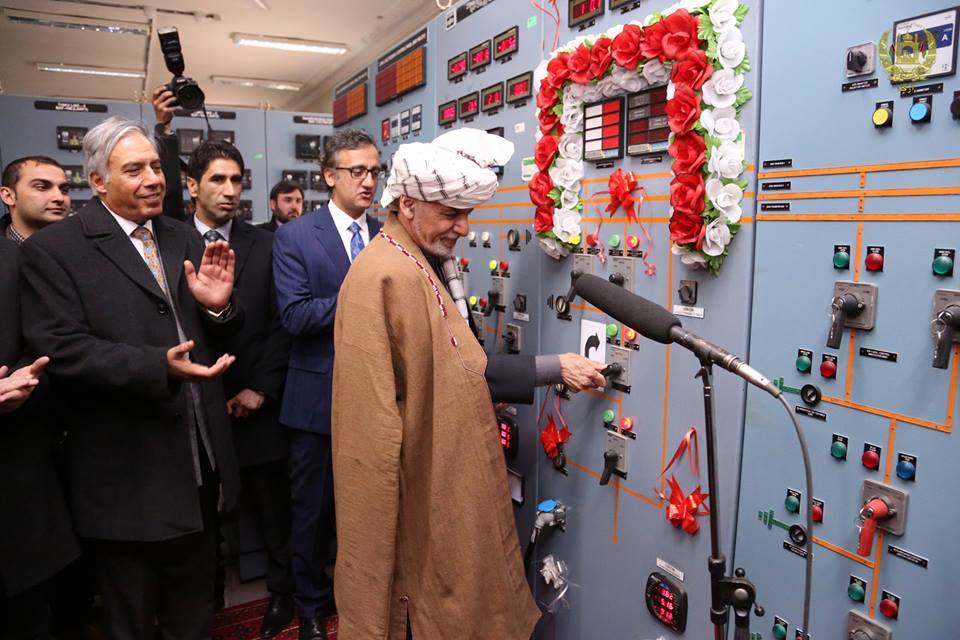
Speech at the Inauguration Ceremony of the 220 kV Maidān Wardak–Ghazni Power Transmission Line
Keypoints:
- National Power Network: Building a unified electricity grid across Afghanistan
- Equal Energy Access: Reducing regional disparities in electricity prices
- Energy Self-Reliance: Moving from import dependence to production and transit
- Economic Development: Supporting investment, agriculture, and industry through electricity
- Renewable Energy: Expanding solar, wind, and gas power solutions
- Regional Connectivity: Linking Afghanistan to regional energy markets
- Community Participation: Engaging local councils and citizens in projects
- Responsible Development: Minimizing social and environmental impacts
- Knowledge & Heritage: Honoring Afghan scientific and historical figures
- National Responsibility: Protecting public infrastructure and achievements
Today, I once again congratulate the people of Ghazni—a land where Abu Rayhan al-Biruni rests on one side and Sultan Mahmud of Ghazni on the other.
In the tables I reviewed, the most expensive electricity was in Badghis, followed by Ghazni. There are eleven provinces in Afghanistan that have been paying two to four times, and sometimes up to ten times, more for electricity than other provinces. Our goal, as a national program, is to possess a single, unified grid so that every citizen of Afghanistan has equal access to power. And today is the beginning. God willing, this progress will reach Zabul and Kandahar.
Furthermore, I express my special gratitude to Breshna Company, the Ministry of Energy, the Ministry of Finance, the Ministry of Economy, and specifically Dr. Qayoumi, for fundamentally changing our master plan for electricity over these last three years. We were previously provided with foreign consultants—do you know what they told us? They said, "Import for ten years; do not focus on domestic production." They kept us occupied with that mindset. Now, we will both import and export, and we will stand on our own feet. I congratulate them for coming forward with a proper plan; we are witnessing a new step taken every single day.
Today belongs to Maidan Wardak. Another day will belong to Logar and Paktia; following that, it will be Nangarhar and Kunar. Likewise, we are reaching Bamyan, where we are inaugurating another line, and eventually, we will reach Daykundi and the entirety of Afghanistan. Simultaneously, in Badghis, the price of electricity will soon decrease as power arrives from Turkmenistan. Our commitment is that these eleven provinces receive fundamental attention to ensure a national balance.
At the same time, I want to thank USAID for undertaking the financing of this project, and I thank our Indian partner company and other collaborators for its implementation. Dr. Farooq Wardak is not present—but I want to give a special thanks to him for uniting all of Maidan Wardak and for accepting the role of mediator. Thank God that there are individuals who are both in the government and standing with you.
What is our goal? Our goal is first to have a nationwide power grid. Currently, we are nine "electricity islands," which is like separating the heart, the liver, and the brain from one another. When these are joined, one of the fundamental pillars of Afghanistan’s national unity will be this unified grid.
Second, we are moving from being an importer toward self-sufficiency and becoming a regional transit hub for energy. Our goal is not just to be self-sufficient; our goal is to transit a massive amount of electricity—which Dr. Qayoumi and his colleagues estimate could be up to 15,000 megawatts—from Central Asia to South Asia. Instead of spending our own money on imported power, God willing, the revenue from transit will fund a large portion of our budget.
Our third goal is to provide power through solar, wind, and especially gas—which has already begun—for those provinces that the grid cannot yet reach and which currently rely on diesel. I congratulate everyone that the first private investment in Sheberghan has been made for the production of 90 megawatts of gas-powered electricity. This does not mean it is only for the north; those 90 megawatts added to the grid will have a positive impact on all other provinces. When a single grid exists, we all become united. Water is our honor (Abru), and we shall preserve the honor of this homeland.
Another essential point we must learn from this project and others is the social dimension. Breshna and our sectoral ministries should not be solely responsible for social impacts. Therefore, my first directive is that the ARAZI (Land Authority) shall henceforth take charge of clearing all developmental projects so that there is a clear framework, accounting, and payment system to prevent complications.
Second, the Ministry of Rural Rehabilitation and Development, through the Citizens' Charter program—for which they hold the secretariat and work alongside other ministries—must manage social plans and address both positive and negative impacts, especially through our development councils. Our development councils must now consider themselves the owners of these projects; if you do not cooperate, success becomes impossible tomorrow. Consider how much the people of Ghazni spend on electricity in a year? If that cost drops by half, or by ten times, or four or five times, imagine the impact? Beyond that, imagine the ripple effects on the economy.
My other directive is to Breshna and those who design these projects: First, Mr. Ghalib, we must not pass through residential areas whenever possible. We must not interfere with the homes, gardens, and lives of the people. It is not enough for the Ministry of Public Works to tell you that a road exists and you should just run the power line alongside it; the impact of a road and a power line is different. There must be a clear arrangement to pass through uncultivated, state-owned, or public lands to minimize negative impacts.
It is also vital that our own Afghan engineers are involved in the design, because we understand our own social conditions. Second, there must be a fundamental reduction of negative impacts, and these costs must be integrated into the project budget to maintain a balance. Third, a disciplined work plan—from land acquisition to the cutting of trees and payment—must all be part of a systematic process, and provincial administrations must be fully involved so that responsibility and authority are clearly defined.
I thank the Provincial Council, the Chairman of the Ghazni Provincial Council, and Mr. Wardak, member of the Maidan Wardak Council. It is a firm promise that I will come to Ghazni to serve you.
I read Abu Rayhan al-Biruni so often that if it isn't every week, I am reflecting on him every month. Do you know who this man was? At that time, he predicted the existence of the Americas. Second, he calculated the circumference of the Earth with such precision that he found it down to the decimals. Third, he determined the direction of the Qibla for every city in Afghanistan so people could pray correctly. His book on India is still taught in the most prestigious universities in the world.
Everyone knows Sultan Mahmud of Ghazni; but it is necessary that they also know Biruni and his hundreds of articles on mathematics, astronomy, and logic. Next year, we will hold a joint scientific seminar with Uzbekistan to honor the personality of Abu Rayhan al-Biruni.
Regarding your urban planning, I must say that old plans are no longer effective. We must create plans in which the people have a fundamental share. We are working with several international companies to arrange major plans for eight provinces soon; Ghazni will play a role in this, and Maidan Wardak is already part of the Kabul plan.
I have two final points: First, it is clear today that the people see the light, and this is the first step for the private sector of Afghanistan and Maidan Wardak. I ask the private sector of Ghazni: now that electricity is arriving, make a commitment to invest.
Life is not just about reading books, though both are important—because one cleans the clothes and the other cleans the mind—but the point is that we need jobs. These two provinces have immense potential; look at the apples of Maidan Wardak, look at all the produce of Ghazni. From first-grade wool to the famous Lucha of Ghazni, let us lay the foundation for industrial agriculture and Maidan Wardak’s vast output. Thus, our electricity plan must be significantly broader. The second part is the mineral development of these two provinces. Both provinces, by the grace of God, are extremely rich. It is not just that I am Ghani (rich); they are also rich.
Final point: Mr. Ghalib, I want special attention given to Engineer Jamshid. My request is that you honor the workers, staff, and engineers who worked day and night to ensure the success of this project. Send me the proposal for their commendation.
Again, thank you. May God keep you safe. We will be waiting for the next steps. To those who cut power lines, I want to send a message on behalf of the entire nation: Are you shutting the light upon yourselves by choosing the path of darkness? Do you prefer darkness over light? Do you cut your own foundation? I ask all the people to protect this great achievement—attained through daily hardship—as you would protect your own life and property.
Long live Afghanistan!