Afghanistan’s Path Forward: A Condition-Based Strategy for Peace, Resilience, and Regional Connectivity
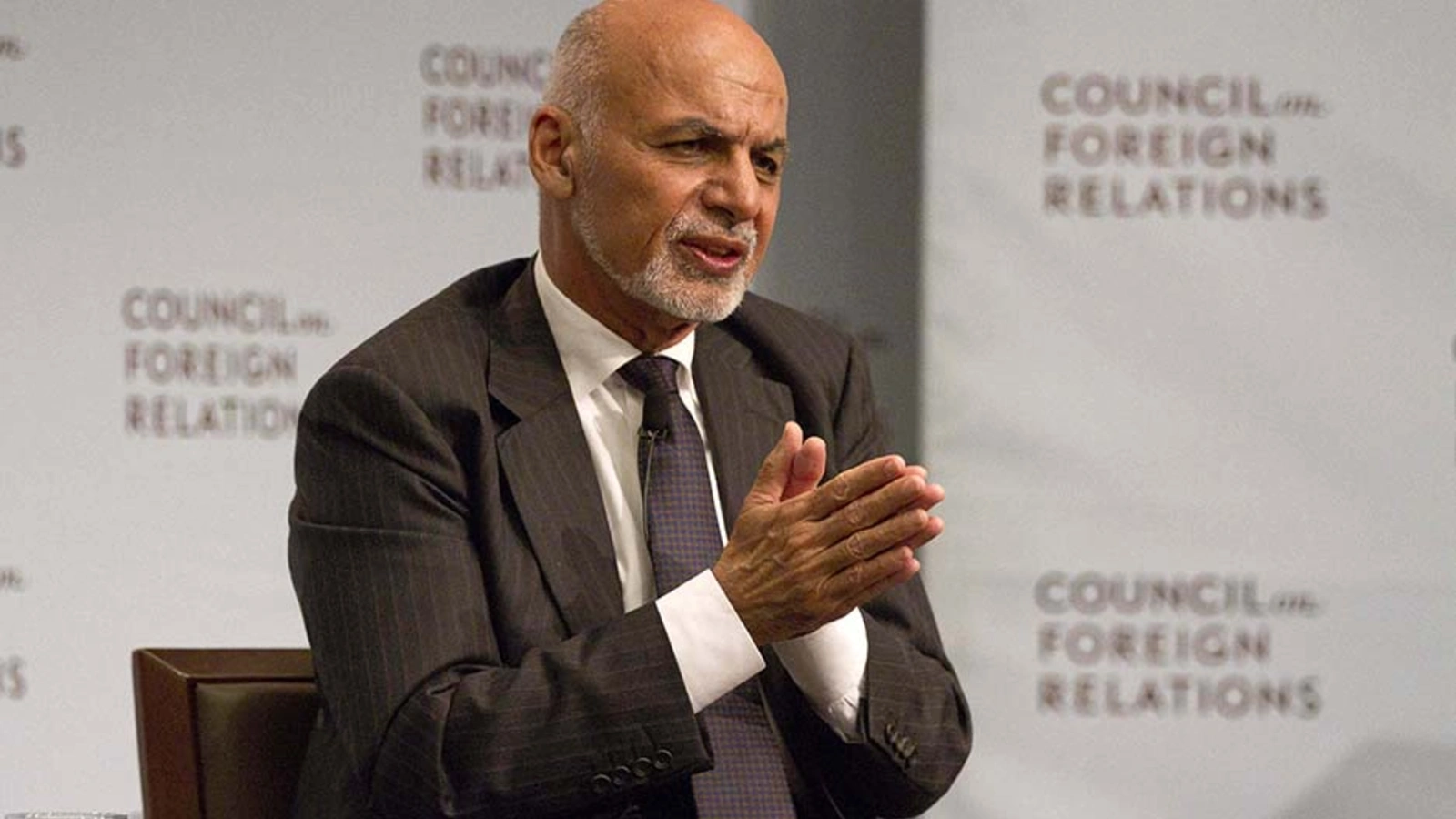
Speech and Interview at the Council on Foreign Relations (CFR) - New York
Keypoints:
- Trump’s South Asia Strategy: Condition-based; multidimensional; aligned with existing agreements.
- Afghan Forces & Reform: Forces lead combat; reforms supported by U.S. advise-and-assist.
- Political Settlement: Dialogue with Pakistan; Taliban engaged under Afghan Constitution.
- Taliban & Military Defeat: Cannot win militarily; losses push for peace.
- Frontline Against Terrorism: Afghanistan defends against global terrorism, including Daesh.
- Economic & Regional Vision: Harness resources; expand connectivity, trade, energy, and railways.
- Governance & Rule of Law: Judicial independence; anti-corruption; inclusive institutions serving citizens.
- Poverty & Development: Address poverty; promote growth, social protection, and reintegration.
In the name of God, the Compassionate, the Merciful
Secretary Miliband, it is such a pleasure to see you in your new function and thank you for your advocacy and voice.
Distinguished members of the Council on Foreign Relations, friends,
I have come here not to have asked to but to say thanks. First, thanks to the over a million American men and women in uniform who have served in our country, who have fought shoulder to shoulder with us, and particularly to those like the son of General Kelly who paid the highest price that a human being can pay in order to ensure the freedom, dignity and security of others.
Today we are dealing with a radically hopefully different context. So my remarks will be basically focused on that and then we will have the conversation.
I welcome President Trump’s decision on a comprehensive strategy for South Asia. It is what we have been waiting for and the implications are quite significant.
Let me first explain what the strategy does not do. It does not return American soldiers to combat roles. The process of security transition is completed; we are not reversing that process. The fighting and unfortunately the dying is being done with valor and distinction by our security forces to whom I pay tribute. Contrary to expectation in 2014 when I was given the honor of serving my people that the majority of the commentators thought neither the government would last nor our security forces, we have shown our resilience; and this resilience will now be expanded and increased.
Second, the number is modest. The increase in number of American forces is extraordinary modest in contrast to the major surge that took place under President Obama in his first term. The function that these troops will be performing will be advise, assist and train.
Why are they needed? Because of the reform program that we have underway and they will be going to the company and division level to help us complete the reform process.
What is important about the strategy is its multidimensionality. First in terms of the security area, it is completely in alignment, in a manifestation of the Strategic Partnership Agreement and the Bilateral Security Agreement. Let me bring it to your attention that these two agreements have been ratified by the Parliament of Afghanistan and they are the framework for our cooperation till 2024. And again, Afghanistan is the only country between the Mediterranean and the Indian Ocean to have such a treaty arrangement with the United States and equally with the NATO – the Status Forces Agreement.
The overarching framework is the four-year security reform program under which our security forces would be overhauled in terms of leadership and management and systems and processes. This process is fully underway in the Ministry of Defense and it will be implemented now in the Ministry of Interior.
What is fundamental about the strategy is to provide the ground for a political settlement, and that political settlement involves two major components and then the remaining threats that we have to deal with.
The first of these is a comprehensive discussion between Afghanistan and Pakistan as two states; state-to-state relationship, so the inherited problems of the last forty years can be addressed. Without peace between Afghanistan and Pakistan, political settlement in Afghanistan alone is not sufficient.
And second is – I hold and invite – I hold my hand out to Taliban groups and invite them for a political discussion. Thus, we can have an intra-Afghan dialogue that will bring an end to violence as a means of conversation. Conflict is a relation but it is not a relation that is productive. A political dialogue within the framework of the Constitution, modeled on the process that we followed with Hizb-e Islami would be a critical ingredient of ensuring that the rights and obligations of citizenship are fulfilled.
What I earlier indicated and welcomed very much, the strategy is condition-based, not time-based, and this gives us the opportunity to tell people get a watch, because the famous quip was ‘the west and the Afghan government have watches, but Taliban have time’. They do not have the time. The reason they do not have the time is because of the type of actions that have been committed, that have lost, and that have brought enormous disenchantment. We need to understand that the tolerance of the Afghan public for violence has limits. We need to act on the lessons of history and bring an end to violence as a means of dialogue, and replace it with a political process of dialogue.
What the strategy equally is not, it is not a blank check because the Burns’ documentary is around. Let me spend my last four minutes on making some comparisons. Afghanistan is not Vietnam. First, we have endured the first test. Over a hundred thousand troops who were withdrawn and we’ve stood firm. We have paid immense sacrifices for our freedom and continue to do so.
Second, the engagement of the United States in Afghanistan is not because of Afghanistan. Afghanistan is a platform where a global struggle between terrorism and forces of order is taking place. That threat unfortunately is nowhere eliminated. The level of the threat compared to 2001 and the tragedy of 9/11 – now particularly in this city and this location where we’ve had detailed conversation – unfortunately still remains. So the threat of terrorism is what brings us together in a binding relationship. In that regard, we are the first line; not only the front line state, but the first line of defense of freedoms and democratic processes.
And thirdly, we are absolutely committed as a government and as a people to reform our governance processes to ensure that we are not a burden but an asset; and in that regard, our tragedy is that we are potentially one of the richest countries in the region. The natural resources that we have been endowed with by the Almighty are immense, but simultaneously our country is inhabited by some of the poorest people on earth. Because of this, regional connectivity is our key goal. We have reversed 117 years of history by rejoining Central Asia. Afghanistan today enjoys the best of relationship with every single one of its northern neighbors and their neighbors. This is a historical transformation underway. Trains from China are reaching our border. Pipeline, railways, transmission lines, a huge series of efforts is underway and the key to this is, harnessing both the natural wealth of Afghanistan and its immense human capital.
I want to thank you for giving me this opportunity. I am looking very much forward to a conversation with the master of conversation [laughter] Secretary Miliband. Thank you for inviting me and thank you for the council for this opportunity.
[Applause]
David Miliband: Thank you very much Mr. President for that tremendously clear overview of some of the progress that you have been making and challenges that you’ve faced. It is actually three years to the day since you were elected president of Afghanistan. And I want to start by asking you to reflect with the audience here on what has been the most surprising challenge that you’ve faced in those three year. We’ll come to some of the progress that you have achieved. But how is it different in practice than you anticipated in your books and in your other writings to lead change in Afghanistan.
President Ghani: Well, thank you for a wonderful question. The first thing is that the Afghan people are really being, I think, surprised by my patience. [Audience’s laughter] A lot of them when they were voting for me had one concern. Is he truly mad, or will he behave with some patience? And, this patience has been strategic and, I think, been an asset.
What has more surprised has been the global environment. Assumptions of the 20th century are no longer operative. We are working with conditions of radical uncertainty.
First, when I became president, President Obama had announced that the number of American troops would be reduced to 600, based in the embassy. It took a very intense conversation to persuade President Obama and the previous administration to arrive at support for Afghanistan and change of policy. And second, of course, President Trump, upon assuming office, asked a series of incredibly valid and tough questions. And again, we are delighted that we have passed through these two periods of intense examinations by two presidents of the United States and two administrations, and now we are at a point. We are looking forward from uncertainty to risk. Risk is instruments of management but when you are dealing with radial uncertainty, it is a different issue.
The second was that I reached out to Pakistan upon weeks of becoming president. I am the rare Afghan president or the rare civilian leader in the area to have gone to the army headquarters for a detailed conversation because the argument was that the disputes, the disagreements, the misunderstandings were based on persons. And what became very clear that there was no personal issue. There was a fundamental set of differences and interest, and unfortunately repeated assurances that we would engage were not realized. Now, we are looking to an opportunity to have a comprehensive dialogue.
Third, global economy has become very uncertain. When central banks become the only game in town and trillions of dollars are sitting and people are paying banks to keep their money, the investment climate – economically what we could do vis-à-vis the commodities, Afghanistan has an immense set of assets but the international environment in terms of economic opportunities was minimum. And this brought a situation where a lot of countries and a lot of strata started taking different forms of insurance, so when you are dealing with a state transformation agenda, the model of leadership that comes from the private sector or stable countries needs to be adjusted. I hope that, despite this uncertainty, we have managed to push our way forward, but today I think we are in a different context and I very much look forward to the next round that we can generate real moment.
David Miliband: One other aspect of the uncertainty is that when you were elected, the initials ISIS, that is named Daesh, was not known around the world and you have given us a sense of your estimate of Taliban’s strengths or lack of it. Just for the fullness of the picture, can you give the audience, the members of the council here, a sense of the presence that you estimate of ISIS (Daesh) and what you see is their interest in Afghanistan?
President Ghani: Sure, the first thing is I had warned about Daesh. And I warned about Daesh in my first weeks, people thought I was inventing a threat to get attention. The term that I put forward in Munich was the “Fifth Wave”. The current wave of terrorism is the fifth beginning with the first wave starting with Anarchism in Europe. Each of those waves, unfortunately, has lasted two to three decades. The uncertainty is that response to terrorism, because of the political cycles of elections and others, is short-term. We do not understand, I would submit, the scale and scope of the problem.
Three things are combined. First, transnational terrorist networks but the nature of network is radically different than the networks that were formed by Al-Qaeda. If Al-Qaeda was version 1 of network formation, Daesh is version 4 to 6 in terms of network theory. There is some excellent work done by CENTCOM, but open source that demonstrates it.
Second is transnational criminal organizations. Daesh and the related terrorist organizations today are the best financed networks in history. And crime – particularly, the war in Afghanistan cannot be understood apart from it; the drug war. The parallels to Colombia and now to Mexico are striking. And we need to understand the second element.
The third component is, again, the cyber space. All previous networks of violence were face to face. One usually cells of 5 spread around with degrees of anonymity; now, it is face to Facebook. It is not face to face, but face to Facebook. And this means the pattern of recruitment and organization is very different and embedded in a context of a century of frustrations with change in Muslim majority countries, it’s become a lethal boat.
Why Afghanistan? One – because of history. Al-Qaeda was an isolated myth, and see what it did. They want to repeat that history.
Second – because of location. We are at the heart of Asia and today there is a struggle between two platforms; will Afghanistan become the platform for stability and a roundabout for connectivity, or will it become the center of terrorism incorporated.
Third is because of ecology. The ecology of Afghanistan offers the best potential; mountains, valleys, 2000-5000 meters above sea-level and in terms of access with ability to disrupt. But the most significant sector, of course, is that the headquarters for all of these organizations is elsewhere. And they would like to push this onto us and it is important to realize that if all these things came together… Just one illustration, we arrested a Kazakh in the Sar-e Pol province in northern Afghanistan. He had been wanted by the Kazakh government through the Interpol for 6 years, and it was an amazing range of information and relationships in networks that are revealed; or ETIM – the Eastern Turkistan Islamic Movement – the Chinese separatists’ movement. It is amazing when you see the way they move around.
The threat now is because Daesh has openly called on its followers in January of 2017 not to go to Iraq and Syria but target Afghanistan and Pakistan. So the presence is really increased because we are an open frontier society; movement is much easier, so the threat is very real and the desirability is for destabilization of global economy.
The target of this wave of terrorism is what your father had written immensely about is the contract between the citizen and the state. They want to make sure that the western state, the state in the western countries that is embodiment of a social contract is shown to be impotent. So they are targeting civil spaces, open spaces, spaces of dialogue, spaces of worship, spaces of congregation and association. This war requires a different way of dealing with and preparation for.
David Miliband: Thank you. I want to dig in a bit to the reference you made – you made several references to a political settlement and to the two tracks of it, because the crying shame of the last 16 years has been a difficulty of making progress and parallel on those two tracks. Can you talk about, Mr. President, about what you mean by the internal settlement, what your ideal is a credible legitimate sharing of power, and maybe give us an insight of into what it is that you think can turn Taliban supporters of various kinds to become part of the political process. Is it the threat that they are going to lose; is it the offer that they are going to have a place at the table. How do you see that internal settlement going?
President Ghani: Sure. The first issue is that it should be very clear to them that they cannot win militarily. And they still had – prior to the announcement of the South Asia strategy, they had confidence that they could win, at least they could destabilize without a cost. That thing is becoming costly. If they want to choose certain death, it will be their responsibility. They are losing lives. Their leadership is committing criminal acts by sending young men to their certain death. In the past month, they have lost over 1,300 men. This is unnecessary bloodshed, so the cost is rising very very substantially, and the capability is increasing.
The second part is the need for an engagement, but the type of engagement differs. We can have our agreement with Hizb-e Islami was an intra-Afghan agreement carried out in Kabul through the Peace Council and then endorsed by the National Security Council and the government. Throughout the representatives of Hizb-e Islami came, they lived in an open environment, they had full access to the media, to the public to forms of association and finally their leader came. But Hizb-e Islami had their leader who could act and decide, and today he lives in Kabul. Is this possible – that goes back as to whether they can speak for themselves or not, so there is a fundamental choice for the Taliban; will they have the will and the ability to speak for themselves as Afghans to other Afghans, or do they want to give the right of speaking and representation to a foreign power for them. That is their decision, it is not ours. But we want to make sure that they have the possibility of engaging in a dialogue.
The question of the outcomes depends on the process. We’ve prepared a full process with a full outline of the issues to be discussed. Clare Lockhart and I wrote a long piece on peace agreements summarizing the entire 90s decade because peace broke out. And there are key issues that all recur with the regularity in almost in every peace agreement. The distinction I will make and it is necessary to make is between “peace-making” and “peace-building”. Peace-making is the ability to come to see that politics, not Northern Island which you have been involved and did an immense job. It shows that there is a price to be paid. You wouldn’t have had dinner with those people who are acting, engaging in acts of terror, but tomorrow, the next day because of the peace of UK, you sat down with them and incorporate them in the government. That is the internal process. There is a democratic process; let them participate in the elections to see how many people will vote for them. If they think they have support let them contest the elections. If the people of Afghanistan want to elect them as the next president, more power to them. If they want to elect them to Parliament, etc. This is the democratic process.
The other component of this in terms of maintaining peace is the need for security. And here, the security reform program is absolutely essential that the security sector is depoliticized. It becomes truly national and everybody can trust. So it is not hops in deal, but it is a lot in deal, that you entrust collective security to the state institutions.
Now the obstacle. The fundamental issue is that the Afghan people, like a lot of other people, associate peace with security. But the global experience says that peace is deligitimated violence but is not necessarily brought security. So that we need to make sure that public support for peace is translated into real security and particularly for utilization of Afghanistan’s resources.
The second lesson of these peace agreements is that ex-combatants have not been included. And we have fundamental issue. 40% of the population still lives below poverty line; we don’t want to increase this and turn the risk in a lot of these countries after peace-making has been increasing the criminality. And given the drug problem which is a criminal organization problem, we need to make sure that we have a comprehensive understanding.
Again, to make the main point that peace discussion, invitation to peace discussions are unconditional, the outcomes need to be based on in maintaining of the gains of the last. Women are non-negotiable. We cannot put our women to apartheid; they won’t take it. And if Taliban want to engage in any democratic process, they need to understand that the women are a part of this. The adjustment to everybody is to understand that Afghanistan of today is not the Afghanistan of 1996 or 2001.
David Miliband: I am cautious of time, so let me ask one more question. You’ve said that Afghanistan is a very poor country in various ways. I think the half of the members here, if you give a sense of daily life of Afghans in the context of the following fact that I know all too well because of the work that we do; every year, there is a humanitarian appeal to the international community for Afghanistan. This year, 2017, the humanitarian appeal is 34% funded. So the metaphor I will use is that the four wheels of the car that are needed to drive a country forward; a security wheel, an economic wheel, obviously you can’t do without the security wheel, but the element that seems to be missing is the shear grinding poverty for a large number of your citizens. The fact that the Taliban recruit with economic incentives that we would see as a low level, nonetheless can be life changing for the people that they are trying to bribe into their ranks. Can you talk a bit about what that challenge is and how you think the international community can support you on the economic and humanitarian fronts, not just the military front?
President Ghani: No, absolutely. We have a program called National Solidarity, and now it is going to be expanded into the Citizen Charter. Mr. Atmar, our very able national security advisor, was the first minister of Rural Development that consolidated. And scale was really important. The largest scale through the UN System was 40 villages; we reach for 34000 villages. But let me bring your portrait from a conference that we hold annually for members of National Solidarity. The picture is the following; what percentage can afford three meals a day, and can put their kids through college in a village? There is a village in Baghlan but I repeated I crossed the others; 10%. What percentage of population can afford two meals a day and put people through high school; that is about 40%. What percentage can afford one meal a day, and put a child through 4th grade to 6th grade; that is another 30–40 percent. What percentage looks to the meal, to its next meal, is uncertain and cannot put children through school. This is the rest.
The other factor; 15% of the population goes to bed hungry every night. 30% to 40% of the population has chronic food deficiency; three months a year or two months of the year, etc.
What have we gained? In 2001, I returned on December 26th, 2001 after 24 years. At that time, we were absolutely at the end of our coping strategy; five years of drought, etc. I went to my ancestors’ village where my family has been for 600 years; I embraced 600 men, there were only bones. There was no meat on anyone. I went to the university with my former colleagues their faces looked like leather. I flew a lot over and drove, and I do still. 60% of the population has regained coping strategy. 40% of the population lives below $1.35, so the immense--but what is different is also that we have become one of the most unequal societies on the face of the earth. For all these poor people --and this again has captured by a proverb. The proverb in the province of Kandahar used to be that “when a villager makes it, life of one hundred people improves within.” Now they say when a villager makes it, one hundred people are thrown in poverty. It is repressive.
The elite has not fulfilled its function to hold the country together. It is gone for accumulation. So the inequality is a fundamental driver; unemployment, hidden unemployment, because of it.
But where is the tragedy? The tragedy is again, you know, we can become the larger producer of copper and iron in the world within 10 years. We will become a major player in the gold within 5 years. We will be a decisive vote on lithium and rare earth; we have 14 of the 17 rare earth. Afghanistan used to be called by the Russian the Mendeleev Table. The richness, the water resources; at least 22 billion cubic meter water that needs to be harnessed, land, etc. So an economic strategy that is both about growth but also about inclusive growth is central.
Second, social security; we have a million and half people who are martyred. If investing in a girl changes five generations, a female-headed household condemns three generations of girls to poverty and to abuse. We have close to one million people with disabilities, a lot of them war-caused. Internal displacement, another million. So this means that a social policy is absolutely essential. The issue is not to fragment, not to put the three into silence. So the humanitarian becomes just perpetuation of the humanitarian. The illustration; instead of building livable cities we have built slums. 75 percent of Kabul is informal because the humanitarian community absolutely failed to have the imagination to give people property rights. They could have built.
But the need for humanitarian assistance and on top of this; last point. Five million Afghans who were refugees have returned. Last year, we were the country that absorbed the largest number of returnees; over 1.1 million people. The need to work with this and incorporate, still we have four million people out. I always say that I feel that I am missing an arm and a leg because until we have this population abroad, we are not whole. And we need to make sure that the social fabric is renegotiated into a compact where we feel bound together in a common destiny.
David Miliband: thank you very much. Anyone of you who came here thinking you had a difficult job. [Audience’s laughter] I hope you have reappraised the relative position. I am going to get as many people as possible, so please keep your question short; please say who you are; and don’t make speech. Mary Boys to kick off.
Mary Boys: [I am] Mary Boys. Thank you Mr. President.
President Ghani: It is a pleasure to see you again.
Mary Boys: It is good to see you again. We have been hearing for at least 15 years about the vast mineral and natural resources wealth in your country. What specifically are you doing to develop that wealth and what are the chief obstacles to that development?
President Ghani: Well, thank you. First of all, thank you for your interest and continuous engagement. She has been a remarkable advocate and analyst. First, what we are doing is brining power. Without power, the natural wealth cannot be developed, therefore a comprehensive approach to power both to produce but particularly transmit. Its stake is transmitting 5000 to 15000 megawatts of power from Central Asia to South Asia through Afghanistan. Energy is the infrastructure of infrastructure. All of mining and other legends are power intensive.
Second is transport. We are linked now to the Central Asian and Caucuses’ networks and to China. And the development of railways is absolutely essential. We have done one calculation. We could have an export of 500 million dollars a year to China just from marble—just one item, marble. We have forty billion cubic meters—estimated cubic meters—of marble, 60 colors.
Third is policy. Stability of policy is absolutely essential.
Fourth in this regard, these were in the discussion with the OPIC and a number of others, its risk guarantees. Without risk guarantees, the development of the minerals will not happen. You need to have forms of risk guarantee and forms of insurance to be against various forms of risk, to be able to do this.
And fifth, we are advocating detailed decisions. Dr. Qayumi the former president of San Jose State University, the chief advisor of the presidency; I can’t use the word ‘my’ with him because we were college roommates and I dragged him from one of the best jobs, to again to help with one of the worst. [Audience’s laughter] Well, you thought—Barney thought that I had a bad job when I was working with him…Now imagine! [Audience’s laughter] and what is on the top of it that is I ran for it. [Laughter]
Question 2: Thank you Chris Isham with CBS news. Nice to see you again.
President Ghani: I am very glad to see you again.
Question 2: A question about your meeting this morning. Can you give us any insight into the meeting with President Trump, and can you give us a general sense of whether you have any indication from this administration that they are prepared to put real pressure on Pakistan to stop their support for Haqqani network and for the Taliban?
David Miliband: If you pass it to the lady in front so she can ask the next question.
President Ghani: Why don’t you take three questions at a time?
Question 3: Seema Mody with CNBC News. President, nice to meet you. The critics in Washington who say the Afghani government hasn’t done enough to combat terrorism; what would your response be? And your confidence in Trump’s strategy in Afghanistan, how is it different than his predecessor’s?
Question 4: James R. Silkenat, World Justice Project. Mr. President, I know you’ve had a long a personal involvement in support of the rule of law, could you talk a little about on how those are playing out now in Afghanistan; judicial independence, human rights—related issues?
President Ghani: Well. Thank you Mr. Silkenat again… I had the honor of serving on the American Bar Association advisory group and a number of others and I learned a lot.
First, I am extraordinary proud of our attorney general and chief justice. Illustration; five generals including a lieutenant general that I promoted to lieutenant general are now in prison for corruption duly prosecuted in a court of law and justice center, and now in prison. One of the richest men in Afghanistan was again found in violation of the contract and he is now in prison. The judicial sector is really moving. Every single provincial appellate court justice has been changed. Over 1,400 positions in the Supreme Court under the direction of the chief justice have changed. I have had the honor of appointing three judges to the Supreme Court and now a full reform is in place and I’ll have the opportunity to name three other justices to the Supreme Court. I had the distinctive honor of nominating the first woman to the Supreme Court. A remarkable woman who is heading our justice center against corruption. She lost by 8 votes, because the women of parliament did not cooperate, so shame on them [laughter] and I hope that they will mobilize better because they had assured me. On top, the foundation has been laid. Again, I can claim without contradiction that I have not taken a single step to interfere or to suggest ways in a judicial case. The autonomy of the justice sector is sacred to me. I had said during the campaign and I repeat it that the day they hold one of my ruling or policies not to be in accord with the constitution, I will celebrate, because the justice sector really holds the balance. And it is extraordinary important.
Are we delivering at the bottom? No, because corruption was de-order. Now, we have articulated a very comprehensive anti-corruption strategy based on five pillars and implementation of this will make rule of law possible. We need to understand; rule of law cannot take place if the two parties are not equal in front of the judge. I reviewed 5000 cases from the 19th century and the most important thing was the impartial nature of justice. Our advantage is that our tradition of justice, justice in the Islamic theory of governance is the foundation of state, and is the glue that really holds together. We are now working comprehensively, we have a four-year plan particularly fitting because we would be celebrating the one thousand four hundred anniversary of Islam and on that day, I hope that we can show very very substantial change from a justice sector that was universally distrusted to one that would be trusted.
Have we done a lot about terrorism? Who more than us has fought it? Madam, on 31st of May, Kabul turned into a carnage. If it were not for the heroic deeds of five Afghan policemen, who stopped the truck right in front of the German embassy, Kabul could have entered the Guinness book of records as slaughter place of diplomats. The way we are under attack by terrorist networks, a six-month-old girl that has been ripped to a seventy-year-old that has been made to sit on a bomb and exploded. The level of atrocities—the latest that was again that was in Shinwar, the latest was in Mirza Olang in Sar-e Pol where people in cold blood were shot. And our attorney general has had an extensive investigation these are crimes against humanity. We are the first target. Since the completion of security transition on December 31st, 2014, all the fighting is being done by us, and under distinctive constraints. Because we have had to win back our partnerships and I am very proud of my colleagues and myself in the government of national unity that we have ensured that the foundational partnership with the United States and NATO is now one of trust and mutual confidence.
What is different about this strategy is now, it is not time-bound, and it is not condition-bound. It is multiple instruments; economic is really coming to the forth with a very important set of discussions so that we can address the issue of growth of, development of the natural wealth of Afghanistan and service of the people of Afghanistan and to pay for our own security in the future and equally, the regional component of it.
The discussion with President Trump was excellent; a good portion of it is on public record, because was recorded. I am confident that the president means what he says and I am very hopeful that we will be witnessing a significant dialogue with Pakistan and I hope that Pakistani authorities will take my offer of comprehensive dialogue so we can bring an end and put an end to this tragedy.
Question 5: Thank you Mr. President. My concerns are often religious, but today I want to ask you about your air force. Several years ago when I visited Afghanistan with a group from the council led by Max Spoor. The US drawdown was underway. One of the big concerns was the complete absence of a functional air force. In addition to the obvious tactical problems, it was drawing low enlistment rates among the security forces who aren’t really able to get back and forth to their homes for their leave and holiday and also the lack Medevac capability was making the security forces reticent to going to rescue missions. How is the air force?
Question 6: Hello, Mr. President. You mentioned the role of China to a certain extent in Afghanistan’s economic development. I wonder if you could elaborate on that a little bit, and whether you would see a role for Russia and China, Iran two other regional powers in Afghanistan’s future economic development and reconstruction. Thank you.
David Miliband: And there is a man very patient with blue suit.
President Ghani: He has been always patient with Afghanistan. [Laughter]
Question 7: Always patient Mr. President. David mentioned of the Taliban’s recruitment with blandishments, but one element of President Trump’s new strategy if it be really that new that you haven’t mentioned is the loosening of the restraints on use of American air power, already we see rising civilian casualties as result of a more promiscuous use of military power. To what extent do you worry that this becomes a non-blandishment but rather a grievance-driven recruiting tool for the Taliban. And in this long war of attrition, what point does the Afghan military itself begin to lose the capacity to recruit bodies to fill your own casualty losses.
President Ghani: Well. Thank you. First, on the question of air force; of course, we worked under enormous handicaps and one part of the valor is really to fight from a circumstance that in 2014, we had absolutely full air support and controlled the skies to 2015 where we went to our old helicopters, and I want to pay tribute to our pilots. They have done a remarkable job. It was much more like World War (I) and World War (II), the men rather than the machine matter. Today, our air force is in the process of full renewal. 680 million dollars have been allocated. The overall estimation would be about 6 billion dollars that would go to the air force. So I am confident now that the air power will be there.
Medical evacuation is still a problem. One of the highest complains, as I mentioned six army corps, is young men seeing their wounded colleagues bleed. It is, last week was the first week where we had succeeded in medical evacuation of every martyred and every wounded person. But it is a stretch. But the main reason is Ukraine. The US very generously under different administrations from President Bush to President Obama had agreed to purchase Russian equipment for our air force and when the Congress put a sanction that came to an end. And we worked with forty-two countries, only India could give us four Mi-35 that were really a lifesaver. But this week six Apaches arrived and more will be arriving. I think we will be seeing a change in this dimension.
China’s engagement, and India’s equally, these are the two fundamental economic giants of the region as well as the Caucuses and West Asia. Afghanistan would be foolish not to have diversified relationship. What is underway is an event comparable to 1869. An 1869, the Atlantic and Pacific railways were joined to form the continental economy of the United States. Asia is moving from an idea to becoming an economy. Asia has been a concept; it has not been an economic reality. Long business trade does not weave you together; it is the commodities. Our location is going to become the most advantageous asset that we have. With China, we are working on a five-country railway, and that would be transformative, also with Uzbekistan and others. With Iran and India with the development of Chabahar and the related railway system, and with Russia it is what we are doing with Uzbekistan. In October, there will be a comprehensive agreement when I visit hopefully Uzbekistan on trade, transit and investment.
Afghanistan’s rejoining of Central Asia. I’ll just give you one illustration. Two years ago, our imports from Kazakhstan were 35 million dollars, this year is 350 million dollars.
Kazakh wheat is the most competitive, we don’t need to import any wheat from Pakistan, and by contrast the fee that we were paying to Karachi last year was 1.2 billion dollars, this year it is 200 Million dollars. Afghanistan is diversified place, people think that one country can put a stop to our economic growth or integration, they need to think. But all of us have something to win in common.
Regarding words like ‘promiscuous’, I would really beg to differ. [Laughter] The American military is not promiscuous in use of force, nor is the Afghan with enormous difference. We take unbelievable care to use force against those who are challenging and who are bringing destruction. What would you like us to do when the capital of the country is attacked and every single civilian space is attacked, every mosque is attacked, should we fold our hand behind our back and offer surrender. We are not responsible for this war, the Taliban are. Let’s understand who is responsible for elevation of military use of force. I extended my hand, I extended my hand to Pakistan and they spit on it, because they thought they could overthrow us, so let’s call the facts, facts. There have been some few, but very unfortunate civilian casualties but I bring you our will. Mr. Zadran whose family lost sixteen members in the Logar province. First I talked to him on the phone then he came with his family. These were a series of small houses and a Resolute Support mission helicopters had unfortunately a developed mechanical problem, and unfortunately it was landing, it was fired upon. What Mr. Zadran told me and the nation is that they took the Quran to the Taliban saying ‘please do not fire’; they did. And Mr. Zadran understood that this was a defensive act, and the job that I have and my colleagues have, we have to hold a scale of blood. It is important to bring an end to this war. The ball is in the court of those who are engaging in violence and sponsoring it. Our last thing and my last duty as a commander-in-chief is to incite further violence. If violence is inflicted upon us, do not misunderstand. Kipling put it best, “When two strong men meet, there is neither east nor west.” It is sheer determination. If those people think that the president of Afghanistan and the commander-in-chief does not have will to secure his people, they need to think twice. We will fight to the end of times if it is necessary, but our desire is to engage in a dialogue. And it is imperative that this historical opportunity that has been opened is not wasted.
David Miliband: If you got time Mr. President, we will take three more quick questions. There is a lady right to the back who has been waving a hand at me or you [audience laughing]
Question 8: Carolyn Maloney.
President Ghani: Great to see you again!
Question 8 [continued]: Great to see you again. Everyone says that there is no military solution to this conflict, so how do you see bringing this war to an end, how do we get to a negotiated settlement?
David Miliband: There are two people in the third row. One person now, one has given up, the lady there and then I will come to the young man at back.
Question 9: OK, I am Lucy Komisar, I am a journalist. This just a report that came out today from SIGAR – the Special Inspector General for Afghanistan Reconstruction – it is reconstruction of the National Defense and Security Forces. It says that it is very damning of the United states that US failed to understand the complexities and scale of the mission required to stand up and mentor security forces in a country suffering from 30 years of war, misrule, corruption and the poverty and the rest of the report is in that same vain, have you seen it? Do you think this is a fair assessment, this comes out of the Pentagon?
President Ghani: It doesn’t come out of the Pentagon. It comes out of Congress. It is congressionally mandated body. I will put SIGAR very routinely.
Question 10: Hi, Mr. President, my name is Ravi Sarkami with the New York City Police Department. I am curious as to whether or not you feel you have particular insight, given your country’s history as a theater for foreign fighters and the conflict with the Russians with the respect to what is going on now in Syria and whether or not you have insight into the trajectory of that conflict, the generational ramification of that conflict globally. Thank you.
President Ghani: Thank you. At the last one; I wrote a paper with Clare Lockhart on Syria, so I will just send it to you. [Audience’s laughter]
David Miliband: and you can give your email address to Clare in the front row at the end of the session. [Laughter]
On SIGAR. First, the absorption of money into a context like that was, of course, very difficult. But what are we doing with SIGAR, we have formed the High Council on Anti-Corruption and Rule of Law. Each time SIGAR has a report, we sit down and we announce an action plan to deal with.
So, on the abuses, first I have chaired 110 sessions of the National Procurement Council. Every contract in the ministry of defense was overhauled and redefined and rebid. We saved 200 million dollars. Now one of the most important initiatives and bringing civilian leadership to logistics, procurement and management is underway. Ministry of Interior; we have a task ahead of us, but a lot of the criticism that SIGAR has directed is towards the past performance of Ministry of Defense is at the process of correction. And again, I brought to your attention, a 3-star general that had even performed with distinction in Helmand is now in prison because of fuel. He stole fuel. It is a conviction between--and it is part of a compact with a hundred benchmarks and we have a full program now and and it is time-bound and you will see the actions. We are not in denial about what we inherited, but we are responsible for is that tenure of going forward and then I invite you to come and cover it in person. But SIGAR is a congressionally mandated body, it has full autonomy, and Sepko heads it. They sit on our National Procurement Council; we have also invited him to sit on our council on rule of law.
On the fundamental question, the last and the overwhelming question. How do we end the war? First, by persuading Pakistan that we need to come in South Asia to Westphalian regime. South Asia is still in a pre-Westphalian phase. States routinely sponsor malign non-state actors and use them as instruments of policy. This has been called as the instrument of the weak vis-à-vis strong or others. And the reason states can come together is now because of two sets of interest; one, terrorism is not going to recognize a supportive state from a non-state supportive. It rebounds on sponsors, and this is a threat that we really need to take seriously. If history has a guide, I hope I am wrong, it is more a 20-year problem rather than a two-year problem. It requires coordination, and coordination among the states is absolutely key to this.
Second, poverty. Millions of people in Pakistan have sunk to poverty. The gains of earlier, it is not just that poverty is not diminished, it is increased. And as I said, forty percent of our people live under poverty. There is a distinctive cooperation has a much more distinctive advantage than conflict. There is no competition between states in being bad. We all become losers of this process. So that is a fundamental thing because without sanctuary once sanctuary is denied, once logistic supports, once open recruitment, etc.; the rules will change.
Second is the openness of our system to be able to take genuine grievances and work out through mechanisms of participation. And learn from Ireland. If you want a political settlement, you have to be willing to talk, and talk seriously and undertake the necessary adjustments that peace demands. That means you have to persuade a woman whose child is blown to smithereens and the child left for school in the hope of learning. You have to persuade a wife whose husband was blown up in a mosque, etc. We need to understand that we need a comprehensive national dialogue. This cannot be the job of one person or even, to the most important elected office, we have to forge the consensus, and that means the other parties need to come and embrace a political process of dialogue and understanding. Is it tough? Extremely. But is it absolutely necessary? Yes. In that hope, I hope that the council and all of you will help us. I want to take a special moment to thank members of councils over the last seventeen years for having been such fantastic partners and in many occasions of giving of the opportunity to interact with you. My friendship overrides my functions as president, and I hope it will endure with the council.
Thank you
[Applause]