Afghanistan and NATO: Partnership for Security, Peace, and a Stable Future
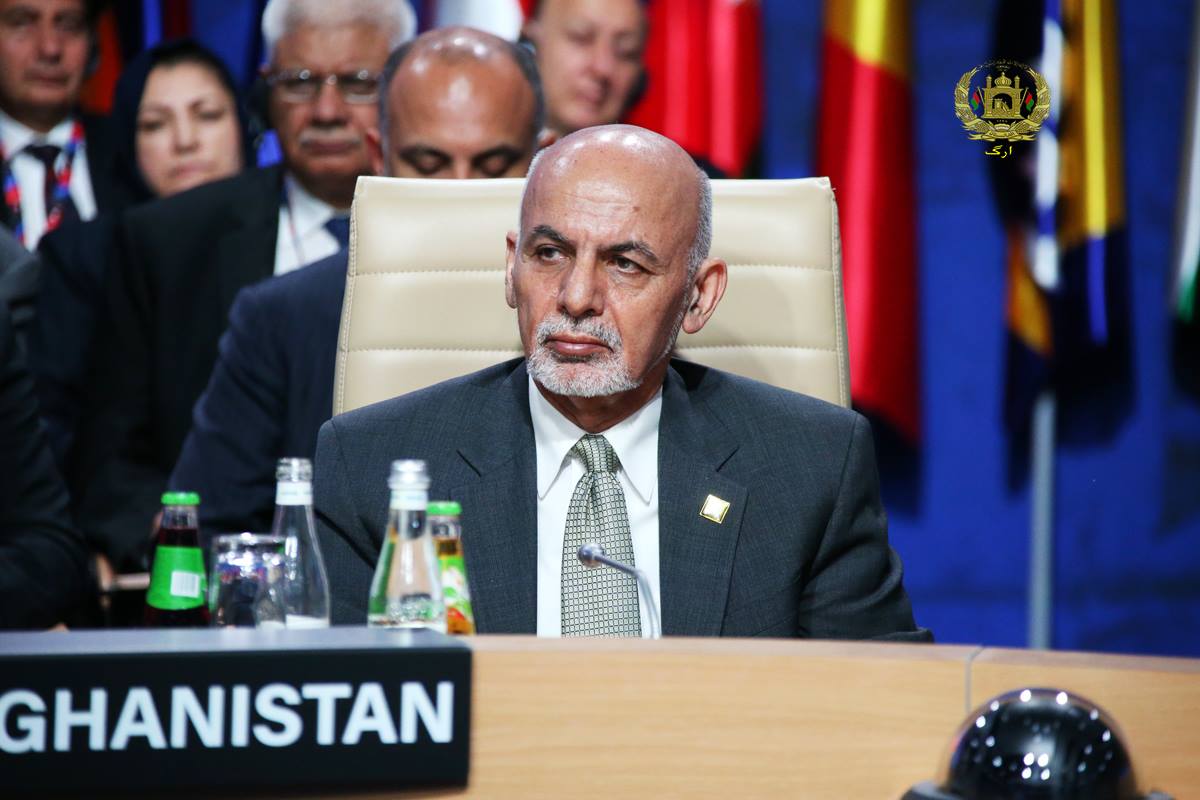
Speech at the 2016 NATO Warsaw Summit in Warsaw, Poland
Keypoints:
- NATO Partnership: Cooperation strengthens Afghanistan’s security forces.
- Afghan Forces: National troops show resilience and sacrifice.
- Global Terrorism: The “Fifth Wave” threatens worldwide stability.
- Four-Level Action: National, regional, Islamic, and global coordination is needed.
- Governance Reform: Fight corruption and build citizen-focused governance.
- Peace Priority: Peace requires understanding the complex conflict.
- Regional Cooperation: Stability depends on neighborly cooperation.
- International Support: Global assistance is vital for security and development.
- Democracy: Afghanistan aims for an accountable state.
- Future Vision: Afghanistan seeks to be an “Asian Roundabout.”
In the name of Allah, the Compassionate, the Merciful
Mr. Secretary General, Your Excellencies, Heads of State and Government, Ladies and Gentlemen!
Thank you for the opportunity to provide an Afghan perspective on NATO, threats to our interconnected world and our efforts to secure the future. On behalf of a grateful nation, I pay tribute to your citizens who paid the ultimate price to ensure our freedom. We thank political leaders, generals and officers, and the men and women who have fought shoulder to shoulder with us. We thank the taxpayers and the civilians from your countries who have dedicated their lives to helping us recover from the estimated $240 billion of economic losses inflicted on us by invasion and conflict.
NATO’s Role and Legacy in Afghanistan
NATO has maintained its relevance and effectiveness in the paradigm shift presented by post-9/11 Afghanistan. The organization’s fulfillment of both its combat and support missions in Afghanistan is a corroboration of NATO’s continued global relevance, adaptability and effectiveness. Its transformative legacy, however, is building our 352,000 strong security and defense forces.
Afghan Security Forces and National Responsibility
Having assumed full responsibility for national security in December 2014, our all-volunteer forces have displayed commitment to the nation and the constitution through immense sacrifice, thereby earning unprecedented public support and trust. They are resilient in the face of adversity, and they have made constant improvements in efficiently and effectively coordinating and building systems of leadership and management. These developments have enabled them to face and overcome a series of vicious attacks from forces of disorder and terrorism in 2016.
Partnership with NATO and International Support
Thanks to our joint investment in our security institutions, Dr. Abdullah, the CEO, and I can confidently state that the combat role of NATO in Afghanistan is over for good. Our confidence derives from our national resolve and the constructive partnership between our National Unity Government and NATO. Having signed the BSA and SOFA on our first day in office, we created an environment of mutual respect and trust befitting foundational partners. We thank President Obama for expanding the authorities of the Resolute Support Mission, extending the mission of the US troops in 2015, and his latest decision to maintain American troops throughout his term. We are grateful to leaders of the Framework countries and all leaders of NATO and allied countries for support that ranges from troops, to enablers and funds for our security forces. General Campbell and General Nicholson deserve praise from all of us for their leadership.
Understanding Modern Terrorism: The Fifth Wave of Violence
Coping continuously with the specter of terrorism, we Afghans have special empathy and sympathy for victims of the Fifth Wave of political violence that threatens our interconnected world today. Global connectivity simultaneously increases our collective vulnerability to this new threat. We believe that the range of organized forms and techniques of violence today draws on previous waves of violence throughout history: anarchism, anti-colonialism, terrorism of the 1960’s and 70s, and violent ethnic and identity movements of the 1980’s and 90s. The symbiotic relationship between criminal economic networks--manifested in drug and natural resource wars--and criminal politics is making this Fifth Wave a medium term obstacle to global stability.
Four Fronts for Overcoming Global Instability
Overcoming the obstacle requires simultaneous action on four fronts: national, regional, Islamic and global. Our national focus is directed at owning and solving our interrelated security, economic, and political transitions. Through increasing national revenue by 22%, we are meeting our Chicago commitments to the financing of our forces.
Governance Reform and Anti-Corruption Efforts
The key to our success lies primarily in our ability to transform the culture of the state from entrenched corruption to a citizen-centered governance system. As a test of our political will, we ask all our partners to deliver their assistance on budget, and make it conditional on fulfillment of agreed benchmarks. This is an approach that we have successfully piloted with the IMF and the US. I thank Prime Minister Cameron for his leadership on anti-corruption as an international problem.
Democracy, Stakeholders, and Inclusive Development
Afghanistan is a stakeholder society per excellence and we are proud of our record of respect for democratic freedoms of expression and assembly. An Afghan-owned agenda of reform translated into a conditionality-based international compact for on-budget support would enable us to converge the needs of key stakeholder groups –especially women, youth and the poor – and the government’s reform agenda. This, in turn, would enable us to increase the speed of delivery, enhance the quality of services and ensure accountability and transparency.
Peace as the Highest National Priority
Peace is our highest national priority. Reaching peace, however, requires understanding the nature of the war imposed upon us. The conflict is multi-dimensional, ranging from Al-Qaeda and Daesh to terrorist groups with Central Asian, Chinese, and Russian origins, to Pakistani groups classified as terrorists by Pakistan and Afghan Taliban groups. Because these groups pose a threat to the region, the Islamic community and the world at large, we have devoted significant efforts to achieve cooperation regionally and within the Islamic community to defeat these groups.
Regional Cooperation and Challenges
Our regional initiatives with neighbors are beginning to yield significant cooperative dividends. The exception is with Pakistan--despite clear commitments to a quadrilateral peace process, their dangerous distinction between good and bad terrorists is being maintained in practice. The key problem among our neighboring states is an absence of agreed rules of the game, thus we seek regional and global support in creating those rules, which will bind us to collective security and harmony.
Engagement with the Islamic World
The discussions within the Arab-Muslim community have also been productive, especially the 2015 Mecca declaration against terrorism. The terrorist attack against the Mosque of the Holy Prophet in Medina has outraged the Muslim community and should result in a consensus against the tiny minority that is attempting to hijack our civilization.
Closing Remarks and Vision for Afghanistan’s Future
Global attention to Afghanistan has been exceptional and we, once again, thank you for your strategic focus and patience. Today, from the Warsaw Summit, we hope for a clear signal of support for the heroic deeds of our soldiers and the hopes and aspirations of our people. With your resolute support, we will redouble our efforts to create a democratic constitutional order and an accountable and effective state that can bring peace to our people and secure our future from the menace of terrorism. Proud as I am of serving as the commander-in-chief of our heroic forces, the epithet that I would like to be remembered by is the peace and development president who served as a catalyst to making Afghanistan once again into an Asian Roundabout. Poland has been a great host and we thank the government for its hospitality.