A Century of Afghan-German Partnership: Stability, Opportunity, and Cooperation
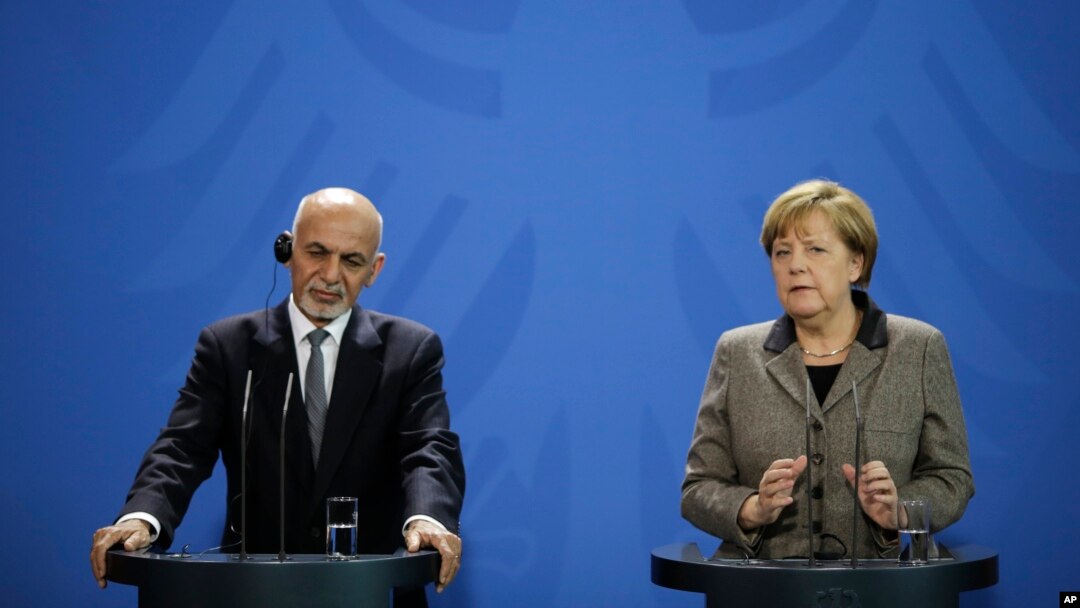
Joint Press Conference with Chancellor Angela Merkel – Berlin Germany
Keypoints:
- Resolute Support Mission: Recognized Germany’s leadership in regional security.
- Migration Challenge: Highlighted push and pull factors driving Afghan migration.
- Criminalized Economy: Human trafficking and smuggling worsen migration risks.
- Economic Opportunity: Afghanistan is rich in resources but needs jobs.
- Civil Society Partnership: Praised German civil society’s support in northern Afghanistan.
- Security Cooperation: Afghan forces defend the country; German support is vital.
- Legal Migration Framework: Emphasized due process and international conventions.
- Century of Friendship: Celebrated 100 years of Afghan-German relations.
- Human Capital Development: German-trained professionals contribute to Afghanistan’s growth.
- Trip Objectives: Affirm Germany’s leadership and global commitment to Afghanistan.
- Bilateral Agreements: Addressed criminal economy, migration, and regional stability
Opening Remarks
Chancellor Angela Merkel: [The Chancellor delivered opening remarks in German, welcoming the President and outlining the agenda for bilateral cooperation.]
President Mohammad Ashraf Ghani: Madam Chancellor, it is a rare pleasure to see you again. Let me first pay tribute to the fifty-six German soldiers who paid the ultimate sacrifice in standing with us. The highest tribute to these fallen heroes would be a stable and prosperous Afghanistan—one that is a responsible stakeholder in the international community and can fulfill the rights and obligations incumbent upon us.
I would like to thank you for your leadership regarding the continuation and expansion of the Resolute Support Mission. Your leadership has been vital; on behalf of the Afghan government and state, I offer a very special thank you. You have made not just a German contribution, but a European and global one. Your grasp of the threat of terrorism and the need for a multidimensional approach—one that makes people stakeholders in an accountable system of governance—is extraordinarily important. I look forward to continuing this dialogue and would be delighted to use video conferences to brief you and exchange information systematically.
The Challenge of Migration
On the issue of migration, we have discussed both "push" and "pull" factors. Push factors result from insecurity and poverty, but also from a criminalized economy of migration. This is the same criminalized economy that drives the trafficking of narcotics and antiquities, and it has now unfortunately focused on human trafficking.
It is a horrible and costly process. Every Afghan attempting to move to Europe invests between $20,000 and $25,000. For everyone who succeeds in reaching European shores, four to ten people lose everything along the way. We must provide the right information to ensure everyone understands that "the streets are not paved with gold."
Simultaneously, we discussed how to create enduring jobs in Afghanistan. Our tragedy is that we are a very rich country inhabited by very poor people. Our mineral resources, water resources, and strategic location provide every possibility to become a significant player. We are focused on ensuring our people live decent, dignified, and secure lives. In this regard, multidimensional German support—from security to vocational training—is essential.
Civil Society and Regional Partnership
I would also like to thank German civil society for its distinctive and comprehensive contribution. Your commitment to the northern areas sends an enormously positive message, particularly to the people of Kunduz. When I was there last Thursday, they sent their greetings and asked for continued engagement. This assures them of an enduring partnership and that Germany stands ready to stand shoulder to shoulder with us in supporting our security.
While the German people should know that no German soldiers will be involved in direct combat—as the Afghan security forces are willing and able to defend our country—this support remains vital. Dealing with legal migration is a joint responsibility, and managing the impacts of illegal migration requires a proper framework. I look forward to the upcoming visits from your Ministers of Interior and Development to address these issues comprehensively.
A Century of Friendship
Lastly, I thank you for marking the 100th anniversary of Afghan-German friendship. For me, this is personal. My grandfather was the Minister-Counselor who established the first Afghan embassy in Germany. Minister Steinmeier recently brought me two letters and agreements signed by him; that tradition continues.
Since the early 1920s, Germany has been a major contributor to the formation of Afghan human capital. German-trained engineers, doctors, and educators led our development efforts for decades. Furthermore, Afghans who came to Germany in the 1980s and 90s have done extraordinarily well. We are now the beneficiaries as these top professionals return to Afghanistan to help. I look forward to strengthening this relationship further.
Question and Answer Session
Journalist: Mr. President, what is your clear message regarding whether to grant asylum to Afghan refugees in Germany or return them? And Madam Chancellor, what is your government’s decision, considering that many Afghans have sold everything they own to come to Europe?
President Ghani: German assistance is directed toward creating a stable Afghanistan for thirty million people, not just thirty thousand. We are asking for continued support for a stable state and peaceful work opportunities. Regarding migration, both Germany and Afghanistan operate within legal frameworks. There is a due process. German laws are clear, and the international conventions to which Afghanistan is a signatory are equally clear. Each side will follow its legally defined pathway to ensure due process is observed and people have dignified lives.
Chancellor Merkel: [The Chancellor responded in German, emphasizing the need to distinguish between those in need of protection from war and those coming for economic reasons, while pledging continued development aid.]
Journalist (Shakila Ibrahimkhail): Mr. President, what are your expectations from this trip? And Chancellor Merkel, what are the new commitments to Afghanistan?
President Ghani: I came here primarily to say "thank you" for a century of friendship and specifically for the leadership Germany has shown since 2011. Seeking affirmation of Germany’s role in articulating a global commitment to Afghanistan was a priority, and that has been achieved. The recent NATO summit announcements in Brussels represent an extraordinary vote of confidence.
Bilaterally, Germany has reaffirmed and focused its commitment to the well-being of the Afghan people. We have also agreed to deal with the global criminal economy—from drugs to human trafficking—in a comprehensive way. My expectations for this trip have been fully met.