Episode 7: Drought
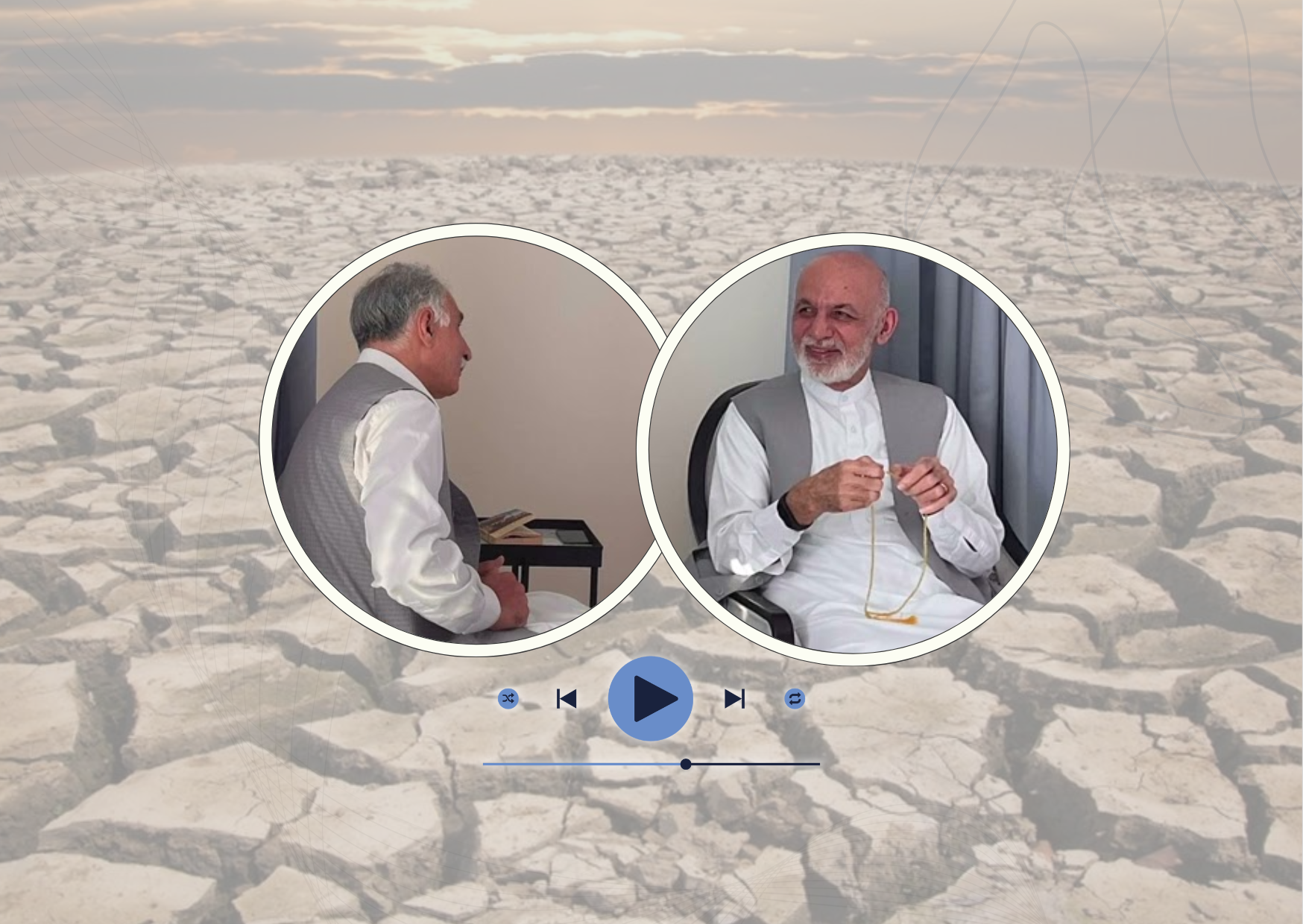
This episode examines the critical and recurring threat of drought in Afghanistan. Following a winter of record-low snowfall and rising temperatures, the discussion moves beyond weather patterns to analyze drought as a fundamental challenge to national stability and economic survival. The conversation frames water management not just as a technical necessity, but as a core requirement for political legitimacy and state effectiveness. Key Discussion Points: Defining the Crisis: An exploration of the three dimensions of drought: the lack of precipitation, the depletion of surface water (rivers and springs), and the critical loss of moisture within the soil, which leads to the alarming drop in groundwater levels across major cities. Historical Impact and Legitimacy: A review of how major droughts have historically challenged the stability of governance in the region, emphasizing the urgent need for a shift from "emergency management" to long-term institutional planning. The Vulnerability of Agriculture and Livestock: A deep dive into the risks faced by the foundational pillars of the economy. The discussion highlights the devastating loss of rural assets, market volatility, and the erosion of food security during dry cycles. Strategic Trade and Food Security: The importance of "land-linked" trade corridors. It details how diversifying trade routes toward Central Asia (such as Kazakhstan and Uzbekistan) serves as a deliberate strategy to ensure a steady supply of grain and commodities when traditional borders are closed. Water Management as a National Asset: A case for the management of every drop of water. This includes the strategic importance of large-scale dams, modern irrigation networks, and community-led check dams to transform the country into a regional hub for agricultural production. The Global and Regional Dimension: Addressing the "sovereignty threat" posed by environmental degradation, including the illegal smuggling of timber and the lack of regional cooperation. The episode argues for a regional approach to climate adaptation to protect shared resources. Summary: This episode provides a comprehensive analysis of the "State Effectiveness" framework applied to climate change. It argues that while traditional and cultural responses to drought are significant, the primary responsibility of a functioning administration is to apply science, modern technology, and regional diplomacy to protect the livelihoods of the most vulnerable—the farmers, herders, and rural citizens who form the heart of the nation.
Transcript
<p data-path-to-node="5">I welcome all listeners and enthusiasts to this series. I am Daud Junbish. We begin this episode by greeting our guest. Dr. Ghani, welcome.</p>
<p data-path-to-node="6"><strong data-path-to-node="6" data-index-in-node="0">Dr. Ghani:</strong> In the name of Allah, the Most Merciful, the Most Compassionate. Thank you, and my greetings to all our compatriots—my sisters and brothers within Afghanistan and across the globe.</p>
<p data-path-to-node="7"><strong data-path-to-node="7" data-index-in-node="0">Daud Junbish:</strong> Thank you, Professor. In our last episode, we touched upon the generalities of the economy. We promised then to explore its various dimensions gradually. Today, we analyze the issue of drought. It impacts the economy, damages the environment, and affects health, rural life, and urban centers. Humanity has faced this repeatedly throughout history. In religious texts, there are specific references. Before we get to the scientific justification, what is the religious perspective on this?</p>
<p data-path-to-node="8"><strong data-path-to-node="8" data-index-in-node="0">Dr. Ghani:</strong> In our noble religion of Islam, the most significant Surah addressing the issue of drought with precision and comprehensiveness is the story of Prophet Joseph (PBUH). God granted Joseph the capacity to interpret signs. While imprisoned in Egypt, the King dreamt of seven fat cows being devoured by seven lean ones, and seven green ears of grain withering away.</p>
<p data-path-to-node="9">Joseph’s interpretation was a strategic forecast: seven years of abundance followed by seven years of severe drought. He took action; the land of Egypt was managed through a proactive "Transition Compact." People from all neighboring regions came to Egypt for grain. There are several lessons here: First, God sends signs and grants humanity the cognitive capacity to interpret them. Second, political legitimacy is tied to the management of crisis. The welfare of the people is the basis of governance. Therefore, drought management has been a core function of the state for centuries. We have seen great civilizations—including the great civilization of Sistan—collapse due to drought. The same happened in Iraq and elsewhere. Anyone who claims the mantle of service or governance must understand that drought management is an essential part of consolidating legitimacy. It is a divine mandate.</p>
<p data-path-to-node="10"><strong data-path-to-node="10" data-index-in-node="0">Daud Junbish:</strong> When we say "drought," is it merely the absence or scarcity of rain, or are there other categories involved?</p>
<p data-path-to-node="11"><strong data-path-to-node="11" data-index-in-node="0">Dr. Ghani:</strong> There are at least three major definitions. The first, and most common, is <strong data-path-to-node="11" data-index-in-node="86">meteorological</strong>: the quantity of precipitation. The second is <strong data-path-to-node="11" data-index-in-node="147">hydrological</strong>: the availability of water in rivers, springs, and <em data-path-to-node="11" data-index-in-node="211">karizes</em>, and its flow-speed across different seasons. The third, which receives less attention but has a direct impact on lives, is <strong data-path-to-node="11" data-index-in-node="343">soil moisture</strong> and groundwater levels. A primary indicator of this third category is the depth of wells. In my childhood in Kabul, water was found at four to five meters. Today, you must drill to 60 meters. Every major city in Afghanistan faces this fundamental problem. For our compatriots who have completed autumn sowing, the amount of moisture in the soil is the key variable for their survival.</p>
<p data-path-to-node="12"><strong data-path-to-node="12" data-index-in-node="0">Daud Junbish:</strong> Professor, I am not sure when official records of drought began in our country, though they exist in legends. I remember the severe drought of the 1970s. I have a document—my ID card from the monarchy era—which notes: "Eight seers of wheat were provided." At that time, wheat was distributed to families. I don’t recall the event itself, but it’s in the record. There are stories from the time of Amir Sher Ali Khan. In this last century and a half, how has the "graph" of drought trended?</p>
<p data-path-to-node="13"><strong data-path-to-node="13" data-index-in-node="0">Dr. Ghani:</strong> We must distinguish between different scales of drought. First, the Great Drought of 1871 during the reign of Amir Sher Ali Khan. It devastated Persia (Iran) and Northern/Western Afghanistan. In Iran, nearly two million people perished. In Northern Afghanistan, entire villages were depopulated. The effects were long-term because while the land and water remained, the human capital was gone. Afghanistan faced a severe population crisis, which later triggered migrations from Kohistan and Kabul to the north.</p>
<p data-path-to-node="14">The second major drought occurred in the final two years of the Monarchy (1971-72), which you mentioned. Under Prime Minister Musa Shafiq, Afghanistan sought international assistance. Despite the war between India and Pakistan at the time, wheat arrived. However, the crisis was so severe in Nimroz and Farah that families were forced to sell their children. This led to a crisis of legitimacy that served as a primary driver for Daud Khan’s coup.</p>
<p data-path-to-node="15">The third was during the first Taliban era. It didn't rain for years. I remember when I first returned to my village under the Bonn Process; I greeted about 100 relatives in Logar. They were all skin and bones. Kabul was black; the earth was scorched. In the ten provinces I visited rapidly, the "knife had reached the bone" for the people.</p>
<p data-path-to-node="16">Unfortunately, we have seen recurring cycles in 2000, 2006, 2008, 2011, and so on. The difference is the frequency. Professor Hamidullah Amin wrote a book during Daud Khan's era stating that a major drought occurs in Afghanistan every 100 years, with medium droughts every 22 years. That calculus has changed. The interval has shortened. We are now in a state of permanent climate risk.</p>
<p data-path-to-node="17"><strong data-path-to-node="17" data-index-in-node="0">Daud Junbish:</strong> Globally, scientists believe that since record-keeping began, 2023 was the hottest year on record. Our listeners remember the devastating forest fires in Europe, America, and even our own forests. The prediction is that temperatures will continue to rise, leading to drought, fires, and destructive floods. What are the global implications?</p>
<p data-path-to-node="18"><strong data-path-to-node="18" data-index-in-node="0">Dr. Ghani:</strong> The trajectory is clear. Despite our scientific understanding, major powers—specifically the US, Europe, India, and China—lack the collective political will to take the radical actions necessary to halt global warming. We are not just living on a continent of land; we live on a "continent of water." If ocean temperatures rise even slightly, it endangers all of humanity. Glaciers are melting. Major coastal cities will be submerged. In South Asia, dozens of cities will vanish due to drought. This is a global "sovereignty threat" that requires a global "Double Compact." The goal of limiting warming to 1.5°C is currently out of reach because geopolitical tensions have eroded the possibility of cooperation. Afghanistan is at the "ground zero" of this risk.</p>
<p data-path-to-node="19"><strong data-path-to-node="19" data-index-in-node="0">Daud Junbish:</strong> Exactly. In developed countries like the UK, they impose restrictions—banning hosepipes for cars or gardens—to manage water. If wheat fails, they have the financial reserves to import. Countries like Afghanistan suffer most. Which regions and which citizens will be hit hardest if this crisis continues?</p>
<p data-path-to-node="20"><strong data-path-to-node="20" data-index-in-node="0">Dr. Ghani:</strong> Geographically, the maximum pressure is currently on the Northeast (Badakhshan), the northern provinces, and the West (Badghis, Herat, Farah). We must look at the snowfall. According to UN aerial surveys, there is almost no snow in the Salang or Badakhshan. This is a catastrophe for our hydrological flow. The hardest-hit will be those reliant on <em data-path-to-node="20" data-index-in-node="359">Lalmi</em> (rain-fed) farming. If rain-fed crops fail, our imports must increase. This makes our relationship with Kazakhstan—our primary wheat supplier—of paramount strategic importance.</p>
<p data-path-to-node="21"><strong data-path-to-node="21" data-index-in-node="0">Daud Junbish:</strong> This brings us to a critical question. Given the changing climate, is it time for Afghans to reconsider their agricultural model? Should we stop trying to be self-sufficient in wheat and instead grow high-value, low-water crops and import our grain?</p>
<p data-path-to-node="22"><strong data-path-to-node="22" data-index-in-node="0">Dr. Ghani:</strong> You have reached the core of the issue. We must understand the value of every drop of water and every inch of soil. First, we lack the "knowledge system." In developed countries, a farmer is a "knowledge worker" who uses technology and data. Our agriculture was devastated by decades of conflict, and we alienated the new generation from the land.</p>
<p data-path-to-node="23">Regarding wheat, we cannot simply stop growing it without a "Regional Integration" strategy. We need 10-to-20-year long-term contracts with Kazakhstan. No one can compete with Kazakhstan in wheat production. In exchange, Kazakhstan needs our vegetables and fruits. But this requires stability, sophisticated transit systems, and "Market-Building." We need a national stance. While prayer (<em data-path-to-node="23" data-index-in-node="389">Istisqa</em>) is necessary as we are all needy before God, the story of Joseph teaches us that humanity is responsible for taking scientific and administrative action.</p>
<p data-path-to-node="24"><strong data-path-to-node="24" data-index-in-node="0">Daud Junbish:</strong> You mentioned Kazakhstan. When you opened the "Northern Corridor," was this a conscious move to ensure food security?</p>
<p data-path-to-node="25"><strong data-path-to-node="25" data-index-in-node="0">Dr. Ghani:</strong> Absolutely. Every time Pakistan felt it necessary, for whatever reason, they would close Torkham or Spin Boldak. When I became President, I saw that we had effectively "imprisoned" our food security by relying on a single route. We reached a strategic understanding with the leaders and specialists in Kazakhstan. Within two years, Kazakh wheat was competing with and undercutting Pakistani wheat across Afghanistan.</p>
<p data-path-to-node="26">During COVID-19, Pakistan closed its borders again. But Kazakhstan, Uzbekistan, and Turkmenistan never did. Opening the Northern Corridor was a deliberate act of "Sovereignty." It wasn't about enmity with Pakistan; it was about showing that our hands were no longer tied. We also opened the Western Corridor—from Nimroz to Chabahar to Mumbai—allowing 100,000 tons of wheat from India to reach us directly. Afghanistan is the "Heart of Asia"; it must be linked in every direction. When I inaugurated the Kamal Khan Dam, I said that Nimroz and Farah would not just be Afghanistan's granary, but Iran's as well. We have the capacity to provide for the region, provided there is a framework of mutual benefit.</p>
<p data-path-to-node="27"><strong data-path-to-node="27" data-index-in-node="0">Daud Junbish:</strong> During COVID, how were prices controlled when borders were closing? What were the lessons for future droughts?</p>
<p data-path-to-node="28"><strong data-path-to-node="28" data-index-in-node="0">Dr. Ghani:</strong> You must distinguish between <strong data-path-to-node="28" data-index-in-node="40">emergency measures</strong> and <strong data-path-to-node="28" data-index-in-node="63">institutional building</strong>. In the short term, when thousands were returning from Iran, rumors spread that food would run out. Prices spiked for two days. I immediately addressed the nation, showing that we had sufficient wheat reserves. We coordinated with the private sector—importers and retailers alike. We provided bread through bakeries in Kabul and other cities. I reallocated the entire national budget and foreign aid to create a "Social Protection" package for 90% of the population.</p>
<p data-path-to-node="29">The long-term lesson is <strong data-path-to-node="29" data-index-in-node="24">Digitalization</strong>. Our plan was to distribute five million electronic IDs and move all payments to a digital system by September 2021. This would have eliminated the "informality" that leads to price gouging.</p>
<p data-path-to-node="30"><strong data-path-to-node="30" data-index-in-node="0">Daud Junbish:</strong> Drought is like an extreme—months of dryness followed by a sudden flash flood. Controlling these floodwaters must be a priority. I saw a video from Uruzgan where people were building "Check Dams" to catch water. How important is this?</p>
<p data-path-to-node="31"><strong data-path-to-node="31" data-index-in-node="0">Dr. Ghani:</strong> It is vital. Investment in water—specifically check dams—yields a 1,400% return, compared to just 100% for electricity. Under the "Citizens' Charter," we built hundreds of these. In many provinces, we have six months of drought followed by six months of floods. Managing this cycle is existential. The "scientific" and the "communal" must work together. We often waste water on low-value crops. The people of Uruzgan understand that water is our dignity and our life. But check dams alone aren't enough. They must be part of a "National Water Grid." We must treat our water as a regional asset, not as a source of propaganda for neighbors who claim we have no rights to it. Our rights are grounded in Sharia and international law, and we stand firm on them.</p>
<p data-path-to-node="32"><strong data-path-to-node="32" data-index-in-node="0">Daud Junbish:</strong> Finally, the livestock sector. During the first Taliban era, livestock in the north was almost wiped out. This affects our protein security. What is the outlook?</p>
<p data-path-to-node="33"><strong data-path-to-node="33" data-index-in-node="0">Dr. Ghani:</strong> During that era, 70% to 80% of Afghanistan's livestock was lost due to drought and displacement. You cannot simply import livestock; if they aren't adapted to the local environment, they die. Livestock is a "Value Chain." In the 19th century, Maimana alone had a million sheep. Our Konar cattle were legendary.</p>
<p data-path-to-node="34">Today, the price of livestock is falling—that is a "danger signal." It means farmers are selling their assets because they cannot afford to feed them. Our pastures—like the Lake Shiwa area in Badakhshan—are worth billions. We need modern transport so cattle don't lose weight walking to market. We need a "Triple Compact" between nomads (<em data-path-to-node="34" data-index-in-node="338">Kouchis</em>), settled farmers, and urban markets. If we don't manage the value chain, our raw wool will continue to go to Pakistan only to be sold back to us as expensive carpets.</p>
<p data-path-to-node="35"><strong data-path-to-node="35" data-index-in-node="0">Daud Junbish:</strong> Is the struggle against drought a global one, or is our region ready to cooperate?</p>
<p data-path-to-node="36"><strong data-path-to-node="36" data-index-in-node="0">Dr. Ghani:</strong> There are both positive and negative signals. The COP28 summit in Dubai created new funds and initiatives. But in South Asia, the environment is being used as a pawn in political games. Look at the "killing" of our forests. While Pakistan plants a "Billion Trees," their smuggling networks collaborate to strip Afghanistan of its timber.</p>
<p data-path-to-node="37">Regional competition has blocked environmental cooperation. But without joint management, we cannot maintain stable relations with any neighbor. We must also train a new generation of specialists. In the Netherlands, they design dams based on 1,000-year data cycles. We can no longer rely on old assumptions.</p>
<p data-path-to-node="38">Ultimately, we face a choice. If we believe that escaping drought and poverty requires <strong data-path-to-node="38" data-index-in-node="87">National, Regional, and International Legitimacy</strong>, we must ask: How is that legitimacy achieved? Does the citizen have a voice in their rights, or is governance the preserve of a minority? The responsibility for the consequences of that choice must be clearly accepted.</p>
<p data-path-to-node="39"><strong data-path-to-node="39" data-index-in-node="0">Daud Junbish:</strong> Thank you, Professor. President Ashraf Ghani, thank you for joining us. And thank you to our listeners. We conclude this program here.</p>
<p data-path-to-node="40"><strong data-path-to-node="40" data-index-in-node="0">Dr. Ghani:</strong> Thank you. Long live Afghanistan</p>