Afghanistan’s Strategic Partnerships: TAPI, Food Security, and Regional Prosperity
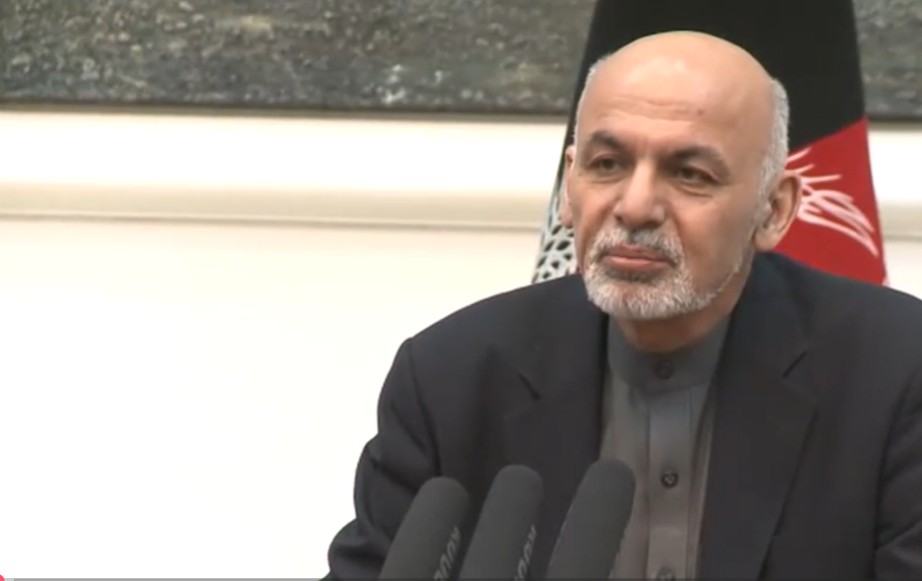
Post-Turkmenistan Visit Press Conference on Food Security and the TAPI Pipeline - ARG Kabul
- Regional Partnerships: Deepen cooperation with Turkmenistan and neighbors.
- Food Security: Achieve self-sufficiency in wheat within four years.
- TAPI Pipeline: Launch gas pipeline linking Turkmenistan, Afghanistan, Pakistan, and India.
- Economic Connectivity: Expand energy, fiber optics, electricity, railways, and roads.
- Jobs & Training: Prepare youth in transit provinces for technical work.
- Security: Protect critical projects, especially TAPI.
- Peace & Cooperation: Use projects to foster stability and reduce conflicts.
Dear journalists, esteemed compatriots, brothers and sisters, honorable members of the Cabinet, advisors, and Governors: Peace be upon you all, and the mercy and blessings of Allah.
The subject of today’s briefing is our two-day visit to Turkmenistan. Our relations with Turkmenistan are growing deeper and more extensive by the day. As two cooperating and brotherly nations with a shared vision for economic development, we are demonstrating to the region how the results of economic cooperation can be positive for both states, their governments, and especially for our people.
I wish to emphasize two primary points today:
1. The National Table (Food Security)
As you are aware, Afghanistan has unfortunately not yet reached self-sufficiency in the production of wheat and flour. We have a fundamental plan—which I will discuss in detail another day—to ensure that within four years, God willing, we not only become self-reliant but return to being an exporter.
However, the news I want to share today is that previously, the price of one ton of wheat imported from various neighbors was around $350. We held fundamental discussions with Turkmenistan regarding wheat. I want to express my gratitude to the Ministers of Finance and Agriculture, as well as Dr. Qayoumi, Dr. Saba, and Mr. Osmani, who conducted the initial negotiations. The result is that we will receive at least 200,000 tons of wheat at a price of less than $250 per ton. We are also in negotiations with Kazakhstan to import another 600,000 tons of wheat. There will be a significant improvement in the quality of this wheat, and I hope this serves as pleasant news for every Afghan family this winter.
2. The TAPI Project
The second subject I want to share—which is a matter of national attention and great pride for us all—is the TAPI project. TAPI stands for the Turkmenistan-Afghanistan-Pakistan-India pipeline. For years, this project was under discussion. Most people had lost hope. External observers constantly commented that this was a "phantom project" that would never be realized.
Yesterday, by the grace of Allah, this project moved from paper to reality. The foundation stone was laid in the city of Mary, Turkmenistan—known historically as Marv-e-Shahijan, once a major Islamic center. Marv is where the Caliph Al-Ma'mun began the century-long translation project at the House of Wisdom (Bayt al-Hikma) in Baghdad. It was there that our brave Herati, Tahir Phoushanji, defeated the Caliph’s brother, Amin. Such is the historical importance of Marv. Today, under the leadership of my dear brother, President Berdimuhamedow, Marv is becoming a major energy and industrial hub.
Reaching this stage was not easy; we moved through difficult phases. A year ago, most people had lost faith. I want to specifically thank Mr. Hakimi, Mr. Qayoumi, Mr. Saba, Mr. Osmani, and Mr. Kargar for conducting comprehensive and vital negotiations. Afghanistan’s fundamental interests have been secured.
Why is this project significant?
-
First: For the first time, one of our neighbors is placing billions of dollars of its own money on the table for the future stability of Afghanistan. This is not "external" aid money; the government of Turkmenistan decided to fund this project from its own revenues.
-
Second: It revives the "New Silk Road." For nearly 3,000 years, Afghanistan was the heart of the Silk Road because we are the shortest link to Central Asia. Today, gas is the foundation of life. This creates mutual interdependence. When our lives are linked through economic cooperation, it prevents the old colonial tactics of dividing Central and South Asia to maintain dominance.
Beyond Gas: Fiber Optics and Electricity At the suggestion of Dr. Qayoumi, President Berdimuhamedow immediately agreed to run a Fiber Optic network alongside the pipeline. This will connect India to Europe via land through our territory. Furthermore, we signed an agreement to transit electricity from Turkmenistan to Pakistan through Herat, Farah, Helmand, and Kandahar. Eventually, these "Olympic rings" of connectivity will create a massive corridor of railways, roads, and airports.
Economic Impact and Security
This 730km stretch through Afghanistan will cost an estimated $8 billion. Nearly half of that will be spent within Afghanistan, Pakistan, and India. We secured an equal 5% stake in the project, with the Asian Development Bank covering 3% of our share. This means we only pay 2% while reaping maximum benefits.
This project will provide work for our small and medium-sized businesses. I am calling on the Ministers of Education, Higher Education, and Labor to prepare our youth—especially in the four transit provinces—for technical training in Turkmenistan so they can manage these stations in the future. We expect $400 million in annual direct revenue.
Our national challenge is security. We will not look back. The government will take comprehensive measures, including training special forces, to secure this project. But my call is to the whole nation: this is for the prosperity of future generations. Afghanistan is the center of gravity between the energy producers of Central Asia and the energy consumers of South Asia. Our geography is our greatest asset.
Questions and Answers
Journalist: There is a mentality that India and Pakistan are fighting a proxy war here. Since both are involved in TAPI, will they create insecurity to sabotage the project?
President Ghani: First, let us remove the idea from our minds that we are a field for anyone’s proxy war. As long as you journalists keep saying we are a "battlefield," you are accepting it. We are a field for cooperation. Pakistan currently has a gas shortage; 60% of their needs will be met by this project. We must prove that Afghanistan has the vision and the action to bring people together.
Journalist: What about Iran? They are a competitor. Also, the trash in Kabul city is blocking the roads—can you do something about that?
President Ghani: Thank you for the suggestion regarding Kabul. I have already asked the Army for help. Give me two weeks to finish a few big tasks, and then I will come out with you as a fellow citizen and we will use every resource to clean Kabul.
Regarding Iran: TAPI is not a threat to anyone. Iran is developing its own projects and will become a positive regional player once sanctions are lifted. Our biggest enemy is poverty. Let us join hands to defeat it.
Journalist: When will the "shovel and pick" hit the ground in Afghanistan? And how will this help peace with Pakistan?
President Ghani: Studies are complete. I prefer to perform the work first, then inform you. Every step in regional cooperation reinforces peace. Fourteen years ago, when I was Finance Minister, I started the geological survey. International partners said Afghanistan had nothing but stones. We proved them wrong. We have resources worth trillions and the capacity to produce 316,000 megawatts of power.
Journalist (Radio Azadi): We have documents that Sartaj Aziz gave a letter demanding Afghanistan stop "propaganda," recognize the Durand Line, and remove certain NDS officials. Is this true?
President Ghani: Your rumors never end! The Durand Line is not my choice to make; it belongs to the people of Afghanistan. Our discussions are about shared security. Appointments in the Afghan security forces are made according to the Afghan Constitution. No neighbor has the right to interfere.
The Afghan media is free. Media freedom is our red line. No government in the 21st century can dictate public opinion. Ashraf Ghani is just one man; if no one can dictate to me, they cannot dictate to thirty million Afghans. We must change this atmosphere. A massive war is also raging in Pakistan. Blood is flowing on both sides. We must stop this blood. These terrorist organizations are a threat to both countries and the world.
Thank you.