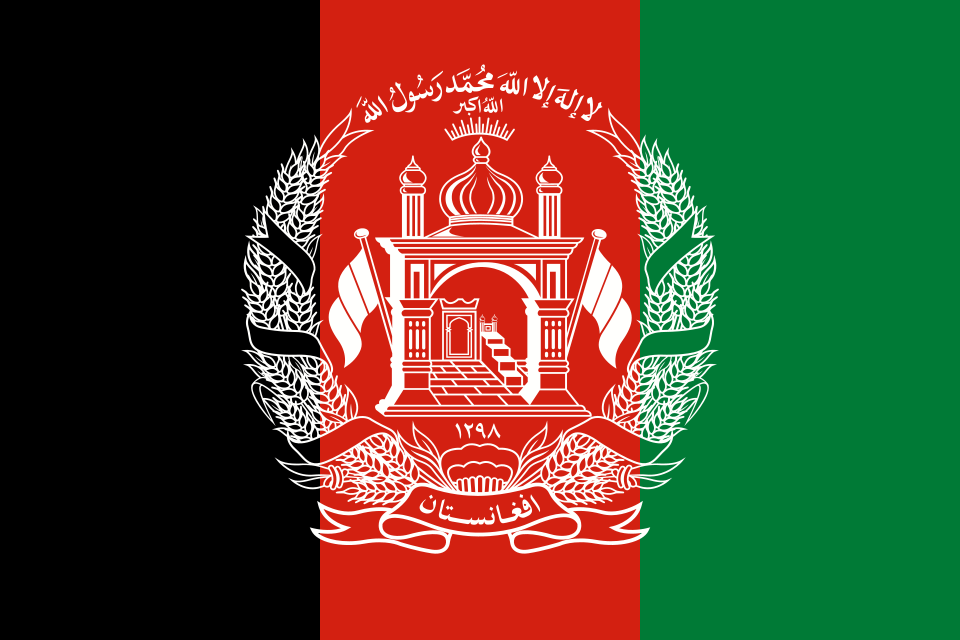
A Century of Solidarity: Renewing the Afghan-Italian Partnership for a New Era
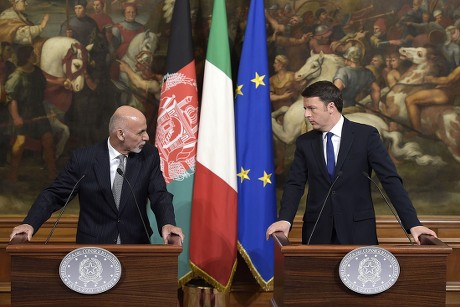
(Joint Press Conference with Prime Minister Matteo Renzi of Italy )
Keypoints:
- Sacrifice: Honoring the 54 fallen Italian soldiers and the "Emergency Hospital" in Kabul.
- Justice: Reforming the judiciary through the transfer of 34 judges to uphold the Rule of Law.
- Empowerment: Advancing women from secret "sewing circles" to university and government leadership.
- Security: Defeating "theatrical violence" through a shared global front against terrorism.
- Economy: Recovering $450 million in stolen bank assets and inviting Italian mineral investment.
- Identity: Reclaiming the true image of Islam as a civilization of science and open borders.
- Hope: Using sports and culture to replace narratives of despair with a vision of normalcy.
Location: Villa Madama, Rome, Italy
Part I: Remarks by Prime Minister Matteo Renzi
PM Renzi: [Music] Good evening to everyone. This is a very precious occasion for me to give a warm welcome to President Ashraf Ghani to Rome—to my dear friend, President Ghani. Today marks his first visit to our country and capital as the President of the Islamic Republic of Afghanistan.
We previously had the opportunity to meet on June 1st—six months ago—in Herat. He was very gracious then to come and greet us, and together we paid tribute to the 54 Italians who lost their lives in Afghanistan. To all of them goes our sentiment of gratitude and closeness. The Homeland is attentive and close to the pain of these families and the pain of the Afghan people, for whom we continue to nurture an extraordinary friendship.
The Afghan people have suffered many difficulties over the last decades, and President Ghani is leading them with courageous leadership. He is tackling domestic issues—important reforms against corruption, the valuation of the role of women, the enhancement of education, and the fight against inequality—but also on the external plane, with the important role Afghanistan must play in the global fight against terrorism.
If there are so many girls and boys going to school today in Afghanistan, we owe it to the leadership of President Ghani and the efforts of international cooperation, including Italian cooperation. I want Italians to be grateful for this effort—a cooperation effort involving hospitals, schools, agriculture, and roads. We have spoken today of railways and renewable energy; everything that serves to help this country, so rich in history and beauty, return to life in peace and prosperity.
Naturally, the threat we know is a heavy, terrorist threat of great impact. With President Ghani, we discussed the situation in Afghanistan and the entire region. We shared a very serious judgment on the necessity of a "counter-narrative." History books will study extremism not just as a global phenomenon, but perhaps as one of the first global communication initiatives played with great skill. However, they will not win. The terrorists will not win because the beauty, culture, and system of values we represent—which we want to defend together with President Ghani—is a system stronger than barbarity. This system of values is stronger than ignorance.
Italy, with great determination and courage—and let me thank the Italian women and men working there, particularly those who shown our partnership in various regions and today specifically in the region of Herat—will remain engaged for 2016 alongside the United States and the international coalition. We will work hand-in-hand with our Afghan brothers to fight terrorism and ensure the children and women of this country a life that marks a point against desolation and resignation.
Finally, the response to international terrorism must have multiple levels: the diplomatic level (efforts for Syria, Libya, Afghanistan, Somalia); and the cultural level. I have said that for every Euro invested in security, one Euro must be invested in culture. For every cent put toward the police, a cent must be put toward the school. It is not a slogan; it is an Italian specificity that I hope our partners will accept as a model. At the same time, we do not underestimate our military commitment in Iraq, Lebanon, and Afghanistan. I reiterate my personal friendship and the friendship of the Italian people. We are rooting for this country to finally know a season of peace. Welcome, Mr. President.
Part II: Remarks by President Mohammad Ashraf Ghani
President Ghani: Mr. Prime Minister, my dear friend. My remarks will focus on three key areas: Gratitude, Threats, and Hope.
First, I want to pay tribute to the 54 Italians who made the ultimate sacrifice. Their deeds are not only etched on a memorial pillar in Herat; they are etched in our hearts and will be etched in the pages of our history. You and I, we have both had the somber mission of standing and honoring the fallen. I ask you to be the messenger of a grateful nation and convey our condolences and thanks to their families. We will respect them by recording their stories. Their actions will ensure that Afghanistan becomes a zone of stability and prosperity that we can all be proud of.
Let me also thank Italian civil society. In Kabul, there is a facility known as the "Emergency Hospital." Whenever a bomb explodes or a suicide attacker strikes, one of the first doors for people to go to is that Italian hospital. This hospital was founded by the generosity of Italians from all over your country. There is no greater love than to love a stranger. Many Afghans—children, women, and the elderly—bear the mark of this kindness on their bodies and in their lives. We have the deepest respect for Italian civil society, supported by your government.
Second, a question is often asked: Does the presence of Italian forces make a difference? I want to thank you for Italy’s contribution to NATO’s ISAF mission, and specifically the Resolute Support Mission during 2015. Herat is one of the most secure areas of Afghanistan and is becoming a center of development. The Italian forces do not fight, but they give us the capacity to fight. Our forces have shown we can defend our country, but Italian support has been essential. On behalf of tens of thousands of families in Herat and the Western region, I thank the Italian forces for being a catalyst for security and stability.
Mr. Prime Minister, I hope the Italian Parliament will tomorrow extend the mandate of the Italian forces within Resolute Support. This will signal that we do not surrender to imposed threats, but rather support a mission based on values: empowerment, accountability, and democratic values.
In this regard, I also thank you on behalf of the Supreme Court of Afghanistan. The Chief Justice is a remarkable reformer. Last Thursday, he responded to the aspirations of the Afghan people by transferring 34 provincial appeals court judges. This is the start of a very serious reform in the judicial sector. We again thank Italy for being a lead nation in the reform of the Rule of Law. Without law, we cannot have stability. Stability will not come from the muzzle of a gun; stability will come from a bond of citizenship between free citizens of a country united in their values with partners across the world.
I would like to thank you on behalf of women whose chances of dying during childbirth have been cut in half. We still have a long and difficult journey ahead. In December 2001, Afghan women were subject to an apartheid where they could not go to school. There is a beautiful book called The Sewing Circles of Herat, describing the places where they had to study in disguise. Now, thousands of women in Herat not only go to schools and universities, they lead; they are members of Parliament, members of elected councils, and our very capable Minister of Labor and Social Affairs—one of four cabinet members—is from there. We focus on the economic self-reliance of women, the poor, and the youth who were marginalized. Italian investment in infrastructure has been a key to this turning point.
Mr. Prime Minister, the Italian-Afghan friendship has entered its 94th year. We established our first relations in 1921. we look forward to the 95th anniversary next year and the centenary thereafter. But our relationship has changed qualitatively since 2001, and especially this past year where I have had the honor of working with you.
Second, regarding Threats: Europe and Afghanistan are no longer two distant locations. We are two regions united by common threats. What is being attacked by terrorist organizations is freedom, the belief in the rule of law, and the freedom of movement. We cannot yield these to them. We must stand against these threats because "theatrical violence" aimed at making news—the slitting of a young girl's throat to dominate a news cycle, the torture of an elderly person—is a new form of the game. They want to disrupt our normalcy and destroy the habits we have acquired over centuries.
We must state clearly: as a Muslim leader elected by the free votes of the Afghan people, I assure you that we leaders of the Islamic world have a responsibility to speak for the true Islam. These barbarians have nothing to do with our sacred religion or our great civilization. Remember the first map of the world by Al-Idrisi in Palermo; that is the true civilization of Islam—one that knows no borders.
Finally, I conclude with a narrative of Hope. I want to assure you and the Italian nation that we in Afghanistan are taking responsibility. We have entered a three-stage transition. 130,000 NATO troops left with dignity, and our own forces have risen to their patriotic duty. We had to fight for survival and we prevailed. We also faced an economic transition—a deep recession bordering on collapse—but we are now in an austerity package to prove our reforms.
We are proud that the Kabul Bank crisis—a sign of state weakness—was addressed. Of the $800 million looted by a tiny minority, we have recovered $450 million and will recover the rest. Afghanistan is an extraordinary country with very poor inhabitants. Our natural wealth and minerals make us a major potential factor. I invite Italian businesses to engage with us.
Europe is at a moment of choice. Does it retreat into a fortress, or does it maintain its open vision? Your insistence that every Euro spent on security must be matched by culture and sports is a vision we welcome. Our people crave normalcy. Our cricket team recently made history. We must use the global media platforms to create stories of connectivity and hope, not despair. Despair can be overcome. It must be overcome. And it will be overcome.
Thank you.