
Transforming Energy and Development for a Sustainable and Secure Future
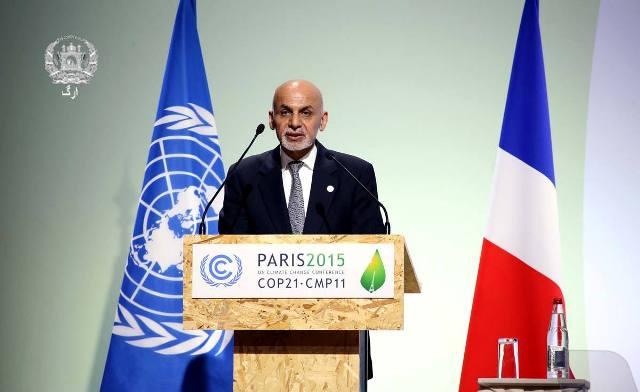
(Speech at the UN Climate Change Conference (COP21 – CMP11), Paris)
Keypoints:
- Solidarity Against Terrorism: Support global resilience and fight against terrorism.
- Islamic Values: Promote tolerance, harmony, and peace in an interconnected world.
- Energy and Environment: Recognize the central role of energy policy in reducing carbon footprints.
- Infrastructure Efficiency: Invest in productive infrastructure to save resources and reduce emissions.
- Innovation in Development: Treat developing countries as hubs of innovation, not for outdated practices.
- Capacity Building and Accountability: Ensure social justice and sustainability through proper frameworks.
- Regional Collaboration: Cooperate across borders to enhance shared environmental and energy outcomes.
- Afghanistan’s Potential: Harness hydro, solar, wind, and transit capacity for regional benefit.
- Urgency and Action: Act decisively to achieve lasting solutions for future generations.
Mr. Chairman, Excellencies, ladies and gentlemen.
A grieving Paris is hosting us to secure the future of the world. Saluting the French resilience and resolve, we stand in solidarity with you. Experiencing the savage practices of Daesh and its associates reflecting their distinctive pathology, morphology and ecology on a daily basis, we, the Muslim people of Afghanistan, feel your pain and are determined to make our country the burial ground of terrorism.
We the people and leaders of the Muslim majority countries speak for Islamic values of tolerance and living in harmony in our inter-connected world; not those visiting destruction upon millions of our people. [Inaudible] The spirit of Paris transformed the emerging consensus on the environment into a binding collective framework and an agreed paradigm to prevent two degrees of global warming and enhanced the resilience of countries vulnerable to environmental threats. Given the thoughtful reflections of others on the subject, I’ll highlight only four issues.
Centrality of energy policy to environment is clear. Yet impact of infrastructure spending estimated at $50-65 trillion until 2030 has not been explored. Focused attention to the productivity of infrastructure can save a trillion dollars a year and help the carbon footprint substantially. As infrastructural investment is critical to the transformation of developing countries, it is essential to treat these countries as frontiers of innovation rather than as places for recycling of old technologies and old practices. Getting capacity building right is therefore essential to social justice and sustainability. Avoiding wasteful past practices on technical assistance requires framework agreements on transparency and mutual accountability.
While national responsibility is crucial to ownership, regional collaboration is a must and requires catalytic mechanisms for demonstration of cooperative advantage. Afghanistan is a country that cannot only have a development path with a positive carbon impact but contribute to the reduction of the carbon footprint in Pakistan, India and all our neighbors. Our energy potential from hydro, solar and wind is estimated at 316,000 megawatts. Additionally, we are the key transit point for transfer of natural gas and electrical power from Central Asia in the Caspian Basin to South Asia, we stand ready to embark on journey of hope against the narrative of despair, of terrorist network. Let us exhilarate the momentum with a true sense of urgency to achieve a breakthrough solution for generations to come.
Thank you.