Building a Professional, Inclusive, and Resilient Afghan Security Force for National Stability
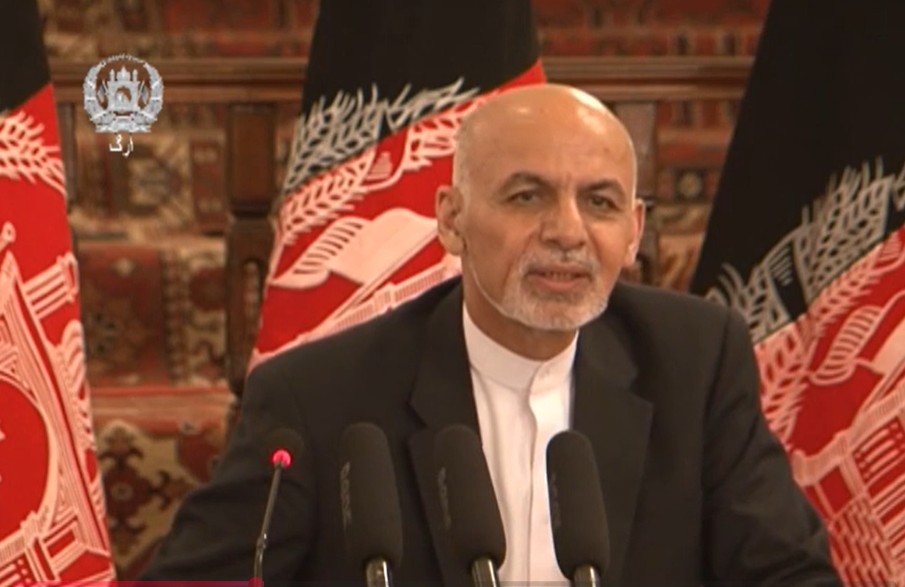
(Address to Cadets of the National Defense University, Police Academy, and National Security Directorate)
Keypoints:
- Honor and Sacrifice: Value the courage and selflessness of security forces.
- Lessons from History: Learn from past hardships to strengthen the nation.
- National Security: Protect Afghanistan, its people, and sovereignty.
- Professionalism: Ensure merit-based, non-political, and inclusive security institutions.
- Civilian Protection: Safeguard lives, rights, and justice for all citizens.
- Support for Families: Care for martyrs’ families, orphans, and widows.
- Regional and Global Cooperation: Work with partners to maintain stability and peace.
- National Unity: Foster trust, solidarity, and cohesion across the country.
- Peace and Dialogue: Pursue reconciliation without compromising sovereignty.
- Training and Development: Prepare skilled, committed new generations of defenders.
- Values and Identity: Uphold Islamic, national, and ethical principles in service to the nation.
In the name of Allah, the Most Gracious, the Most Merciful.
Honorable members of the National Army, National Police, and National Security of our beloved Afghanistan; dear students, sisters, and brothers: Aslam u Alikom...
1. The Military as the Pillar of the State
The security and defense forces are among the fundamental pillars of the country's stability and are the resilient shield and support of the nation against the incidents that threaten the country on a daily basis. Your fellow citizens, like me, feel a sense of security, immunity, and pride when they see you, the youth, in military uniform. Those who have witnessed the difficult days of life in this country are well aware of the value and importance of the selfless soldiers and brave officers of the country’s armed forces and take pride in them.
2. Lessons from Historical Trauma
This awareness is the direct result of the historical experiences of our nation in recent decades. From the voices of thousands of women and men in different parts of our beloved country, I have repeatedly heard bitter memories of uncertainty and living in fear.
-
The Collapse of Values: Those days when our people suffered because of the collapse of the values of the armed forces—who, for the sake of serving an ideology and a regime, targeted their own people and moved away from being "national"—or in the absence and collapse of state structures, especially the army, where people lived under the shadow of irregular gunmen.
-
The Era of Anarchy: In the name of this or that, they were subjected to harassment, beatings, and merciless killings; their belongings were plundered, their cities and vineyards were set on fire, and our honorable Hindu compatriots were forced to wear a specific color of clothing because of their religion, contrary to the teachings of the holy religion of Islam.
-
The Foundation of Shared Pain: Men and women, old and young, elders of the localities and tribes were insulted and beaten in public. These are the bitter and dark days of our people’s history. Those days created shared pains within this nation. This shared pain has woven together every individual of this oppressed and beloved land from the South to the North, from the West to the East, and the highlands of our central regions. This shared pain, I believe, has become the strong foundation of our shared history and the institutions that guard this country.
3. The Scars of Disintegration
Past memories, though bitter, must be remembered so that we may take a lesson from them. Twenty-two years ago, I was traveling by car from Khost to Gardez. I will not tell you about how the road was destroyed, or how the bridges were broken, or that there was no electricity, or that there were no uniformed persons on the roads—but rather undisciplined youths who extorted money from the people by force.
I will tell you another bitter thing. I saw a former officer from the time of the late Daoud Khan. At that time, he was a colonel. I recognized him. He had spread a cloth on the side of the road and was selling the old pots of his house. In that same state, I saw the equipment of Afghanistan’s military divisions in a truck, being taken God-knows-where to be sold. Tanks had been cut into pieces and loaded onto trucks to be transported out of this country. Factories were uprooted and loaded onto trucks to be sent to other countries.
Some ill-fated individuals have the ambition that such days should return to Afghanistan—that its offices and weapons become scrap metal and its people become displaced—but this wish will never be fulfilled, and they will take this wish to their graves.
4. The Symbolism of the New Force
Fifteen years ago, there was no security and defense force in Afghanistan that could represent the entire nation and that all Afghans could call their own. However, now, by the grace and mercy of Allah ﷻ, we have powerful security forces that represent the entire nation and hold the status of a symbol of our unity and cohesion, much like our national flag and national history. Alhamdulillah, they are committed to national and Islamic values, and in every corner of the country, people are happy to see them and consider them the guardians of their lives, property, and honor.
Last Friday, I went to Kunduz. The leaders and elders of this province requested with one voice that more units of the National Army, National Police, and National Security be sent to Kunduz and that operations for the defense of the province continue.
5. The Demand for a System (Nizam)
The question is: Why do the noble people and elders of Kunduz want more security forces within the framework of the country's armed forces to go to that province? Why do we have similar requests from people in other provinces of the country? Wherever I go or whenever I meet people, they say in one voice: "Send us security forces."
-
Tranquility vs. Terror: The main difference between our courageous soldiers and our cowardly enemies lies right here: people feel tranquility () with our army. You saw Kunduz and other places; when the terrorists and enemies went there even for a short time, they caused immense suffering to the people. In less than a week, more than thirteen thousand families were forced to leave their homes in Kunduz. Tajikistan also closed its border for fear of the influx of people.
-
The Conduct of the Soldier: This is the conduct of the terrorists. In contrast, the behavior of our courageous soldiers is such that they deal even with the enemy according to the principles of law, honor, and justice. Their conduct and behavior have been praised by international organizations, including the United Nations, which stated that Afghan soldiers treated the people well.
-
The Return of the Displaced: Now that Kunduz is back in the hands of the Afghan National Army and security forces, in recent days, more than nine thousand families have returned to Kunduz, and this process is ongoing. All displaced families of Kunduz will, Insha’Allah, be resettled as soon as possible, and likewise, through your blessings, the entire nation of Afghanistan will feel secure in this homeland. Borders are created only when there is no agreement and unity in a country. Our home is one, and our home is one Afghanistan.
6. The Blood of Ancestors
This is the difference between us and the enemies of our people. Fighting bravely and passionately for a great goal is our pride; and chivalry and moderation are the nature and character of the "Ayari" (gallant) spirit of our soldiers. For our noble people, and specifically the soldiers and officers of our armed forces, carry the blood and temperament of brave ancestors like Mahmoud Ghaznavi, Abu Muslim Khorasani, Ahmad Shah Baba, and thousands of nameless and famous names of freedom from all ethnicities of this pride-inducing land in their veins and emotions. Heroes whose names others have placed on their weapons to frighten their enemies—but we carry their soul and spirit with us. Ghaznavi and Ghori belong to us.
7. Building from the Ashes: Global Comparisons
Fifteen years ago, we became the inheritors of a country whose every institution had collapsed, and unfortunately, the national flag of this country was not flying in any border post, brigade, or institution. We started from zero, so that from beneath the dust, ashes, and ruins destroyed by war, through the determination of the youth and brave men of this country, we could lay the foundation of the security and defense forces of the country. Forming our armed forces was not an easy task; it required the self-sacrifice and altruism of various political and social groups; it needed the commitment and dedication of the people; and at the same time, it required international trust and confidence so that they would provide Afghanistan with financial, technical, and weaponry assistance.
We are not the only country that needed cooperation.
-
Germany and Japan: When Japan and Germany, as a result of continuous wars, found themselves in need of the help of others, assistance was provided to them; and because they possessed strong institutions, they utilized the opportunities and grounds that arose in the best possible way.
-
The South Korean Model: But South Korea—one of the poorest countries after the World War, which was severely affected by war—was able, with the help of international donors and despite having institutional problems like ours, but with a firm will, to find its place in the front rank of developed and civilized countries of the world in less than three decades. With honor and pride, it not only preserved its independence and sovereignty but also contributed its share with strength and pride to the development of the world.
If the leaders of these countries had pursued their short-term personal interests, not only would they have failed to provide welfare and prosperity for their fellow citizens, but they would most likely have lost their national sovereignty and independence as well. We too can fight the remaining problems through the self-sacrifice and commitment of our elders and the cooperation of all the people. With a long-term vision, focusing on the best interests of future generations, through reflection, thought, and intellect—and not emotions—we can make decisions and stand tall before Allah ﷻ and our history.
8. Strategic Partnerships and Regional Consensus
It is for this reason that we welcomed and expressed our gratitude for the historic decision of President Obama and our other international partners, such as Germany, the United Kingdom, Japan, and others, regarding the continuation of technical and military assistance within the framework of bilateral strategic agreements or the Bilateral Security Agreement (BSA), the foundation of which was laid by the decision of our people in the Consultative Loya Jirga of 2013 (1392). President Obama’s decision was truly a historic one because it represents trust in this free nation and our proud people. This decision was the result of deliberation and direct consultation with our civil and military officials, under the leadership of the Government of National Unity, and through my continuous consultation with Dr. Abdullah Abdullah, the Vice Presidents—Mr. Dostum and Mr. Danish—and other political and Jihadi leaders of the country, civil society institutions, the Ulema, and academic institutions of the country, and was based on two major reasons:
-
The Proof of Capability: First, our soldiers and people showed in this current difficult year that they defend their country and their achievements with courage and self-sacrifice. They proved that they fill the void of facilities and equipment with a high spirit of patriotism, excellent morale, and faith. There are many countries that did not pass this test successfully. By passing this test, the world was compelled to recognize and confess to the capability of our security forces and, ultimately, to the continuation of cooperation and support as equal partners. As the Commander-in-Chief of the security and defense forces of Afghanistan, I express my gratitude from the bottom of my heart to every member of the country's armed forces.
-
The Global Mission: Second, our mission with the world in the fight against terrorism and the ensuring of stability and security in Afghanistan is also a common mission for global peace and security. Mutual need has placed us in a common and equal mission.
In the region as well—with the exception of Pakistan, which is in an undeclared war with us—we have been able to create a general consensus that a stable Afghanistan can lead to regional stability and collective prosperity. To complete this consensus in the region, we have emphasized that the basis of our relations with our southern neighbor, Pakistan, is based on the principle of ensuring and consolidating peace and the common struggle against the sinister phenomenon of terrorism. Afghanistan will never sacrifice its freedom.
9. Opportunity and Institutionalization
The continuation of global cooperation and regional consensus has brought us a historic opportunity. Now, we must make the maximum use of this opportunity to stand on our own feet and place ourselves among the ranks of advanced and stable nations. This is an opportunity that, in some cases in past years, was not utilized correctly and was lost. Our people, alongside their inherent courage and "Ayari," are appreciative and grateful people; they firmly and warmly shake the hands that are extended in friendship. Similarly, there have been many hands extended for interference and enmity, and our people have cut those hands. History is certainly a witness that many conspiracies have been buried in the soil of this sacred country.
I ask all the people of Afghanistan, and especially political elders, the Ulema, honorable members of Parliament, the media, and civil society, to turn the support for security forces into the main axis of their thoughts, initiatives, and actions. Leave the fighting and struggle to our brave forces and provide them with all-out support.
-
Professional Boundaries: Let our generals be generals, our traders engage in trade, and our politicians engage in reasonable politics.
10. Building the System (Nizam) Over Bread
Fortunately, one of the great desires of our people is for institutionalization so that we may stand on our own feet. This point is also among the preliminary findings of the Fact-Finding Commission for Kunduz, where the people said: "We want a system () and security through the system, not bread." Our people have the ability to find bread within the framework of the system. It is our duty to build the system.
Furthermore, my personal experience during the transition of security responsibilities is a clear example in this regard. We decided that, by relying on ourselves, we would entrust the mission of defending the homeland and our soil to our young soldiers and capable officers. During the security transition, through numerous trips to all provinces of the country, I met with thousands of soldiers and officers of the security and defense forces, and as a result of these meetings, I saw with my own eyes the complete confidence and commitment that the soldiers of a great nation must possess.
11. The Inheritance of Love for the Soil
During the transition process in Bamyan, a soldier told me that he had been wounded three times and that Allah ﷻ had protected him. He said, "Even if I am wounded ten more times, I will protect my soil." Or those two mothers whom I will never forget—one in Badakhshan and the other in Paktia—who were in the same situation. Two of their sons had been martyred for the defense of the country, yet they enrolled their third son in the ranks of the National Army and said that the love for God, the love for the homeland, and the love for the soil is inherited by our youth from their fathers, and we will keep our flag high.
12. The Vision for an Inclusive Force
My vision is that our security and defense forces should be a force in which all Afghans see themselves; Afghanistan-inclusive; the foundation and pillar of stability and national unity in the country; and the protector of the territorial integrity and honor of the proud people of Afghanistan.
-
Non-Political and Professional: It must be non-political and non-partisan. It should also represent every village, region, district, and province of Afghanistan; possess Islamic and national spirit; have experience and professional training; and finally, be a factor for regional stability and the mental peace of the people of Afghanistan.
-
National Honor: The people of Afghanistan have placed the greatest trust in the security and defense forces of Afghanistan because they have handed over the responsibility of protecting their national honor to you. To achieve this great goal, we have taken major practical steps. Your effort, education, and training as a new generation that has emerged from the furnace of smoke and fire bring us closer to the realization of this ideal, and specifically, the presence of girls is a source of pride for us.
13. Peace as a National Process
We state clearly that the people and government of Afghanistan are not aggressors or warmongers. We do not want bloodshed; we do not want anyone to become a widow or an orphan, because we feel the pain of widowhood and orphanhood more than any other people in the world. We do not want anyone's home, or our villages and towns, to be destroyed. We all know that war is not the solution.
For this reason, I have repeatedly asked our Afghans who wish to lay down their arms that the doors of peace and dialogue are open to those who wish to respect the values of our Constitution and the achievements of the past decade. I ask every religious scholar, civil and tribal influencer, and national trader to strive for the bringing of a lasting peace; because peace is a "National Process." We will never surrender to force, but they must pay the price of war. This war has been imposed upon us. An Afghan does not submit to imposition; however, at the negotiation table, we can reach a result with dignity in intra-Afghan talks very soon. It is necessary to start intra-Afghan talks in the full sense as a national process and not just a governmental one. It is hoped that we will have specific and comprehensive achievements.
14. The Duty to Defend Infrastructure
However, we consider it our duty and right to defend our people and not allow rebels and insurgents, by whatever name they may be, to murder our people or destroy our bridges, culverts, and roads. These bridges, culverts, and roads were built with the lifeblood and at the request of their mothers, fathers, and sisters. Any damage to the infrastructure of Afghanistan is damage to our own body. We must keep the doors of schools open.
We can no longer accept that our daughters, like Tarpaykay, are martyred in Kandahar because of their love for serving the people and the country, or that our families, like our compatriot families in Kunduz, are massacled every day at the hands of merciless executioners. Based on divine commands, we defend our soil and our people, and in this regard, the members of our armed forces are ready to sacrifice themselves bravely and selflessly. Once again, I am proud that our security and defense forces diligently defend this soil. I am fully confident that you, dear students, like your predecessors, will become strong and committed guardians of the trenches of this land.
15. The Resilience of the Wounded
In my numerous meetings with the heroic soldiers and officers of the National Army, National Police, and National Security who have lost their hands and feet for the sake of saving the lives of their fellow citizens, I have heard from them with decisiveness and resilience that they do not regret losing their hands and feet; because they are ready for any sacrifice for the sake of the homeland and our people. The Minister of Interior was with me when we saw more than sixty sergeants and officers in the National Police hospital, and each of them said in one voice that they are the soldiers of this homeland and will sacrifice themselves hundreds and thousands of times for every inch of this soil and our proud flag.
The sacrifice and selflessness of our country’s brave personnel give me confidence that, despite the continuation of attacks on our villages and cities and despite the fact that our challenges in defending the homeland are great, the success of our nation in defending the country and the people is certain. For a short time, we will still face challenges like Ghormach, Musa Qala, and Kunduz; but if we honor the sacrifices of these heroes as a nation and act by creating an atmosphere of confidence and empathy in the country, divine success belongs to our people.
16. Empathy and Political Unity
Empathy in the political arena, in particular, is one of the prerequisites for this success. As a great nation that believes in pluralism and patience, we can organize our differences of opinion—whether group or team-based—openly and by using logic and wisdom. As the Holy Prophet ﷺ said, such differences are a source of mercy, provided they are according to principles, peaceful, and in the best manner.
We will have many opportunities for political and social discussions, and in future discussions, I will talk to you about the economy, the people's bread, and governance. But we have no opportunity to be negligent in the defense of Afghanistan or to postpone the opportunity. All of us and all our assets must be spent in the service of defending Afghanistan and for the elevation and pride of our people. Our enemies must know that we will never surrender to force. Our soldiers will be victorious on the battlefield by having confidence in our statesmen and political elders. Therefore, we must work and strive for the creation of trust, national unity, patience, and mutual acceptance. I invite everyone to go toward and reach this goal.
The courageous members of our National Army and security forces—who, like the martyred soldier Imranuddin of Kunduz, the martyred Sergeant Murad Gul of Nangarhar, and the martyred Colonel Enayatullah, have sacrificed their lives in the path of defending the religion, the homeland, and the Muslim nation—are the pride of Afghanistan’s history. We, as a united nation, are obliged to remain faithful to their aspirations for a free, prosperous, and stable Afghanistan and to consider the defense of our beloved homeland as our national, Islamic, and Afghan duty.
Long live Afghanistan!