Nation-Building Through Peace, Integrity, and Shared Responsibility
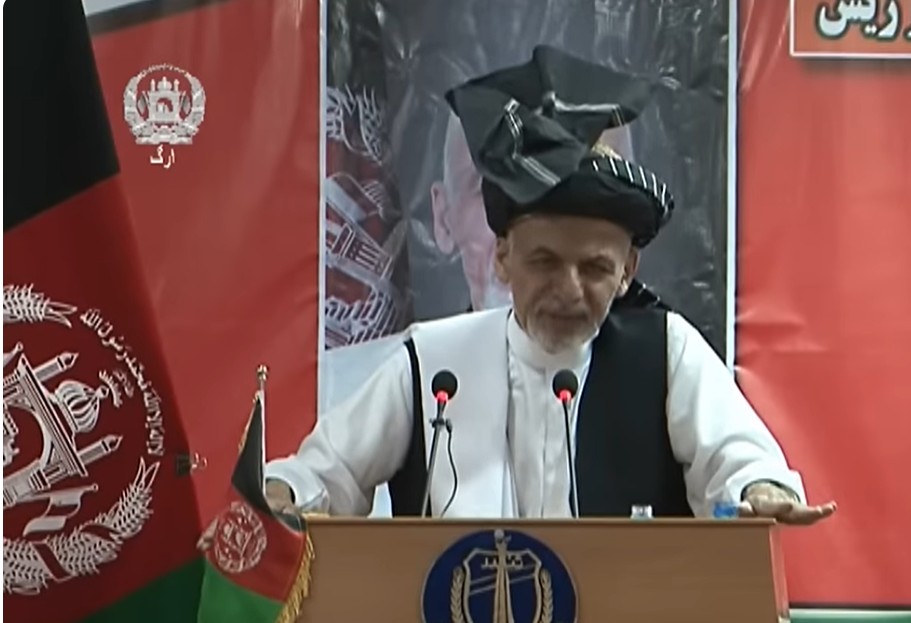
(Meeting and Address to the People of Paktia)
Keypoints:
- Peace: Pursuing reconciliation with the Taliban and a state-to-state settlement with Pakistan.
- Military Pride: Honoring Afghan forces for defending the nation independently after the NATO withdrawal.
- Budgetary Realism: Warning of a $600 million deficit and the need for frugal, "nomadic-style" fiscal management.
- Technical Integrity: Rejecting failed, "sham" contracts for dams in favor of building real ministerial capacity.
- Smart Infrastructure: Designing roads specifically for Paktia’s harsh climate rather than using generic templates.
- Human Investment: Prioritizing the "nurturing of the human being" and education as the state’s core mission.
- Shared Responsibility: Demanding local consensus and merit-based criteria in exchange for government action.
Location: Paktia Province
In the name of Allah, the Most Gracious, the Most Merciful.
Honored elders, members of the Provincial Council, the youth, Mr. Governor, the Corps Commander, officials, notables of Paktia, sisters, and brave brothers; and our delegation from Kabul—Minister Mangal, Mr. Rahimi, General Qadam Shah, and Mr. Hamdullah Mohib (our newly appointed Ambassador to the U.S. who will soon represent you there)—first, I offer you the greeting of the Great Leader of Humanity: Assalamu Alaikum wa Rahmatullahi wa Barakatuh!
Once again, I wish you a blessed Eid al-Adha!
In the last ten months, last night was the only night where not a single major security incident occurred across Afghanistan. Yesterday and the day before, I spoke with all governors, police chiefs, university professors, and judges. It is my hope that we achieve our fundamental demand, which is peace.
The problems of Afghanistan are many, and your demands are legitimate. I will touch upon only a few points because it is late. First, come to Kabul—you are most welcome—so we can deliberate there. Or, if you wish for me to return here, I shall come. [Audience: "We will come to you!"] Come, then; come a thousand times! Come so we can spend hours together discussing practical matters.
Everything cannot be done in a day. Some things require time, some require will, and some require resources. Your expectations seem to stem from the time when the Americans were here in full force. Brothers, those times are gone. Do you know what I inherited? A $600 million budget deficit. Every stone you lift, you find corruption beneath it. So, let us speak "the village way" (Watani); let us set a "nomadic rate" (Kochiyanai Narkh). I stand by my promises, but as for the timeline of implementation, we must look at our actual capacity.
On Peace and Foreign Policy
The primary demand of all Afghanistan is peace. Peace has two parts: one is peace with the Taliban, and the other is peace with the Pakistanis. Unless both happen, this country will not find rest. My position regarding Pakistan is very clear: either make fundamental peace with me so my country’s rights are secured, or fight me. You have fought us for fourteen years, and no one can break me through war. My first duty is to ensure the survival of this land.
Look, 120,000 foreign troops left. You all had deep doubts. But today, be fair: it is this National Army and National Police—your own sons—who have held this country, and I am proud of them! In Paktia, I am proud of the people. Whether it was in Mirzaka or Janikhel, the land was held through the coordination and participation of the people. The enemy had dark conspiracies to create a "belt" from Azra to Sarobi to Janikhel, but we did not let them.
On Governance and Infrastructure
I am the President, but you are the leaders of the people. My first promise is this: The Palace (Arg) will not be a factory for manufacturing "leaders." I recognize you, and you recognize me. We will solve these problems together. If the Palace becomes a place that dictates who is an elder and who isn't, or fails to respect your honorable Shmla (turban), this land cannot be saved. This is a land of Narkh (customary law); we shall speak according to that code.
Peace with the Taliban requires will, resolve, and a long road ahead. You placed me in this seat; I hope your wish is for me to work with great patience. If a leader acts like the Chamcha-Mast River (volatile and seasonal), rising and falling impulsively, the country will see no benefit. I will not yield an inch on Afghanistan’s interests, but building global consensus takes time. Today you saw both China and the U.S. at the table—that took months of diplomatic effort.
Regarding infrastructure: dams and roads. I can move quickly on power lines. But regarding dams, the new Minister informed me that previous contracts were not right. They were sham contracts with Russian firms just to get the paperwork done. I will not lie to you: This year, the Ministry of Water and Energy does not have the capacity to build a single dam. I must first get this Ministry back on its feet.
As for roads, the trouble is that they designed the same road for Nangarhar as they did for the freezing mountain passes of Paktia! We are working with a professor in Ohio to create a framework so your roads are built correctly for this climate. The foreign money is gone, so we must prioritize, but roads are your right, and God willing, we will deliver.
Conclusion
Finally, two things are most important: How do we nurture the human being, and how do we stand the economy on its feet? Roads and dams are merely tools for this.
Paktia is my home. I am deeply indebted to you for three reasons:
-
Your bravery brought me to the Palace.
-
You have defended this land.
-
You have great ideas; now we must implement them.
[To Elder Haji Hazrat regarding tribal codes]: Haji Sahib, I too was raised under the Posteen (sheepskin coat) of my grandfather. I know the "rate." Don't argue with me on the code—I won't let you down!
I ask the Governor to sit with all tribal elders. Reach an consensus on administrative changes and needs. You set the criteria, and together we will find the right people to fit them.
Stay safe. Long live Afghanistan.