The Virtuous Cycle: Agriculture as the Foundation of National Stability
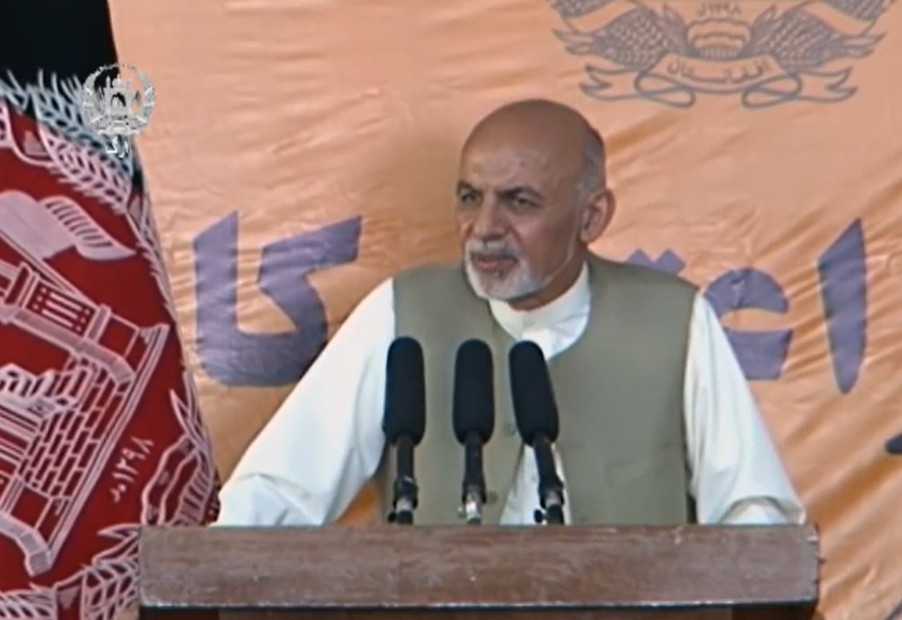
(Speech at the 15th Kabul International Agricultural Fair on the Occasion of International Rural Women’s Day)
Keypoints:
- Agriculture as Stability: Food security and rural productivity underpin national peace.
- The Virtuous Cycle: Linking Afghan farmers, domestic industry, and urban consumers.
- Five Elements of Production: Investing in water, land, seeds, farmers, and laborers.
- Export Discipline: Meeting international standards to turn Afghanistan into an exporter.
- Empowering Women Producers: Recognizing rural women’s labor and ensuring direct income.
- Procurement Reform: Prioritizing domestic food for the State over imports.
- Urban-Rural Connectivity: Connecting city households with Afghan countryside produce.
In the name of Allah, the Compassionate, the Merciful.
The First Lady, Dr. Qayoumi, Minister Zamir, Minister Saba, Minister Batash, esteemed members of the National Assembly, sisters and brothers, and members of the diplomatic corps! First and foremost, I offer you the gift of the Leader of Humanity: Peace and the blessings of Allah be upon you! I congratulate the agricultural women of Afghanistan on this auspicious day.
The Minister did not believe I would come to serve you today, so let me begin by explaining why I am here.
The Strategic Definition of Security
-
Stability through Agriculture: The enemy wants our entire focus to be consumed by instability; but we are bringing Afghanistan to stability. Agriculture is the foundation of Afghanistan’s stability. Without an advanced, active agricultural sector that meets the needs of all our people, we cannot have true security.
-
The Hunger Gap: Security is not merely physical. We must have food security. Without food security, we cannot perform our duties. I visit our Army Corps, and I pray fervently for the souls of our martyrs and for the wounded. But one thing pains me: the stature of nearly 70 to 80 percent of our soldiers is shorter than mine. What is this a sign of? It is a sign that during their years of growth, they did not receive sufficient nutrition.
-
A Religious Mandate: An Afghan child—whether a girl or a boy—who lacks food security today will face fundamental problems in the future. We must remove these obstacles. I wish to begin with a Hadith of the Prophet (PBUH). This is a Sahih (authentic) Hadith in Bukhari Sharif regarding agriculture. The Prophet (PBUH) says that any individual who engages in agriculture—whether they plant a tree, a sapling, or sow wheat—any human or animal that benefits from it, prays for that person and remains indebted to them.
Observe how great the importance of this is in our noble religion. Based on this, my first thanks go to the farmers, livestock owners, orchardists, agricultural industrialists, and our investors. I thank each and every one of you from the bottom of my heart for taking Afghanistan seriously. Your work is the source of this nation's stability. Every woman, every boy, every girl, and everyone doing this work is clearly investing in this homeland.
Investing in the Future: The Lesson of Nushirwan
You all know the story of Nushirwan the Just—if not, it is worth repeating, for "repetition is the best of teachers." Nushirwan was passing by a place and saw an old man, whose back was bent like a bow, planting a tree. He asked, "What are you planting?" The old man replied, "Walnut!" Nushirwan said, "This will take decades to bear fruit, and you will not see its harvest." The old man replied, "Have you seen other trees?" He said, "Yes." The old man said, "Our ancestors planted those so that I could benefit; I must plant these so that others may benefit."
Afghanistan is our common home. Take it seriously and count on the future. It is only with an atmosphere of trust in the future that we can plant a tree and know that the next generations will reap the results. This is the fundamental point: today, our sectoral ministries—and I thank them all—are investing their attention in the future even while we are making sacrifices. I express my gratitude to the Ministry of Agriculture and their sectoral partners for their hard work, and to our international partners who have assisted in the changes of the past 14 years.
Breaking the Vicious Cycle
We are currently living in a national Vicious Cycle. One figure is enough to clarify the weight of this cycle: we have over three billion dollars in annual imports of agricultural and livestock products. There is no figure more shocking in our country than this. Every day we eat bread, we are consuming foreign production. We must thank Mr. Helmand [Presidential Advisor on Agriculture] for merging practical work with theoretical vision, and also Mr. Panjshiri, who has spent his life in this field.
-
The Disconnect: What is the result of this Vicious Cycle? The cities and villages of Afghanistan are disconnected. Today, a major portion of the produce used in Afghan cities consists of foreign imports.
-
The Failure of Coordination: Worse yet, the procurement of the Afghan government has not been coordinated with Afghan production. We left the Afghan farmer to fend for himself, reaching a state where, for the first time in history, the harvest of wheat did not even cover its own costs. We did not take agriculture as seriously as it demanded.
The Virtuous Cycle (The Najeeba Cycle)
My message to you is that a Virtuous Cycle must be created. What are the elements of this cycle? Agriculture, agricultural industry, trade, and the Afghan consumer must be linked—especially Afghan women, as they handle the household purchasing. We must take Afghan production seriously starting in our own homes. Make the decision to create this link. If this Virtuous Cycle is established, the agricultural sector can create at least one million jobs. Our people will not be forced to leave. Take agriculture seriously; it brings stability because the majority of our citizens are farmers, orchardists, or livestock owners.
The Minister of Agriculture spoke scientifically; I want to speak in terms of the "Kurd" (the small plot). Speaking "Kurd-style" means acknowledging that agriculture has five elements:
-
Water: Between the canal and the field, 40 percent of our water is wasted. Not one of our rivers has been fundamentally managed. We lost the old order of the Kariz system. My promise is that the water of Afghanistan will find fundamental management within these next four years. I express my gratitude to Dr. Qayoumi, a national asset who resigned from a top US university to rebuild Afghanistan. His passion is water and electricity. He played a massive role in the Salma Dam. Water cannot be managed without government investment.
-
Land: The amount of land under cultivation today is significantly less than it was during the era of Daoud Khan. Regarding Land, there is a Hadith stating that whoever usurps the land of another will find their place in the seventh level of hell. The main task of the Afghanistan Land Authority is to make the farmer's property secure. With irrigation management, hundreds of thousands of hectares will come under water.
-
Seed: Only 10 percent of improved seeds were being used. I held many meetings regarding wheat, yet we may still be forced to import 600,000 tons. Every ton imported is money not going into the pocket of the Afghan farmer. A coherent policy for improved seeds is essential.
-
The Farmer (The Human Factor): We have different types of land, from mechanized Helmand to small plots elsewhere. Experience in East Asia shows that the small-scale landowner can be the engine of mobility. 600 years ago, a book was written in Herat called Irshad al-Zira'a. Today, clear workbooks must exist to strengthen the Afghan farmer. Agricultural cooperatives are vital.
-
Labor (Work): "National Solidarity" is being fundamentally changed to serve agricultural production, and we are creating "Urban Solidarity" to link the city and the village.
Export Discipline and Standards
What is the main goal of our strategy? Simple! To transform from an agricultural importing country into an agricultural exporting country. The reason is that a country capable of exporting improves the quality of its production. This is called "Export Discipline." When export discipline exists, every norm and standard is implemented.
When I was a university president, I visited the dormitories. Every night, students suffered from stomach blockages. Why? Because produce lacked standards. Even with inspections, there was filth. But if standard classification and packaging exist, the problem is solved. Afghanistan has the potential to become an exporting nation.
The Role of Women in the Value Chain
Establishing the role of the Afghan female producer is a major goal.
-
Invisible Work: First, the Afghan woman plays a massive role in production. Second, however, the cash does not go into her pocket. We do not count the woman’s work as "work." At the university, students wrote their mother’s occupation as "unemployed"—referring to someone who works 14 to 16 hours a day! I salute such "unemployment"!
-
Collective Culture: Linking the Afghan woman to the Value Chain is vital. In my childhood, we gathered the harvest collectively. This is a core part of our culture. Thus, women's production needs added value and strengthening.
Government Commitment and Procurement
The government is moving from a defensive posture toward a clear goal.
-
The Value Chain: No nation has ever escaped poverty without an agricultural value chain. Minister Saba has started great work in Mines, but mines do not create massive employment; agriculture creates jobs. Mining and infrastructure projects will be synchronized with agriculture.
-
Procurement Reform: Until now, the government has not used procurement to strengthen domestic production. We gave a 15 percent preference to national products. We are implementing a plan where the 650,000 tons of food for the Army and Police will eventually be provided entirely from domestic production.
-
The Urban Consumer: Our aerial survey shows nearly one million houses in Afghan cities. This is a massive human mass whose demand must be linked to the countryside. Investors must create this chain. A few years ago, I could find honey from everywhere except Afghanistan—even though a production center was four doors down from my house. This disconnection must end.
Marketing and Saffron
Marketing happens in the region; the problem lies with us. When Minister Saba was Governor of Herat, he strengthened saffron, but government bureaucracy created obstacles. Today, Afghan saffron is sold under Spanish names.
-
Policy Instruction: For the next hundred days, my instruction to the Ministries of Commerce and Finance is to fundamentally remove the obstacles facing agricultural exports. Saffron can replace opium, but we must not fail in our management. China is ready to buy all of Afghanistan's saffron, but we must have the discipline to identify regional markets and not blame others for our shortcomings.
Conclusion
I congratulate Minister Zamir and his colleagues. Their daily work is often hidden, like digging a foundation. In the past, foundations were turned into trenches because there was no self-belief. But this year, fundamental work has been done.
Our promise to all farmers, orchardists, and investors is that we will join hands. This country is our common home. The security forces defend it with their lives; the farmer defends it with the shovel and the tractor. Let us expand the definition of stability. We believe in our future, and we will build this country.