Hope, Justice, and the Quest for Lasting Peace in Afghanistan | Speech at USIP
Keypoints:
- Pride & Pain: Afghanistan has suffered deeply, yet remains proud and hopeful.
- Farkhunda Tragedy: Her murder exposed collective trauma and systemic violence.
- Justice & Accountability: Perpetrators were arrested; police inaction was prosecuted.
- National Resilience: Afghans vote despite danger; 38% of voters were women.
- Peace Priority: Peace is essential but complex and non-traditional.
- War as a System: Terror and conflict are organized systems, not isolated acts.
- Peace Lessons: Half of peace deals fail; enforcement and regional consensus matter.
- Future Challenge: Peace will bring millions home; jobs, rights, and governance are vital.
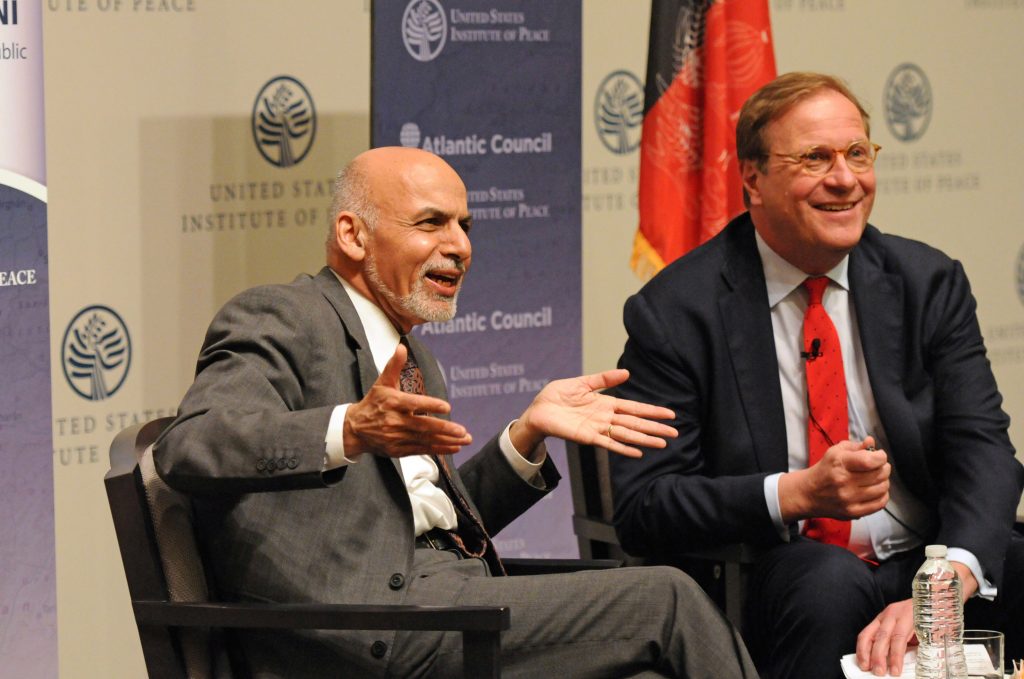
Ms. Lindborg, Mr. Hadley, Steve, ladies and gentlemen, I must humbly say that it is not an honor for Afghanistan that I was born there, but I am proud to have been born Afghan. We are a country with great pain and suffering, yet also with great opportunities ahead.
The fate of Farkhunda reflects our pain and suffering. She was an entirely innocent woman who went to a shrine, possibly to dispute a horoscope scroll that was meant to bring her happiness but had no effect. Farkhunda was brutally killed by an angry crowd. We arrested 32 people connected to this heinous crime and prosecuted 10 police officers for standing silently and failing to save her.
This incident speaks to our collective trauma. Thirty-six years of civil war have deeply wounded the minds and spirits of the Afghan people. We suffer from post-traumatic stress that has yet to be fully studied and analyzed. We must undertake collective healing to confront this unprecedented level of violence, which has no place in our culture or religion. The events must be taken seriously, as rarity alone does not excuse them. This tragedy shows the depth of the disaster, and we must have firm resolve to confront such incidents.
I am fortunate because the people of my country have trusted me, giving me, as part of a team—including Dr. Abdullah and others—the responsibility to bring fundamental change and lasting transformation. Our country is a country of hope because we never give up. We are resilient people; anyone else in our place might have surrendered, lost hope, or lacked the will to participate in elections.
As you know, participating in elections is simple for others, like a leisure activity, but for us it carries the risk of having fingers cut off. For example, a man in Ghazni province, after participating in the first phase of the elections, tried to scrape the ink off his fingers with a knife to avoid having them cut. Yet the broad participation, especially 38% women voters, shows the strong determination of our people.
I will try to keep my remarks brief so that we can have a conversation rather than a formal speech, because clichés are not solutions. Peace is our priority, but achieving it is extremely difficult because peace in Afghanistan will not follow the classic model of political conflict. The instigators of war must be identified, and only then can true peace be established.
Most books and writings on peace—even with full respect to the Peace Institute—are based on a classic perspective. Where is the discussion and analysis of crimes committed by war instigators? Some individuals have gained billions from conflict by controlling areas outside government authority. We need a deep understanding of the nature of crimes committed by war instigators.
The ecology of terror has changed; morally, terror is still a deviation, but sociologically it has become a system. Terror has acquired systemic characteristics, similar to corruption. In many countries, corruption is not merely a moral deviation but a system. The point I emphasize is that when you face a system, your efforts must be very different from when you face isolated incidents.
When I was president of Kabul University, the cold nights motivated me to read 100 peace agreements, classify them, and write about them. In 2007, I published a long paper and want to share some key findings from that paper, as well as my earlier writings on Syria related to foreign policy.
Fifty percent of peace agreements worldwide fail within the first five years. This is a shocking reality, because starting or even ending a peace agreement does not guarantee results. That is why we must work carefully on agreements and consider their implementation. Many peace agreements are idealistic and exist only on paper, with little attention to enforcement. That is where the real work begins.
Second, regional consensus is crucial for successful peace. Most prolonged conflicts have involved the covert involvement of one or more neighboring countries. Ending hidden agendas and securing cooperation from neighbors is vital for achieving peace. In Central and Latin America, peace failed until neighboring countries realized that regional agreement was necessary, because national consensus alone was insufficient.
Only then could peace processes begin effectively. You need national consensus. In today’s environment, secret negotiations are impossible. To achieve peace, actions must be transparent to build the necessary agreement and consensus. Secret actions provoke strong reactions, and this is extremely important. Furthermore, when major issues like gender rights, basic human rights, and inclusion exist, these are non-negotiable principles that must be fully established and maintained.
Another observation—which I will later discuss with my good colleague Mr. Frederick Kempe—is that in many countries, peace does not automatically lead to security. Peace agreements may end the political justification for violence, but reintegration of former fighters remains a major challenge. Returning refugees and displaced persons also require careful attention.
Many peace agreements are ambitious and give minimal attention to social and economic issues. This is exactly our situation. I will highlight one issue: when peace comes—I say when, not if, because we are determined to bring peace—we will face the return of 2 to 5 million migrants.
We must be clear and precise about what this return entails: What economic conditions must exist? What type of governance? Specifically, what social policies will ensure that these people have a stake and place in society? I invite your Peace and Leadership Institute, with Mr. Hadley’s valuable experience and suggestions, to support and collaborate with us in this process. I expect intense discussions in the days and months ahead.
Thank you.