Turning Our Cities into Engines of Sovereignty and Self-Reliance
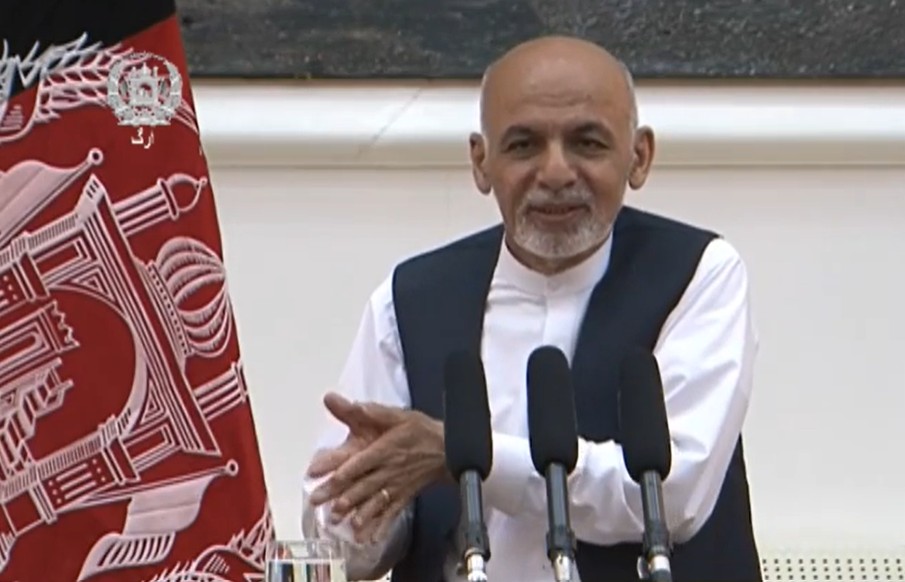
(Speech at the event titled: The State of Afghan Cities 2015, ARG, Kabul)
Keypoints:
- Data-Driven Governance: Satellite mapping of 1,000,000 homes to enable evidence-based administration.
- Property Legalization: Converting informal holdings into Sharia-compliant deeds for 16,000 houses per month.
- Darulaman Vision: Relocating the central government to a planned administrative district.
- Urban–Rural Integration: Replacing $3–$4 billion in imports with Afghan agricultural production.
- Transit-Led Growth: Developing border cities as trade hubs, building on $100 million growth in Zaranj.
- Social Justice: Ending IDP status within four years to strengthen national citizenship.
In the name of Allah, the Compassionate, the Merciful.
Honorable Mr. Popal, Mr. Naderi, Mr. Ahad, the British Ambassador, the Australian Chargé d'Affaires Mr. Fukasawa, ladies and gentlemen, brothers and sisters!
First of all, I wish to begin with appreciation and thanks. Gratitude to the Independent Directorate of Local Governance (IDLG), the Ministry of Urban Development and Housing, the Kabul Municipality, and all the municipalities that participated in this important national discussion. Secondly, I thank the Government of Australia for its very effective and timely assistance. We requested this aid at the beginning of the formation of the National Unity Government, and it was implemented quickly. Work began in November last year and has now reached completion. I also thank UN-Habitat and all my colleagues who helped one another to finish this vital task.
The Urban Data Revolution: Identifying 1 Million Homes
My second point concerns information, policymaking, and implementation. What is in this report? On what basis was it prepared? The first task accomplished was the identification of every house in all Afghan cities via satellite; these figures have all been aggregated. Based on this, we know there are approximately 1,000,000 (one million) houses. Until now, we did not know how many houses existed in Afghanistan; now we know there are one million. This was done from the air. What happened on the ground? On the ground, we determined how many of these houses are legal and possess Sharia (legal) deeds, and how many are estimated to be "informal" (urfi). Unfortunately, the majority of houses are informal. Then we considered the different types of our cities.
Addressing the Imbalance: The Focus on Kabul
First is the capital. The absolute majority of Afghanistan's urban population resides first in Kabul. What does this mean? It means other places have not received equal attention. The population of Afghanistan is not distributed in a balanced way; it is unbalanced. Since the majority of the urban population lives in Kabul—5 (five) times more than in the next closest cities—Kabul requires our special attention.
Therefore, policymaking requires precision. This past year, urban affairs—as mentioned by Mr. Popal, Mr. Naderi, and the Acting Mayor—have been at the center of my focus. However, without data and evidence, we could not move toward implementation. Now, the ground for practical implementation is ready. In the past, we have always been portrayed as a people who deal in lies.
Look at two big lies recently: for two years it was said Mullah Omar was alive, but he was dead. Conversely, for a month now I have been alive, but they said I was dead... [Laughter]. This is Afghanistan. They tell a healthy man he is dead, and they kill people for a dead man. Do not blame these people. The big liars are now, God willing, identified, and the hope is that we base everything on the truth.
Turning Theory into Action: Land Reform and Darulaman
The third point concerns decisions. What are the urgent and medium-term decisions emerging from this report? First, we thank the UK and Australian governments for funding the second phase of research, which is the "State of Afghan Cities." More importantly, I thank the healthy management of Mr. Popal, Mr. Naderi, and the efforts of the Kabul Municipality, because we are now turning theories into action.
What is the first step? After Eid [al-Adha], the registration of informal buildings will begin as a systematic project by UN-Habitat. Approximately 16,000 houses will be identified per month. This registration will lay the foundation for the promise we made during the elections: that all urban property in Afghanistan will, God willing, be converted into Sharia-legal property.
Second, the government has decided to move the majority of ministries to Darulaman. We always talk about King Amanullah Khan’s vision, but we rarely act to complete his unfinished work. The Ministry of Urban Affairs—and I especially thank Mr. Toryalai—has been working day and night. The vision Amanullah Khan started with German technical help will, God willing, become a lasting phenomenon for the people of Kabul in the coming centuries. This will begin with ministries that have their own budgets. The land currently occupied by these ministries in the city center will be consolidated to fund the future Darulaman structure as a planned and organized district.
What has been our urban problem? We are sitting on gold but think we are sitting on straw and must beg. No! Sell 100 jeribs of land in Kabul, and Darulaman can be built from top to bottom—provided it is sold with transparency and efficiency. I declare here that no ministry has the permission to sell its own land! Every decision to sell property in the center of Kabul must go through the Ministry of Urban Development, IDLG, the Independent Land Authority (ARAZI), and the Cabinet. No one is allowed an individual sale. This must be managed with total transparency.
Citizen Consultation and Municipal Competition
Thirdly, I offer condolences to the citizens of Kabul for the casualties and suffering the city has endured. Starting from Eid, we will begin a nationwide dialogue with the citizens of Kabul so that the research from last year can be turned into a master plan for a capital every Afghan can be proud of. One thing is certain: this cannot be done without a comprehensive consultation with the citizens. From the street level to the district level, we will consult and then act.
Fourthly, I thank Mr. Popal very much. A new initiative has emerged... I also thank Baqi Khan Popal. It seems the Popalzais are good people... may God keep you! Two mayors—the Mayors of Herat and Kandahar—were appointed by me based on legitimate competition and constructive ideas. In the coming months, all major mayors will be appointed based on specific plans and clear competition. But more fundamentally, a nationwide network of mayors will be created so we can begin the basic transfer of resources from the center to local administrations.
In this process, excellent ideas have emerged. I appointed a 31-year-old young man as the Mayor of Herat. Mr. Popal and I interviewed him. I asked him why he was interested in this position. He said, "Every time I crossed the bridge, I thought about how to fix it. Every time I saw a canal filled with trash, I thought about how to clean it." He wrote 22 pages for me. No one else did that. When someone else writes a paper for someone, I can tell immediately... don't try to trick someone who has been a professor [Laughter]. One knows where the ideas came from. His key idea? He said the Ministry of Finance should sign a contract with us: if we increase our revenue beyond a certain percentage, we should receive more incentives. It is essential to create this network so that the Ministry of Finance and other ministries can sign contracts with municipalities.
Affordable Housing and National Security
Every time they implement reforms, Mr. Naderi, we must give them more authority and privileges. Today, by the grace of God, we understand that within the framework of candidates proposed by Mr. Popal, a technical and managerial capacity—and most importantly, a sense of ownership—has emerged in Afghanistan. We must remove the bureaucracy and the legal barriers—some of which are outdated laws remaining from the time of Amanullah Khan—in the municipal sector.
Therefore, our fifth objective is creating a systematic urban policy in the first stage, and a systematic housing policy in the second. Afghanistan currently lacks both. Without affordable housing, we cannot compete. Today, the data mentioned here is both interesting and shocking. In Kabul, even an informal house can cost up to $50,000, while in comparable countries, affordable housing is managed differently. Creating affordable housing will not be limited to the civil sector. Next year, we hope to turn every Army Corps (Qol-e-Urdu) into a center for creating affordable housing for the National Army. The Police will take more time, but because the Army is centralized, we are already creating this.
Bridging the Urban-Rural Divide
Finally, I thank you all again. The city and the village build the nation. Thinking about the city does not mean the city should be like an island. The importance of this report and our central focus will be: How do we link the city and the village?
Today I present a hypothesis, as the data is not yet complete. But based on my 14 years of research into 600 years of Afghan history, never have Afghan cities been so disconnected from their villages. Look at agricultural imports; we import $3 to $4 billion worth of goods annually. The connection between city and village from the perspective of a national market must be at the top of our focus. Every citizen should think: what is the connection between the water they drink, the meat they see, the fruit they use, and the clothes they wear with the national wealth? Thus, alongside urban transformation, we must propose a national economic vision where all citizens participate. This creates a "virtuous cycle."
Economic Sovereignty and Transit
This year and next, you will see that all food requirements for the Army and Police will, in the first stage, hopefully be 60%—and in the second year 100%—produced by Afghan farmers and gardeners. Similarly, our cities must understand that we cannot live solely as consumers.
If our cities have a future, what does it lie in? It lies in transit. Twenty Afghan provinces are on the border. Zaranj was once a small village; it was transit that turned Zaranj into a city of 17,000 buildings—buildings that are higher in quality and price than those in Wazir Akbar Khan—because today the Zaranj custom office generates at least $100 million in revenue.
A Future of Citizenship and Ending Displacement
Therefore, the connection of our cities with other sectoral ministries and our major policies is vital. What will this solve? First, the problem of employment and construction. The construction sector is the primary sector for job creation. To our youth, my message is: have a little patience. From the Darulaman project to others, work is coming. Making property legal will also help; comparative experience shows that when property moves from informal to legal, investment quadruples because the investment is secure. Job creation isn't just the state hiring directly; the state creates the environment in which jobs are born.
Second, the result of these policies is that the cities we live in will be "livable." Third, and most importantly, is the sense of citizenship. We must understand that we are not islands or isolated atoms, but a human mass with deep ties to one another. The social fabric will grow stronger, and we must provide conditions for progress, especially for youth, women, and those below the poverty line.
One final point: the term "Internally Displaced Persons" (IDPs) must be abolished from our culture within the next four years. We cannot accept that our fellow citizens live in absolutely inhumane conditions. Therefore, my final instruction and the major decision the Cabinet will follow is to address the IDPs fundamentally, now that we understand their numbers.
A very large step has been taken. The people of Afghanistan expect us to implement this, and with this organized team, it will be done. We also thank our international partners and UN-Habitat. Further steps will be taken as soon as possible.