A Century of Afghan-German Diplomacy and State-Building: Speech on the Anniversary
- Historical Roots: 1915 Niedermayer expedition sparks century-long partnership.
- Architectural Legacy: Darul Aman Palace inspired by Germany’s Sanssouci.
- Infrastructure Vision: Reviving nationwide railway and technical modernization.
- Human Capital: German education shapes Afghanistan’s civil service.
- Economic Blueprint: Friedrich List’s ideas guide industrialization.
- Industrial Impact: German firms drive energy and health sector growth.
- Bonn Framework: Germany hosts conferences defining Afghanistan’s constitution.
- Decade of Transformation: Moving from aid dependency to self-sustaining state.
In the name of Allah, the Most Gracious, the Most Merciful.
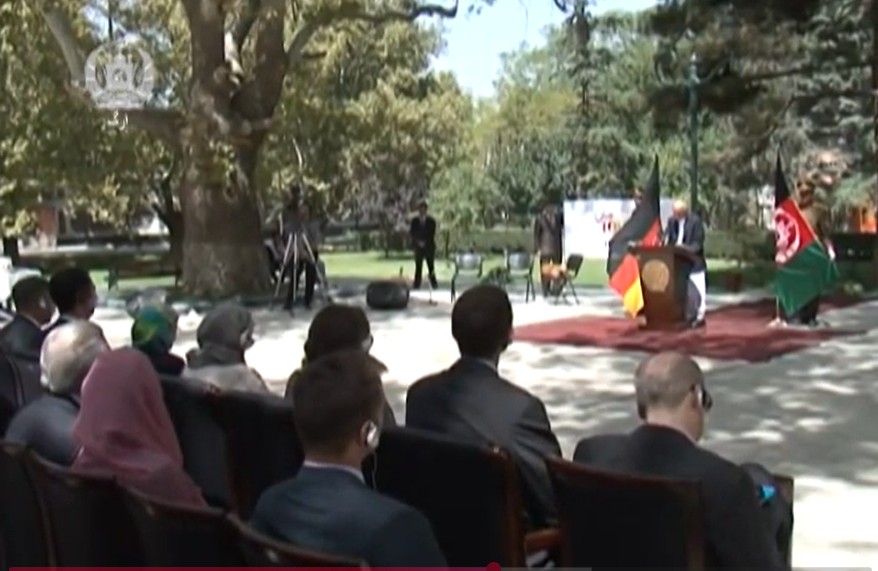
Honorable Foreign Minister of our friend nation Germany, Mr. Frank-Walter Steinmeier; Distinguished Ladies and Gentlemen!
I am profoundly honored to commemorate the centenary of friendship between Afghanistan and Germany. The hundred-year relationship between the Afghan and German peoples stands as a premier model of friendship and cooperation between two nations.
A century ago, in September 1915, a German delegation led by Oskar von Niedermayer arrived in Kabul to invite Emir Habibullah Khan to join the Central Powers. Although the Emir did not align with the Central Powers and the delegation did not achieve its short-term objective, the subsequent research published by the delegation's leader regarding Afghanistan laid the groundwork for a medium and long-term enduring friendship between our two peoples.
When official diplomatic relations commenced in 1920, the foundation for comprehensive cooperation was established. During the reign of King Amanullah Khan, Germany collaborated on several pivotal projects in Afghanistan. The architectural planning and construction of the Darul Aman Palace villas, the construction of the road from Darul Aman to Pul-e-Artal, and the technical training of six hundred Afghan technicians in the construction sector within a very short duration are prime examples of German cooperation from that era. The name of the head of the German technical mission [Hartel] remains alive in the memory of ordinary Afghans, as a famous bridge in Kabul is named Pul-e-Hartal in his honor. This mission was a superlative example of technical cooperation; they even inaugurated a railway line from Darul Aman to Pul-e-Artal.
They designed the Darul Aman Palace based on the blueprints of Frederick the Great’s Sanssouci Palace located in Potsdam. My daughter, Mariam Ghani, has produced a documentary film comparing these two palaces. While Frederick the Great’s palace has been renovated and rebuilt multiple times, Darul Aman has shared a similar historical fate. It is my hope that, like Sanssouci, it will once again be restored and flourish.
Following King Amanullah's visit to Germany, the German government initiated a project for a nationwide Afghan railway network, which, unfortunately, remained unfulfilled due to the collapse of the King's reign.
During the era of His Majesty Nader Shah and thereafter, Afghan-German relations entered a new phase with two distinct dimensions: military and economic. In the military sector, the first senior officer courses were inaugurated under the tutelage of German officers. In the economic sector, Abdul Majid Zabuli—who admired the 19th-century German developmental model—fundamentally applied the ideas of the German economist Friedrich List. With the assistance of German engineers, he implemented foundational infrastructure projects in electricity and textiles and established the Bank-e-Milli. During this period, the Afghan private sector, with state support, achieved its most significant historical milestones in both the industrial and agricultural spheres.
One of the most prominent aspects of Germany's role in Afghanistan has been its investment in Human Capital. We can point to Gholam Mohammad Farhad, Kabul’s first elected mayor, and Dr. Mohammad Yousuf, the first Prime Minister of the Decade of Democracy, as prime examples. This focus on human resources continues today; among the approximately one hundred thousand Afghan migrants residing in Germany, a significant number have achieved academic excellence and higher education. It is our hope that they will contribute significantly to the reconstruction of Afghanistan.
During the reign of His Majesty Mohammad Zahir Shah, three major German corporations played a vital role in Afghanistan’s industrial growth: Siemens constructed the Sarobi hydroelectric dam; Höchst laid the foundation for the pharmaceutical industry; and Hochtief collaborated in the production of construction materials. The Paktia Forestry Project stands as another testament to German cooperation during that era.
In the last fourteen years, Germany has hosted three critical conferences. First, the historic Bonn Conference, which laid the foundational framework of the current Afghan state. Germany played a vanguard role not only as a host but in the creation of ISAF and providing multifaceted aid, specifically assuming security and economic leadership in Northern Afghanistan.
Second, the Berlin Conference on April 1, 2004, where the international community, led by Germany, committed $8.2 billion over three years and pledged $26 billion over eight years. Third, the "Bonn II" Conference in 2011, where the concept of the "Decade of Transformation" was welcomed by the global community with German support, leading to renewed commitments.
Throughout these fourteen years, Germany's comprehensive assistance has brought positive transformations to the lives of our people.
Relying on this century-long friendship and the robust foundation of the last fourteen years—specifically the decisive commitment made by Chancellor Merkel during my visit to Germany last December to support Afghanistan during the Decade of Transformation—I am confident that our relations will become deeper, broader, and more steadfast than ever before.
May the Afghan-German bond be eternal and everlasting!