Afghanistan-Turkmenistan: Presidents’ Joint Press Conference on Cooperation and Connectivity
Keypoints:
- Strategic Friendship: Turkmenistan as a virtuous neighbor, partner, and regional collaborator.
- Empowering Carpets: Supporting 1.6 million Afghan artisans, 80% of whom are women.
- Energy Backbone: Expanding electricity imports fivefold to power Afghan development.
- Regional Rail: Advancing the trilateral railway for trade, industry, and connectivity.
- Historic Triangle: Reviving the cultural heritage of Herat, Merv, and Balkh.
- TAPI Transformation: Regional pipeline projects enhancing energy security and cooperation.
- Positive Neutrality: Turkmenistan as the Crossroads of Asia and a pillar of stability.
- Shared Prosperity: Pragmatic partnership ensuring tangible benefits for both nations.
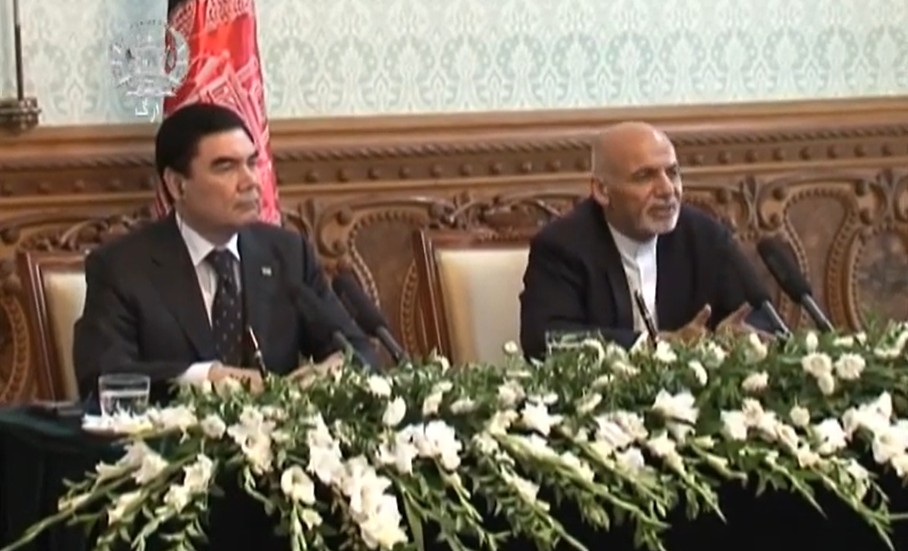
Your Excellency Gurbanguly Berdimuhamedov, my dear brother, the esteemed President of the Republic of Turkmenistan,
On behalf of the Government and the peace-loving, patriotic people of Afghanistan, I welcome you to your second home. You, my dear brother, have become a model of sound leadership in fostering stability and prosperity across our region.
We view Turkmenistan as an all-encompassing friend, a virtuous neighbor, a primary socio-economic partner, and a strategic collaborator in establishing regional security, peace, and stability. I thank you for your presence.
Your arrival with a comprehensive working delegation signifies a high level of commitment. Rather than delving into exhaustive details, I wish to outline the tangible results of this visit for the people of Afghanistan.
Empowering the Silk Road Artisans
First, a message to the producers, importers, and exporters of Afghan carpets: approximately 1.6 million Afghans—80 percent of whom are women—drive this industry. His Excellency the President has directed the Turkmen Ministry of Carpets to provide comprehensive cooperation. He has further instructed his government to prioritize the role of carpets within our shared cultural heritage. I trust that every individual involved in this trade will soon witness the practical fruits of this directive.
Energy: The Infrastructure of Infrastructures
Electricity is the infrastructure of infrastructures. Without power, Afghanistan’s vast resources—from agriculture to mining and services—cannot be mobilized. It is a moment of great satisfaction that President Berdimuhamedov has assured us of the rapid expansion of Turkmen power production. Our electricity imports from Turkmenistan are set to increase fivefold, God willing. This will impact all provinces, particularly through our two primary corridors: North-to-East and South-to-West. This represents a massive opportunity for our industrialists and producers to harness.
Furthermore, for the first time, we discussed the transit of electricity from Afghanistan to Pakistan. Following technical assessments, this will provide a foundational framework for regional cooperation. In the energy sector regarding fuel and gas, we have reached an initial framework. The Turkmen pipeline is expected to reach Aqina shortly, establishing facilities that move beyond the ambiguities of the past toward clear, predictable cooperation.
The Vision of Regional Rail Connectivity
For decades, the Afghan people have awaited the execution of a nationwide railway system—a vision first articulated by King Amanullah Khan. Today, the trilateral agreement between Afghanistan, Turkmenistan, and Tajikistan moves from the planning phase to execution. This line will connect Aqina to Andkhoy, Sheberghan, Mazar-i-Sharif, Kunduz, and Sher Khan Bandar. I assure our citizens that the route remains optimized for the maximum benefit of Afghan agriculture and industry.
The railway from Turkmenistan to Aqina Port will be completed by February. The extension to Andkhoy is under review, with 75 percent of the preliminary survey by the Ministry of Public Works already complete. This will catalyze the development of our petroleum resources. We are also committed to the revival of Torghundi; it shall soon become a hub of comprehensive trade and cooperation similar to Aqina. We have secured initial funding for the rail link from Torghundi to Herat, which will make Herat our first city connected by rail to two neighbors. This allows goods from Europe to reach us within five days at significantly reduced costs.
The Cultural and Historic Triangle
Transit cooperation between Afghanistan, Turkmenistan, Azerbaijan, and Turkey is a cornerstone of our policy. Ancient Merv (Mary) was the cradle of the great Abbasid civilization. By looking at modern Merv, one envisions the revival of the historic triangle of Herat, Merv, and Balkh—the Islamic epicenter that produced the world’s leading scholars of medicine, jurisprudence, and science. Our great cultural heritage is being fortified through this partnership.
TAPI and Regional Transformation
The pipeline projects—both the bilateral link and the regional TAPI project (Turkmenistan-Afghanistan-Pakistan-India)—are under comprehensive study. Turkmenistan has taken a significant step by tasking the Turkmen-Gas company with its execution. This is a project that will transform the region.
Positive Neutrality and the Crossroads of Asia
Finally, I congratulate Turkmenistan on the upcoming 20th anniversary of its neutrality. This is not a "negative" or passive neutrality, but a positive neutrality with profound substance. Under this policy, Turkmenistan is transforming into the Crossroads of Asia. Our bilateral trade has exceeded $1 billion, and Afghanistan is now Turkmenistan's seventh-largest trading partner—a remarkable figure given Turkmenistan’s global engagements.
President Berdimuhamedov and I are committed to ensuring that our border remains a frontier of peace, coexistence, and a model for neighborly relations. Those with negative intentions must understand that we are strengthening the foundations of regional cooperation. I thank the President for his willingness to host the Heart of Asia-Istanbul Process and for his continued support in achieving a dignified and lasting peace.
Turkmenistan’s emphasis on the rights and obligations of states within the UN framework is a testament to the wise leadership that has made it a pillar of stability. Our partnership is defined by pragmatism. The progress made today provides hope that two states committed to the absolute welfare of their people will continue to take positive, practical, and sustainable steps for our mutual interest.
Mr. President, once again, welcome. We look forward to your continued visits and the opportunity to transform our shared frameworks into tangible programs and specific achievements for our nations and the wider region.