Institutional Restoration and Monetary Sovereignty: Central Bank Governor Nomination to Parliament
Keypoints:
- Legitimacy and trust: Parliamentary confirmation and national confidence in the Central Bank leadership.
- Historic foundation: Afghanistan’s strong banking legacy established by Abdul Majid Khan Zabuli.
- National stability: Strategic gold reserves as a pillar of long-term economic security.
- Institutional failure lessons: Kabul Bank crisis as a warning against corruption and misgovernance.
- Reform and recovery: Judicial action, asset recovery, and rebuilding banking credibility.
- Central Bank independence: Full operational autonomy in monetary policy and regulation.
- Fiscal discipline: Rejection of deficit financing and commitment to revenue-based governance.
- Economic growth mandate: Banking as the backbone of trade, industry, and national development.
Distinguished Mr. Sediq,¹ honorable Minister of Finance Mr. Hakimi, Minister of State for Parliamentary Affairs Mr. Farahi, Minister Khowakhozh, Mr. Hedawal, esteemed officials of the banking sector, and representatives of the private and public sectors!
First and foremost, I wish to express my profound gratitude to Mr. Sediq for accepting this monumental responsibility during such a critical juncture for our nation. I also thank the National Assembly of Afghanistan for your confirmation; today, a great trust has been placed in you, ensuring that a truly professional, expert, and visionary leader is appointed to lead the Central Bank of Afghanistan.
I also want to thank Mr. Khan Afzal Hadawal and all his colleagues. During the period following Mr. Delawari’s resignation, they maintained close and effective cooperation with me, the entire government, and specifically with Minister Hakimi. I will begin with three brief points, as today belongs to Mr. Sediq.
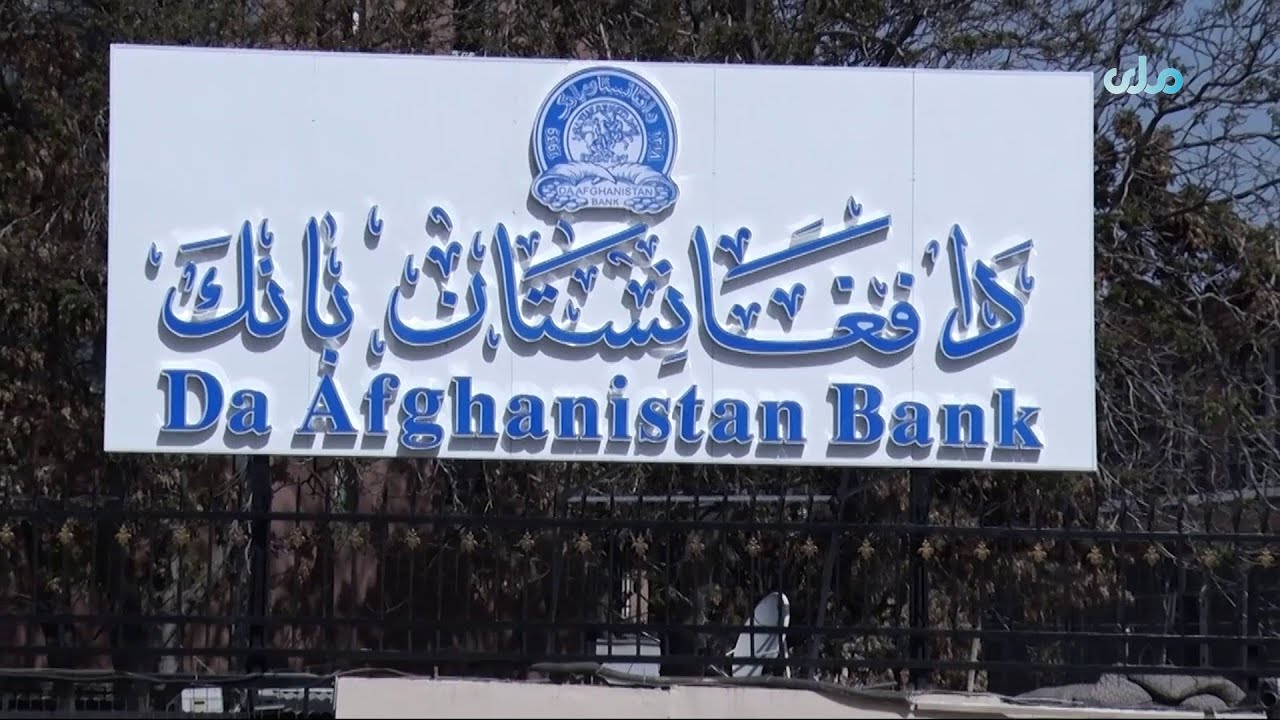
First, banking in Afghanistan possesses a remarkably distinguished history. The "Mastermind of 20th Century Afghanistan," Abdul Majid Khan Zabuli, laid the foundation of Afghan banking. In the shortest possible time, he established major commercial transactions with Europe, America, and Asia. Afghan banking was unparalleled in the region in terms of integrity, technical sophistication, and economic growth. Our country was perhaps the first where private banking—through the establishment of Bank-e-Millie—preceded state banking. Later, through Mr. Zabuli’s initiative as Minister of National Economy, the foundation of Da Afghanistan Bank was laid, operating with immense success.
One example suffices: when the United States entered World War II, Mr. Zabuli held significant funds from the sale of Karakul sheepskins in America. Within a very short period, he converted those funds into a massive gold reserve, which today is valued at no less than $600 million. One of the primary pillars of Afghanistan’s stability remains that reserve held in the Federal Reserve Bank of New York.
When banking resumed in Afghanistan [post-2001], we unfortunately encountered grave difficulties. Kabul Bank will always remain a "black page" in the history of this country. Instead of banking serving as a catalyst for economic growth and providing accessible credit for entrepreneurs, it was transformed into a mechanism for defrauding the people and the state. By the grace of Almighty Allah, this crisis is being resolved. The three levels of the Afghan judiciary have established a framework for liquidation, and the people’s money is being recovered. However, the reputation of the Afghan banking system was severely damaged.
Over the past ten months, I have found it necessary to meet with each of our banks individually to discuss these issues. I am now confident that under Mr. Sediq’s prudent management, we will be able to possess a banking system that restores the historic prestige and credibility of both the National Bank and the Central Bank. On this basis, both our monetary and economic policies will stand on fundamental pillars and move forward.
Our banking sector is a foundational component and a central pillar of Afghanistan’s economic progress. Without a functional, credible, and fully transparent banking system, a nation’s economic growth cannot materialize. Therefore, I wish to declare with absolute clarity: the independence of the Central Bank is not only accepted by us—it is emphasized by us.
Mr. Sediq, according to the Law of the Central Bank—a law I once played a role in drafting—you shall have operational independence to harmonize Afghanistan’s monetary policy. You must elevate the reputation of the Afghan banking system so that all Afghan banks can facilitate transactions for our traders through international banks. Most importantly, our banks must become capable of standing Afghanistan’s industry and services on their own feet.
These points are fundamental. The Central Bank is a technical and professional institution. In this institution, no merit shall be recognized except for competence, capacity, and integrity. "Micro-politics" has no place in the Central Bank. Simultaneously, our fiscal policy is built on the principle that the government will never demand a deficit from the Bank. Deficit spending has proven to be a failed policy worldwide. From the time I held the Ministry of Finance until now, under Mr. Hakimi’s leadership, the government shall operate strictly within its own revenues.
I leave the remaining details of the reforms to Mr. Sediq. Once again, I thank you all. It is my hope that we will now align our short-term, medium-term, and long-term positions, policies, and strategies—alongside our monetary policy—to serve as a comprehensive and credible foundation for the prosperity of the Afghan people, the progress of the Afghan state, and the strengthening of the Afghan economy.
Thank you! Long live Afghanistan!
¹ Khalilullah Sediq received a vote of confidence from the Wolesi Jirga as Governor of Da Afghanistan Bank on July 8, 2015.