A Vision for Regional Integration and State-Building : Speech at the 7th BRICS Summit
Keypoints:
- New Rules: Replace 20th-century paradigms with a 21st-century framework for states and markets.
- The Roundabout: Transform Afghanistan from a passive "buffer" into Asia’s central economic hub.
- Regional Shield: Afghanistan’s stability is the primary defense for the security of Russia, China, and India.
- Unified Strategy: Defeat the "ecosystem of terror" through collective regional action, not fragmented efforts.
- Strong States: Robust state institutions are the only sustainable cure for the vacuum where extremism grows.
- Evolving Terror: Recognize Daesh as a mutated, state-like entity that exploits social gaps with precision.
- Economic Stake: Revive the Silk Road to replace poverty-driven recruitment with trade-driven stability.
- Cooperation Hub: Treat Afghanistan as a platform for global partnership, not a theater for competition.
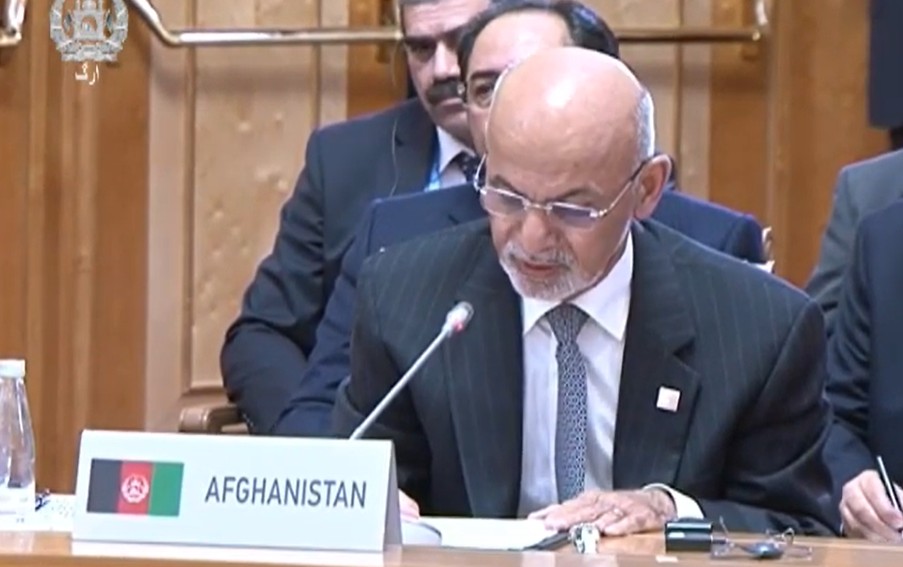
President Putin, Excellencies,
Allow me first to thank President Putin for providing the opportunity for this conversation.
Today, the Global Order is in flux. While there is consensus on the inadequacy of mid-20th-century "rules of the game," there is sharp disagreement on how to replace them with more equitable principles to regulate relations between states, non-state actors, and markets. The traditional discourse centered on inter-state conflict faces a fundamental challenge; unconventional warfare is posing new questions regarding the use of force, its adequacy, and its efficiency.
As state collapse becomes a recurring pattern, the question confronting us is no longer merely about fixing a weak link, but about rethinking a broken chain. While threats to the state system are increasing, our global response remains fragmented and episodic.
The Ecology of Terror
Terrorist and extremist organizations are exploiting this uncertainty to create an ecological system that allows them to manifest a fast-changing morphology and a rapid set of pathologies. This "Ecology of Terror" is:
Transnational: Operating beyond borders.
Symbiotic: Deeply linked with global and national criminal networks.
Technologically Expert: Utilizing New Media and digital tools with precision.
Disciplined in Violence: Using brutality to awe and overwhelm populations.
Socially Manipulative: Identifying and exploiting grievances and social fissures to create discord.
Our analysis shows that Daesh (ISIS), in contrast to Al-Qaeda, has moved from organization to orientation, decision, and action in a remarkably short period. In terms of wealth, territorial control, and recruitment, terrorism has undergone a massive shift. This manifests in an extreme pathology: brutality against individuals and a systematic attack on cultural heritage and forms of sociability.
Afghanistan’s Front Line Role
We in Afghanistan feel both the absence of global "rules of the game" and the concentrated weight of this terror. I wish to make three points:
The Narrative of Failure: Terrorist networks are betting on our failure. Should they succeed, our great neighbors—China, India, and Russia—as well as our neighbors near and far, will be directly in harm's way.
A Forced War: An all-out war has been forced upon us. We are fighting on behalf of the region and the world. In this fight, we must be joined by forceful and coherent collective action.
The Vision: The Afghan people seek to become the "Asian Roundabout"—the key hub in the revival of the Silk Road.
Expectations for the BRICS Leaders
What do we expect from the leaders of BRICS?
First: Lead in establishing new rules of the game to regulate inter-state relations.
Second: Implement an agenda for strengthening the state system. Without coherent states, terror cannot be overcome; it is the lack of inter-state cooperation that allows these pathologies to thrive.
Third: Secure agreement on a comprehensive strategy. Currently, our actions are partial and fragmented, while the enemy moves with coherence and decisiveness.
Fourth: Unleash economic potential by translating the Silk Road vision into an actual possibility. As long as there is massive poverty, there will be a "reserve army of labor" for terrorists to recruit. The young and excluded must have a place in our global order so they feel a sense of ownership over it.
Conclusion
In Afghanistan, we have the will not only to overcome the past but to marshal our energies toward a credible and feasible future. Our proposal is simple: view Afghanistan as a platform for cooperation, not as a theater of competition.
Let us work together to bring peace, stability, and prosperity to our interconnected world.
Thank you.