Remembering Kakar: A Scholar’s Impact on History and Unity
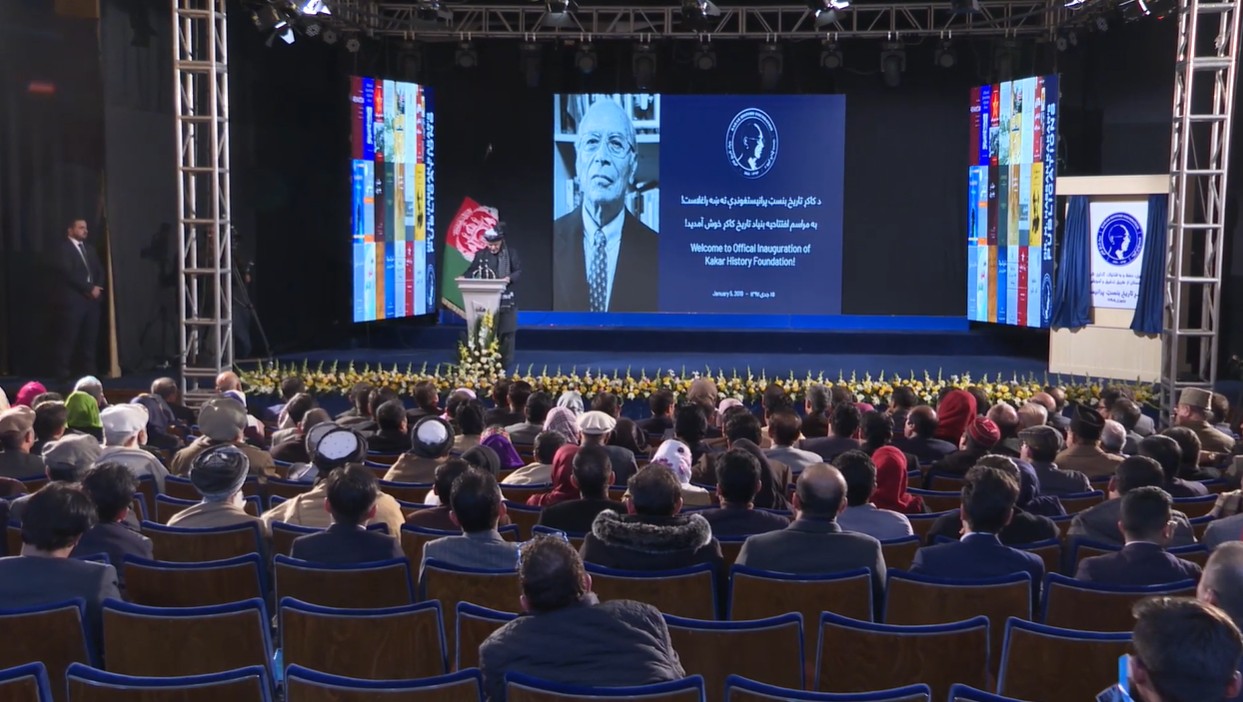
Speech at the Memorial Ceremony of Professor Dr. Mohammad Hassan Kakar and the Inauguration of the Kakar History Foundation
Keypoints:
- Kakar’s legacy: Honoring his role in shaping modern Afghan historiography.
- Scientific history: Promoting evidence-based and analytical historical study.
- Scholarly integrity: Upholding courage, humility, and intellectual honesty.
- Academic translation: Expanding access to global knowledge in local languages.
- Historical awareness: Understanding the past to guide future decisions.
- National unity: Using shared history to strengthen social cohesion.
- Balanced narrative: Acknowledging both achievements and tragedies.
- Cultural identity: Preserving linguistic and historical heritage.
- Youth education: Inspiring new generations of historians and thinkers.
- Future vision: Preventing repetition of past conflicts through learning.
RTA Kabul, Afghanistan
In the name of Allah, the Most Gracious, the Most Merciful.
Most esteemed and dear sister Maryam Kakar, Kawun Jan, Sabawun Jan Kakar, Khwaga Kakar, distinguished guests, professors, students, brothers and sisters, and admirers of the late Professor Kakar: Peace be upon you and the mercy of Allah and His blessings.
I stand here today to speak about a man I knew closely for decades—and even before meeting him for the first time, I knew him through his pen, his scholarly works, and his significant translations. I came to know him through his legacy. During the 1350s [1970s], when I was a young student of Literature at Kabul University, two of Professor Kakar's books were highly prominent: one was his translation of What is History? and the other was his Master's thesis, which had been published in book form and attracted great attention.
The Science of History
What is History? is a seminal work by the scholar E.H. Carr. Carr is an internationally renowned historian, specifically regarding the origins of the October Revolution. Of course, What is History? is not a history book itself, but a book about the science of history. This field is one for which the Muslim scholar and thinker Ibn Khaldun is considered the greatest founder. E.H. Carr's book is a vital contemporary work in this discipline.
During my student years, I read most of Carr’s works with great care. It is important to emphasize that Professor Kakar possessed a unique talent for translating complex academic concepts from English into Pashto, expressing them in a fluent and accessible language.
One might ask: why was a renowned Afghan historian so consistently engaged in translation? In my view, it was because Professor Kakar wanted to deepen his understanding of the scientific foundations upon which he wrote history. His role in translating pivotal works mirrors that of famous American historians in the first half of the 20th century, who popularized German, French, Italian, and other European methodologies and perspectives within American universities.
A major feature of Professor Kakar’s Master's and Doctoral theses was that they were written based on a meticulous comparison of both English and Afghan primary sources. Professor Kakar was familiar with every page of the Siraj al-Tawarikh. He also made precise use of sources from Britain, India, and elsewhere to analyze and clarify the conditions of contemporary Afghanistan. The era of Afghan history that Kakar discusses in his theses is close to our own time, which is why it remains subject to varying discussions and significant differences of opinion. While his work will be reviewed and different interpretations will be offered, there is no doubt that Kakar’s books will always be read and critiqued. His works serve as the foundational research necessary for understanding that period.
A Scholar of Humility and Courage
When I first met Professor Kakar, he had just returned from Harvard University and held a prestigious reputation. Yet, despite his fame, he was a deeply humble man. He never boasted in discussions about having studied at world-renowned universities in England or America or having met famous international scholars.
His character was that of a pure Afghan personality. We became friends and colleagues in a very short time. Professor Kakar and Professor Majrooh lived in Pul-e-Sokhta; I would bring them to the university in my car, often joined by Dr. Ghouth Shujaee, Rasul Amin, and Mr. Shpoon. May God forgive them all. We would sit in a room, considering even a tasteless cup of coffee a blessing, but our discussions were warm and substantial. We spoke about teaching methods for younger colleagues and students, engaged in deep discussions on "Afghanology," and shared our commitment and love for the homeland.
Just as he was a friend and companion to his juniors and peers, he showed immense respect for academic and literary elders such as Habibi, Ulfat, Benawa, Rishtin, Rishtya, Kohzad, and others. Professor Kakar’s humility was tied to his moral and political courage. After the April Coup and the Soviet invasion, he took a very strong stance and spent five years in prison. During that time, I remained in contact with his family. His self-sacrifice is a source of pride for us all.
Summary of a Legacy
While many scholars have spoken of his academic achievements, my own conclusion is summarized in these five points:
-
Foundational Role: In writing history based on modern methodology, Kakar’s role in Afghanistan was that of a pioneer, much like our great historian Kohzad.
-
Authority on Modern History: He holds such a status in contemporary Afghan history that any other historian writing on the subject feels compelled to read and critique his works.
-
Linguistic Innovation: He played a unique role in creating scientific historical terminology within the Pashto language.
-
Mentorship: As a university professor, he trained and nurtured many students.
-
Political Integrity: His political piety and principled stances hold a special place of importance.
Honoring such a person is not just honoring an individual; it is honoring a tradition. I thank Professor Kakar’s family and friends for establishing a history foundation in his name. Unfortunately, for centuries, most of our researchers and writers lacked the resources to dedicate their lives sufficiently to academic and literary work.
History as a Pillar of Unity
The stability of a society is not only linked to state-building and market-building. A society needs shared national values, and national unity must be proven to every citizen through action, not just slogans.
History generally has two parts: One is the part of shared values, sacrifices, great achievements, and common beliefs—where a child or youth believes they are the owners of this land, with rights and duties, as the heirs and protectors of their country for thousands of years.
The other side of history consists of the marks of pain, suffering, oppression, violence, and injustice. To have a bright tomorrow, we must not remain imprisoned in the shadows of the tragedies of yesterday. When despots built minarets [of skulls], they did not care where they were; they shed blood everywhere in Afghanistan. When they tied constitutionalists to cannons, it did not matter to them what their mother tongue was. Historians must consider both the positive and negative aspects of the past to maintain balance and understanding.
I believe that attention to Afghanistan's ancient history is essential for our future stability and prosperity. Afghanistan was historically at the cultural, political, and economic crossroads of Asia, and we must reclaim this position. Furthermore, becoming familiar with the cultural characteristics and historical honors of every region and province will allow us to better recognize and understand our shared pride. This understanding will help every Afghan work together toward a bright tomorrow based on equality.
Beyond understanding one another, we have no other path to unity. We must reflect on our pains, but not to look at each other with hatred. In my view, the pains of all Afghans are shared; only the way they are expressed differs. We all cry out that our village has been burned, and we cannot forget that pain—but the truth is, all our villages have been burned. Our goal must be to believe in the future and make the most of the present. There is a famous saying: those who do not learn from history are doomed to repeat it.
The goal of the Kakar Foundation, our scholars, and especially our young students must be to prevent history from repeating itself. To have a better future, we must understand our history.
I am certain we can overcome our historical tragedies. By focusing on the living part of our history—which drives our national identity and heartfelt emotions—we can find pride. In this way, the soul of Professor Kakar will always be at peace. I hope the Kakar Foundation succeeds in publishing his works. Next year, as we celebrate the 100th anniversary of independence and honor a thousand years of the history of our three national languages—Dari, Pashto, and Uzbek—and their connections, I hope the Kakar Foundation takes the lead. We commit to printing the major works of all our writers within this significant national discourse.
Long live Afghanistan!
Zindabad Afghanistan!
Yashasın Afghanistan!