A Foundation for the Future: Transparency, Generational Change, and the Rule of Law
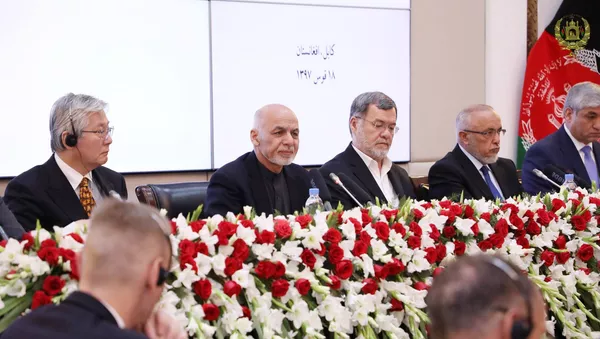
Speech at Commemoration of International Anti-Corruption Day - ARG
Keypoints:
- National Belief: Reform is a foundation, not a weapon.
- Six-Step Reform: Logic, planning, roadmap, will, action, and results.
- New Leadership: Replacing old networks with a younger generation.
- Zero Impunity: Applying the law equally to all, regardless of rank.
- Limited Power: Restricting the President’s authority over land.
- Merit-Based Hiring: Using transparent exams to stop nepotism.
- Digital Contracts: Using e-procurement to end secret deals.
- Fiscal Shift: Moving from foreign aid to trade and revenue.
- Accountability: Jailing the corrupt and rewarding the honest.
- Ethical Pledge: Implementing a voluntary code of conduct.
In the name of Allah, the Most Gracious, the Most Merciful.
Honorable Ustad Danesh, Honorable Chief Justice, Honorable Attorney General, Honorable Ambassadors, distinguished members of the Cabinet, Ambassador Yamamoto, Ambassador John Bass, Ambassador Nicholas Kay, all sisters, brothers, and compatriots—first, I offer you the greeting of the great leader of humanity: Peace be upon you, and the mercy and blessings of Allah. We are gathered here today in a very important meeting to discuss the plans of the Government of the Islamic Republic of Afghanistan in the fight against corruption and to renew our commitments in the path of anti-corruption efforts.
Defining Reform and the National Vision
The first point for discussion is that whenever we work toward reforms in the country, a group of people thinks that those leading the reforms are, so to speak, trying to "dig a pit" for others; they perceive reforms negatively. However, others believe that bringing reforms is the laying of foundations and pillars for a bright future. Why is there such a vast distance and gap between these two views? The reason is clear. Those who think reforms are for "digging pits" view them as a threat to their personal, group, and negative interests. But those who view reforms as the laying of foundations for a better future believe that reforms are essential and inevitable for the country's well-being.
The Six Dimensions of Fundamental Reform
What is required to distinguish between "digging a pit" and fundamental reform? Reform has six essential dimensions:
- Belief; there must be a belief that reform is necessary and inevitable, and this must turn into a national conviction.
- The Plan; belief alone is not enough; a specific plan based on a clear analysis of problems and defined goals must be established.
- The Roadmap; a specific map must exist detailing which work and which reforms are to be implemented, at what time, and in what manner.
- Willpower; reforms everywhere in the world inevitably face resistance; there must be the will to ensure one does not retreat.
- Implementation; a plan remains just paper unless there is a clear and specific mechanism for implementation.
- Results; results must be proven to the people. If results are not tangible, it all remains mere talk. Therefore, it is essential to revisit the previous five steps based on these results.
Impact of Corruption on Youth and Civil Service
Dear friends, esteemed compatriots! Who pays the price of corruption? In the past, the Kankor (university entrance exam) was a clear example of corruption. Dozens of our youth committed suicide, and thousands lost hope because of corruption in the Kankor process. Clearly, it is the children of the poor who pay the price for this injustice. However, with the establishment of the National Unity Government, extensive reforms were made in this field. Here, I thank Mr. Rasouli who, at that time, was able to make the Kankor process transparent by creating a new system. A few days ago, one of the young people who visits the Arg every week from the districts told me, "Now we believe that the Kankor process ensures that rights reach those who deserve them." Furthermore, who previously believed that an appointment could take place without being based on personal connections? We thank Mr. Naderi and his colleagues in the Administrative Reform Commission, who carried out twenty-two thousand appointments with complete transparency. The speed of these appointments, despite our youth wanting even more speed, is unprecedented in the region.
Judicial and Procurement Progress
The Justice and Judicial system—who believed that a prosecutor or a judge would not make decisions based on corruption? We thank the Chief Justice, the Attorney General, and our entire judicial apparatus! Specifically, remember that thousands of cases had remained unresolved for years. Today, by the grace of Allah, if cases remain in the Supreme Court of Afghanistan, it is only from one quarter to the next; the past is being cleared. Contracts—who believed that a contract, especially in the Ministries of Interior and Defense, could be completed without "connections"? The meetings of the National Procurement Commission brought about a fundamental change. I thank Mr. Yari and Mr. Hotaki because today Afghanistan is progressing toward the digitalization of procurement.
Historical Accountability and Infrastructure Management
Examples are many, and we will not go into all of them; but what is the most important issue? After September 11, there was a deep affection for Afghanistan, and billions of dollars arrived. Why were our waters not managed? Why were our roads not built? Why were the foundations of our infrastructure not laid? It is because we did not manage the money; we prioritized personal interests over national interests. The result is that today the world asks, "We helped you, but what did you do for yourselves?" And we must answer these questions. Hundreds of Rangers were delivered to the Ministry of Defense; ask Mr. Barmak to whom these were distributed. Why were police Rangers distributed to civilians? On what basis, under what rule of law, and under what claim were these arrangements made? We have now collected them, but there was resistance against every single one collected.
Land Governance and Legal Limits
The grabbing of land—by whom was this grabbing done? Are these not families who were given anywhere from ten thousand to one hundred thousand acres? On what basis? Does the law of Afghanistan not state that the President of Afghanistan does not have the authority to give even one acre of land to anyone? I thank Ustad Danesh. On the first day we arrived, he said that the authority to claim property does not belong to the President; it must be done according to the law. Again, I thank Ustad Danesh, the Chief Justice, and the Attorney General for limiting the President's authority to less than one acre of land, and thank God, they saved me from a massive headache. There are many examples of reform, and in this section, I specifically want to thank Judge Anisa Rasouli for her courage and bravery.
The Martyrs of Anti-Corruption and Generational Change
It is fitting to name two specific individuals who are not with us today as "Martyrs of the Fight Against Corruption": the late Sayema, a judicial staff member, and the late Toryalai, also a judicial staff member. The Attorney General had a special affection for them. Toryalai was one of our marksmen; the traitors did not give him enough time to reach his sidearm. Why? Because they were being threatened over their case files. Mr. Attorney General, I want special attention and real recognition to be given to the families of these two martyrs of the anti-corruption struggle. One of the ways to fight corruption is changing the generation; the young leadership now standing before you faced intense resistance to get to this point. In our institutions, if we do not use committed and young leaders in human resources and do not place them there, it means we will backslide. Do you want to support our plan in this process? Because this is the only way to eliminate corruption—or do you want to go backward?
The Choice of the Nation and Rule of Law
The nation has a clear choice. If we do not want reforms, what is the alternative? My will and that of the government is to dry up the roots of corruption; how the situation was before us is left to the judgment of the nation. This movement will continue. This is not the sole duty of the President and the government; here, the role of the people, the media, civil society, scholars, and all strata—especially the women of Afghanistan—is extremely important. Corruption and injustice prevent the implementation of the Constitution, and ultimately, corruption is a major cause of hunger and insecurity. Forty percent of this nation faces hunger; do we not have the right to ask why our projects are not better, not effective, and why rights do not reach those who deserve them? Do we want one hundred people to become billionaires while thirty million live in hunger? Or do we want five million families to all possess a prosperous life?
International Cooperation and Recognition of Merit
We have done much work in this regard, and much remains. We will move forward and, God willing, we will reach the destination because the fight against corruption is one of the important values of the holy religion of Islam. In the war against corruption, the aspect of rewards and punishments is also important. Under the National Unity Government, many high-ranking civil and military officials have been placed under investigation and questioning and are now in prison. I specifically thank the Justice and Judicial Center, the Attorney General, and the Chief Justice, and I thank Ustad Danesh from the bottom of my heart for the drafting of laws and regulations—and also our international partners! In terms of rewards, much action has also been taken. I want to say that Mr. Naderi's work in the civil service sector is commendable. The fact that we have met the World Bank's indicators is due to the very commendable efforts of Mr. Ajmal Ahmadi. In the Kankor sector, Mr. Rasouli, and in the judicial sector, Judge Rasouli. I announce today that medals will be awarded to Mr. Naderi, Mr. Rasouli, Mr. Ahmadi, and Judge Rasouli. My request to Ustad Danesh is to sit together with the Chief Justice and the Attorney General to broaden the chain of appreciation and designate a special day to honor the fighters of the struggle against corruption.
The Ethical Pledge and Closing Remarks
Here, I want to mention one more thing: the network of young high-ranking officials of the National Unity Government has voluntarily prepared a pledge. According to this pledge, they have accepted a series of ethical codes for their daily official and personal lives, which they wish to sign today in my presence. I thank Mr. Wali Tamim for his hard work in composing this plan. Finally, I want to thank our international partners, and specifically the three Ambassadors sitting to my right, because the fight against corruption is a shared responsibility, and their assistance must also become clearer, more effective, and more comprehensive day by day. Long live Afghanistan! Zinda bad Afghanistan! Yashasin Afghanistan!