Connecting Afghanistan to the World: Pine Nut Exports, Agricultural Development, and Economic Growth
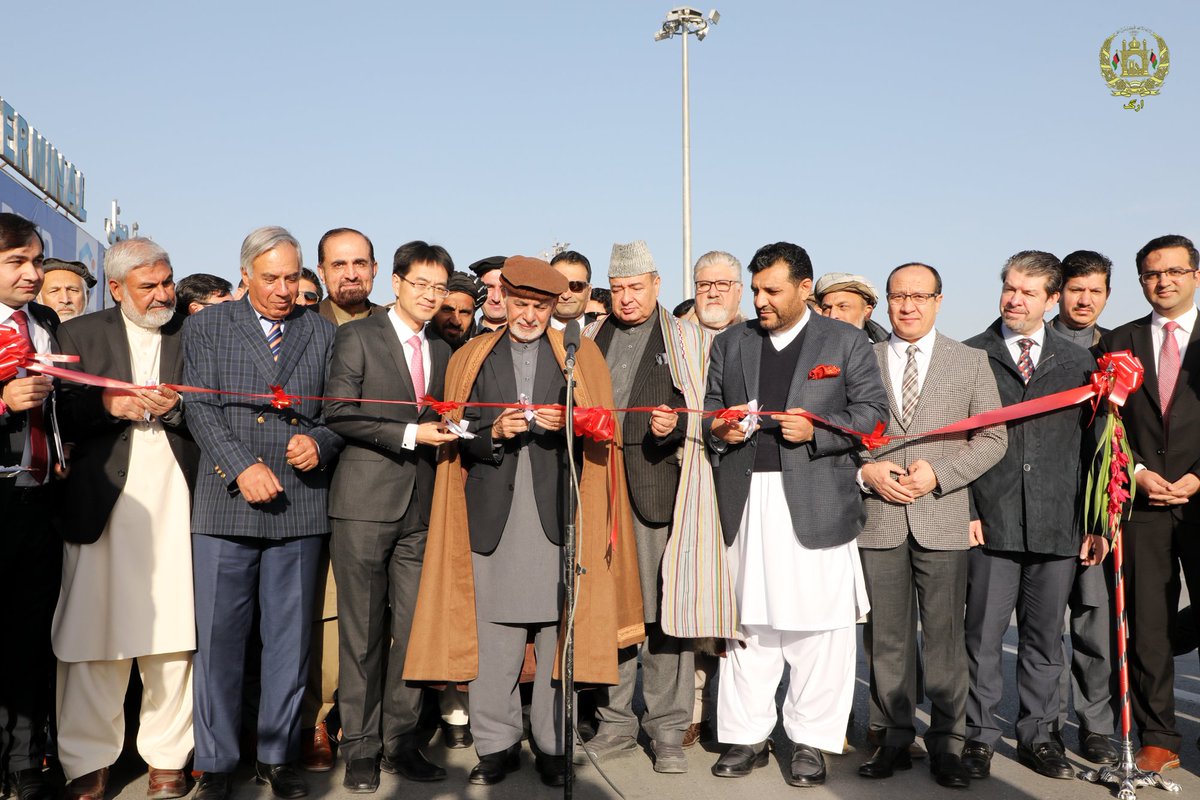
Speech at the Afghanistan–China Air Corridor Inauguration
Keypoints:
- National Symbol: Nov 6 is "National Pine Nut Day" to unlock national wealth.
- Grassroots Initiative: Honoring the export vision from Paktia, Paktika, and Khost.
- Self-Reliance: Replace foreign aid with domestic investment to drive prosperity.
- Value Chain: Move from raw exports to local processing and global standards.
- National Identity: Ensure all products reach the world under "Afghanistan" brand.
- Regional Opportunity: Tap the 2.6 billion-person markets of India and China.
- Direct Marketing: Connect local farmers directly with international buyers.
- Decentralization: Shift project management from Kabul to provinces and districts.
- Professional Unions: Form unions to streamline exports and attract investment.
- Soft Power: Use exports to boost Afghanistan’s image and promote peace.
Kabul International Airpot
In the name of Allah, the Most Gracious, the Most Merciful.
Honorable Dr. Qayoumi, Minister of Economy, Minister of Agriculture, Minister of Commerce, Head of Aviation, Honorable Governors of Nangarhar, Kunar, Paktia, Paktika, Nuristan, Laghman, and Kapisa; Mr. Momand, Mr. Helmand; all elders, attendees of this assembly, Deputy Minister Kamela, sisters and brothers—first, I offer you the greeting of the great leader of humanity: Peace be upon you, and the mercy and blessings of Allah.
Our dear guests, the Chargé d’Affaires of China and their colleagues, first and foremost, I congratulate you on this day. Today is a historic day where our hidden treasure is transformed into national wealth. In honor of this day, from now on, the 15th of Aqrab will be celebrated every year as National Pine Nut Day.
A People-Led Initiative and National Recognition
We must understand our hidden treasures. This initial idea started from the people, and it is essential that we mention and thank them. The concept began when people—specifically from thirteen districts and the three largest pine-nut-producing provinces: Paktika, Paktia, and Khost—came forward, and the network then expanded to other provinces. This massive wealth of ours had been neglected. Afterward, many individuals exerted great effort in this cause. Again, I thank Mr. Basharmal in the Administrative Office of the President, Mr. Durrani, Mr. Ahmadi, Mr. Qayoumi, all colleagues in the civil aviation sector, and especially the honorable President of China. You may remember, during my first visit to China, I spoke constantly about exports. At the end of that trip, a minister—Mr. Zakhilwal—asked me, "Are you the President of Afghanistan or a merchant?" I told him, "Whatever Afghanistan produces, I sell it with pride and I honor it."
The Vision of Sovereign Exports and the Value Chain
The reason I express my gratitude in this way is that the development of every sector of Afghanistan’s wealth requires everyone’s cooperation. This is a noble chain of rings. If one ring is missing, we will not achieve the result. Today we start with 30 tons; tomorrow, God willing, it will be 30,000 tons. We must not be satisfied with just starting at 30 tons. What was the truth? What was the bitter truth? The bitter truth was that Afghanistan was the world's largest producer of pine nuts, but nowhere would you see Afghanistan’s production recorded as more than 3,000 tons.
While the private sector, producers, and governors estimated it at up to 5,000 tons, think about what happened to the rest. The rest, without bringing us any profit, were sold for two or ten pennies and then re-sold for more. We were left with crumbs while others profited from us. I thank the private sector; their message to the world is that from now on, Afghanistan’s products will be exported to the world under the high name of Afghanistan, not in the name of anyone else. We bear the labor, God Almighty gave us the pine nuts, but others were playing with them. It is essential that we become the owners of our national capital. Mr. Momand, I thank you and the private sector; Mr. Helmand, I thank you and everyone else who has endured so much hardship.
Economic Self-Reliance over Foreign Aid
I specifically want to thank the private sector. This is for the benefit of all; legitimate money will reach the pockets of those in the villages where pine nuts grow. They work very hard, but for centuries, we lacked the capacity to turn this into a standard, to provide quarantine facilities, and to create the ground for it. My third point concerns our hidden treasures. In these seventeen years, the world has been very generous and helped us a lot, but another result of this was that we became very lazy. Every day we look for someone to give us anywhere from 20,000 to 20 million dollars.
In the history of the world, no country has ever reached the middle class through foreign aid. Real capital is the development of our own assets. For this, it is necessary to understand that at least 40% of our citizens are still engaged in agriculture, livestock, and forestry. These pine nuts are the first part. My hope is that every item of Afghanistan's production turns into a value chain. There were other plans; the Ministry of Commerce had worked on industry and trade, but plans are not enough. We want action. Those who claimed that speed is impossible in Afghanistan should put that thought out of their minds. When the first air corridor was created with India, what did the pessimists say? "This isn't practical," "What is this madman saying again?" How did it turn out? Was it madness or wisdom?
Global Market Access and Strategic Partnerships
We thank the great country of China. What the Consul and the Chargé d’Affaires said is very important. First, the Indian market was opened; over a billion people are familiar with the name of Afghanistan. Today, China wants to bring our products to its 1.3 billion people. If you add these together, it reaches 2.6 billion people. Are these people not enough to stand Afghanistan’s agriculture and exports on their feet?
So, my request is that we truly move toward the development of our assets because everyone profits from this. It is not just the private sector profiting while the producer or middleman does not. What does developing our assets require? It brings prosperity to the villages. When there is money in the villages, other things become ready: health, and especially education. From this perspective, it is necessary to see pine nuts, pistachios, cumin, and hing as national capital. If you look at the major points of our exports, unfortunately, they are without processing.
The Strategy for Processing and Direct Marketing
Now, what is my request? In the second and third steps, move toward processing. Without moving toward processing, you are still only exporting raw materials. I thank Mr. Durrani, and the fundamental point is that on the day of the exhibition, a farmer from Herat summarized the fundamental philosophy of changing Afghanistan’s agriculture in seven minutes. This farmer was a grape producer from Injil district; he said two things: First, in the production sector, we have sufficient progress—other remaining problems we can solve ourselves; just develop and expand the air and ground corridors. Second, and his main point, was: "Connect me directly with the consumer and the buyer." He said, "I don't want to produce something that has no buyer; I want to produce something with the quality the buyer wants."
This is a revolution, and I truly welcome it. Because the Afghan farmer, the orchardist, and the protector of pine nuts doing this work represents a fundamental change. I specifically want to thank Paktika, Paktia, and Khost. If this has happened in other places, I am unaware—other governors should share the information with me. I thank the people; in these three provinces across thirteen forest districts, they have established regulations and a firm, intrinsic rate so that from now on, no one will cut down pine nut trees. A great movement has emerged among the people. We must work with this movement.
Directives for Decentralization and Professional Unions
What is my request for us to work together? It is very simple. What do I want from the producers? Unions—national unions of pine nuts and other major exports—created by the producers. I know you have taken intrinsic steps to establish these so that we have an address. We cannot work individually with every village and every district; it is necessary that these unions be created. To help them, my directive to the Ministry of Agriculture and Irrigation is to carry out its technical work in each of these provinces through the universities.
I thank the governors who all proposed nurseries. Mr. Durrani, currently these other projects are managed from Kabul; they don't go out and travel to the provinces—all the spending happens here. I want the Ministry of Agriculture's projects to be province-centered and then reach the districts. By doing this, we will know where the capacity exists. Unfortunately, we had only one pine nut specialist here, and he was working in the Kabul Municipality. It is necessary to work in this area. Second, the processing union is necessary. You have created one, but I want it to turn into a truly organized union. Third are the exporters' unions. If you create these, the ground will be paved for loans and assistance for your exports, and especially for our state and private banks to invest in this sector, God willing.
The Economic Image of Afghanistan and National Unity
Every major item of Afghanistan’s exports will change in this manner, God willing. At the same time, our agricultural imports are still excessively high. My call to the industrialists is to make a fundamental investment in products that reduce our imports and increase our exports. Mr. Momand, your words are accepted a thousand times over! I will meet with all those who suffered losses as soon as possible. I have followed up on it; I have appointed a committee, and Mr. Sarfaraz, who worked extensively on the Kabul Plan, is the head of this committee. Whenever the private sector desires, and especially when a bad incident occurs, the state is ready to cooperate. God willing, we will meet soon.
Again, I congratulate you all on this historic day. The fact that you have come from distant places—this is a Hashar (community mobilization). Today you represent a national Hashar. Every person in this hall represents a state, private, or community institution. You have gathered with love; maintain this coordination and this love. The result, God willing, will be the prosperity and peace of this nation. Whenever people see Afghanistan's produce or "Made in Afghanistan," it changes the image of Afghanistan for the world. This is as important as cricket, because next time in these exhibitions, people will look at the flag of Afghanistan in a different way.
Thank you