Martyrs’ Week: Honoring Heroes, Supporting Families, and Promoting Unity, Justice, and Peace
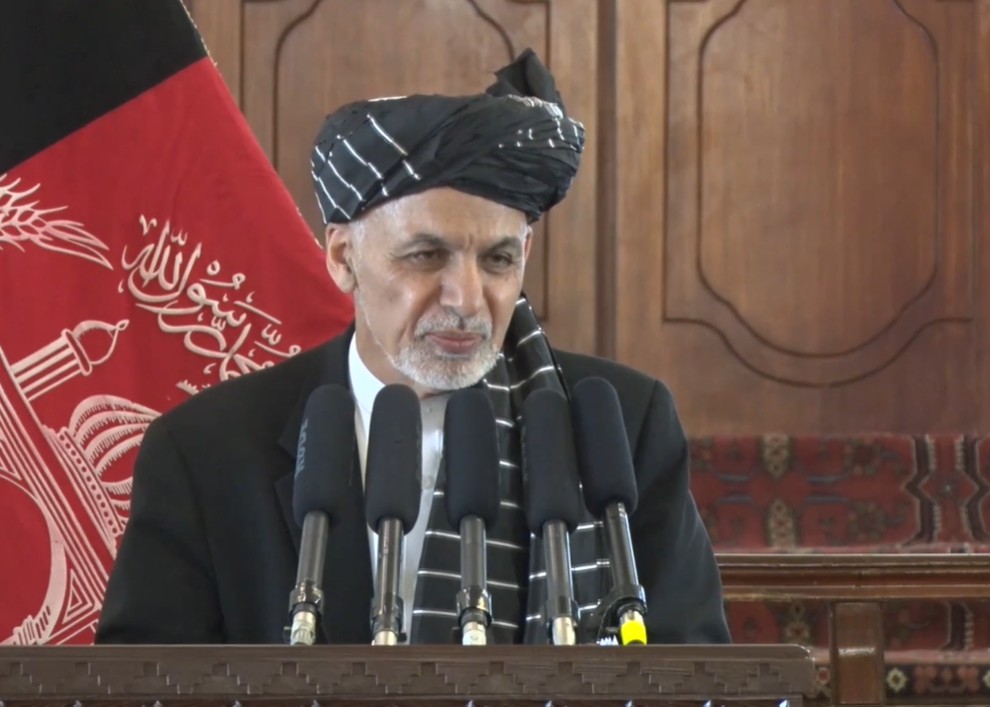
Speech at Martyrs’ Week
Keypoints:
- Social Contract & Stability – Balance economy, justice, and compassion.
- Unity in Grief – Martyrs’ pain is shared across all provinces.
- State Debt – Government must repay families of security forces.
- Inclusive Administration – Hire martyrs’ relatives in government offices.
- Military Reform – Replace checkpoints with mobile, defensible bases.
- Economic & Direct Aid – Food coupon system and NGO fund for families.
- Education & Opportunity – Scholarships and exam bonuses for martyrs’ children.
- Religious Support for Peace – Scholars declare conflict illegitimate, promoting peace.
- Unified Voice – National unity pressures international actors against terrorism.
- Respect & Dignity – Ban aerial firing and chaos during Martyr’s Week.
In the name of Allah, the Most Gracious, the Most Merciful
My dear compatriots, children and heirs of the rightful martyrs of the Afghan nation, esteemed persons with disabilities, distinguished guests, sisters and brothers: First and foremost, I offer you the greeting of the Leader of Humanity—Peace be upon you, and the mercy and blessings of Allah.
It is only fitting that we first offer our prayers to the souls of all the rightful martyrs of the Afghan nation, the martyrs of our security and defense forces, and the victims of bloody terrorist incidents across the country. I pray for the swift and complete recovery of the wounded from the Almighty. I convey my condolences to the great and Muslim nation of Afghanistan on the occasion of Martyrs' Week and the arrival of the decade of Muharram.
I am honored to stand before the heirs of those who proved their commitment to this beloved homeland with their blood. It is the continuous sacrifice of your fathers and brothers in the security and defense forces that has paved the way for the persistent and fruitful efforts of the National Unity Government in the arena of international and regional relations. Many of you rightly mention our successes in international and regional politics, but had it not been for the pure blood of your fathers and brothers, not a shred of our work would have reached fruition. As Commander-in-Chief and President, I take pride in their courage and resolve, and in appreciation of their supreme sacrifice, I bow my head in respect.
Vision for Stability and Social Contract
Before I focus on your proposals and views, I wish to share a few points regarding Martyrs' Week and our collective vision:
On this occasion of commemorating Martyrs' Week, I propose that a new perspective is needed for this discussion. The core issue is that for the stability of a society and a country, a vital instrument is the Social Contract. Without a social contract that is implementable, a nation cannot achieve stability. In other countries, a consensus on the social contract led to stability after long, dark periods in most of today's developed nations. This means that through a social contract, people created a balance between justice and compassion.
All countries that have reached stability have established a balance between economic mobility, justice, and social compassion. If economic progress exists without social justice and mercy, it is a jungle. If the government is not accountable, there is no rule of law; and if the community is not a partner and does not participate, justice remains unfulfilled.
My point is that if we do not reach such a balance, our pains will not be healed. First, if we look at these past forty years, such grief and calamity have befallen our great people that had it happened to others, they would have dissolved. It is the immense patience and high resolve of the people of Afghanistan that we did not dissolve. The enemies of Afghanistan have always bet on our dissolution, but they will take that wish to hell.
Behold, the pain is universal; therefore, the remedy must be universal. You have come from all 34 provinces of Afghanistan—does the pain of one martyr’s family differ from that of another? Why do they sow division within your pain? Why do they turn a shared grief into small, fragmented pains? We will not allow small pains to stand against our great, collective suffering. Because of two reasons, our society has not yet reached the stage of establishing a balance between growth and compassion.
You are all correct in what you say—had we reached this balance, today’s gathering would not be necessary. Because extremes do not bring stability to a country; wealth made of "wind" (corruption) differs vastly from wealth made by the hand and the sweat of the brow. Wealth that serves the nation and is constructive is vastly different from wealth that is transferred to foreign countries.
First, in our country, everyone feels they are the victim and that more injustice has been done to them than to others. Second: everyone believes that their share in the sacred Jihad of Afghanistan was no less than others, if not more. Therefore, we must reach a solution where our grief becomes shared rather than exclusive.
Let us accept and collectively reach a consensus that Jihad and martyrdom are our shared honors, and let us all accept with one voice that our great nation shares in these glories. Is there any part of the Afghan nation not present in this hall today? Is it not one shared grief? Whether Mr. Bashardost speaks or Mr. Safi speaks, it is the same message—whether in Pashto, Dari, Uzbeki, Turkmen, or Pashayi. Our means of communication differ, we speak in different accents; but we are one united nation. Once we accept this reality from our hearts, we must also accept that we are indebted to the families of our martyrs, our wounded, and our disabled—especially those of our security and defense forces. We always mention these words; but if we do not accept our debt, we will fail in its repayment.
Thank you, Mr. Safi, for saying that you will not leave this hall without a commitment! May your home be prosperous! We will assess the destruction in those areas and sectors of society that have suffered most. We will consider their reconstruction our responsibility, and in this way, we will fulfill our debt and responsibility toward the families of the martyrs, the disabled, the wounded, and all our compatriots.
Regrettably, in the past 17 years, this consensus was not reached. We always made mentions, but we never arrived at a practical program on how to repay this debt. Today, I thank you for initiating this discussion—that you demand your rights and you demand your debt!
Third, we must define justice. Just as it is written in your resolution, and as I gave you examples of other countries, we must reach a consensus on how to transform our Constitution into an economic and social system. The values you desire are all embedded in the Constitution; what is needed now are practical methods and specific programs. It has now become a tradition to commemorate the status of martyrs for one week or one day, but the vision and goal I mentioned earlier cannot be achieved just by a week or a day of celebration. Habib-ur-Rahman Khan said it well: once you leave here, you should still have a place in my heart. Ask these Generals—you have a permanent place in my heart, because not a day or week goes by that I do not inquire about your well-being.
Critique of Negative Behaviors and Call for Strategy
Let us transform our vision into systematic actions so that a positive movement is created; to this end, we require a national discourse.
By firing weapons into the air, creating noise and commotion in the streets, and fostering an atmosphere of fear and dread, we do not fulfill our responsibility or our debt to the martyrs, the disabled, and the wounded. On the contrary, through these unproductive acts, our dear citizens are distressed, and the ideals of the martyrs of the Afghan nation are desecrated. The character of our martyrs—of the Martyred Masoud and all our fallen heroes—is far more sublime than to be associated with such negative behavior.
Now, what must our strategy be? we were losing martyrs; even now, we lose them every day. We all wish to provide aid and opportunities to the families of martyrs, the wounded, and the disabled, but this must be raised before the nation: where will this aid and these resources come from, and how will they be provided?
For forty years, blood has been flowing. If we continue in this current state—where disorder prevails, the objective is lost, the social contract is ignored, and we resort to public clamor and aerial firing—we will never achieve sustainable stability.
National Goals, Justice, Self-Reliance, and Unity
What is the goal? Next year marks the 40th anniversary of the Soviet invasion of Afghanistan. Forty years is enough. We want stability—sustainable stability within the framework of an Islamic Republic of Afghanistan that is nation-centered and democratic. Let the nation of Afghanistan, with full freedom, determine its own political class and leadership. Do you claim a hereditary right in the 21st century? Do you wish to return to hereditary systems, or shall we consolidate and strengthen a popular system so that rights are granted to those who deserve them?
Based on the definition of justice, how do we bring about social justice? We must clarify that justice cannot be ensured without building a just system. I want to make one thing clear: a just system is not built with foreign aid. I repeat: a just system is not built with foreign aid. It is built only by our own strong arms! And in our Islamic society, this just system is realized only through the principles of the holy religion of Islam, such as the Treaty of Hudaybiyyah and the life of the Prophet Muhammad (PBUH).
The foundation of the holy religion of Islam is justice, not force. Without justice, no army can be formed, no taxes can be collected, and no commerce can take place.
If we expect outsiders to build a system for us, or to save us from hunger and poverty, it is clear that we are forgetting our own responsibility. No nation that has forgotten its responsibility has ever achieved success. Is there not a Quranic verse stating: "Indeed, Allah will not change the condition of a people until they change what is in themselves" (Surah Ar-Ra'd, Verse 11)? Therefore, we must accept our responsibilities and work together in a sustained and collective manner. International experience has proven that sustainable economic mobility and balanced development provide the foundation for social justice. When we speak of the distribution of resources—if you divide zero by anything, does it become more than zero? If you divide half a loaf of bread, how many people will it reach? The point is that a bread factory must be built, rather than quarreling over the division of half a loaf. God has given Afghanistan everything. We must think systematically to utilize our natural and human resources.
Behold; the elections for the Parliament, District Councils, and the Presidency are ahead of us. You must turn the elections into a national discourse, in such a way that our unity, social justice, and religious solidarity are represented within them.
Confidence in our security and defense forces exists, and now is the opportunity to end forty years of war and crisis. In your presence, I clearly declare that as the Commander-in-Chief of the Afghan Armed Forces, I am proud of our security and defense forces. Which of them did not have a choice? All the security and defense forces of our country are volunteers. Which of them has not made a sacrifice, and which of them has not endured a hundred slights? Let one point be clear: they took the place of one hundred thousand international troops. All international and regional experts were involved in this analysis and had reached the bleak conclusion that they would—God forbid—collapse within six months. Did they collapse, or are they growing stronger every day? You, the righteous children of these martyrs and the heroes of this land, have the right to demand that others invest in our defense and security forces.
As Mr. Safi, Mr. Bashardost, and Habib-ur-Rahman Khan [members of the National Assembly of Martyrs' Children] have stated, today there is an attack on our unity, our civilization, and our religious and historical solidarity. We must understand why West Kabul is being attacked. Our Hazara brothers and sisters are our own. Every follower of the Jafari school and every member of the Shia community is the pride of this nation. We are the epitome of national unity; every one of our languages is a language of pride, every tribe of Afghanistan has a great history, and every province was the cradle of a state or an empire. They failed to consider four thousand years of history and a great cultural civilization; they imagine they can erase us from the map. Let the enemies of Afghanistan clearly understand that this nation cannot be erased. Anyone who has harbored the dream of erasing this nation has found their grave in our mountains and valleys. However, the necessity is for us to realize our collective and national responsibility; political factions, the political elite, civil society, Afghan women's networks, media networks, and scholars—now more than ever, our alliance and unity are essential and mandatory. A single voice carries immense influence; if the voice is fragmented, even with the same goal, it does not have the same impact. A single voice must rise from all sectors, saying: we want peace, an end to war, stability, and dignity.
When we say we must define the war, it means that the current conflict is regional and international. The 40-year crisis can end because there is international consensus and unprecedented pressure on terrorist groups and their supporters.
In this, God willing, have no doubt: a price has been placed on my head, and you know what thoughts must be in a head for it to have such value!
The strategy of the United States for Afghanistan and South Asia is the strategy that the people of Afghanistan have wanted for 40 years—that the stability of Afghanistan be guaranteed within the framework of a secure region.
The possibilities for peace are better than ever before; the nature of the war has changed, and the Afghan security forces have shown that they have taken the place of advanced and equipped international forces, and by the grace of God, their strength will increase day by day. So the question is: do you want us to isolate ourselves just as we are nearing peace? What is your second alternative? Do you want the world to send one hundred thousand soldiers back, and who wants this? I want a clear answer! We are close to peace; in this state, is the nation's choice to go into isolation, or do you know that bringing Afghanistan out of isolation over the past four years is one of the prides and achievements of the National Unity Government? Now that your righteous children have proven they can take the place of one hundred thousand equipped international soldiers, do you still want to call them mercenaries and subject them to judicial prosecution? Why, before the National Unity Government, did the political leaders of Afghanistan not visit our corps, and not attend the headquarters of the Police and National Security? Are you not worthy of pride? Are you not proud of your mothers? Is their blood not pure? I want us to answer the questions: is it not my duty under the Constitution to look after every soldier, every sergeant, every officer, and every general? The son of the martyred Ghori is sitting here. Was it not my honor to carry your father's coffin on my shoulders? I am proud that we carried the coffins of the Generals of Afghanistan on our own shoulders.
In the region, some wish to destroy our international relations. Why should we lose through raw emotion that which we have gained through intellect and sacrifice?
When emotions are combined with logic and a plan, there is no greater moral force. But if emotions exist only as emotions and are not joined with a plan, they—God forbid—lead to destruction. The necessity is clear: we must direct our emotions. We must clearly distinguish between our friend and our enemy, and more than anything else, what has always been the cure for our pain is our holy religion, national unity, religious harmony, and our sense of sacrifice and commitment to social justice and the equality of every Afghan.
Specific Responses to Proposals and Executive Commitments
I shall now address your specific initiatives and proposals:
First, I thank you for your initiative! We have long been searching for a single, direct address to engage with. Whenever I inquired of these Generals at the Supreme Command, they brought me reports, but one thing was always missing: your perspective—the pain in your eyes, your tears, your sense of deprivation, and your pride. Today, you have provided that address for the country, and I welcome it.
Mr. Safi, instead of starting from the beginning, I will start from the end, as Mr. Bashardost also raised this point. My directive to the Office of Administrative Affairs of the President, the Ministry of Martyrs and Disabled, the Ministry of Labor and Social Affairs, and the Supreme Command is this: transform this institution into a clear office for government cooperation and provide them with a dedicated office space in the city of Kabul.
Secondly, I speak plainly. These people want "cash, not credit"; they want action, not promises. Therefore, in the very first round of appointments, through a transparent process, the survivors and families of martyrs must be absorbed into the Office of the President, the Ministry of Labor and Social Affairs, the Ministry of Interior, the Ministry of Defense, and other institutions—including the Ministry of Finance, which plays a direct role in these matters. Establish a transparent method so the best among you can return to serve and represent you. Do you accept this?
The third subject is the medium-term vision. Mr. Bashardost mentioned that these families must be cared for. From the perspective of sustainable economic relations, what is the international experience? International experience suggests that a neutral, non-governmental entity should be established to assist the martyrs, the wounded, and the retirees of the security and defense forces. Establish a clear fund with the help of the Office of Administrative Affairs and the Ministry of Labor and Social Affairs. There are vast international funds, especially in the United States, the United Kingdom, and countries that have historically provided significant aid to Afghanistan, which can serve as a bridge. This is essential; our current resources alone are insufficient. Action in this area is a clear necessity.
The next topic is your proposal regarding the monitoring of the implementation of benefits already enshrined in law, to which we are committed. Create a clear system with these departments so that the role of oversight does not turn into a role of interference. Monitoring means you collect data and figures and share them with a high committee led by Mr. Zaki so they reach me. But oversight must not turn into interference like some others; therefore, your neutrality for all families is vital. In this way, God willing, we can move forward.
For urgent assistance to the families of the fallen in the security and defense forces, within two months, a coupon system for ten thousand people will be implemented in Kabul as an initial trial, and later expanded across Afghanistan. This will be a fundamental aid; I have not taken this step anywhere else. Today, I give you a firm promise that this will be implemented for the families of martyrs. My hope is that if we secure internal resources, this will reach all security forces and then civilians—but you are the first priority.
Another point was regarding "obstacles and delays." I do not forget my words; I have written them in my notebook, but they are engraved in my heart. Form a technical group for this specific purpose to identify every obstacle and delay in coordination with the Office of Administrative Affairs and the Ministry of Labor and Social Affairs. See where the blockage is, and I will then issue a decree to bring about a fundamental change. The implementation of the law lies in these three articles. I thank Mr. Qatali for his hard work—4,000 scholarships in private universities have been allocated to the families of martyrs and the security forces. Work with Mr. Qatali to ensure their fair distribution.
Your other proposal was to "level the playing field" in competitive exams. In this regard, Mr. Qatali, please draft a clear order for the Civil Service Commission to facilitate their participation and grant them at least a five-point bonus or more. The field of competition has not been level for them. Think of those who were seven, five, or ten years old when the news reached them that their father or brother was martyred. That day is unforgettable. They hoped their father would return with a gift in his pocket to embrace them and soothe their pain with stories, but the next day, their name changed to "orphan."
The pain of an orphan is a very hard pain in Afghanistan, but do not forget that the greatest figure in human history, Prophet Muhammad (PBUH), was an orphan. Therefore, a ten-percent clear preference must exist to understand the hardships faced by these families. My further instruction—and Mr. Zaki and Mr. Naderi, you must work on this—is that before exams are held for vacant posts, create a transparent system to provide them with recruitment opportunities. Mr. Qatali should take the first step right here in the Presidential Palace—within the National Security Council, Administrative Affairs, the Chief of Staff’s office, and all presidential departments.
You asked me to trust you; I trust you implicitly. If I did not trust you, why would I be speaking with you? There is a path from heart to heart; if tears fall from your eyes, blood drips from my heart. The worst part of my day is early morning when I hear the figures of the martyrs. At that time, no one can speak to me for twenty minutes because I am coiled in pain like a snake. But this martyrdom is for a great goal: to end this crisis.
You came with two major points, and I want to provide solutions for both. First was the prevention of casualties. Most of our casualties, unfortunately, resulted from wrong decisions in the deployment of forces. In offensive operations, we suffered the fewest losses. Our losses occurred because of excessive social and political interference that placed army and police checkpoints in unsuitable locations. Security does not come from a static checkpoint; it comes from a mobile, active force. That is why I need your voice—we must consolidate our forces. A base of one hundred people can defend and attack better than a base of five. You do the math. Therefore, the deployment of our forces must become a national discussion; we must make the Army and Police mobile again. We became grounded in thousands of locations. Small resistance is meant for a big goal. I declare here that we must all conclude that the "deployment of forces" is a science—a clear science—and not everyone can do it. If we do this, we will prevent many casualties. My promise to you—and you may ask these Generals—is that I am constantly working on this. But our fundamental dream is a sustainable peace. You told me to take action!
Brothers, sisters, and dear ones! If they want my head for the sake of peace, I will give it with both hands!
We want intra-Afghan negotiations—in the mountains, the deserts, the plains, the villages, the chambers, or the mosques. Come, if the pain is one, let us solve it. The ceasefire of Eid-ul-Fitr showed that we have unity. Therefore, my request is that peace now belongs to the people; it is not the work of the government alone. Peace is the demand of the nation, the families of martyrs, and every Afghan. Sustainable peace requires precision, but the first step is a step of courage.
Someone asked me why I did not consult more on the ceasefire. I told them: "First, I consulted for three and a half years and found the whole country wants peace." That was the first answer. Secondly, if—God forbid—the ceasefire had failed, a neck was needed to go under the axe. The President's neck is worth the risk! And thirdly, most importantly: never before had 2,709 Ulema of Afghanistan stood for peace. Do not forget that war in Afghanistan has no religious legitimacy. When 2,907 scholars of religion took a stance without interference, saying peace is a blessing and suicide bombings must stop—and when voices came from Indonesia, the entire Islamic world, Mecca, and Medina—I made my decision in four days.
Therefore, you must know that the National Unity Government has a firm resolve and the consensus is clear. In negotiations, we will find out the "price of peace." But Mr. Safi, Mr. Bashardost, and the entire nation already know the "price of war," of suicide attacks, and explosions.
The day before yesterday, I had a video conference with eleven provinces and seven corps commanders. Imagine if our focus, instead of security, was on managing waters and ending drought. Imagine if this was a field of job creation for our sisters, or investment in our schools and universities. But every day, my time is consumed by security matters.
The last issue you raised requires fundamental attention: our civilian martyrs. This needs a complete review. Mr. Zaki, let a clear action and fundamental assessment be conducted so we understand the dimensions of this issue and what we can do within our resources. But it is essential that the rightful demand made at this stage receives serious attention.
Conclusion
In conclusion, I offer my condolences once again. For some, it has been five years; for others, ten; for some, more or less. But the pain of martyrdom is always fresh. Especially when you come together, you find solace and your pain is halved, for you now realize there is one great, immense pain in Afghanistan—the pain of the families of the martyrs. I offer you my sympathies!
Secondly, I am proud of your fathers, your brothers, and your sons. All of Afghanistan is proud of them and indebted to them. The National Unity Government has a clear commitment; it considers itself a debtor and is ready to pay its debt. We cannot do everything in one day, but I hope in this first installment, we provide the ground for mutual trust.
I thank you again for your initiative. You have provided an address; uphold the honor, respect, and dignity of this address. God willing, your other words will be put into action.