Honoring the Legacy of Imam Abu Hanifa (RA): Preserving Islamic Scholarship, Justice, and Moderation
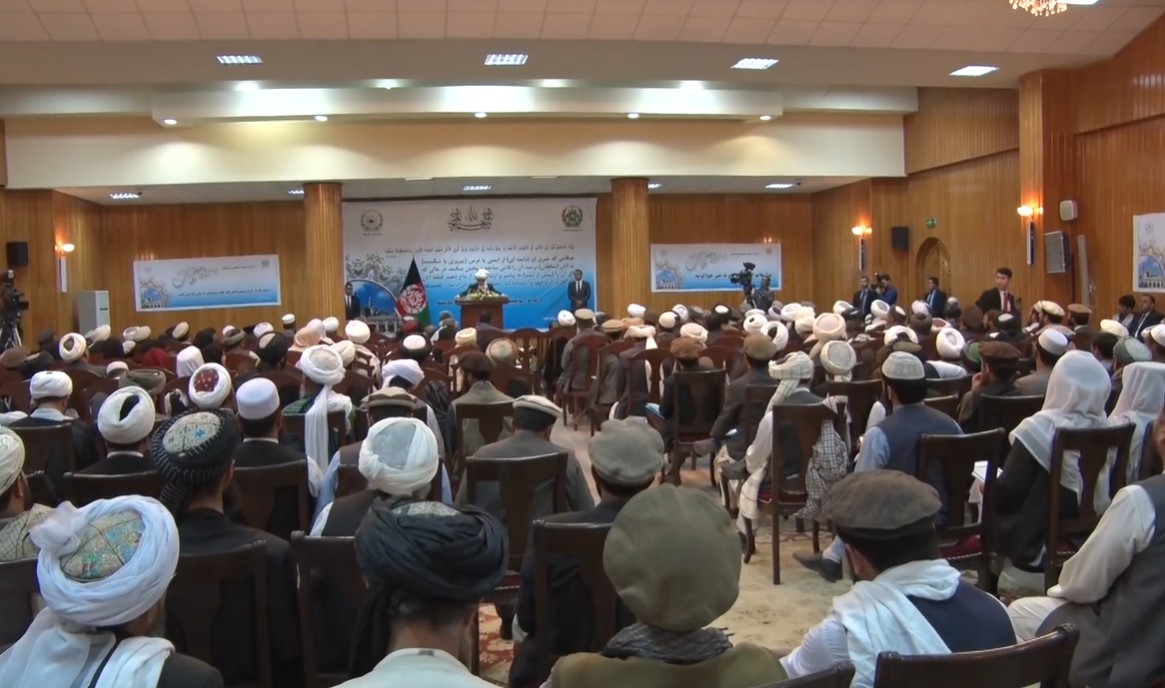
Speech at the Academic Seminar Honoring Imam Abu Hanifa (RA)
Keypoints:
- Scholarly Legacy: Preserving Imam Abu Hanifa’s intellectual heritage.
- Moderate Islam: Promoting balance, reason, and rejecting extremism.
- Justice and Stability: Making fairness the foundation of society.
- Ijtihad and Renewal: Applying principles to modern challenges.
- Civilizational Confidence: Strengthening identity while engaging modernity.
- Religious Tolerance: Encouraging coexistence among diverse communities.
- Role of Scholars: Guiding society toward unity and awareness.
- Rule of Law: Upholding justice and fighting corruption.
- National Unity: Strengthening cohesion through shared heritage.
- Public Participation: Encouraging engagement in national processes.
In the name of Allah, the Most Gracious, the Most Merciful.
Honorable Chief Justice, esteemed scholars and heirs of the Prophets, respected members of the Cabinet, advisors, brothers and sisters, dear compatriots, and distinguished guests: Welcome! Khosh Keldiniz, Khosh Amadid!
First and foremost, I offer you the greeting of the leader of humanity: Peace be upon you, and the mercy of Allah and His blessings.
Distinguished scholars and guests, I congratulate you on the convening of this academic seminar honoring the status of حضرت Imam Azam Abu Hanifa (RA). I extend my gratitude to the Ministry of Hajj and Religious Affairs and our esteemed scholars for organizing this scholarly gathering. For us, the study of the personality, achievements, and thoughts of Imam Abu Hanifa is a permanent subject from which we can always learn; it is a constant necessity for identifying our religious and civilizational identity.
The Influence of Jurisprudence on Life
From the cradle to the grave, our lives are shaped by jurisprudence (Madhahib). One who creates a school of thought changes the way people think. One who establishes a legal school influences all principles and rules of life comprehensively. Therefore, the thoughts of Imam Abu Hanifa and Imam Ja'far al-Sadiq are not thoughts of yesterday or the past; our very existence and daily lives are renewed based on these principles. To know them is to know ourselves. Without a deep understanding of the Imams who established the major Islamic schools—especially the Hanafi school—we cannot truly understand our own identity.
The scholarly legacy of Imam Abu Hanifa is a magnificent asset of Islamic civilization. In an era where extremist groups attempt to erase the civilizational identity of Muslims, returning to the intellectual and spiritual capital of Imam Azam and other great jurists is equivalent to redrawing the fundamental map of Islamic civilization.
A Rejection of Extremism
I offer my condolences to the scholars for our martyrs. Every day we give martyrs in this land—our children, sisters, elders, and youth. This is because those engaged in sedition (Fitna) are ignorant of the school of Imam Abu Hanifa. When they understand the thoughts of Imam Azam through the blessing of this seminar, they will be forced to reconsider. What they do has no place in the school of Imam Azam. Explosion and suicide are not the methods of Imam Azam; his way is reason, logic, submission to Sharia, and above all, the preservation of stability. Imam Azam is the founder of stability—a stability built upon justice and equality.
The Hanafi school has contributed more to the legal and jurisprudential systems of the Islamic world over the past fourteen centuries than any other. This is no exaggeration. The greatness of Imam Abu Hanifa is best understood when compared to his critics. While he faced attacks from literalists and false accusations of innovation (Bid'ah), his scientific robustness and piety eventually forced even his critics to bow before his greatness. His lesson to us is one of patience and fortitude. He is recognized by Sufis as a pillar of mysticism and by followers of the Salaf as a towering figure of the early righteous generations. Who in the Islamic world can deny his lofty vision?
Moderation and Human Rights
Imam Abu Hanifa was an example of a true believer: a truthful scholar, a merchant of pure character, a politician aware of his time, and a hardworking jurist. His methodology was moderate, avoiding extremes, and balanced between tradition (Naql) and reason (Aql).
He famously checked the Takfiri movement initiated by the Kharijites by explicitly declaring that no one from the "People of the Qibla" (Muslims) can be called an infidel. He emphasized the rights of non-Muslim citizens (Dhimmis) and highlighted their legal protection within Islamic Sharia. He was also the one who emphasized the rights of women, preventing injustice through clear fatwas. I am proud that our aware and scholarly sisters are here with us today.
On matters of war and peace, his views were revolutionary. He defined the basis of Jihad as the rejection of oppression, not a difference in belief. His logical definitions of international relations opened a path for Muslims to engage with the world, a framework that remains vital for modern international law.
Reason and the Spirit of the Age
The Hanafi method, often called the "School of Reason" (Ahl al-Ray), allowed jurists to consider the higher objectives (Maqasid) of Sharia and the general spirit of the faith. This prevented a superficial or literalist interpretation from becoming the sole voice of Islam. He institutionalized legal preference (Istihsan) and disciplined analogy (Qiyas), providing a defensive method for evaluating narrations that scholars still benefit from today.
His work emerged when Islamic empires were expanding from East to West, requiring a legal system capable of answering complex, growing societal needs. Hanafi jurisprudence was never alienated from the spirit of its time; it allowed jurists to pave the way for positive transformations with foresight. From Central Asia to India, and from Turkey to the Balkans, the Hanafi school has been the standard for courts and legal institutions for centuries. Our judges could easily preside over matters from Morocco to India—a sign of a civilization united under a clear legal umbrella.
The Afghan Identity and Modernity
Fortunately, the Hanafi school reached Afghanistan in the early centuries of Islam. While our country has historically been a home for diverse sects and religions living in peace, the culture of tolerance and moderation in Afghan society is deeply rooted in the influence of the Hanafi school. Imam Azam, though living in Iraq (the center of civilization then), was of Afghan origin. This great son of our soil linked our land's civilization with the flourishing civilization of Islam.
Today, as the Islamic world faces waves of violence and extremism, we must return to this heritage. We need to interpret our religious issues in accordance with the requirements of the modern era using the tools provided by Imam Abu Hanifa.
In the 19th and 20th centuries, many who received a modern education were unfamiliar with Sharia texts and their own traditions. Instead of looking for solutions at home, they looked elsewhere. That era is over. It must be clear: outside the system of Islam, Afghanistan has no other system. This country is the "Islamic Republic of Afghanistan," and our Constitution is the most Islamic law on earth. The issue is not the text, but the implementation.
Avoiding Extremes
We have learned that there is no benefit in extremes. We must engage with modern civilization as our ancestors did—by preserving our beliefs while adopting the sciences of the world. The Hanafi school has the capacity for constructive engagement with the needs of every age.
Returning to this legacy offers a moderate alternative to extremist ideologies. Our youth should not be left at a crossroads where they must either declare war on their time or enmity toward their great past. With the Hanafi school, we can rescue the vulnerable, especially the youth, from the grip of radicalism.
The Role of Scholars in Governance
Scholars play a primary role in guiding the people. I ask for your help in two specific areas:
-
Elections: This is an Islamic and national process. Leadership that lacks legitimacy and is not based on the people's vote will always be questioned. The pulpit and the Friday sermon are the most powerful tools for communication; scholars must encourage the people to register and vote.
-
Combating Corruption: The Islamic society is built on justice. Respecting the independence of the judiciary is vital for stability. Corruption is a poison, and we must stand against it. Our people are pious; a small minority must not be allowed to sideline the greatness of this soil and the achievements of our Holy Jihad.
In conclusion, I wish this conference great success. I thank you for allowing me to greet each of you. Your President is the first servant of the country. If people wonder why I welcome each of you personally, it is because you, as Afghans and as scholars, are the source of our respect.