From Aid Dependency to Self-Reliance: Afghanistan’s Vision for Sustainable Development
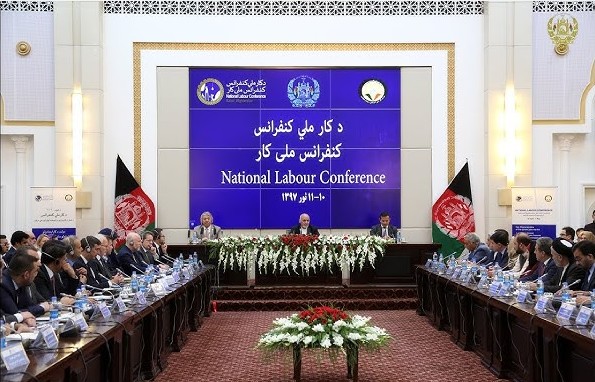
Speech at the Closing of the National Conference on Employment
Keypoints:
- Freedom & Sovereignty: Defend unity, reject extremism.
- Economic Self-Reliance: Produce, trade, invest; reduce aid.
- Balanced Development: Fix budget, trade, population, regional gaps.
- Security Reform: Strong policing and governance for stability.
- Jobs & Labor Rights: Create work; update labor laws.
- Good Governance: Fight corruption; restore trust.
- Regional Trade: Leverage geography as transit hub.
- Private Sector Growth: Enable investment; support entrepreneurs.
- Human Capital: Educate youth and women; build skills.
- Inclusive Growth: Share development across regions and communities.
In the name of Allah, the Most Gracious, the Most Merciful.
Honorable Mr. Zaki, Honorable Mr. Ahmadi, distinguished members of the Afghan Cabinet, Ambassadors of nations residing in Kabul, all sisters and brothers, dear compatriots, and citizens of Kabul: Peace be upon you, and the mercy of Allah and His blessings.
First, I express my deepest condolences and profound sorrow to the families of journalists and the Journalists' Union of Afghanistan. Martyr Shah Marai Fezi from AFP; Martyr Yar Mohammad Tokhi from Tolo News; Martyr Mahram Durrani, Martyr Ebadullah Hananzai, and Martyr Sabawon Kakar from Radio Azadi; Martyr Nowroz Ali Rajabi and Martyr Ghazi Rasouli from 1TV; Martyr Ali Salimi and Martyr Salim Talash from Mashal TV; [the martyrs of the May 1st incident in Kabul] Martyr Ahmedshah, the martyr of the April 30th incident in Khost from the BBC; Martyr Abdul Manan Arghand, the martyr of the April 25th incident in Kandahar from Kabul News; and the wounded of the April 30th incident in Kabul: Omar Sobhan from Reuters, Ayar Lemar from Wahdat-e-Milli weekly, Ahmadshah Azimi, a journalist for Neda-e-Agah, Dawood Qaisani from Maiwand TV, and Nasser Hashemi from Al Jazeera.
Yesterday, Mr. Atmar held a meeting with various institutions; their concerns covered 22 points which were summarized into seven pillars, and this morning the National Security Council focused on these issues. I offer my condolences, pray for their recovery, and will clearly follow up on their proposals. Ongoing discussions with the media will continue.
This is a war between freedom and slavery. It is a clear choice: will this free-spirited nation live in liberty, or surrender to a tiny minority to live as slaves? If their wish is for this nation to accept servitude—never, and never again! The complete lack of legitimacy for this war from a Sharia perspective is well-known. From the fatwas issued in Pakistan to Saudi Arabia, to Deoband and the entire Islamic world, Jordan, and beyond: the place of the suicide bomber and the explosive-setter is hell. There must be absolute clarity on this—if they think someone has brainwashed them and they will see Paradise, the gates of Paradise are closed to them according to Sharia. This clarity is a necessity.
The interests of a small minority, based on narcotics and the bondage of others, cannot hinder a political solution to the war. The National Unity Government has a clear will to respond decisively to the war declared against the Afghan nation, while simultaneously continuing the sustainable political solution we announced at the Kabul Conference.
In this regard, it is clear that accelerating fundamental reforms in the security sector, especially in the urban police—by making rules prevail over relations and giving the job to the capable—is one of our essential and general components.
Today, Mr. Zaki, I first congratulate all workers of Afghanistan and the world on International Workers' Day. The National Unity Government has the firm political will to maintain a balance between entrepreneurship and the protection of workers' rights. Yesterday’s special Cabinet meeting was held specifically because the Labor Law, which had not been updated for over forty years, required necessary regulations. The Afghanistan Chamber of Industries has between five days and two weeks to include their final views with us.
In the contemporary world, the rights of workers and entrepreneurs require the state to play a supervisory and "referee" role to create a society defined by rights and obligations. I express my gratitude from the bottom of my heart to all colleagues present today, especially the youth who have come to represent their generation. I also thank Mr. Zaki, Mr. Ahmadi, Mr. Kaminzada, Mr. Wafiq, Mr. Alokozay, and Mr. Bahman for the active participation of the private sector.
To prepare for this conference, six meetings of the High Economic Council, five meetings of the High Council for Poverty Reduction, and two Cabinet meetings were held after the start of the New Year (Hamal 1st). The reason for these sessions was to transform the fundamental importance of job creation and sustainable growth into a national discourse. Throughout these meetings, discussions focused on defining problems, diagnosing current conditions, setting goals, and preparing and implementing better, more effective programs.
This conference, as summarized by Mr. Zaki, is an opportunity to broaden the discussion and focus more on urgent, short-term, and medium-term actions. The discourse on labor is a comprehensive national discussion requiring the active participation of all sectors. It is not only necessary for all members of the government leading ministries, independent departments, provinces, and other offices to participate in this discussion, but they must also produce practical results for the people of Afghanistan.
Administration does not exist for the sake of administration; it exists for the delivery of services and the creation of a suitable environment for growth. Especially in a democratic system, it is the people who judge, and the people’s judgment is tied to their dining table, the amount of money, and the possibilities in their pockets. It is hoped that the pockets of the Afghan people and their living conditions play a central role in your discussions, and I believe they do.
My remarks are divided into seven parts:
First: The Current Economic Situation What is our current economic situation? Imbalance. First, the imbalance between revenue and expenditure. For 17 years, Afghanistan has lived on international charity; therefore, Afghanistan’s dependency and reliance on the world is extreme. I thank all international partners, but this method is sustainable for neither them nor us. How can a country whose entire development budget depends on international aid call itself economically independent?
Second: Imbalance Between Exports and Imports Our imports are seven times our exports. Show me one country in the world that is stable with such a ratio of imports to exports without oil revenue or other resources. This is not the key to development; it is the most significant element of stagnation. This is a representative of stagnation, and specifically, the tragedy is that most of our imports are in areas where we should be producers. Dr. Qayoumi and Mr. Ahmadi have worked on this, and in your view, I estimate that 70% to 80% of this can be changed.
Third: Imbalance Between Population Growth and Economic Growth If our population growth continues at this rate, we will reach 50 million people in two decades. Mr. Rasouli [Head of the Central Statistics Organization] and his colleagues are working on this and had an extensive discussion; but if you have only 3% growth, it means poverty remains permanent. Extremes in Afghanistan have no limit. One in three of our people goes to sleep hungry every night, and it is a clear necessity to change the balance between population percentage and growth. The minimum sustainable growth required to create jobs and essentially eradicate poverty is 9%; otherwise, poverty persists. Therefore, who pays the price for this imbalance? The poor, the youth, and the women—three majority groups of this land who, unfortunately, are minorities from a political and economic perspective. If we want citizenship and equal citizenship rights, growth must include everyone, not be concentrated in a minority while the absolute majority of society is deprived of it.
Fourth: Lack of Budget Expenditure Capacity Every billion we do not spend, we lose 1% of growth; this is the worst effect of failing to spend the budget. The percentages have improved, but they are by no means sufficient. When public money and the national treasury are not spent for the people of Afghanistan—and instead, hundreds of instances of red tape, poor project management, and "relations" with contractors take the place of rules—it is unacceptable. This is not only a disease of our country; a hundred countries suffer from this. No matter how much money you give them, they cannot spend it for the development budget, while the expenditure of the ordinary budget increases day by day. The ordinary budget is spent on officials, but the development budget is spent on the nation; the goal is creating conditions for the nation, not creating consumption conditions for the state.
In one province, they bought a ten-million-afghani car for one of their directors, yet they gave them a budget of only forty thousand afghani. Ten million so that a government official can fundamentally separate themselves from the people, but forty thousand to provide services. Not only is budget expenditure low, but project costs have been excessively high and quality excessively low. Mr. Yari [Minister of Public Works] is present and reviewing everything. Show me a single sustainable twenty-year road—let alone forty years, which I see only in my dreams—but all of this is possible for these or other projects.
Fifth: The Prominent Role of the Informal and Criminal Economy The fifth important indicator in the current economic situation is the prominent role of the informal economy and the criminal economy. The majority of the Afghan people are fed by the informal economy. The apprentice-based system of guilds, which we have inherited for centuries, employs more than one million people; but it takes four or five years for a person to become an effective mechanic. Is this not an injustice? On one hand, we are indebted to them. Dr. Qayoumi and Ms. Nadima Sahar, our new Deputy for Technical and Vocational Education, are working on fundamental changes to this.
My second point concerns our mutual commitments with the international community. What is our contract with the international community? In one sentence: in the Decade of Transformation—between the years 1393 and 1403 (2014 and 2024)—we must move from reliance on the international community to self-reliance. One of the primary reasons this conference was convened is that six years ago, we had to make it clear to the Afghan nation that at the end of these six years, aid on this scale is neither possible nor appropriate. For how many more months should we be a burden on the international community? What are these commitments in exchange for?
Because this is a mutual contract—the Decade of Transformation is a mutual contract. Aid is in exchange for reforms. We reached a conclusion with the international community that we collectively diagnose the fundamental pains of our society and fix them one after another, finding a solution for every problem. Our most significant problem was widespread corruption. Therefore, reforms are for building the system, ensuring the rule of law, holding elections, strengthening democracy, ensuring broad participation of women, and eliminating poverty.
Second, the eradication of corruption is key. In education, three generations—sometimes five—pay the price of corruption. Are we training people to be illiterate in three languages, or are we making a fundamental investment for the future? Corruption that hinders the private sector hinders job creation, and any services based on corruption or red tape also obstruct work.
A colleague of the First Lady got married; it has been ten days and her marriage certificate cannot be converted into an international legal document. This is called "governance"—she and her husband have to wait ten days, and her husband, who has international work—he is an international journalist—must wander from place to place for a document that is absolutely Sharia-compliant, and in the end, it was an issue of translation; the translator would not accept the type of name she wanted. Now a new custom has emerged where a person cannot even state their own name.
Ensuring citizenship rights is the central point and part of our contract with the international community. Because citizenship rights bring stability, and what is the goal of ending this decade in our relations with the international community? A shift from aid to trade and investment.
By the end of this decade, Afghanistan must prepare the ground over these six years so that international capital comes to the country on a large scale and our trade relations are established. This is the sustainable path. We have excellent and top-tier privileges with Europe, China, India, Central Asia, and everyone else—but we have no exports. Until we have exports, how will we benefit from these privileges?
We look toward the North, the West, the East, and the South as a global crossroads. Afghanistan has no permanent enmity with anyone. We seek friendship with all, and we want others to keep their enmities away from our country. This is a place of connection.
Fourth: Asian Experiences Asian experiences are relevant because whenever you propose a new theory, people tell you it isn't possible in Afghan conditions—that "this is Afghanistan, and these things don't work here." Well, if this were the [old] Afghanistan, how could we have provided electricity to nine provinces, or how could three-star generals be in prison for corruption? This is a different kind of Afghanistan. the Afghanistan we want today is exemplified by our cricket team, which wins international matches, earns World Cups, and rose from zero to the top tier within ten years. That is our example.
The first important lesson from the Asian experience is that a large portion of these countries had seen war and destruction. Consider Japan: after World War II, Nagoya had only two T-212s left. The day the war ended, they began reconstruction, and Japan became a model of change. South Korea is another example; the World Bank conducted a study in the 1960s stating that South Korea was a country with no possibility for development. You have seen what South Korea did. Every problem we faced in the last decade, South Korea faced in the 1950s. Regarding Singapore, Gunnar Myrdal—a prominent international commentator and Nobel laureate—said Singapore would explode and was unsustainable. Yes, Singapore did explode: an explosion of development. China, Vietnam, Malaysia, Indonesia—these are all countries that saw fundamental war. Therefore, they serve as excellent examples for us, proving that what people call "impossible" is actually possible.
Asia has two faces. One is the immense success of the last five decades in overcoming Asia’s 500-year legacy of war. Between 1970 and now, Asia became a model for overcoming these inherited conflicts and structures. The second face, unfortunately, is that Asia remains a field for competitive wars, especially Western Asia. Thus, there are very clear lessons: in 40 to 50 years, the continent that had the lowest growth and was always compared to Africa has transformed into the most dynamic economic continent in the world. What was the key? The key to success was creating a disciplined vision for continuous transformation. Malaysia invented the method of long-term planning. Many thought "2020" just meant the year; no, Dr. Mahathir [Mohamad] was an ophthalmologist—he wanted "20/20" vision, meaning a clear perspective. Nine five-year plans were implemented one after another, transforming one of Asia's poorest countries into one of its wealthiest.
Second is the continuity of the state-building process. What we lacked in Afghanistan was continuity in state-building. Every decade or two, we adopted a "new fashion" instead of having enduring goals. Third is nation-building; the process of nation-building moved in tandem with state-building. Fourth was building the market and the balance between the market and the role of the state. When Singapore turned to a market economy, followed by Korea, specialists thought they had broken the regional consensus because state-led economies were dominant; but you saw what they achieved. Ultimately, they created a culture of governance where the state is committed to creating a suitable environment.
What are the negative experiences? On the other hand, we have countries in Asia that moved from crisis to crisis, where the long-term promises of leaders were never realized. Another negative experience is found in Africa and Latin America, which completely lost two decades; the 1980s and 1990s were wasted years. Africa’s GDP changed by only a few hundred million dollars over ten years, while Singapore’s GDP changed by billions.
What do we learn from this? I want to propose the mandate of the Constitution and a practical framework for the honorable ministers and the nation. The people of Afghanistan, per the Constitution, demand Balanced Development. What does balanced development mean?
First: Geographical Balance My proposal to all colleagues is to divide Afghanistan into 7 or 8 "Development Zones" and bring specific development plans for each. For example: our minerals. I thank Ms. Nehan [Minister of Mines] for creating a map showing that almost all investment in minerals was in the North, while the East, West, and South were completely ignored. We brought transit possibilities to the North; in the West, we are moving rapidly to turn Herat, Faryab, Balkh, and eventually Badghis into a key transit hub. What am I bringing to Paktia, Paktika, and Khost? What am I bringing to Nuristan and Kunar? The world's best minerals are in these places. Since 1976, we haven't spent a single day exploring for oil and gas in the Katawaz region of Paktika. Why?
Dams: not a single dam has been built in certain provinces or zones. Why? This is not called balanced development. My proposal is to have both a national process and a logical process where connectivity is fundamentally assessed. The benefit is that if you look at these 7 or 8 zones, Afghanistan's population is distributed among them quite balancedly. Outside of Kabul, our development areas link geography and population clearly, allowing us to create very precise planning. The beauty is that God (SWT) has given us blessings where one part of Afghanistan supplements another. This is not Iraq, where all resources are in one place leading to war over resources; here, there can be cooperation in resource development. Look at our 5 water basins, 6 climate zones, and 45 irrigation basins.
Second: Sectoral Balance If we look at Asia's success, there must be balance between sectors. In 1970, agriculture was dominant across Asia; its percentage has decreased since, and while its economic role has lessened, the majority of our people still live off agriculture. Agriculture, industry, mines, services, construction—these are the ten general sectors upon which UN data is based. It is vital to bring balance among them; without it, sustainable growth is impossible.
The major role is not just in state sectors; there must be balance between state investment and the private sector. The role of the state is to create human capital and social justice. The state is a facilitator; in any area where the private sector is ready to invest, the state must provide the conditions. A live example is the telecommunications sector. I thank Minister Aryoubi and his colleagues; the open fiber-optic policy created the ground for $320 million in investment by four private companies. I also thank Dr. Qayoumi; in the electricity sector, we must move away from [state] monopoly. The more the private sector invests, the more we can care for our children, widows, and orphans.
We have a fundamental problem with social justice. We fail to achieve it because: 1. We have a major security problem. 2. The entire burden of development sectors is on the state's shoulders. 3. There was no balance in creating opportunities for men and women because our development programs were not "people-centric." This is unacceptable to me, to the women of Afghanistan, and to everyone. There must be a balance between women and men. Japan decided that if Japanese women left their homes and joined the workforce, massive growth would follow. If Japan can gain such growth in its advanced state, the women of Afghanistan can also bring growth. Do not forget: though we lack exact figures, thousands of families are headed by women. Investing in one girl changes five generations. An economy must be Youth-Centric. The absolute majority of Afghanistan is comprised of youth. Our programs must be youth-centric because if we do not create jobs for youth, as Mr. Zaki said, it inherently causes insecurity.
Fourth: Balance Between Cities, Villages, and Kuchi (Nomads) I am grateful; this is the first time in a development seminar that serious attention has been paid to the situation of the Kuchi. Mr. Faizan, I thank you and your colleagues. Few groups have suffered more or fallen further into poverty than the Kuchi. During the five years of drought under the Taliban, the majority of the country's livestock was lost. This must be treated as a fundamental capital. The Constitution's mandates regarding resettlement and balanced service delivery must be respected. We have been far too Kabul- and city-centric. Afghanistan is not just Kabul and Wazir Akbar Khan. We must see clear balance. The situation of our cities is developing, but how many provinces are there where the governors can host the Cabinet for four nights? If you were to hold a seminar like this, other than Herat, Mazar-i-Sharif, and to some extent Jalalabad, how many provinces could accommodate it? Have we built the governance infrastructure in the provinces to at least equalize basic facilities, while every day we spend on another massive project building ministries and offices in Kabul?
Fifth: Balance in Capital Development This involves the development of natural, economic, cultural, and especially human capital. Today’s Afghan nation is not the nation of the past. It has a clear and bright mind. Mr. Karimi, 70 years ago, were there writers in Khost? They were rare. Today, Khost is one of Afghanistan's great cultural centers. Sheikh Zayed University is a top-tier university. There is a peace center at Kandahar University, as well as at Herat University. We must fundamentally develop our cultural capital. We have work to do in investing in human capital and culture. We started with repairing mosques, but one of our most important projects is preserving cultural capital. Yesterday, Dr. Abdullah and I intended to go to Parwan to begin the restoration of the Jabal al-Siraj Palace; unfortunately, the [terrorist] incident occurred. But our cultural heritage cannot be lost or wasted—it is also the greatest opportunity for immediate job creation.
Sixth: Balance in Government, Private Sector, and Public Expenditure for Job Creation You discussed immediate job creation, Mr. Zaki, and I welcome it. Most immediate jobs must be created through large-scale projects, but the most important immediate jobs are created by the people themselves. The role of the people in irrigation is vital. From the day Balkh-Bami—one of the earliest centers of irrigation in all civilizations—began until the creation of NGOs, people cleaned their own canals. Now we sometimes boast that "20% of the people are participating." A clear public culture must return and the ground for it must be provided.
My next point is the necessity of Choice. What is the choice between? Between "survival growth" or sustainable growth? The growth we had was just for survival. With this growth, poverty persists. With this growth, our dependency remains permanent. We must think seriously about sustainable growth. Budgeting should no longer be just for [current spending]—Mr. Payenda has done a lot of work and I am grateful to him—the budget must become a vehicle for sustainable growth.
Second: Do we continue a consumer economy where the seven billion we spent on imports is simply gone? With this seven billion—we imported between 7 and 15 billion over 17 years—what is the result? What wealth did we produce to sustain such imports? We focused on luxury. When a wedding costs ten million dollars, or the dowry of a rich girl—not my daughter [laughter from the President and audience]—can be 20 million dollars, we must see the excess. Consensus is needed on a Productive Economy. The country must move toward a productive economy.
Third: Transforming into an exporting country or relying on imports. We have seven times more imports than exports. For how long? Therefore, what is required? Setting clear goals versus the ambiguity of policies that didn't work. A "lack of policy" is itself a policy. A bad strategy is the worst type of thought, and all our ministries, unfortunately, have stacks of strategy books. I visited a ministry during the transition and asked what their projects were. The official said, "Doctor, let me explain my strategy first." He spent two and a half hours explaining the strategy, but there were no projects and no results. These papers must be made smaller, more practical, and actionable. What is the intersection? A need for national discourse on growth percentages, setting revenue targets, developing a productive economy, and creating an export system—and as a result, girding our loins for the comprehensive reforms that make these goals possible. We have no other choice. If we want to emerge as Korea, Singapore, Malaysia, or most recently Rwanda emerged, then we must clearly set our goals.
Millions of people—and the honorable EU Ambassador is present—came from Bangladesh, and millions of bundles in the textile sector were put to work. We must think differently. In these six years, this debate is fundamental because we have emerged from the crisis we started with. Growth was at 0.5%; it has now turned into 3%. Now, the essential debate is how we move toward a sustainable discussion.
Third: Our Environment In what international environment do we live? Is it an environment of opportunity or danger? Fortunately, I call this the gift of geography and a gift from God (SWT). For two hundred years, our location was a danger to us; today, Afghanistan's geographical location is a massive opportunity. Look to the North: the dynamic republics of Central Asia, and beyond them, the Caucasus to Russia. Look to the Northeast: our great neighbor and republic, China. To the South: Pakistan and India. To the West: Iran and the Gulf. Everywhere you look, there is opportunity. We live in the heart of the most dynamic economic continent in the world. Today, Asia's GDP is higher than other continents—estimated at $28 trillion in 2016 according to UN statistics.
We live among nearly four billion people. Look at East Timor, which Mr. Lanzer is very familiar with; one must travel across the entire ocean to get anywhere. We are in the heart of Asia with four billion people—think of the consumption capacity; it is a massive import market.
What are the economic characteristics of our neighbors? First, all our neighbors, near and far, have invested hundreds of billions of dollars in infrastructure. In the last twenty years, Asia has seen the highest investment in infrastructure. This means the distance between us, our neighbors, and the Asian continent is shrinking daily. Forty years ago, the idea of exporting to China was impossible; today, we can reach China in three days. There is nowhere we cannot reach by land from Afghanistan within four days—via rail or truck—and the world is accessible by air within hours. A flight of 2.5 to 5 hours covers a massive development area, and 7 to 9 hours reaches key global points.
The second positive aspect of our environment is the start of serious investment toward us. Investment used to be far from us, but fortunately, it is now heading our way. Look at Turkmenistan, which invested in the Aqina port railway and the Torghundi port. Iran is coming toward us from Chabahar with its own investment. Uzbekistan is partnering with us to connect the Hairatan and Torghundi railways, creating a linked network—this is a massive investment. Look at the power lines that Dr. Qayoumi has worked on; all of this is toward us, not against us. 19th-century investment led to our isolation; 21st-century investment is our aid.
Third, there is a long-term vision among our neighbors and Asian countries for cohesive programs and clear ways to fund infrastructure. The latest was the Development Bank created in Beijing, of which we are a member. Conditions are becoming easier daily. Why? Because we have all realized that regional economy can be the key to both security and mutual prosperity.
And finally, the mindset regarding Afghanistan is changing. Four years ago, no one in Central Asia looked from the North to the South. UN Secretary-General Guterres came here. After a week in Central Asia, he said, "I have good news for you." I asked what it was. He said, "All of Central Asia is looking South."
I have two other points for you:
First: Your Discussions I thank Mr. Zaki, Mr. Ahmadi, Mr. Mastoor, and all colleagues for creating these continuous discussions. You mentioned the possibility of creating 2.2 million jobs. My suggestion to you is the necessity of documenting the goal. I am not in a position to announce to the Afghan nation that I can create 2.2 million jobs in three years unless every aspect of it has been calculated. The discussions are in the pre-finalization stage, but they were very useful. It is a clear necessity that you set a deadline within a few weeks to finalize these numbers. Anyone who proposes a number must take responsibility for its execution. Repeat the work of Minister Sadat Naderi [Minister of Urban Development]. A construction project was stuck; he promised the people and signed a written pledge that he would either finish the project in three months or resign. He finished it in three months. Bring that kind of commitment so we can announce it to the nation. Otherwise, they won't believe us. I have seen many programs; during my ten years at the World Bank, I saw so many countries telling "tall tales" that I recognize them. But I have also seen practical programs. This is possible; it is not impossible. But we must give it a practical form so the people trust us.
Second: Data and Evidence Our discussions over the past few weeks revealed a fundamental problem: we lack data. Mr. Rasouli and his colleagues, Mr. Mohtat, and all those working in major sectors, as well as the Ministries of Economy and Finance—these policy-making ministries need a correct consensus on our figures. We cannot continue the old way of taking a census every ten years and spending the next five years analyzing it. Data must be documented.
Every time I call my most active ministers, it takes hours for them to get back to me. If this is the state of these poor officials, imagine the state of your fellow citizens. Isn't that right, Mr. Yari [Minister of Public Works]? Your ministry is transforming, but in the past, even your ministry had this problem. I don't know which road work is ongoing, which is not; which dam is being built, which is not. We haven't brought in a system. It is a clear necessity that data be operationalized for management, analysis, and implementation.
Another issue raised was that our program-making relied on international experts. Ownership of our programs was, unfortunately, very weak. We have two ownership problems. First, if an international partner helps us, we name those projects after the international partner. Brothers and sisters! These are Afghanistan's projects that our international partners assist with for the sake of the Afghan people. Second, as soon as a project is handed to a contractor, we wash our hands of it. Our supervision is extremely weak, and contractors often subcontract the work four levels down. The method of program-making and implementation must fundamentally change. Most of us are individual-centric; papers prepared before us are worthless to us. We order multiple reviews of the same thing; we lack proper archives for documents that took 20, 30, or 40 years to produce. We must stop wasting money on redundant efforts. The time consumed is far too high; the "price of time" in our government culture is very low. We do not value our people’s time. These are the problems that were revealed.
A very positive point I found in the discussions was the active participation of all attendees—especially women, youth, and the Kuchi. Thank you all! Continue these discussions, for your future depends on them—especially for the women of Afghanistan! If you don't demand your rights now, no one will give them to you tomorrow. We have told everyone that women’s rights are not negotiable in peace talks. Is your number, your presence, and your share acceptable? The current situation is not acceptable to me; I hope it is not acceptable to you either.
Next: Consultation with Productive Sectors There is a need for the conference to continue consultations with productive sectors. Workers from various production unions—once they hold transparent elections—and the various sectors that actually create jobs must be present. We should not make policy in their absence; policy-making must involve the stakeholders and beneficiaries. Continued consultation leads to success.
Final Point: Prioritization The first thing our environment requires is the creation of national and regional networks, which needs clear and specific investment. Yesterday, I told Mr. Chowdary to look at Afghanistan's communication system. If you want to go from Jalalabad to Khost, you must pass through Kabul. If you want to go from Kandahar to Mazar, you must pass through Kabul. We still don't have a ring road to go directly and cheaply from Herat to Faryab. All our programs have been Kabul-centric. The easiest connectivity routes must be found for different parts of the country.
My proposal to our entire infrastructure sector is that the current type of relationship with contractors is unsustainable. Most of those who get infrastructure contracts haven't invested in their own capacity; they just subcontract the work. My proposal to the international community and infrastructure partners is to work directly with the 200 to 400 companies that have clear capacity and perform construction directly, and to build their capacity. The road from Jalalabad to Kabul took three and a half years—how many kilometers did it move? This needs an answer. We lost millions, perhaps hundreds of millions of dollars, and damaged the state’s credibility. Why not divide 10 and 15-kilometer roads fairly among different contractors? Let international companies assist with supervision, design, and support. The current method is unsustainable; infrastructure in Afghanistan has the highest price and the lowest quality.
Second is the management of land and property. Over 100,000 hectares of land—I thank Mr. Paikar [Head of ARAZI]—have entered the Land Bank; in the next two years, two million hectares will enter. Also, all state properties must be in a clear state property bank so we can use them rationally. Third is the legalizing of properties. The program started by the Land Authority must be implemented so the people have legal deeds; until this issue of customary law and land grabbing is resolved, we will get nowhere.
Fourth, incentive mechanisms for investment in both industrial land and housing land must be provided to private companies. Throughout the world, private companies develop areas. Conditions must be fundamentally prepared for them because the state is currently an obstacle. The reason much of Kabul consists of customary property is that the state lacked the ability to demarcate it; it forced the best land to be used customarily.
Fifth: Water Management. We must reach a clear program for small, medium, and large water projects and understand what has the greatest impact in the short, medium, and long term. Water is not just a national issue; it is a regional and international one. There is a clear need for cooperation within the framework of climate change. The second point is changing the culture of irrigation. The key point you focused on in agriculture—Mr. Durrani, Mr. Karimi, Mr. Osmani—is that the value chain and food security must not be pitted against each other. Here, three topics are paramount:
-
The Role of Government Procurement: We want government procurement to be a tool for agricultural production, as we cannot provide direct subsidies.
-
Credit Mechanisms: Within the next month, I want a clear credit mechanism arranged for the agricultural sector. The fundamental issue is "pre-purchase." Our best agricultural products are bought at the lowest prices two or three months before harvest; thus, we lose billions in the value chain. My instruction to Mr. Ahmadi is to work on a mechanism for how state banks can prepare assistance loans in this sector.
-
Immediate Job Creation: In agriculture and irrigation. In the transport, telecommunications, urban, and mining sectors, we have reached a basic arrangement and a roadmap. The sequence is: first, changing laws; second, the roadmap; third, investment conditions; fourth, infrastructure development; and fifth, monitoring systems. All five together provide the principle of transformation. Fighting corruption is the key and central point.
In closing, I want to emphasize four points:
-
We need a national economic debate. Economy is not just the work of the state, and decisions should not be made only between the state and the international community. The people of Afghanistan must take part. It must be based on principles that ensure balanced unity. People have hundreds of proposals; these must be consolidated, and the annual budget will be the vehicle for this.
-
The National Budget cannot be decided only at the level of Deputy Ministers. It must become a national debate so these goals can be the vehicle. Do not take scissors to a cohesive program and say, "I'll give you this part but not that part." That is not how a budget is made. We must fundamentally address how to "stretch our legs according to our rug"—what do we want, and how will it be funded? To those who cannot spend their budget, I say clearly: I have told Mr. Payenda that money will be taken from those who cannot spend it and given to others. I ask the nation to give all ministries an "exam paper" regarding their expenditure. A public exam paper must show which ministry created capacity and which did not.
-
The political will exists in the National Unity Government for sustainable growth and immediate job creation. If we didn't initiate this debate in past years, it was because conditions were not right. Now, there is a sufficient roadmap and enough reforms to show we are ready for the leap.
-
Equality of Citizenship based on balanced and sustainable programs is the key to ensuring our national unity, the stability of the system, and ultimately, peace and security.
I again thank Mr. Zaki, Mr. Ahmadi, and all members of the Cabinet, departments, private sector, and civil society for participating. Here is to an Afghanistan that ends its inherited crises and, in the year 2024, tells the international community with pride: "Thank you for your very useful and lasting aid; now we are self-reliant, and we will discuss trade and investment with you."