From Conflict to Connectivity: Building Regional Consensus for Peace and Prosperity in Afghanistan
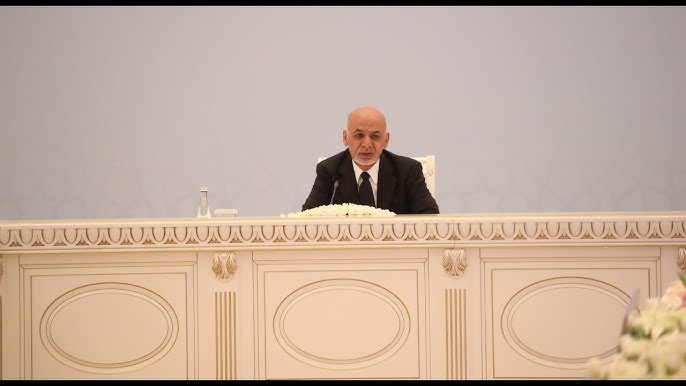
Remarks at Tashkent Conference on Afghanistan: Peace Process, Security Cooperation and Regional Connectivity
My dear brother, President Shavkat Mirziyoyev, guests from the region and the world!
I am very pleased to once again be the guest of my friend and brother, Shavkat Mirziyoyev, the President of Uzbekistan. We express our gratitude to the hospitable people of this historic country.
Our thanks to the government of Uzbekistan for organizing the Tashkent International Conference on Afghanistan regarding the peace process, security cooperation, and regional connectivity. I understand that this conference gives hope to the people of Afghanistan; thank you very much."
Distinguished Foreign Ministers, distinguished heads of delegations, ladies and gentlemen:
I welcome you all. I am grateful to President Mirziyoyev for graciously co-hosting this conference here in Tashkent. I have immensely enjoyed my trips to Uzbekistan during my time in office. In working with you, Mr. President, to further connect our two countries for mutual benefit has been greatly rewarding. I thank you for turning the Kabul Process into the central forum of cooperation and coordination, and for your incisive analysis and constructive remarks this morning.
I would like to express our sympathies to the Russian people and Foreign Minister Lavrov for the tragic loss of life, and I would like to start with a moment of silent reflection in honor of those civilians and international partners who have been killed in terror attacks.
(Moment of Silence)
Thank you. Those who have paid the ultimate sacrifice in this war must always be at the forefront of our minds as we forge a path to peace and stability. If the aim of those terrorist attacks at the beginning of our New Year—a time of joy—was to divert us from our pursuit of peace, they will not be successful. Judge the strength of our national consensus on peacemaking by the response of the citizens of Helmand, building a monument to our martyrs with the slogan of peace and their dedication to its pursuit. The suicide attacks, however, compound the urgency and importance of the purpose of our meeting here today. We must exhaust every means available to us to achieve a peaceful solution.
II. Regional Consensus and Connectivity
Thanks to all of the distinguished leaders from the international community who are here. As we take the next steps forward in this peace process, your leadership and your commitment are absolutely essential to achieving shared solutions to our shared problems.
The Kabul Conference of February 28, 2018, demonstrated that there is full alignment between the Government of National Unity and our international partners on finding a political solution to the war in Afghanistan. We thank our partners—particularly the United States and the ISAF and Resolute Support Mission contributors—for their sacrifice in blood and treasure, and for their support for our comprehensive peace offer to the Taliban.
We are here today to build the second phase in our journey toward a peaceful solution to regional insecurity and the conflict over Afghanistan: that is, to build a regional consensus for peace. While the shared threat of terrorism unites us, so do the shared opportunities availed through regional cooperation and connectivity. Today I will speak to both. Our economic and political futures are mutually reinforcing components of sustainable peace, security, stability, and prosperity in our region.
III. The Gift of Geography
Let me dwell on connectivity. This region—Asia, or more accurately, Eurasia—is experiencing one of those rare "open moments" of history. We have a chance to change the course of history in our favor. These moments are rare because, oftentimes when they have occurred, leaders have overlooked their significance and haven't utilized the opportunity.
What makes this moment particularly poignant is that one can visibly see the emergence of a nascent continental economy. Asia historically has been a sphere of connectivity, but more a concept than an integrated economy. Today it has the opportunity to become a continental economy. Aside from ocean-oriented trade passages, Asia presents the greatest opportunity for inland trading.
I call this the "Gift of Geography." Central Asia, including Afghanistan—and we are very proud now to be an inherent part of Central Asia thanks to your efforts—is the shortest inland way to get to and from anywhere: east, north, south, and west in Asia. Equally important, for millennia, Afghanistan formed the gateway to the Indian subcontinent. The global energy situation of today’s world enhances the importance of this historical gift. Central Asia is rich in the energy supply which South Asia is in need of, and Afghanistan is the bridge which connects these two areas.
In the words of Pakistan’s poet Allama Iqbal:
"Asia is a body of water and earth, of which the Afghan nation forms the heart."
Placed at the heart of Asia, Afghanistan naturally has the potential to be a connector—a realizing factor that allows our region to either grasp this moment of opportunity or become a "burnt bridge" further dividing these two spheres of South and Central Asia.
IV. A Future Defined by Cooperation
With 71% of our population being under 30, our people and government are determined to secure our future through cooperation. We are dedicated to overcoming the past and ask all our regional partners and neighbors to join us in a mutual quest for security and prosperity. We have to make a choice today as to the direction to lead the region.
Luckily, our heritage gives us a guide. There is a heritage that our region shares from the days of the Silk Road and before that makes it possible to think of renewal as a way forward. We must create an agenda for owning our future. Will we become a prisoner of the past, or will we embrace the potential of the future? If we choose the latter, the outcome will be a win-win situation for us all.
But in order for us to get there, we need vision, leadership, and management—something that President Mirziyoyev has just offered. The vision is one where national interests can be accommodated for mutual benefit, where we create a set of regional rules for connectivity and collaboration, and where national, global, and regional goals can be aligned.
In Afghanistan, the vision is swiftly becoming reality. Last month we celebrated the construction of the TAPI pipeline as a developmental corridor commencing at our border in Herat province. New air corridors and railways have opened; the Chabahar Port was inaugurated earlier this year; and the CASA-1000 energy project is underway. Last night, we made significant progress with President Mirziyoyev on transmission lines, railways, and other programs of connectivity.
V. Threats: The Four Layers of Complexity
Our tragedy is that we are one of the richest countries in natural capital, inhabited by one of the poorest people on Earth. This is not fair; it is not just; it is not tolerable. These are the prospects for the future, but the constraints of the present must be addressed.
The threats facing the international community today are from transnational terrorist networks and transnational criminal organizations. Both are deeply interconnected, do not respect borders, and are global in reach. I believe there are four layers of complexity:
-
Response of States: These are long-term, generational threats that must be confronted with medium and long-term strategies, outlasting political cycles.
-
The Nexus of Terror and Crime: No terrorist organization in history has been as well-financed as the current networks. Drug smuggling, human trafficking, and general mafia criminality provide the funding for terrorist agendas. We will not make peace until we address these dependencies.
-
Ambiguity of States: This ranges from tolerance to the use of these networks as instruments of policy.
-
Local Enabling Environments: Without a local base, transnational networks cannot create hubs. In the Afghan context, this is manifest in the Taliban, who provide the platform for the operation of these networks.
We are the front line in the global fight against terrorism. Let me bring some facts to your attention regarding Daesh (ISIS-K): their number is fewer than 2,000. We have killed over 1,300 of these fighters recently. They are today confined to a small number of valleys in Nangarhar and Kunar. In the past two weeks, we have carried out massive operations to disrupt these networks. We also carried out attacks against narcotics labs, inflicting more than $130 million of damage.
VI. Principles for Peace
In order to effectively confront these threats, it is essential that we take away the platform inside Afghanistan that the Taliban provides. Inclusion of the Taliban into a political process and the fabric of society will enable our energies to focus on the threats of terror and criminality. I suggest the following principles:
-
First: Treat Afghanistan as a scenario of cooperation. Cooperative advantage must outweigh competitive advantage.
-
Second: Support the intra-Afghan peace process through your influence to persuade the Taliban to join the talks.
-
Third: Enhance regional cooperation against terrorist networks by prioritizing state-to-state relations.
-
Fourth: Launch a framework for investing in large-scale regional connectivity projects.
-
Fifth: Engage on critical issues like the reintegration of ex-combatants and refugees.
VII. Conclusion: Ballots Over Bullets
Our political priorities are free, fair, and inclusive elections for Parliament and District Councils in 2018 and Presidential elections in 2019. Let ballots replace bullets as the central mechanism of determining our direction and destiny.
We have had empathy, sympathy, thoughts, and prayers—for which we are truly grateful. We will not have solutions, however, until we have cooperation. I implore you to join us in committing to our regional consensus to combat terrorism and earnestly pursue peace.
Cooperation is a trust-building exercise. Trust comes after connectivity projects deliver what we promised. This is how we gain social trust with our citizens. We must remove antagonistic and confrontational politics from the equation. We must put ourselves to the test of leadership to make the extraordinary become ordinary on our watch.
I want to thank you once again, President Mirziyoyev, for your leadership. I would like to thank all of you around the table for your participation, vision, and commitment.
Thank you.