Commitment to Reform, Peace, and Development: Speech in Kandahar
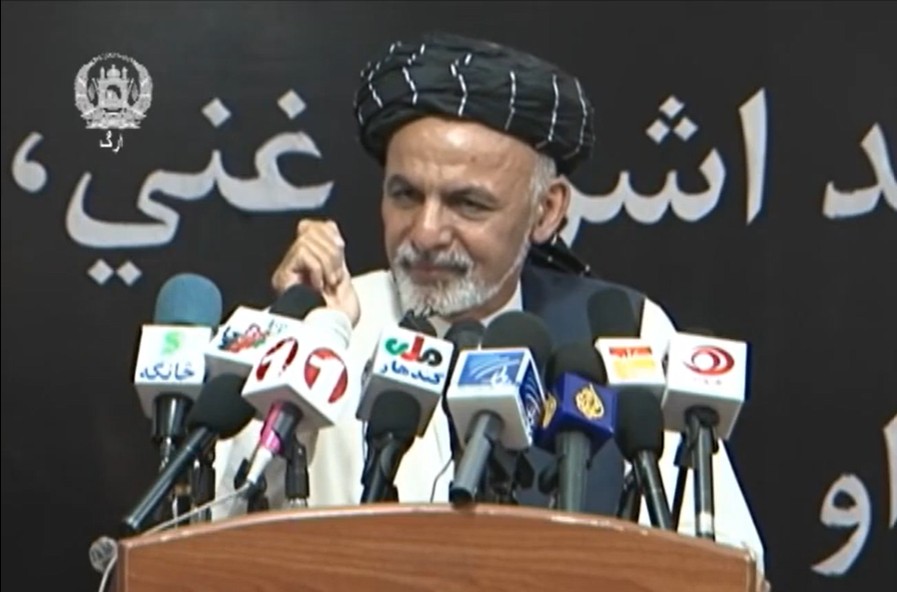
First, I offer my condolences to Attorney General Isa Khan on behalf of the entire government and nation. May God grant Haji Abdul Malik Khan Paradise and give you patience. I extend my heartfelt sympathy and thank you for coming to share this sorrow with me. May God always keep the leadership of Kandahar and Afghanistan upright!
I had intended to hold this session in Karz because my late brother, my dear friend, Heshmat Khan Karzai, once stood beside me, and we raised our hands together, affirming that the descendants of Ahmad Shah Baba and Mirwais Khan will preserve Afghanistan’s national unity. Every drop of his blood is with me, and his wishes—that stability, peace, security, and development come to Kandahar—will guide us and you as our mission.
I thank Deputy Minister Hikmat Khan from the Ministry of Foreign Affairs for standing close to me as a brother. May God always protect him and all other martyrs, and may we pray for them.
Attorney General, you are a man of accounts, correct? You hold others accountable, don’t you? [Laughter] May God preserve you! You have entrusted me with a significant responsibility, and you did so in one day. I cannot repay this debt in a single day. Therefore, let us agree that I will repay it in installments. Do you accept that?
The installments will not be excessively long; first, we plan for 100 days, then one month, then another 100 days. This is how credibility is built; it cannot come otherwise.
With your permission, I want to speak on four subjects: Kandahar, Pakistan, peace, and promises versus action.
First, I came because the governor completed his analysis and told me that the current administration in Kandahar is not an effective tool for reforms. Kandahar’s current administration has many problems and requires fundamental reforms. I came to tell you first that I am committed to these reforms.
Second, Attorney General, you said that the governor should be given the authority for reforms. The governor has the authority to propose reforms to me, and I will implement them.
Regarding the municipality: Mr. Popal is present. All major municipal positions should be proposed by the people in consultation with the governor. Six candidates should be presented to me, and I will appoint one of them. I hope this is acceptable so that we proceed in a principled manner.
The slogan under which you voted for me, which brought us here, was that no Afghan is superior to another, and no Afghan is inferior to another. I want all the people of Kandahar, like Mr. Mawlawi Marouf Khan, who said that one should see oneself as equal, to recognize that you are all descendants of Ahmad Shah Baba and Mirwais Khan. No one has superiority over anyone else. I am your servant first, and we are all your servants. Provide us the opportunity to serve you.
Accept the reforms proposed by the governor if they are practical, fundamental, and gradual. Nothing can be accomplished in one day. We must proceed in a principled manner. The governor is my special representative; there is no other authority in Kandahar. We have one administration, one resolve, one logic, and we will all work together—but the proposals must be implemented. Your advice and emphasis are all well-placed.
Attorney General, you said that the problems were inherited. Yes, but alongside the problems, I have inherited the strong determination of this people, the foundations, and above all, our unity. It is essential that we, as Abdul Malik Khan said, act responsibly.
I am proud that the poet of our national anthem, Abdul Bari Jahani, now serves as Afghanistan’s Minister of Information and Culture. Let us move to electricity. I want practical measures.
My first instruction to Mr. Samadi, Mr. Rasa, and Mr. Durani is that whenever I meet you, the responsible officials of each sector should sit with them. The governor will arrange this. When I meet other groups, relevant officials, traders, and representatives should meet with them. They are not there to simply hear me; they are there to resolve fundamental problems.
Electricity has several aspects. First, I have instructed Mr. Samadi to arrange solar electricity for Kandahar worth ten million dollars as soon as possible. Reach a conclusion with them.
Second, you requested that the private sector participate. Three weeks ago, the Cabinet approved this. The private sector now has the opportunity; cooperate with them. Invest in Baba Wali, invest elsewhere; I am at your service to solve Kandahar’s electricity problem quickly.
Third, turbines for Kajaki Dam have arrived; help with the transmission. All of greater Kandahar needs electricity, and all are related by blood. Those days are gone when I would give people money and they would demand fees to maintain roads. That will not be tolerated! Come, cooperate. If Kandahar wants electricity, then no mosque should block it. Why kill soldiers? Electricity is essential; let us work together. Meanwhile, fifty additional megawatts will be added.
The main point is that I previously discussed with Turkmenistan. Mr. Samadi can explain. Their plan was to first send electricity from Mazar to Kabul, then from Kabul to Kandahar. I reversed this. The line will go directly from Turghundi to Kandahar, but it will take several years. Herat will receive electricity within one year, and then Nimroz, Farah, Helmand, and Kandahar. I am fundamentally focused on resolving Kandahar’s electricity problem. Without electricity, Kandahar’s potential cannot be realized. Let us take clear, practical steps and implement them in installments.
Second, Kandahar’s agriculture has been neglected. The land currently being farmed—Mr. Rafiqi is a major expert—includes lands dating back to Daoud Khan’s era. Do you understand what we are doing? We spend $800 million or one billion dollars on wheat annually, and Afghanistan also imports $2 billion worth of meat and dairy. I call this “foolish money.” Kandahar’s agriculture must stand on its own feet, and I have decided that this year the government will purchase wheat.
We are also strengthening storage facilities and strategic fuel reserves. This works together with agriculture. Minister Durani is present. This group includes some of its leaders; you have seen them. The main request I have is that you come forward with a plan to sell Kandahar’s fruits.
One part I can implement immediately: sufficient cold storage exists at Kandahar Airport, some of which has already been built. This is at your service. Second, we have spoken with Iran; next month Iranian delegations will come to buy Kandahar’s produce for both local consumption and transit to the Gulf. I want a team to implement this practically. Let us build the foundations so that farmers truly benefit.
Why do Pakistani intermediaries dominate Kandahar and Helmand? Mr. Rafiqi analyzed this first. The reason is that they buy fruits in advance, and the center has been in Quetta, not Kandahar. My proposal is to establish this center in Kandahar. Start with agricultural packaging and build practical solutions. You know Kandahar better than anyone; specialists are at your disposal. Give me your priorities so we can implement them step by step.
Education in Kandahar is truly distressing. Governor Azizi told me that only two districts in Herat have more students than all of Kandahar. Kandahar, from which Mirwais Baba went to Mecca to seek rulings against the Safavids, historically had literacy and learning. Should we be proud or ashamed of this state? A fundamental plan for Kandahar’s education must be prepared. First, assess which schools exist.
We will also organize curriculum standards so that our children become leaders in knowledge, science, and literature. Universities: within the next 100 days, Afghanistan’s ten universities will be connected to satellites by the Ministry of Communications. Within a year, we aim to convert them into a fiber-optic zone. This will allow international curricula to reach Kandahar directly from the Gulf, India, and the U.S. Without the internet, this cannot happen. We cannot achieve it in one day.
Judicial reforms: I have completed my review. Two candidates for the Supreme Court will soon be presented to Parliament. I personally met with 34 judges. Legal and judicial reforms will be implemented within the next 200 days; personnel changes will follow the established criteria. I will not elaborate further; you know the details. These points are examples. Authority rests with you—work with the governor to bring fundamental reforms, and all will cooperate.
I am accountable first to God, then to the people of Afghanistan. My duty is to prepare at least ten qualified individuals for the Presidency. Therefore, I ask that we remove obstacles to competition. Previously there were dynastic systems: Amir Dost Mohammad Khan ruled 21 years, his final battle was in Herat. Amir Abdur Rahman Khan ruled 16 years. Now we have a constitutional system. A politically committed, skilled, and knowledgeable generation must emerge to govern this land. I will serve as a bridge for that generation. Youth, women, and businessmen—all must cooperate.
Pakistan: with whom do we make peace? With the one you are at war with? If peace were with someone with whom you have good relations, what need would there be for negotiations?
What have I done? First, define the problem. Pakistan has been engaged in an undeclared war with Afghanistan for 36 years, particularly over the past 14 years. We accepted this definition of the problem with the Pakistanis. Hikmat Khan confirmed it, did he not?
The meaning is: first, peace between two states. Has Afghanistan been seen as a state? Or only as a battlefield? We are a state, enduring for 5,000 years, and will endure for another 5,000 years. Therefore, Afghanistan’s interests are negotiated with Pakistan as a state.
We have never discussed Durand; it is not within my authority or anyone else’s; eventually a solution will be found, but today the priority is peace. How many elders have been martyred in Kandahar? Was Manzil Bagh Road the Road of Death or not? Have people been martyred in your mosques or not? Does Kandahar want peace or not? [Audience: Yes!]
If we want peace, can we achieve it without regional cooperation? [Audience: No!] Peace does not come from emotion; it comes from logic, commitment, and responsibility.
I also want to share another point. Pakistanis came. You all heard what I said to their Prime Minister at the press conference. We said: you train people; your cities launch attacks on us. They said: your National Security also trains Pakistani Taliban. We said: we have not done this. Our National Security is not active against other countries; it protects our national interests.
To refute their claims, we said: let us draft a memorandum of understanding. This agreement was preliminary; it was not at my level. It is not effective until signed by the Chief of National Security. Until then, it has no practical effect. I have taken responsibility for managing this. We will present it to the National Security Council, consult with members, and proceed only when consensus is achieved.
But do not accuse your fellow citizens of training terrorists. Those who killed children in Peshawar are our enemies. Terrorism has no good or bad; we act courageously. Look, the world stands with us in this logic. The goal is peace, and we must strengthen our security and defense forces. Afghanistan will not accept peace from a weak position. We want strong, enduring, and honorable peace.
My message to Kandahar: Kandahar is Afghanistan’s political heart. Ask Hamid Karzai. When Haji Gul Agha left Kandahar to become a minister, I was Minister of Finance. My authority was extensive. I offered to go to Kandahar as governor; Karzai thought 48 hours and said political unrest would occur in Kabul. I was ready to go.
If peace does not come to Kandahar, Afghanistan will remain unstable. Therefore, I call upon Kandahar, district by district, mosque by mosque, commander by commander, elder by elder, scholar by scholar, woman by woman, youth by youth… build a caravan of peace. Mobilize for peace.
The issue is no longer ideological; the war is over territory. I want to address what can be achieved through negotiations that cannot be achieved on the battlefield. How about, Senator, the 5,400 mounds of fruit burned in Arghandab? That is unacceptable. We do not seek war; war was imposed on us. Those international terrorists who come here have no place in our political framework. What claim do they have?
If we had not negotiated with Pakistan, we could not have gathered the Taliban for talks, or ensured that Heshmat Khalil Karzai would negotiate without being killed or imprisoned. I now have full authority to act; the time for implementation of the peace process has arrived. We will bring new leadership and momentum. This is what the nation demands.
I hope the trust you placed in me has been justified. When the goal is high, every minute must be dedicated to it. We are nomads: when crossing the Hindu Kush, no one abandoned their journey midway. Those who stop halfway lose everything. The people of Afghanistan have set the goal: lasting, honorable peace. Doubts and hesitation cannot be allowed. We must remain focused because this is the people’s demand and condition.
Finally, promises and action: I have not forgotten any promise, whether in Kandahar or Nangarhar. Videos exist to verify my words. Every promise I made is documented.
First, Cabinet restructuring: a new generation, free from personal affiliations, committed, and capable, has arrived. Second, governors: fundamental changes will be implemented in the coming days. Ask Mr. Popal; morale has changed. Who can now become a corps commander in the army without qualifications? The army is becoming professional. Daily reports are provided from Kandahar.
The vehicle existed in parts before, not as a machine. We must transform the government into a functioning machine. Committed people are coming. The first 100 days focus on ministries. Read the ministries’ 100-day programs; you will be pleased. The second 100 days focus on provinces; governors identify issues and address them fundamentally.
Mr. Popal recently presented numbers to the Cabinet: 0.07% of the national budget reaches provinces and districts. One district receives only $9,000 per month for development. How can governance function with this? Our financial, judicial, and administrative systems require fundamental change. Lessons must be learned from past mistakes.
Brothers and sisters: Do not repeat history unnecessarily. I told you from day one that transformation and continuity will be combined. Progress must be deliberate but steady. Hence the 100-day plans. Next week, I will gather all independent agencies. Then, all state enterprises. Mr. Rasa is witness.
We have started a fundamental discussion with the private sector. Meetings must produce results; two topics at most per session, then I will meet and present them to the Cabinet. I am your servant, but I am human.
I will conclude with the story of Caliph Umar ibn Abdul Aziz. He took nothing from the public treasury for himself. During Eid, children asked him for gifts; he had no money. He asked the treasurer for a loan, with two conditions: first, guarantee that he would live for three months; second, guarantee that he would become Emir al-Mu’minin in three months. The point: life is in God’s hands.
I am one person, your servant. Afghanistan’s people endure forever. Kandahar, historically a center of scholars and leadership, will witness reform across all sectors. My uncle, Mr. Rafiqi, has implemented changes in Bamyan in recent days: first potatoes, then trees. During Daoud Khan’s assassination, the only governor who stood and earned martyrdom was Mr. Rafiqi.
Do not spread rumors about personnel. Authority is delegated to Governor Hikmat Khan, Mr. Jahani, Mr. Afghanmal, Mr. Popal, etc. Decisions will be made based on principles: discuss the administration, not personalities. Once consensus is reached, appointments will follow. Esteemed leaders like Attorney General will oversee appointments. I entrust this responsibility to you.
Long live Afghanistan! Long live Kandahar!