Afghanistan’s Strategy Against Evolving Terrorism: Address at the 12th US–Islamic World Summit in Doha
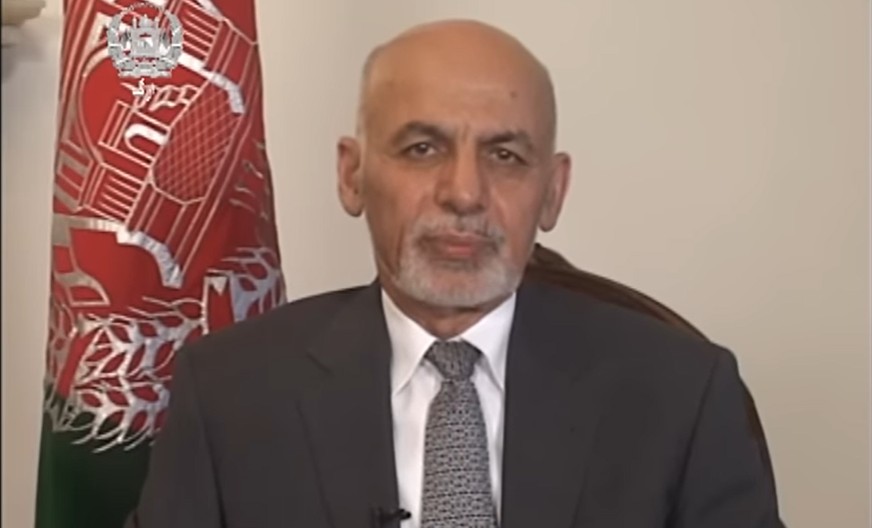
Ambassador, excellencies, distinguished members of the State of Qatar, ladies and gentlemen,
Thank you for the opportunity to engage with the Brookings community, of which I still count myself as a member, and with the US–Islamic World Forum on the theme of “Changing Assumptions.” It would have been a pleasure to interact with you in person and learn from the rich dialogue.
The imposed war on Afghanistan, however, requires me to fulfill my constitutional duty as Commander-in-Chief while simultaneously, as the elected President, striving to achieve our national quest for democratic accountability, enduring and just peace, inclusive growth and prosperity, and constitutional stability.
Being between and betwixt forces of order and disorder, people are compelled to pay close attention to emerging narratives and changing assumptions. Our challenge is that our country is often perceived as the site of proxy wars. Yet, Afghanistan also holds tremendous opportunity to become a crossroads of Asia, where goods, ideas, and people move freely in all directions.
Transformation requires not only the will to overcome the past but also marshaling the energy to realize a compelling, credible, and visionary future. Given the demonstrated power of assumptions, I would like to first highlight some contextual drivers of state weakness, then examine the emerging ecology of terrorism, and conclude with Afghanistan’s vision of partnership.
Five Key Features of the Terrorism Environment
Five key features have defined the environment in which terrorism has evolved into a distinct ecological system:
First, instead of a system of sovereign states bound by rights and obligations, we witness fragmentation and the breaking of state chains—not just among weak states—which expands the space of disorder.
Second, some states in our region, and some beyond it, have relied on malign non-state actors as instruments of state policy. Despite clear evidence of the negative effects of these policies, atavistic forces and vested interests continue to pursue misguided paths.
Third, the use of force by one or a coalition of states in a given location, without regional support or alignment, produces a displacement effect. Terrorist networks shift across borders, compelling governments to adopt a “mowing-the-grass” approach—repeating military operations across their territories year after year—addressing only the symptoms rather than the root causes.
Fourth, the failure of governments to create inclusive growth and dynamic economies exposes marginalized populations to exploitation by criminal and extremist networks. Unregulated criminal economies thrive in spaces left unattended by the state, providing platforms for illicit politics and acting as a reserve army for violent movements.
Fifth, the absence of consensus on the rules of engagement between states makes it difficult to align short, medium, and long-term strategies, weakening coordinated action and diminishing the impact of interventions.
The Changing Ecology of Terrorism
Terrorism has taken advantage of these structural weaknesses to transform into an adaptive, ecological system. Like other ecosystems, it functions with elements of cooperation, competition, and internal symbiosis. To regard terrorism as merely an aberration is to underestimate the nature of the threat.
The enabling environment allows terrorist organizations to operate with speed and agility. Compared to Al-Qaeda, ISIS has rapidly evolved—bypassing stages of network formation, eliminating competitors, and becoming more lethal and destructive. Its expansion strategies employ not only traditional patterns but also virtual networks and platforms, fusing narrative, action, and organization, constantly reinforcing violence.
Deliberate brutality against civilians, institutions, and communities is part of a theater of terror designed to break the spirit of citizens and undermine opposition to governance.
Afghanistan’s Strategic Position
Afghanistan’s position in this context is multi-dimensional. Our historical resilience, our victory against the Russian army, and our strategic location for launching operations across the region—from India to China and Russia—make us a primary target for global extremists.
If our analysis of the changing ecology of terrorism is correct, then how should we proceed with a new phase of partnership between Afghanistan, the United States, and other stakeholders to ensure stability and prosperity?
A Vision for Partnership
First, let me pay tribute to the sacrifices of NATO and US forces—the successful completion of their combat missions on December 31, 2014—and to the principled decisions by President Obama and other leaders to continue support through the Resolute Support Mission. The commitment of forces and resources until 2015 and beyond has been critical in enabling Afghanistan to confront threats confidently. We look forward to formalizing an enduring partnership at the NATO Warsaw Summit.
Second, we need a shared understanding of the drivers of terrorism, its changing ecology, and its evolving spatial and temporal patterns. A common understanding will allow effective agreement and division of labor in the counterterrorism arena.
Third, overcoming the ecology of terror requires consensus on the rules of engagement among states at both regional and international levels. The United States’ active engagement is indispensable in creating and maintaining adherence to these rules, which govern state relations.
Fourth, Afghanistan sits at the center of a market of three billion people and possesses natural resources valued in the trillions of dollars. By promoting regional prosperity and cooperation, we can lift hundreds of millions out of poverty, strengthen regional and global partnerships, and deny extremists a pool of vulnerable recruits.
Finally, our pursuit of enduring peace requires understanding and support for a comprehensive, three-dimensional approach. Pakistan, we have argued, has experienced an undeclared state of conflict with us over the past 14 years. In light of terrorist threats, achieving peace and establishing normal, cooperative relations between sovereign states is essential.
Conclusion
The Afghan Government of National Unity seeks a democratic and just peace within our constitutional framework, balancing political competition with legitimacy, and creating a structured approach to counter terrorism—from the Arab-Islamic world to China, Russia, and Central Asia.
Our 5,000-year history gives us confidence to plan for the next century, but also reminds us of the heavy costs of freedom and independence. We are therefore determined to establish order at home and foster partnerships abroad to secure the region and world from terror, instability, and poverty.
These proceedings on “Changing Assumptions” are invaluable. By creating consensus on a framework of assumptions, we can align short, medium, and long-term actions. Within this shared strategy, the use of force and allocation of resources can achieve multiple, reinforcing outcomes.
Thank you for giving me this opportunity, and I wish you successful proceedings.