Strengthening Afghanistan: Peace, Rule of Law, and National Development
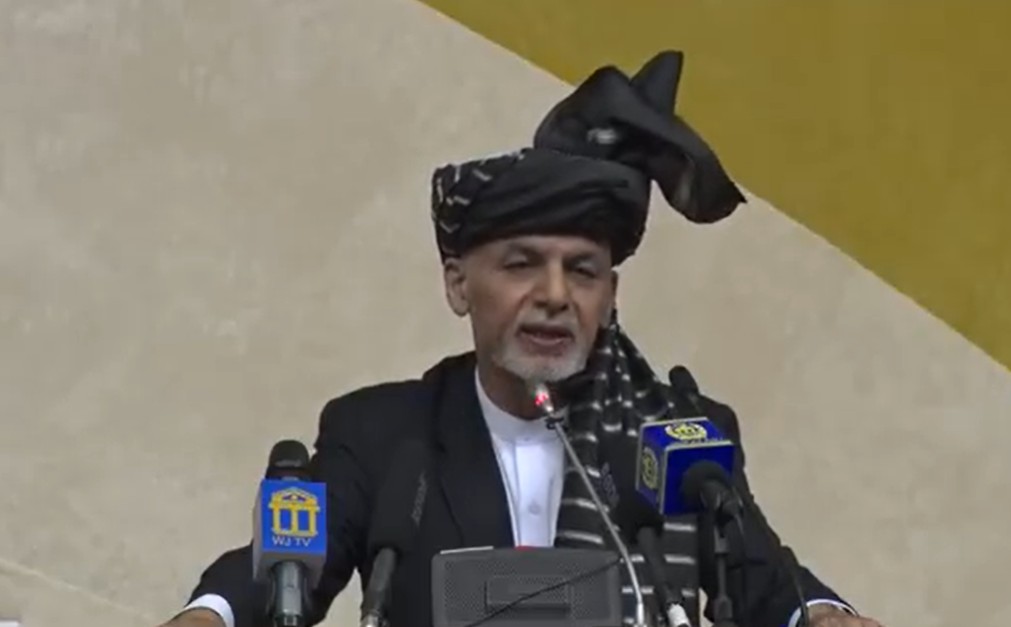
Speech at the opening ceremony of the annual legislative term of the sixteenth National Assembly
- Martyrs: Honor those who sacrificed for Afghanistan.
- Rule of Law: Strengthen fair, independent institutions.
- Peace: Inclusive talks with Taliban and citizens.
- Security: Professional, equipped, and ready forces.
- Economy: Increase revenue and leverage strategic location.
- Resources: Manage land, water, and minerals wisely.
- Governance: Transparent civil service and reforms.
- Education: Empower youth with skills and knowledge.
Parliament In the name of Allah, the Most Gracious, the Most Merciful.
Excellencies Ustad Danish, Dr. Abdullah, Mr. Qanuni, Mr. Arsala, Mr. Hekmatyar; His Eminence the Chief Justice; Excellencies Mr. Ibrahimi and Mr. Muslimyar; Jihadi leaders and national figures of the country; Honorable Attorney General; distinguished members of the Cabinet; the Chairman of the Independent Election Commission; honorable members of the Supreme Council of the Supreme Court; Dr. Farooq Wardak; the administrative boards of both houses; and honorable members of the Meshrano Jirga and Wolesi Jirga: Peace be upon you all! I am pleased that after the winter recess, we are once again gathered for the opening of the National Assembly’s work, marking the beginning of a new legislative phase for the representatives of the people of Afghanistan. At the outset, I pray to Almighty Allah for the souls of all the country's martyrs, especially the security and defense forces, the victims of recent terrorist incidents, and specifically the martyrs of the National Assembly. As the first servant of this land, I once again offer my deepest condolences to you and all the honored people of Afghanistan. In this National Assembly, the memory of each of our martyrs—Martyr Fazal Rahman Chamkani, Martyr Syed Mustafa Kazemi, Martyr Parwin Nuristani, Martyr Engineer Shir Wali Wardak, Martyr Alhaj Muhammad Arif Zarif, Martyr Amir Dad Muhammad Khan, Martyr Alhaj Ahmad Khan Samangani, Martyr Haji Habibullah, Martyr Abdul Motalib Beg, Martyr Muhammad Hashim Watanwal, Martyr Alhaj Baz Muhammad Jozjani, Martyr Shahnaz Hemmati, Martyr Sibghatullah Zaki, Martyr Nazak Mir Sarfaraz, Martyr Sahib Rahman Hemat, Martyr Mawlawi Muhammad Islam Mohammadi, Martyr Ismatullah Muhabat, Martyr Mawlawi Arsala Rahmani, Martyr Ustad Abdulsabur Farid, Martyr Muhammad Yunus Shirin Agha, Martyr Sarajuddin Safari, Martyr Engineer Abdul Matin, and Martyr Rafiullah Gul Afghan—will remain forever fresh, and their sacrifices will always be honored. May the souls of all martyrs rest in peace.
Legislative Achievements and Rule of Law
I wish to begin my remarks with words of gratitude. I thank the esteemed representatives of the nation—the parliamentarians and senators—from the bottom of my heart. Without your cooperation, we certainly would not have achieved the current progress in various areas of social life, ranging from the passage of laws to the peace process. Over the past three years, through the joint efforts of the National Assembly and the Government, nearly three hundred laws and legislative documents have been drafted or approved. This is a monumental achievement, and I congratulate the National Assembly and the entire nation. Furthermore, I must thank you for your positive role in conveying the people's demands and strengthening the relationship between the system and the citizenry. It is expected that in the remaining period of your term, you will continue to pass new laws. Laws form the foundation of social order, and the basis of a legitimate political system rests upon the law and the rule of law. In this regard, I specifically thank Ustad Danish and Dr. Abdullah for the great efforts they have made to bring these laws to this stage. In this context, the independence of the judicial and legal branches constitutes the foundation of the rule of law. Personally, and as leaders of the National Unity Government, we have never interfered in the affairs of the judicial and legal organs. If decisions in the judiciary are just, social conflicts and disputes will naturally dissolve. To date, our judicial and legal organs have gained social trust through their fair rulings and institutional reforms. I wish to extend special thanks to the honorable Chief Justice and the Attorney General. Thank you! Similarly, the religious scholars of Afghanistan have raised a genuine voice in support of the government's programs and the security and defense forces. Our scholars have played a constructive role in the rule of law, peace, and economic development. It is heartening that our religious scholars understand that the implementation of economic and developmental projects aids peace, and they support them. I thank all the esteemed scholars. I also thank all the men and women of our beloved homeland for their commitment to reforms, national programs, and the necessity of peace.
Elections and Democratic Legitimacy
Dear Compatriots! Holding transparent elections, free from any violation, is one of the mechanisms of the rule of law, a strengthener of the system's legitimacy, and a cause for public trust in legal frameworks. Therefore, holding parliamentary and presidential elections at their designated times is an absolute necessity and unavoidable. The National Unity Government considers itself obligated to provide the necessary resources for the elections, ensure their security, and prevent any interference from any side—especially from the security forces, civil administrations, and political circles. The Independent Election Commission must carry out its work with a purely national spirit, remain free from any political leanings or unprofessional conduct, and maintain its independence. To avoid any suspicion of interference in the commission's internal affairs, I, Dr. Abdullah, and Ustad Danish have personally refrained from any individual meetings with the Election Commission or its members; however, we have held group meetings in the presence of government and international colleagues to hear their problems. The work plans, timelines, and whatever is specified in the job description of the Independent Election Commission are internal matters of the commission. If there is a sense of delay in the commission’s work or other concerns requiring the cooperation of the National Unity Government and the Presidency, my expectation is that the political class and civil society organizations define the extent and manner of this cooperation themselves, so that no room for doubt remains.
The Peace Process and National Consensus
Honored Audience, Esteemed Citizens, Last week, at the Kabul Process conference, you heard our comprehensive plan for peace. In the drafting and completion of this plan, all segments of the nation—scholars, intellectuals, political parties, Jihadi figures, women, tribal elders, civil society, farmers, laborers, teachers, and the general public—played a part. This plan is built upon the demands and views of the people of Afghanistan. Here, I wish to thank Mr. Hekmatyar; with the heavy step you took, you brought an atmosphere of trust to peace and paved the way for negotiations with other leaders. It is the ordinary people of Afghanistan who are the primary victims of war; for this reason, the general public is more eager for the voice of peace than anyone else. Decades of war among the people have naturally bred distrust and resentment. On the other hand, there are limited individuals who see their benefit in the continuation of war. Therefore, if our call for peace is viewed with skepticism in some places, it is not unprofessional. However, it is clear that the National Unity Government wants peace for the people of Afghanistan and sees the well-being and dignity of all Afghans in peace. We state this loudly: we will not turn back from the path we have chosen for peace. We call upon the Taliban that the well-being of Islam and Afghanistan lies in sitting down for talks, so that problems and differences can be resolved without destruction and bloodshed. I want to once again thank Mr. Qanuni, who along with Dr. Abdullah was among the founders of the Bonn Process; the goal set at that time must be achieved by us. We are concerned that despite the government's efforts to reach peace, end tragedies, and focus on sustainable development, the enemies of peace—those who find profit in the continuation of war and crisis—will oppose this. Terrorist groups will try in various ways to damage this process. To defeat their destructive efforts, we must focus on the ultimate goal: calming the country and ending the era of war and crisis. To reach this goal, we must be patient and not allow the enemy to seize the initiative or make us victims of reactive and emotional behavior. Sisters and Brothers, Just as the drafting of the peace plan was based on public views and national consensus, consensus is also required to reach and implement peace. Every program implemented with national consensus requires the stability and continuity of such consensus in the practical value of peace. Because the main blow of this war has fallen upon the general public, and for the sake of the objective cause and a lasting peace, the general public—who are the primary victims of war—must never again feel the fear of war in their hearts. Fortunately, at this time more than ever, the Afghan national and government institutions are in the process of becoming fully empowered administratively and technically. Both the executive branch and the judiciary are working, and their role in bringing social peace is especially important, requiring political support.
Security Reforms and National Defense
Dear Compatriots! In a country that has experienced decades of crisis, security stands at the top of its needs. To reach total and sustainable security, there is no choice but the comprehensive strengthening of the country's defense and security institutions. To leave the crisis behind for years to come, we must provide the grounds for strengthening the defense and security sectors—making them educated, equipped, professional, and committed. Without that, a stable future for this country will be difficult. A government that is a driver of mediation and the rule of merit over relations is one of the most fundamental needs for this goal. This is not possible without reforms in these institutions, and anyone who opposes reforms has, in fact, stood against a vital transformation in the country. We do not want reforms for the sake of reforms; rather, with reforms in the security and defense sector, the security of our citizens is ensured and the ground for economic activities becomes favorable. National revenue will increase, and in this arena, the support of the people—especially the support of the people's representatives and our senators—is essential. While peace is our aspiration, unfortunately, we are currently in an imposed war. Therefore, there must not be a moment of neglect in the defense of the country. We must always be ready to defend the country and our people, and the slightest negligence in defending the country is intolerable. When peace is secured, the role of the country's security and defense forces will, God willing, gain even more importance; specifically, these forces can play a prominent role in guarding territorial integrity, national infrastructure projects, the rule of law, and responding to those affected by natural disasters. Right now, a four-year security plan is being implemented, the real results of which we will see in the year 1397 (2018). In 1398 (2019), we will, God willing, witness a great and unprecedented strength in our defense and security forces. Honorable Minister of Defense and Honorable Minister of Interior, I thank you and all the personnel of our security and defense forces for your hard work. The nation is with you. With the full implementation of the four-year security plan, Afghanistan will, God willing, reach full self-sufficiency in the security and defense sectors.
Economic Self-Reliance and Regional Connectivity
Brothers and Sisters! A country can stand on its own feet only if it is economically self-sufficient. To become self-sufficient, we must increase our annual national revenue to at least $8 billion. Today, our total national revenue is $2.3 billion, while our security expenditure is $5 billion. To achieve this, we must utilize the hidden resources and latent capacities within the country. In the past, Afghanistan was the crossroads for great caravans that connected different regions. Today, Afghanistan's position as a connector of Central Asia with South Asia, a connector of China with Iran, and as a crossroads for energy transit to Pakistan and India, is one of our country's important capacities that provides the path to realizing economic self-sufficiency. To reach economic prosperity and eradicate poverty, we need a positive regional policy, and we have moved closer to this goal—making Afghanistan a center of shared interests. Our message is one of regional cooperation; strengthening regional relations will take us from poverty to wealth. Therefore, we do not seek enmity with any country; since our national interests are enduring, and we want to be at the center of regional cooperation, we will always prioritize our national interests. Turkmenistan possesses rich gas resources, and its gas export policy follows routes that pass through Afghanistan; this matter is a priority of our economic policy. Turkmenistan was the first country to understand Afghanistan's capacity as a point of connection and invested in this direction. Afghanistan's policy is a policy of connection, not separation, and we want to have good relations and regular economic cooperation with all our neighbors. Not only with Turkmenistan, but our large vital projects—from railways to electricity—are being implemented with the Republic of Uzbekistan. Similarly, the major CASA projects with Kyrgyzstan and Tajikistan, and the Lapis Lazuli corridor with Turkmenistan, Azerbaijan, Georgia, and Turkey; as well as our cooperation with Iran and India regarding the Chabahar port, are growing more robust day by day. The result of this, God willing, will be that Afghanistan turns into a regional corridor. The days when someone could close our road are over; our road will always remain open due to good relations, and we will always have points of cooperation as a crossroads.
Resource Management: Water, Land, and Minerals
In addition to our location, we possess water resources. Although we face limitations compared to the past due to climate change and regional warming, we can still improve our country's economy through comprehensive management. Managing waters means both preventing water waste and managing its use—whether in cities, agriculture, or mines—and it also means Afghanistan's commitment to the treaties it has regarding its transboundary waters. To this end, the containment of small and medium waters, in addition to large dams, is necessary so that the water situation is predictable and manageable. In the first week of Nawruz, practical plans in this regard will be explained. Our water is our honor (Ab-e ma, Abroo-ye ma ast), and we will uphold our honor. Land is another source for our economy. As you saw in the national land program at the Herat summit, we intend to pave the way for the resettlement of refugees and accelerate the housing construction process through the creation of a "Land Bank." Likewise, we want to complete the property registration process and the securing of people's assets within the next four years. To prevent land grabbing and advance the national economy, we have a clear plan; in the implementation of this plan, the cooperation and commitment of the people, the honored representatives, and the senators are very important. Other resources of the country—such as the lawful use of mines, forest restoration, restoring balance in imports and exports (eventually strengthening exports over imports), and most importantly, the proper use of Afghanistan's human capital—are all potential possibilities that, with proper planning, will lead to the country's self-sufficiency and economic independence. To increase internal revenue, reforms in customs and other revenue sources are of vital importance. The National Unity Government has a comprehensive plan to bring reforms to customs and revenue sources; we need the cooperation and commitment of the people and the honored representatives of both houses in implementing this plan. Here, let me express my heartfelt gratitude to the honored houses for their deliberation on the national budget and its approval by the Wolesi Jirga. It was the most transparent and important budget proposed, and we all thank you for giving direction to the future of Afghanistan. Our economic policy is the depth of Afghanistan’s physical and social security, and without success in this field, nationwide security will not be possible. The beloved homeland of the people of Afghanistan has an important natural capital that, unfortunately, has not been well-utilized. Fortunately, our people have now realized the importance of this capital. Some time ago, the esteemed elders of the Jadran tribe came from their districts, and one of their major demands was that more work should be done for the protection and export of pine nut (jalghoza) forests. Simply taking proper measures for the export of pine nuts can increase our revenue by some one hundred million dollars. The honored people of Badghis and Herat have the same issue regarding pistachios, and everywhere—from Nuristan, Kunar, and Nangarhar to Central Afghanistan—there is a demand for forest restoration. God willing, we will take practical steps in this regard this year. Our minerals are another great natural wealth. Fortunately, for the first time, a roadmap for the country's mining sector has been developed, and henceforth, the utilization of mines will be based on a comprehensive and clear vision. This mining roadmap helps us transform our mines into real capital for this generation and future generations. Based on this roadmap, investment in mines will become targeted, transparent, and easy, and arbitrary actions in this area will be prevented. One reason I shared my views with you in this regard is our national duty. Our national duty is that Afghan refugees—first from Pakistan and secondly from Iran—return to the embrace of the homeland with dignity, honor, and full security. For this purpose, the National Unity Government will consolidate all its plans and share them with you.
Governance, Education, and Human Capital
Dear Compatriots! Administrative reforms are as important as security reforms. The conducting of transparent exams by the Independent Administrative Reform and Civil Service Commission in the center and provinces increases the trust of the youth. In Helmand, 400 people participated in exams for civil service posts, among whom 70 were women. In Herat province, 1,600 people participated in these exams, among whom 1,000 were women. Such broad public participation is a sign of public trust and confidence, and fortunately, a momentum has been created in the area of administrative reform. And finally, our most important asset is our human capital. In the current solar Hijri year, important changes are coming to the sectors of education and higher education, and detailed information will be presented to the nation in the coming days. There were serious problems in the education and higher education sectors, and problems still exist. We do not judge the progress; the people must judge it. High-quality education, higher education, and teaching skills and trades to the young generation can change the lives of our people. As a teacher myself, I know well how important education and higher education are. However, in past years, security conditions caused many issues to be left behind. I hope that in the coming year, we pay as much attention to education and higher education as is necessary and required. Our intention, will, and patience are focused on putting an end to crises, and we will do this together. With national unity and coordination, every goal and objective can be reached. With the support of the nation's representatives and elders, segments, tribes, and ethnicities, your National Unity Government will, God willing, realize the rightful demands of the Afghan and compassionate people.
Conclusion
Long live Afghanistan!