Building Enduring Peace Through Justice, National Unity, and Inclusive Dialogue
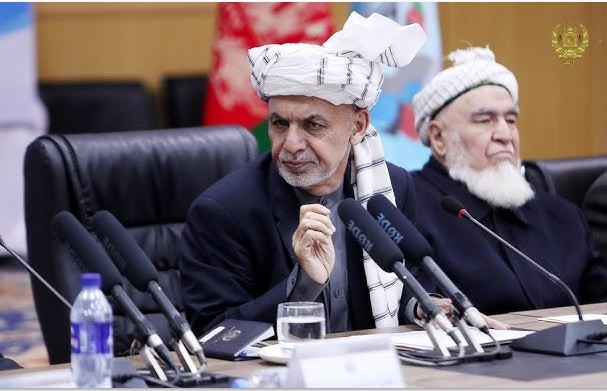
Speech at the General Assembly of the High Peace Council
Keypoints:
- Lasting Peace: Peace is the ultimate goal, beyond war.
- National Unity: All groups stand together in consensus.
- Justice: Hold perpetrators accountable, protect the innocent.
- Peace Process: Clear roadmap for negotiation and guarantee.
- Community Role: Citizens and youth shape lasting peace.
- Strong Governance: Institutions, rights, and law enforced.
- Global Support: Afghan-led process with international oversight.
In the Name of Allah, the Most Compassionate, the Most Merciful.
Esteemed Ustad Khalili, respected Dr. Sahib Sarabi, honorable deputies, Ustad Shahrani, Qazi Sahib Waqad, and all members of the High Peace Council: First and foremost, I offer you the greeting of the great leader of humanity: Peace be upon you, and the mercy and blessings of Allah. "Reconciliation is best" (Wassulhu Khayr) is the command of Allah; it is not a matter of choice, and we are committed to this path. However, we are in a situation where we must understand exactly where we stand.
The National Impact of Recent Attacks
The event of last Thursday is for us what the September 11th attacks were for the Americans. There should be no doubt that we have reached a fork in the road of choice. This attack on the road of the martyred Malalai was not an attack on a few individuals; it was an attack on the people of Afghanistan. It was a declaration of war against the people of Afghanistan—against the children, the women, the youth, the doctors, the shopkeepers, the laborers, and all strata of Afghan society. It was a declaration of war, and the proof is that for the first time, the criminals are claiming responsibility for it. Anyone who takes responsibility for such an act and takes pride in it has no connection to Islam, to being Afghan, to humanity, nor to the codes of Pashtunwali, Uzebkwali, Tajikwali, or any of our other traditions and customs. They are no longer members of this society; the lines have been drawn clearly. Those who do not accept reconciliation and peace have separated themselves from our society, and those who do accept it must make their decision today.
The Call for Courage and Reason over Emotion
The time for choice has come for everyone. If you have the audacity to attack the people and bow your heads in slavery to neighbors, that is not courage. True courage is understanding that this society needs peace and having the spirit to reach out and take this extended hand of peace offered by the High Peace Council, the government, and myself. By the grace of Allah, one of our attributes as Afghans is that when grief strikes, we can control our emotions. Today, more than ever, there is a need for rationality and organized thought. It is organized thought that leads us to our goal, not surrendering to temporary emotions. In the Conference of the Birds, Attar says that emotions are like a beast; either they overcome man, or man overcomes them. Today is one of those days where, while we honor our martyrs—and each of our hearts is in pieces, especially mine—and while we seek healing for our wounded, we must remain focused on the goal rather than surrendering to momentary feelings.
The Dual Strategy: Winning the War and Achieving Peace
From this perspective, two goals are clear: we must win the war and we must also earn the peace. We must win the war because for those who committed this heinous act, there is no way other than war. We must earn peace because it is the demand of the nation and our consensus. We have an opportunity ahead of us as a nation and state, specifically through this national institution which is the result of the Consultative Loya Jirga—the High Peace Council. In twenty-four days, the second Kabul Process Conference will take place. I share these views with you so that complete consultation can occur within the High Peace Council, allowing us to share these ideas with the world as a unified national and state position.
Defining Peace and Sustainable Governance
The time for choice has arrived for the Taliban and their supporters as well. First, what is our vision and definition of peace? Peace has generally been interpreted negatively as merely the "absence of war." But the absence of war cannot be the sole goal; that is not the expectation of our tribes, ethnic groups, or people. Peace is a state in which a system prevails where the state performs its key functions for the people—a state where the rights and obligations written in golden lines in the second chapter of the Afghan Constitution are institutionalized. It is an environment where the private sector can invest in the medium and long term, and a situation where the Afghan state can present itself as a credible and strong partner to regional and global governments. Without this goal, our efforts will lack direction. Without this goal, we cannot distinguish between two essential stages: reaching peace and achieving sustainable peace.
The Pillars of Lasting Peace: Justice and Reform
Esteemed Ustad Khalili, the conditions and shortcomings you mentioned are obstacles to sustainable peace. The first question of those who make peace is: who will protect their lives, property, and honor? Is there justice in the courts, or corruption? Is the government official accountable or autonomous? We must answer these fundamental questions as a nation and state. To reach the goal of peace, we must analyze the current state of war. Without analyzing the war, we cannot transfer a roadmap to the goal of peace. In this regard, I sincerely thank the members of the High Peace Council and Dr. Sahib Khelwak for your two large gatherings and two very important resolutions. Consensus is required regarding the conditions for the continuation of our war; these factors must be clearly defined. If we do not understand the obstacles, how can we remove them? The roadmap required is one that clearly outlines how to reach peace and how to maintain it sustainably afterward.
The Human Cost and National Resilience
To reach peace, it is necessary that we come to a shared picture of the causes of war, its scale, and its cost. The High Peace Council must take a very clear position on the cost. Do we count the blood of two hundred people every day, or do we not? I have no conflict if the consensus of this country is that we must give five hundred thousand more martyrs to win peace once and for all, but we must measure this. What is our answer to every father whose son is martyred and every woman who loses her husband? We must have specific answers. I want to thank the great nation of Afghanistan, specifically the security and defense forces, the Ulema, and all of you. If we were made of steel, we would have broken by now. This nation is a hundred times stronger than steel because of faith in Allah and the Kalima. Be certain that this country was Muslim, is Muslim, and will remain Muslim forever. We are the representatives of Islam, not them. Every day we dedicate ourselves to ensuring a widow does not remain helpless and looking for ways to improve people's lives; this is part of the "Greater Jihad." They come every day to sit us upon the rug of mourning.
Distinguishing the Peace-Seekers from the Criminals
Another point that is extremely important is the distinction between those who accept peace and those who reject it. The reason I came to you today is that after last week, this task became easier. Previously, the question was always how you distinguish them, and we said history would make that distinction. History has now brought that distinction: those responsible for this tragedy are no longer eligible for peace; the door of peace is not open to them. They will only witness our determination for their complete destruction. Conversely, all strata and parties who accept peace will witness the wide embrace of this nation. However, the distinction must be clear. Our commitment to peace does not mean we sit quietly and do not take revenge. Our revenge will be taken with wisdom and planning. They felt the blow in Baramcha last night, and they will see other blows one after another. They must be certain: whichever hole they crawl into, we will pull them out, and justice will be served based on the decisions of the people of Afghanistan. But war is not the final solution; let us understand this clearly: peace and politics are the ultimate path.
Establishing the Boundaries of Consensus
Thirdly, we must understand the social and political obstacles in the way of bringing peace. You say there is consensus—yes, we want consensus—but do we have consensus on the cost? Do we have consensus on the path? This must be clarified. Our boundaries must be clear: what are the limits of our peace? For example, our women cannot be deprived of their rights. We must have clarity here; we cannot sacrifice the rights of our citizens. The boundaries must be clear so that we talk about a legal government. There must be a political solution based on which the people of Afghanistan decide whom to trust through elections. With a clear consensus, we must put a bandage on the wounds. That is clear, but it must also be clear what our limits are. This national consensus requires work because when you sit at the negotiating table, you must have clarity. I am a servant of the people; my limits are determined by the people and the Constitution of Afghanistan.
The Roadmap and the Inspiration of Previous Success
It is also necessary to have consensus on our objective: what is our roadmap? What are its stages? And what are the specific strategies or mechanisms? What is the goal and the roadmap? What are the stages and methods? From the consensus you created and the activities of the last six months, among the great achievements of the High Peace Council is the peace with Hezb-e-Islami, from which we take inspiration. But more extensive and clearer work is required; if the goal is clear but the roadmap is not, we will not know where we are taking this path. It is necessary that the future stages are clarified, especially in these coming twenty-four days.
Economic Justice as a Foundation for Stability
Another matter that must be clear is the creation of sustainable peace after a peace agreement is reached. The point here is very simple: if the intention is to deceive one another, we will be back at war in four or five months. In peace, the intention must be pure. In Sahih Bukhari, the Prophet (PBUH) mentions intention five times. If the intention is not pure, we will not reach the destination. The will must be clear and the decisions specific. In short, without a basic plan and comprehensive reforms in the state, economy, and society, sustainable peace cannot be achieved. How can you think sustainable peace will come when sixty percent of our people are hungry? How can you think sustainable peace will come if we forget the deprivation of those who eat only once or twice a day? How can you think sustainable peace will come if the child of the poor does not have access to progress based on their own merit? We must specify these factors and have a clear roadmap. The good thing is that every time reforms have been made in this great country, the people have welcomed them. But today, reform is not for the sake of reform; it is for the sake of peace. The reforms that peace requires demand even greater will.
Building Mutual Trust and People-Centric Consultation
The second issue in sustainable peace is the atmosphere of trust. If we have fought for years, the end of the war requires an atmosphere of trust and mutual patience. When we want peace, it requires trust-building, stages, scheduling, and implementation. If a peace plan does not have a specific schedule and clear actions, and if the resources are not calculated, the atmosphere of trust vanishes. Third, we are a democratic society that believes in consultation. Our national cultures have always been based on consultation and the "Jirga." The word Jirga exists in all our languages, and the form of the Jirga exists among all our ethnic groups. Creating peace is part of our national culture. Let others not give us too many lessons on peace; let them allow us and cooperate so that we can implement our own intra-Afghan and intra-Islamic methods. For this reason, a sustained will backed by the people's vote is essential. The point where peace and politics are directly linked is the matter of elections. We have two elections ahead: the parliamentary and district council elections, and the presidential election. these provide the opportunity for the field of politics to replace the field of war. This is the decision of the people of Afghanistan. My responsibility, and the responsibility of all of us, is to ensure the field is level and the competition is clear. Anyone who comes forward and thinks they can represent the people of Afghanistan must be given the opportunity, provided they accept the rules of the political game.
Reintegrating Fighters and Healing Society
The final point regarding factors that can destroy a peace pact must be identified from the start. Since it is a matter of intention and trust, it must be clear. I have analyzed more than a hundred international peace treaties. One of the clear points that can cause disruption early on is what we do with the fighters. They have fought for ten, twenty, thirty, or forty years; what plan do we have so they can live in society with dignity and credit? There is a story of a Mujahid from Paktika who, after the interim government was formed, climbed a high mountain. Someone asked him what he was doing, and he replied, "I have given my gun its leave." We need that atmosphere. How do you determine the future of those who fought for years? How do those who suffered and gave hundreds of casualties find healing? How do we prepare society to embrace someone who yesterday killed their brother, father, or sister? These things require clear thought and deep reflection; otherwise, we are only fooling ourselves.
The National Priority of Refugees
The most important issue for us as a nation is to fundamentally resolve the issue of our refugees. Today we are not complete. How can we call ourselves complete when 2.2 million Afghans are in Pakistan and 1.2 or 2 million others are in Iran? Every day you speak to that side, they tell you, "Come and take your refugees." I want your consensus so that no more games are played with refugees. I want all state resources to focus on returning our refugees from Pakistan in a short period with dignity and status to this land. This work will bring us back together. Every day I feel as though we are missing an arm and a leg. You have felt the pain—if someone tells you in the middle of the night to leave, or tells you during the day that you are being deported, that is not a matter of dignity. We must have a commitment to solve the issue of migration fundamentally.
The Three Stages of the Peace Process
From my perspective as a student of peace, three stages are often necessary: the pre-negotiation stage, the negotiation stage, and the stage of stabilization and guarantee of the peace pact. Based on your views and what I saw with the international community and all the ambassadors on Thursday, the first two stages must be absolutely intra-Afghan. The preparation stage and the negotiation stage must be intra-Afghan. If you bring too many people in here, it becomes a case of "too many butchers for one cow." Peace is not something that should, God forbid, become tainted. It is necessary that we prepare our own intra-Afghan conditions for the first and second stages and use those methods that only you and I know, which are for the benefit of this nation. Therefore, in these first two stages, I want our international partners and allies to be informed but not involved. In the third stage, where the result is stabilized and various guarantees and witnessing of the document are required, we must bring in the international community.
The High Peace Council as a National Magnet
It is necessary for each of you to work. I see each of you as a magnet. You are not limited here; from my perspective, each of you is in contact with hundreds of thousands of people. As a collective, the High Peace Council has the capacity of a large magnet in this historical stage. From you, a voice of hope rises both for the nation and for those who seek peace, and the door of peace must remain open. If we make a wrong decision, we drive everyone toward war. I told you first that my will is clear. The work of war is relatively easy. Do you remember the Roshanyans? For four hundred years, they fought one after another against the Mughals. That path is easy and I know it, but the real question is: how is peace achieved? We understand war. Our high Islamic culture and our Afghan pride are alive. But the point is this: just as I am not willing to bow my head to a foreign power, I am willing a hundred times over to go in humility to every Afghan man and woman. I am willing a hundred times to refer to every religious scholar, every tribal elder, and every civil society group. We Afghans should not have pride against one another. Our path is not the path of pride; our path is the path of Abu Bakr al-Siddiq, Umar al-Farooq, Ali Karam Allahu Wajhah, and the Rashidun Caliphs (RA). What is more patient than that?
The Example of Umar al-Farooq (RA) and True Dignity
You remember the story of the envoy who came looking for Hazrat Umar al-Farooq (RA). He had heard the name and expected a high palace and grand displays. He asked, "Where is Umar al-Farooq?" They told him, "He is there." He asked again, "Where?" and they pointed. He saw Hazrat Umar al-Farooq (RA) lying under a tree with his head resting on a stone. The man embraced faith that very day. It is necessary that our measure of status shifts from how many cars or palaces we have back to peace, service, and building.
Identifying the Genuine Peace-Seekers
The fundamental question in these next few weeks is: who is accepting of peace? I do not want to give this answer to the people myself; you and all sectors of Afghanistan must help so that the answer is based on the majority. My perception is that the conditions are useful, but scrutiny is required. This process requires a level of complete precision so that we do not sacrifice people for their intentions in the atmosphere of trust. I told the international community clearly that explanations are only given to them when conditions are favorable. Intra-Afghan relations must be respected. When people tell you they have a way and can take a step, we must think fundamentally about the conditions. How do we release those compatriots of ours who are today in a state of hostage and under great pressure? Some of them are hostages—have they sent you word about what is happening to their families or to them? I want you to come back to me clearly, give me advice, and show me the way.
The True Nature of the Imposed War
Today I have only discussed the internal dimensions with you. The war imposed on us is not a war of Afghans; it is a war against Afghanistan. One dimension is clearly the war we have among ourselves, but the main dimension is the war against Afghanistan. There are two very clear ideologies in this war. One ideology is to make Afghanistan an international center for terrorism and extremism. In this ideology, the people of Afghanistan are merely cannon fodder and victims. Think about whether these twenty international terrorist groups have even a shred of constructive thought for the children, women, scholars, or society of Afghanistan. They pass through five or six other countries, go to a specific country to receive training, and do not fire a single shot there; but the moment they arrive in our country, they think they have the right to perform every act of violence and vileness. Do they not tear apart our six-year-old children? Did they not sit our seventy-year-old men and women on bombs to deprive us of our spirit? They know the Afghan is a warrior, so they try to take away that spirit. These organizations want permanent war. In the Kabul Conference and after, I want to discuss clearly with the international community what the responsibility of the world and the countries from which they came is toward them. They have no political solution with us; what right do they have to say they should have a right in the Afghan system? What has Afghanistan done to them? Nothing!
The Criminal and Economic Dimensions of Conflict
The second dimension involves international criminal organizations. The war in Helmand is a war of opium and heroin; therefore, a clear distinction must be made. For eleven years, the same war has been repeated in Helmand; it is not the war of the people of Helmand. There are grievances, yes, but the basic point is that this is a war of interests. We must have logic there as well. One reason I want to work on the economy is that we must have alternatives. Do people go to poppy eradication or not? If you give these people three to four hundred Afghanis, others give them two thousand Afghanis during harvest time. We must understand that part. This plan for the future of Afghanistan is dangerous to us, and we must prevent it.
Afghanistan as the Heart of Asia
The second plan is our vision, which we are all united upon: that Afghanistan is the crossroads and heart of Asia and the gateway to South Asia. In this vision, all our resources are put to work for the future of the nation—our water, land, minerals, oil, and gas. Allah has given very great blessings to this soil. The problem has been with us, as we have not been able to use them until now. But the good thing is that you saw that after a hundred years, in these three years, Afghanistan became an inseparable part of Central Asia. To those countries that thought if they closed Torkham or Spin Boldak for two days there would be a riot in Kabul because there would be no bread—know that you can close it for a hundred years now.
The Danger of Hope for the Enemies of Peace
Brothers and sisters, know that the intensity of these attacks is not because of our failure; it is because your process is succeeding. The greatest danger to them is what you are doing around this table: the hope for peace. When the hope for peace truly takes root, those who see their interests in war—and do not forget that these interests are both political and criminal—see themselves in danger. For this reason, we must clearly express gratitude on one hand to our heroes of peace and on the other hand to our heroes in the defense of the country. The work of the High Peace Council is as important as what our soldiers do on the front lines. Therefore, the war and peace of today are inextricably linked. Both must move forward together, but the goal is peace. War has been imposed; we are forced to defend ourselves. Allah is witness, and it has been proven to you: did I not take every step that could lead to peace? It is not that we lacked the intention; the result of our effort and intention is that today, from the perspective of the international community, you and I are in the right.
Future International Engagements
The Kabul Conference is important for its messages. Following that, God willing, three other conferences will be held for which the preparation of the High Peace Council and the entire nation is required. First, a conference in Tashkent with regional consensus will be a very large step, and the hundred-year distance between Afghanistan and Uzbekistan will be removed. A lasting friendship is being created. Second is the type of negotiations starting between the Ulema of Afghanistan and Indonesia. Qazi Sahib, Shahrani Sahib, and Ustad, you went there first. After that, there will be trilateral meetings of scholars and finally a great conference of the Ulema of Islam. Do not forget the importance of Indonesia as the largest Islamic country; the visit of the Indonesian President and his commitment is a massive step. Third, a conference will be held in the Gulf for economic support, specifically on how we resolve our refugee issue and create immediate employment and marketing.
Final Condolences and Reassurance of Will
In conclusion, I again offer my condolences to the entire grieving nation and to you. You saw death with your own eyes; you saw it closely. Blood was shed. You saw the blood-soaked bodies of children, mothers, sisters, and elders. But today you sit at this table with a very firm will—a will to bring about a strategy and implement it so that, God willing, such incidents are not repeated in Afghanistan. Dangers lie ahead, but action is being taken where necessary. For the security of Kabul, I have given five days starting tomorrow; you will see some urgent actions. In this regard, my request to you and the whole nation is not to allow small politics, personal relations, or other preferences into the security and defense administration. This is necessary not only for winning the war but also for bringing sustainable peace. If the state is not in a position of strength, how will the opposition have confidence, and how will the real proponents of war in the region accept that there is the will and intention in this land? I thank you again for giving me this opportunity. Ustad, all members of the council, sisters, and brothers: we thank you for the hard work you have done. you have our full support. I came to you during these days while we are sitting on the rug of mourning to tell you that our intention and will for peace has become stronger, not weaker. Our weakness would be to follow the enemy's plan; the enemy's plan is for the High Peace Council and the peace process to be discredited and for our will to weaken. This nation will not allow that.