Advancing National Urban Development: Building Sustainable, Inclusive, and Livable Cities for All Citizens
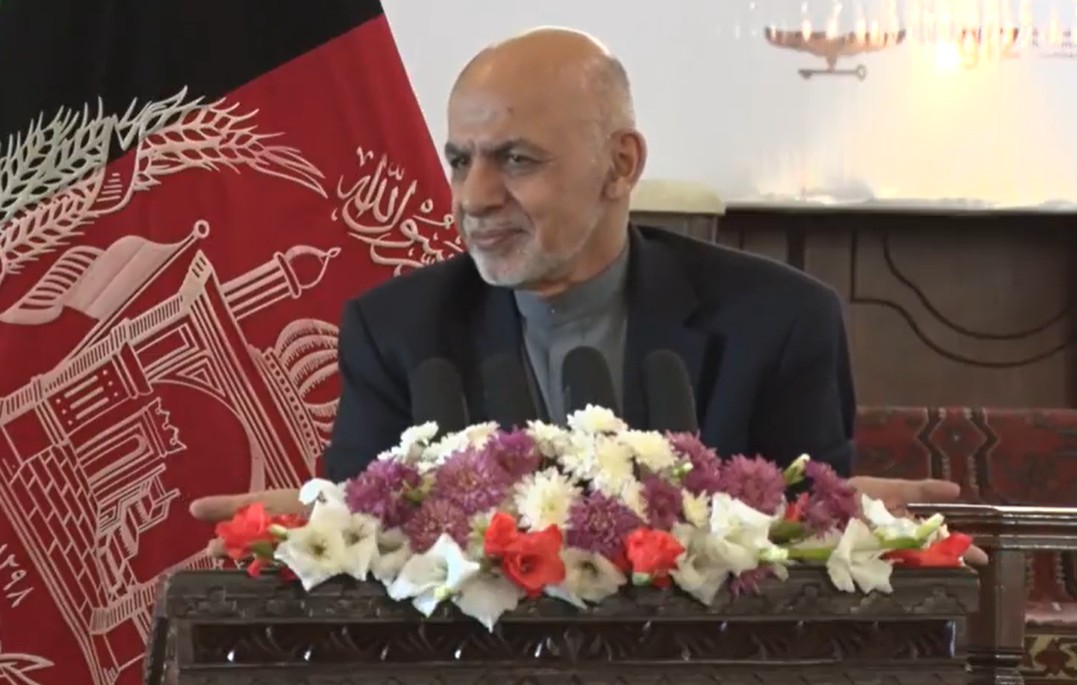
Speech at Fourth National Urban Conference “Towards Sustainable Cities” - Kabul
Keypoints:
- Citizen Empowerment: Promote civic responsibility and urban engagement.
- Civil Society & Councils: Strengthen local councils through the Citizenship Charter.
- Private Sector Participation: Encourage investment in urban projects.
- Planning & Infrastructure: Improve transport, water, and construction systems.
- Land Management: Register property and prevent land grabbing.
- Sustainable Growth: Ensure balanced development across all cities.
- Capacity Building: Develop expertise through professional training.
- Governance & Accountability: Reform municipal administration and finance.
- National Collaboration: Coordinate government, citizens, and the private sector.
- Heritage & Vision: Preserve history while designing future-ready cities.
Salam Khana Palace
In the name of Allah, the Most Gracious, the Most Merciful.
Respected compatriots, dear fellow citizens, esteemed members of civil society, Ulema, representatives of the private sector from the Chamber of Commerce and the Chamber of Industries, honorable members of the Cabinet, Dr. Qayoumi, Mr. Kashaf, Mr. Engineer Mohammad Khan, Mr. Minister of Urban Development, and distinguished guests! First of all, welcome to your own home!
Opening and Welcome At the outset, I find it necessary to congratulate several institutions. The spirit of this conference possesses a fundamental difference from the conferences we held previously. In past conferences, one of my roles was to offer you recommendations. Today, by the grace of Almighty Allah, you yourselves have taken the authority of the urban sector into your own hands, for which I congratulate all of you.
I wish to express my gratitude to civil society. Mr. Siavash, your analysis is spot on in both respects. Until we transform into "Citizens," we cannot become the owners of the city; and until we consider cleanliness as part of our faith—as we have been commanded—we cannot keep our cities clean.
I want to thank the People’s Councils, both for your highly positive review and your very constructive proposals. With the "Citizenship Charter," the role of People’s Councils multiplies several times over. For the first time in our history, it is not just our villages that have benefited from the "National Solidarity" program; this time, all cities of Afghanistan will benefit in a cohesive manner from the "Citizenship Charter" program. But beyond that, the choice is in your hands. Now, my challenge to civil society and the People’s Councils is this: What will you do? We are placing the choice, the authority, and the resources at your disposal. Furthermore, it is hoped that next time, you will honor the most successful People’s Councils in city cleanliness to create a clear competition; because within the framework of the Citizenship Charter, authorities are being transferred to you. The government will provide resources to the extent possible; however, the greatest resource is our own spirit of citizenship and national identity.
Gratitude to Private Sector
Secondly, I wish to thank the Chamber of Industries—Mr. Kaminzada—as well as the traders and Mr. Momand, from the bottom of my heart. The point is this: just as civil society is essential to us, the private sector is vital. You are our partners. The contradiction that once existed between the private sector and the state, God willing, exists no more. I want to tell you with certainty that you are the "arm" of the state; without you, the state is incomplete, and civil society is the other hand. So, I thank you for your investment and for moving toward self-reliance.
Economic Challenges and Trade Balance
My main point is that the greatest risk for the future of Afghanistan today is our trade balance. We import more than two billion dollars in food and over one billion dollars in construction materials and other goods. Not a single one of these needs to come from abroad. Brothers and sisters! We have committed a 25% preference to you; you invest, and you will be given priority in every national project and contract. We will return to this issue later.
Quality and Cost Issues in Infrastructure
The essential point is that if affordable housing is introduced or public government buildings are constructed, quality must go up and prices must come down. The current situation is acceptable neither to me nor to the people. How is it that in our neighboring countries, one kilometer of the best road is built for $250,000, yet we build a second-grade road for $500,000—the price of a first-grade road?
Need for Sectoral Transformation and Mindset Change
Mr. Yari, God willing, will bring fundamental changes to this situation. Mr. Naderi! We must transform these sectors. Where does this situation stem from? Prices were high because an atmosphere of trust did not exist; contracts were taken specifically so they would not be completed. We must accept the money and legitimate profit of the investor as a priority; may Allah (SWT) make all of you billionaires. This land must emerge from the state where trade or investment is equated with theft. Look at Google alone. How many countries have a budget equal to Google? [With emphasis:] It emerged from the initiative of one human brain. The mindset must change; because the production of wealth is the primary tool for the eradication of poverty. We cannot live with this poverty; for this reason, the development of our domestic materials is absolutely essential.
Gratitude to Universities and Professional Institutions
I also wish to thank the universities and professional institutions—Dr. Mujaddedi and Mr. Kakar are here. We must realize that we have given hundreds of millions of dollars for international consultancies for "design." After sixteen years, this is a national shame. The capacity for design must be fundamentally established within Afghanistan; which cannot happen unless we invest in our universities, institutes, and professional bodies. Therefore, the division and distance between the state and universities must not only end; we demand an atmosphere of all-encompassing cooperation. Where else will we train our human capital? This type of technical support, where all the pressure falls on government institutions and on those who were not mentally prepared [in terms of knowledge], must end. We must fundamentally train our new generation and transform our capacity. I thank you for your participation in today’s conference.
Appreciation for Ministry of Urban Development
Mr. Minister of Urban Development, the medal was your right, and today was the day you should have been honored. Mr. Minister, thank you for your report and your activities—and the work has only just begun. But specifically, I congratulate the Ministry of Urban Development for creating this conference for the sake of an open debate. Our conferences must not be ceremonial. You have seen me; I am not a man of ceremony—I still wear my old coat. My point is that as stakeholders and beneficiaries, and as a unified nation and a cohesive state, we must have constructive dialogue. My request is that in these discussions, both achievements and shortcomings, as well as opportunities, be taken into account. Because the only way to progress is to move forward as one, with strength. To understand the problems of the private sector, civil society, and councils from their perspective, the mirror is in your hands. Hold the mirror back up to us. Every time we look in the mirror—you have heard the story of the old woman—the problem is not in the mirror. If we have grown old, the problem is in our own face. But you have the right to hold the mirror to us, and when you do, we will remove our problems with great patience and deliberation, because these are our shared problems.
Congratulation to IDLG and Mayors
I congratulate the Independent Directorate of Local Governance (IDLG). Truly, Mr. Popal, since Mr. Baig arrived—we congratulate Mr. Baig as well, especially since his Pashto has improved so much, because his daughter speaks Pashto with him; the poor man has no other choice! [Laughter] Successful Mayors! All mayors have achieved successes; a very good movement has emerged. But especially Qala-e-Naw, Maymana, Lashkar Gah, Kandahar, Charikar, Gardez, Khost, and Mehtarlam, whom you honored; they are all truly worthy of praise. Manana!
Appreciation for Water Supply Authority and ARAZI
I wish to also thank Mr. Yalani and his colleagues in the Water Supply Authority. Truly, since the day Mr. Yalani took responsibility for the Water Supply Authority, he has taken the very successful experience he had in Herat and made it nationwide. Mr. Yalani was originally a candidate for another job; after I forced him, he came to Water Supply. I later heard he said the President has "a bit of judgment"—thank you for accepting. [Laughter] To the ARAZI [Land Authority]! Mr. Paykar, thank you for your all-encompassing efforts. God willing, with the program ARAZI has undertaken, within four years all public, state, and private properties in Afghanistan will come within a clear framework, and this will provide a clear foundation for you. The latest initiative of the Land Authority is that prices are being assessed, and minimum prices will be determined everywhere, while the maximum is left to the private sector through supply and demand; so that we have a clear arrangement and can move forward. We also thank other sectors, the Capital Zone Development Authority, Kabul Municipality, and others.
Vision and Goal for Cities
What is our goal? Our goal is "The Citizen in a Livable and Sustainable City." Without creating a culture of citizenship, we cannot call ourselves urban. A few years ago—about five years ago—I spent six hours in a university with about four hundred students, sisters and brothers. I asked them for the definition of their property. The majority defined their property as being inside their four walls; that is not citizenship. Those who keep their own house clean but throw their waste on the street—they are not citizens; they are strangers to one another and lack the spirit of solidarity. When we ask, "Whom does the road belong to?" they say "the state." "Whose responsibility is the cleanliness of the road?" "The state." But conversely, in Khair Khana, one thousand and several hundred people joined together. In a fundamental arrangement, the definition of property there belongs to the entire Gozar (neighborhood). Every house has a number and a streetlight, and every side street is concreted. Women and children are safe from early spring to autumn, from morning until ten at night; their most important work is that they shared in each other's sorrow and joy; the neighborhood itself resolves most disputes between husbands and wives. They even segregated their waste.
Importance of Social Capital and Livable Sustainable Cities
The main point, brothers and sisters, is that these changes are in your hands. The greatest capital is social capital; just as it created national solidarity in the villages, and a part of the initial programs that were in the capital. It is hoped it remains so. You saw in Herat, the people themselves stepped back in the face of reforms; because they saw the benefit of stepping back. We must convince one another that shared benefit is the shared goal. But the other part concerns "Livable Cities," which is the duty of the Ministry of Urban Development and municipalities—and thus far, we are unsuccessful, because not one city in Afghanistan has transport, nor has it managed waste effectively until now; not one city in Afghanistan, including Kabul, fundamentally understands its own revenues. There were six different departments in Kabul Municipality to collect revenue. This does not foster an atmosphere of cooperation. We need a foundation for nationwide reform. Successful actions have been taken; we must reform the legacy left behind. It is "Sustainable" because our responsibility is not just to the present. Every city that we plan and organize is for the next two hundred to six hundred years. Do you think London is planned every day? Or Paris, Vienna, Singapore, or Kuala Lumpur? A period comes where fundamental directional work is performed, after which there is improvement.
Urban Institutions and Proposals
We are, both fortunately and unfortunately, at that stage where we have legacy problems on one hand—as Mrs. Siavash and others mentioned—and on the other hand, we have opportunities to create sustainable cities. To solve the problems! The first point and the step that was taken was, evidently, the creation of urban institutions; the Ministry of Urban Development, municipalities, and especially the High Council for Urban Development. The High Council for Urban Development has become the tool through which we fundamentally speak with one another and reach conclusions. My proposal to the Honorable Minister of Urban Development, the Minister of Finance, and Ms. Akbari, who manages the Secretariat of the High Council for Urban Development, is that from now on, Mayors must participate in sessions via video link. They should not only come to Kabul; in the future, all of them must participate via video. Mr. Baig, the views should not be limited to Mayor "A" or "B" coming to speak only about their own municipality; rather, we must seek their perspectives on the entirety of our policies. Furthermore, I hope the meeting held among Mayors in Kandahar yields results. Mr. Popal, please organize the arrangements for this.
Water Management and Urban Balance
Another issue is water. The worst legacy that has reached us is the lack of intellectual [scientific] management over the water of our cities. It is not only Qala-e-Naw that faces a water crisis; Kabul faces a fundamental water crisis. To this end, during these three years, significant studies have been conducted so that we may manage our water. Soon, God willing, you will witness the commencement of dam construction in Kabul to solve Kabul’s water problem and ensure the Kabul River flows once again, year-round. The urban point here is that Kabul, with all its importance as the capital of Afghanistan, is not the only city in Afghanistan that deserves our attention. There must be "Urban Balance." Urban balance means that not only the large cities, but also medium and small cities, must all be attended to. The method and approach in our policy must be the creation of "Urban Networks," not just isolated cities.
Self-Reliance and Industrial Development
Sisters and brothers! Wherein lies our tragedy today? All our cities are dependent on foreign imports for bread, goods, and clothing. For the sake of Allah, why? For thousands of years, this country possessed an urban culture; the city and the village were bound together. Today, you import rotten eggs that are sixty days past their prime; do you not have the resolve to produce eggs? I am ready to centralize all government procurement [to buy domestic]; but Mr. Paykar! It is clear—Mr. Kaminzada was in a very good mood today and did not complain—the problem of our Industrial Parks must be fundamentally resolved. My proposal to the Ministry of Commerce and the Land Authority (ARAZI) is this: create Land Banks and hand over the management and construction of industrial parks to the private sector itself. If you want fifty parks—fifty! If you want a hundred—I want you to build three hundred! After this, bureaucracy will not obstruct you. Establish the equitable distribution of laws, clarify technical capacity, ensure the Land Bank exists, and then distribute.
Key Initiatives Regarding initiatives:
First, the "Citizenship Charter" is one of our major initiatives. 750 million dollars will be spent on the Urban Charter over the next three years. And it is not simply a repetition of National Solidarity. The Minister is here; this is a cross-sectoral and inter-ministerial program. Its secretariat is in the Ministry of Rural Rehabilitation and Development, but the program is fundamentally a national, Afghanistan-wide program. I want the city and the village to see themselves as connected. For every city council that is established, create a system for purchasing rural products; and for every village council that is established, let it join with the Chamber of Industries so that we buy our own industrial products. This way, everyone’s pockets are filled. The second subject, for the people of Kabul and all of Afghanistan—[pointing to the back of the hall] Amanullah Khan’s portrait is there—at the start of spring, God willing, you will witness the stone-laying of a complex of buildings where the majority of government departments will be transferred from the city center to Darulaman. I congratulate the Minister of Urban Development. Two full years were spent on the design and plan of this program, and Mr. Paykar and other colleagues assisted. A fundamental change is coming to Kabul; the project that Ghazi Amir Amanullah Khan started, we shall finish and bring to completion. There is a part concerning initiatives. Mr. Kaminzada, you mentioned electricity. I thank Dr. Qayoumi! His recent trip to Uzbekistan reached this conclusion: instead of 500 megawatts [of infrastructure], 1000 megawatts will come from Uzbekistan alone. Can I announce the price or should I wait for my trip? I will have good news in that area as well. I am traveling in fifteen days; fourteen agreements are ready with Uzbekistan. And regarding Kabul city, we decided in the last cabinet meeting that both the Tarakhil and Badam Bagh factories will be activated. God willing—[asking an attendee:] how much is it? 170—through this action, 170 megawatts of electricity will be provided to you for two years. So, you invest, and God willing, the infrastructure will come. But another part is this: invest in electricity; the electricity is yours too. So my proposal to the private sector is this: come and invest in power! The third issue is the Land Bank. This has two stages: one, all state properties in Kabul are gathered, and information from all of Afghanistan enters a single data bank; the other is the nationwide public and state Land Bank. Sisters and brothers, we cannot finance our current urban agenda in its present state; but fortunately, the key lies in state properties. We can finance the entire Darulaman project, God willing, through the management of the land of current ministries and departments in Kabul's city center. Every one of our cities has this clear capacity. Therefore, my request to all Mayors is to think again about land management. If a location has the highest potential for commercial development, why should a government office be there? We must create alternatives so that from both sides, a fundamental path is found. Another method is Public-Private Partnership (PPP). The job of the state is not the sale of land; it is the creation of partnerships between the private and public sectors to generate maximum work and activity; this will be the essential point.
Addressing Land Grabbing Regarding land grabbing (Ghasb):
The Chief Justice has decided on the creation of a special court. The High Council of the Rule of Law is seriously pursuing land grabbing. If I see any hesitation in the departments of rights and state litigation, both will be transferred from the Ministry of Justice to the Attorney General’s Office. We have told the Minister; he has not answered me yet. I am extremely dissatisfied with the work of State Litigation regarding land grabbing; it is clear to them—what I have said in private, I say to you in public. This form of defending state interests by institutions is not acceptable to me. All cases of land grabbing are presented at once to the Supreme Court; a large portion of which has been gathered from Kabul city. But the prevention of grabbing! From now on, one of the criteria for every commander, governor, and mayor is the prevention of grabbing and the restitution of grabbed land. In the luminous Sharia of Muhammad ﷺ, the grabbing of public property has no statute of limitations; understand this clearly. The grabbing of state land is not subject to time limits. All of these are public property and belong to future generations, and God willing, they will be taken back. This, too, was part of a culture that must be eradicated.
Call for National Debate and Reforms
In the final step, it is my request: My request to all of you, my compatriots, is to join in a national debate. The city belongs to the citizens; the city belongs to the people. I hope this spirit that was present this morning spreads throughout Afghanistan. That is to say, it is not as if the citizens are here and the state is there! We cannot solve our problems in that manner. The point is that we are moving toward a single goal together, collectively, and this means we must all accept responsibility. Responsibility does not belong only to the officials of the urban sector; responsibility does not belong only to the citizens. We must all join hands so that reforms come. And in order for municipalities to become elective, they must first be reformed. If today municipalities were to become elective as other institutions have, tomorrow not a single piece of land would remain in the city. So, I specifically want from Mr. Baig and other officials that we must provide the ground for strong institutions, so that elective bodies can truly represent the people. Therefore, we need an urgent program for the reform of municipalities. For example, the financial system of the municipality; it is currently not accountable, and this requires a fundamental review of the institutions. You had very successful examples regarding revenue. Clearly, their management and the recruitment within municipalities must be reformed; specifically, the Law on Municipalities—a responsive law incorporating all international experiences—is under development. Balanced growth within cities: It is not enough that there is balanced growth between cities; within each city, I want us to have very clear criteria for balanced growth. Specifically, our goal must be that "unplanned areas" (Slums/Informal settlements) must be transformed into "planned areas." It is not justice that on two sides of the same road, the price of land differs four-fold. Property is created from property. Everyone’s ownership must be sustainable and stable, and they must understand that their four walls are their fortress, where no external interference can take place. At the same time, in order for their property to be lasting, they must take responsibility for the ownership of the city. This three-day conference is a great opportunity; I hope a national discourse takes place. As your first servant, I await your proposals and constructive reformist views, which must simultaneously consider new sources of financing. We must solve the problems. We must be able to find ways to involve the private sector in service delivery; which can both generate wealth and provide services.
I thank you all. With the opening and holding of these conferences, a new chapter has begun. It is hoped that all other sectors follow this path you have started and bring the whole nation under one voice, under one umbrella, and God willing, the results will be those that the entire nation desires.