Building Lasting Peace Through Unity, Justice, and Regional Cooperation
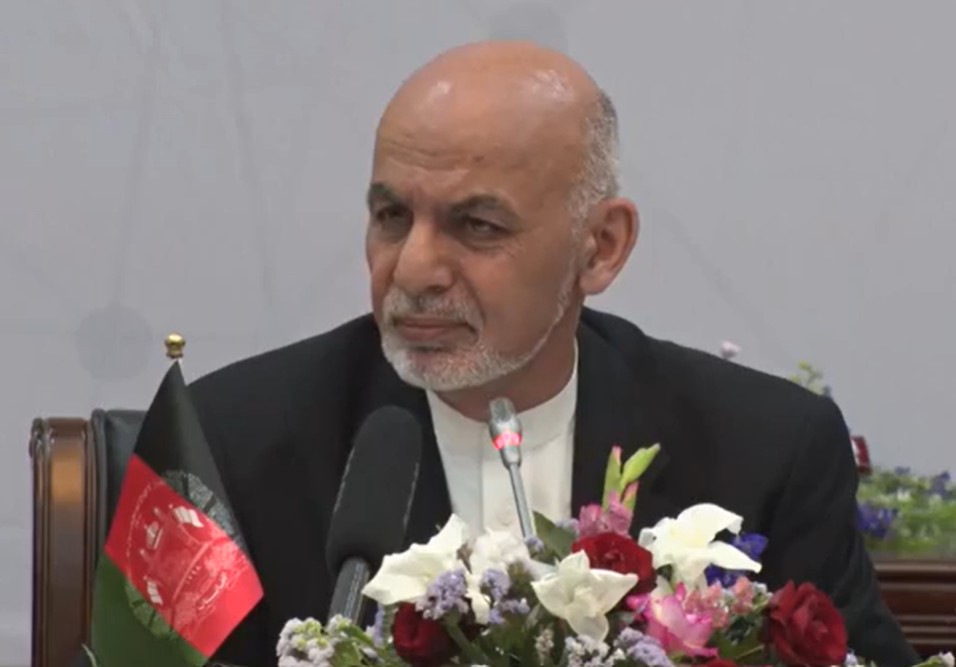
Speech at the First “Kabul Process” Conference, Kabul
Keypoints:
- Grief: Mourns innocent victims of recent terrorist attacks in Kabul and Manchester.
- Condemnation: Strongly rejects terrorism as un-Islamic criminality and demands global action.
- Desire for Peace: Afghanistan genuinely wants peace after years of heavy losses.
- Reforms: Security, justice, jobs, and elections are the foundations for lasting peace.
- Three Questions: Are we interested in peace? Do we have unity? Do we have real partners?
- Proposals: Offers national consultation, flexible talks, and a Taliban office with clear conditions.
- Interlocutors: Appeals to Pakistan, Taliban, neighbors, and the international community.
- Resilience: Afghans are united, brave, and will never surrender under pressure.
- Solidarity: Peace in Afghanistan brings stability to the whole region and Asia.
In the name of Allah, the Compassionate, the Most Merciful, and the Most Peaceful.
Excellency Kim KH, thank you for honoring me by accepting to head the Peace Council. A distinguished career is now brought to focus on bringing peace to this country.
Justice Sangary and the Supreme Court members, the Attorney General, Minister Atar, Ambassador YM, Deputy Minister Rur, Deputy Minister Yis, distinguished representatives, special envoys, members of the cabinet, Mr. S, representatives, friends:
Six days ago, 13 brave Afghan policemen gave their lives to stop a sewage truck packed with military-grade explosives from entering the diplomatic compound — a direct attack on the Vienna Accords. We were not the only targets; the entire diplomatic community was the target of this attack.
The massive blast tore through the heart of Kabul, but thanks to their unflinching sacrifice, nobody from the diplomatic community was killed — for which we give thanks. Yet over 150 entirely innocent Afghan sons and daughters were killed, and more than 300 were brought to hospital with burns, lacerations, and amputations.
Personal Stories of Innocent Victims
Since becoming President two and a half years ago, not a month goes by without my heartbreaking visits to our hospitals and our cemeteries — the places where our young people’s lives have been torn to pieces by senseless terrorist violence.
Kia was a devout young Afghan lady who had memorized the entire Quran. She was a part-time worker — the only person in her family of six who had a job. She worked part-time and used the rest of her day to improve herself through study. Walking to college one morning, a suicide bomber in a car smashed into another car and exploded. She was mutilated and killed — a sparkling young woman whose life meant nothing more than collateral damage to the fanatic who killed her and the people who trained him.
But we are not alone in our grief. Three weeks ago in Manchester, England, little Saffie Roussos had finally become 8 years old. With thousands of other young children, she was going to have fun with her friends at a concert. Shortly thereafter, she became the youngest victim of a terrorist attack that ripped 22 more souls from their families and sent at least 12 more children under the age of 16 to the hospital.
Moment of Silence for Victims of Terrorism
Terrorism is killing our children. Before we begin our talks today, I ask that all of us take a moment of silence to reflect on these innocent lives that were lost — those young people whose futures were snatched from them and from us.
May I ask you for a moment of silence.
Gratitude to the International Community and Partners
Let me begin by thanking you — the men and women of the world community, but also my Afghan brothers and sisters at home and abroad. You have stood with us as we stand with you to end the senseless violence in Kabul, in London, in Brussels, in Paris, in Turkey, in St. Petersburg, in Iran, in Syria, and elsewhere.
We acknowledge with gratitude the sacrifices that your countries have made, including that ultimate sacrifice which many of your soldiers have made on behalf of Afghanistan. Thank you, the United States. Thank you, NATO. Thank you to all our partners for standing shoulder-to-shoulder with us in a common cause.
Purpose of the Gathering
We are gathered here in Kabul today to express solidarity against this terror and to begin the difficult process of defining a pathway that can lead to a just peace that ensures stability, security, and the rule of law.
United Nations Counter-Terrorism Strategy
The first part of this challenge is straightforward. In 2006, the General Assembly of the United Nations adopted Resolution 6288 — the United Nations Counter-Terrorism Strategy. That strategy calls on all State members of the international community to, and I quote: “consistently, unequivocally and strongly condemn terrorism in all its forms and manifestations, committed by whomever, wherever and for whatever purposes, as it constitutes one of the most serious threats to international peace and security.” The four pillars of that strategy are what we have committed ourselves to, and we hope that every member of the international community will implement them.
Demand for Justice
Ladies and gentlemen, you are in a city whose people are grieving because hundreds of our children have been blown apart by terrorist violence. While our people appreciate the words of solidarity and support for our loss, what our people are demanding is justice. These terrorist attacks insult the very concept of justice.
The rebels say they are fighting a religious war, but Islam is a religion of peace. To kill one Muslim — to kill one human being — is to kill the entire humanity. That is the Quran. And it is Muslims — Afghan Muslims, innocent Muslim men, women, and children — whom they are killing by the thousands. Narcotics, terror, and extortion — our religion has nothing but contempt for these tools of modern-day terrorism. They are terrorists, nothing more, nothing less.
The Growing Global Terrorist Threat The world community has not yet come to grips with the full dimensions of the terrorist threat. The UN has documented the substantial growth in the scale of terrorism, in the sophistication of its operations, and in the brutality of its attacks. Unfortunately, the scale of the response to terrorism’s rise has been slow. While cooperation is improving, countries still lack the frameworks, the legal instruments, and the adaptability to track down and destroy movements that rapidly change their scope, their scale, and even their theater of operations.
Global terror has targeted Afghanistan, attracted by its central location and difficult terrain. Best estimates show an increase from 200 to 11,000 foreign fighters over the past four years. The field manual of Daesh urges their recruits to go to Afghanistan, Pakistan, and other South Asian countries. These people do not even pretend to bring any value to the Afghan people. They spill our blood only to provide a base for their criminal, terrorist, and violent activities around the region and the globe.
Call for World Action and Regional Strategy
The world must help us respond to this threat. We are gathered in this conference because the world community signed a promise that terrorism would not be tolerated, state sponsorship of terrorism would not be tolerated, and transnational financing of terrorism would not be tolerated. Today, we are demanding that the world make good on this promise. The violence must be stopped.
As Prime Minister May said, “Enough is enough. Terror must end.”
As the frontline state and the first line of defense for the security of the region and the world, we are making our full contribution. We are fighting 20 transnational terrorist groups on your behalf, with a focus by both our armed forces and the full mobilization of our people in Nangarhar and other provinces to contain and eliminate Daesh.
What we need is an agreed regional strategy, an organizational vehicle, and a plan of action to overcome terrorism together. That is the task of the moment. That is the challenge of the moment.
Three Fundamental Questions for Peace
Refining a roadmap for peace amidst this complex and constantly changing global context was never going to be easy. Our conflict is multi-dimensional. We cannot solve one part of the terrorism problem without having a comprehensive framework that allows us to address its complexity.
However, while the solution to the conflict will be complex, uneven, and time-consuming, the hardest part of it all will be getting started. We believe that once there is a dialogue on peace with good intentions, there are few barriers that cannot be overcome.
For starting that dialogue, we need to ask three fundamental questions:
First, are we truly and genuinely interested in peace? Second, do we have the unity, resolve, and capacity to bring about a sustainable peace? Third, do we have counterparts who are also genuinely committed to peace?
Question 1: Afghanistan’s Genuine Desire for Peace
Let me address each of these questions in turn.
First and foremost, we unambiguously affirm our interest in bringing an end to the violence. Between 2015 and 2016, over 75,000 Afghans were killed or wounded. Over 4 million of our people are still refugees from violence. Our people want to see better lives for their children. But while the violence rages, our economy cannot grow and our people remain without jobs or hope. Our country is full of grieving mothers and impoverished widows. The orphans are asking me, “What will be our future?”
Let there be no question at all: we, the government and the people of Afghanistan — the Government of National Unity — definitely want peace.
Question 2: Unity, Resolve, and Reforms
The second question is whether we have the unity and resolve to negotiate. Answering this question requires addressing directly the challenge that our government has faced — both the burdensome legacy of issues of corruption, leadership, and internal fragmentation, and the contemporary problems caused by disagreements within the political elite. We own these problems and do not deny that internal dissension has been a factor in the perpetuation of conflict.
But in Brussels, in Warsaw, in Munich, and here in Kabul, we have presented our reforms. Despite the triple challenges of managing security, creating jobs after transition, and dealing with fractious politics, these reforms are bearing fruit.
Let me summarize the ones most relevant to peace. The key to our negotiating credibility will be whether we succeed in reforming our security sector. I have said elsewhere — and I will repeat again here — that the cutting edge of our security reform strategy is whether we succeed in reforming the Ministry of Interior.
Defense has already started down the path of reform. Over the past six months, we have already taken sharp measures to improve the leadership, reduce corruption, clarify the mandates, and transform the support that we provide to our frontline soldiers. We have properly developed a four-year plan, and we are making significant progress on implementing it. A new generation of our generals, brigadiers, and major generals is joining forces with the older generation to defend this country, and we will defend it to our last drop of blood.
Let there be no misunderstanding: our Armed Forces are already able and committed to defend the honor, dignity, and the Constitution of this country. But the challenge now is to fix the Ministry of Interior — and here, of course, creating and reforming a police force is much more difficult than reforming an army, because the police deal directly with the people.
We know that this challenge will not be easy, that there will be pushback and resistance, but it must be done. The police must become a force for stability. There are many good frontline policemen, as those 13 good men killed by the terrorist blast showed beyond doubt. But all too often, it is the policemen themselves who are the first victims of corruption and patronage. We cannot secure the country or sustain peace until the situation is changed.
The Ministry of Interior’s reform has already started. We operate now under no illusion as to its difficulty, but Dr. Abdullah, the CEO, and the government are fully committed to reforming the police. Our security forces need to stand firmly on two strong legs — and they will.
Hardening our security forces means that the Taliban cannot win militarily. They have to abandon this illusion that they can overthrow the government or divide the sacred geography of Afghanistan into two political geographies. Afghanistan is united, and united it shall remain.
We have already said that we aim for peace, but we cannot make peace if Taliban groups are not prepared to do the same. Peace is not just a matter of signing a peace agreement. A sustainable peace must be maintained, and for that, the essential acts are to provide justice and to create jobs.
In Brussels, we promised to bring justice to the people. Our reformist Attorney General, our Chief Justice, and the Supreme Court Justices have advanced that agenda, helped in particular by our friends from the European community and other friends, through actions such as full reviews and replacement of professional prosecutors and judges. Over a thousand judges have been replaced. There has been a 500% increase in the number of women in the Attorney General’s office.
The economic reforms spearheaded by our Finance Minister have stopped the economic collapse that plunged hundreds of thousands into poverty after transition, with the World Bank now predicting stronger-than-expected positive growth for 2017.
Democratic reforms, particularly elections, are key to consensus. We are fully committed to holding parliamentary elections in 1396 (2017) and presidential elections on time and without delay in 2019. Dr. Abdullah and I, and all the government, are committed to this path — and it shall be done.
Security, justice, jobs, and democratic rights — these are the foundations for pursuing peace and then sustaining it.
Question 3: Interlocutors for Peace
And so we come to the third fundamental question: Do we have interlocutors who are also interested in waging peace rather than war?
Dialogue with Pakistan
Speaking frankly, our top priority must go to finding an effective way to dialogue with Pakistan. I welcome the participation of the distinguished delegate from Pakistan. We have offered Pakistan a vision of prosperity linking South and Central Asia together through trade, investment, and peaceful coexistence.
As you all know, from the day I took office, the Government of National Unity and I went far out on a limb to offer an olive branch to Pakistan. It has not been taken. We will not be drawn into a blame game. We have tried bilateral, trilateral, quadrilateral, and even multilateral negotiations to bring an end to conflict and terror, but we have made little progress.
We want peace with Pakistan. We want to be able to trust Pakistan, and we want the chance for friendly, cooperative relationships that will reduce poverty and promote growth on both sides of the Durand Line.
Our challenge is that we cannot figure out what it is that Pakistan wants. What will it take to convince Pakistan that a stable Afghanistan helps them and helps our region? We continue to make an unconstrained offer for a state-to-state peace dialogue. But we cannot — nor can any signatory to the UN counter-terrorism convention — accept that the agreed global consensus is not applicable.
So we again call on the government of Pakistan to propose its agenda and a mechanism for that dialogue which can lead us to peace and prosperity.
Dialogue with the Taliban
Our second interlocutor are the Taliban groups. Here, our questions are about who represents them and what it is that they want. We have given our preconditions to a negotiation in more detail elsewhere, but they can be summarized as: acceptance of the Constitution, continuity of the reforms for educating and advancing the rights of women, and a renunciation of violence and linkages with terrorist groups. All else is on the table.
I would like to advance the start of a peace dialogue by proposing several specific actions:
First, since peace has to be a national discussion, we will hold a national consultation to develop a joint peace agenda that addresses the social, political, and security dimensions of the peace. It must pay particular attention to the experience and demands of our women and the views of our diverse civil society. I am pleased to report that His Excellency Mohammad Karim Khalili will be leading that consultation from his position as the new Chairman of the High Peace Council. Thank you, Vice President, for once again serving your nation in an important hour.
Second, we would accept that the location for peace talks can be anywhere that is mutually agreeable — whether in Kabul, where we would provide guarantees, or elsewhere.
Third, if there is agreement to develop a peace roadmap acceptable to both sides, we would allow Taliban groups to open a representative office so that both sides can meet in safety.
We are offering a chance for peace, but we must also be clear that this is not an open-ended opportunity. Taliban-sponsored terrorism is creating a platform that is bringing terrorists from all over the region to Afghanistan. There is not a single one of these 20 terrorist groups operating that is not linked to them and does not operate on their platform of criminality and drug running. The acts of violence they carry out routinely clearly meet the standards set for the definition of terror and terrorism in UN documents.
Without a cessation of violence against civilians and a meaningful agreement on peace, we will invoke the clauses of the General Assembly resolution on counter-terrorism and seek to have the Taliban sanctioned as both perpetrators and sponsors of terrorism. They do not have time. We have the time, and they must get watches — time is running out. This nation will reject them. This is the last chance. Take it, or face the consequences of the united wrath of a nation that is grieving but determined.
Don’t forget: we have 2,000 years of learning how to discipline our grief and direct it towards goals.
Engagement with Regional Neighbors
Our third interlocutor is our neighbors — the countries of Central, South, West, and East Asia. In the past, there has been a misperception that this is America’s war — an unpleasant analogy to the Cold War. But now that illusion should be finished. The number of foreign troops has dropped by 90% since 2013, and had the Taliban groups embraced the agenda of peace that we offered, they would have been reduced further.
Territorial Defense Forces are fully Afghanized, and national policies are fully Afghan-owned. I want to thank the international community and our foundational partner, the United States, again for their commitment to peace. There is no illusion that any of our partners do not want peace, but it has to be a peace that is sustainable, just, and enduring.
But there has been a change: terrorism is spreading, bringing violence, instability, and disruption across all countries of the region. Our policies have been to build strong political and economic ties with all of our neighbors in this region, but now they too are feeling the hot winds of terrorist violence. There is a need to build the security alliances that will let us face this common threat together — from India to Iran, Russia, China, and beyond. We are all facing common threats.
I want to thank our Central Asian, Caucasian neighbors, China, India, Iran, and others, particularly on the economic dialogue and on the full measures that we are taking to change the playing field and create new opportunities. I hope that this will become a regional consensus.
Role of the International Community
Our fourth interlocutor is you — the regional and international community. It is time to get serious about peace. Our region is under threat. Each one of us faces domestic violence financed through illicit transfers and maintained through criminal networks that spread extremism, money, and weapons across borders. It is time to end this. Now, more than ever, we need the global community to provide the muscle and backing to stop criminality and demand the rule of law. You have signed the agreements — let us commit ourselves to enforce them now.
We have said clearly that we would like a strengthened UNAMA to be a key counterpart in this process. We will start discussions with the UN and the international community to develop a neutral third-party monitoring mechanism so that when a peace agreement is in sight, there is also a means to verify compliance and resolve disputes. Peacemaking and peacebuilding must go together. We will begin the process of healing and reconciliation, and we look forward to drawing on our own experience of tragedy and recovery to help us reconcile and move on.
Need for a Unified and Focused Peace Process
Let me add one final thought on the subject. The dialogue around peace is fragmented. There are many players running many parallel tracks with little clarity on who they are and what they represent. It is a recipe for misunderstanding. What is most needed right now is focus.
The government has proposed a consultation to gather our people’s wishes, fears, demands, and concerns from across the country as part and parcel of the peace dialogue. But in return, we also ask that you respect the integrity of an Afghan government-owned and led consolidated process and not create separate tracks of your own. Separate streams never constitute a river or an ocean. It is only when they are brought together that we can have full impact and focus.
Conclusion and Message of Resilience
Let me conclude by underlining how urgent it is to bring peace to our region. Peace in Afghanistan will bring stability to our neighbors, to Asia, and to the world.
Iqbal, the poet laureate of Pakistan, said it best: “Asia is but a vessel of water and earth, the heart of which is one nation. From its accord, the accord of Asia; from its discord, the discord of Asia.”
Billions of bonds tie us together. Let’s focus those bonds on creating accord — both here in the region and Asia-wide. It can be done. Three years ago, nobody thought that Hezb-i-Islami could be brought under the tent of peace. Dr. Gat, thank you for being here, thank you for agreeing to speak later to our interlocutors, and thank you for being such a persistent champion of peace. And yet today they are here, ready to replace their bullets with ballots. Both sides negotiated hard, as friends do, but the deal has held.
All the neighbors negotiated. Afghans are resilient. We are a nation not just of survivors but of champions of our identity. We have 3,000 years of history at least. We have no problem about who we are. We have never had a separatist movement in our history. In our darkest days — and we shall not have one — this nation’s tragedy is that it has always had weak states. But let there be no mistake about the resilience of the nation and our people.
We have all known hunger. We have all seen what terror does to friends and our families. There is not a family among us who has not lost loved ones, who has not been in prison, who has not been tortured in those dark days. And where we continuously are not mourning, we are prepared to negotiate a pathway to peace.
But nobody should ever assume that we will negotiate under duress or pressure. Peace cannot be a surrender of our rights. Terrorists can shed our blood, but they cannot break our will.
During this horrible week that has just finished, my esteemed colleague and friend Dr. Abdullah joined the funeral rites for the young son of Senator Aidar, who had been killed. During the funeral, another bomb went off — a bomb so powerful that half of the body of one of our distinguished scholars, who had been a leader of Jamiat, standing less than two meters away from Dr. Abdullah and standing right next to Minister S, ended up in one hospital while the other half was taken to a different hospital. That is terror.
And yet that evening, even before the blood and debris had been fully cleared away, and despite the fact that the risk of more bombs remained extraordinarily high, Dr. Abdullah stayed to finish the funeral and pay the honor and respect that no terrorist could deter. That is bravery.
Bibish Shima is a mother from Kandahar. Three of her four sons were lost in the fight against terror — two from the police and one from the army. And yet when I met her, she was helping her fourth son sign up to fight. In this very room, I asked her why. I said her son should stay home and care for his mother. Because, she said — and I quote — “I want my son to fight the terrorists so that our mothers and daughters and our village do not feel the same pain that I have felt.”
Ladies and gentlemen, we are all living in one village now — a village that is under attack by networks that know no bounds or limits. Our purpose today is to show that we are as strong as Bibish Shima, as brave as His Excellency Dr. Abdullah, and as committed to ending the reign of the terrorists as our 31 million Afghan brothers and sisters whom I have the honor and the privilege to represent and to serve.
Thank you for being here.
Long live Afghanistan. Long live international solidarity, cooperation, and determination.