Empowering Rural Women and Transforming Afghanistan’s Agriculture
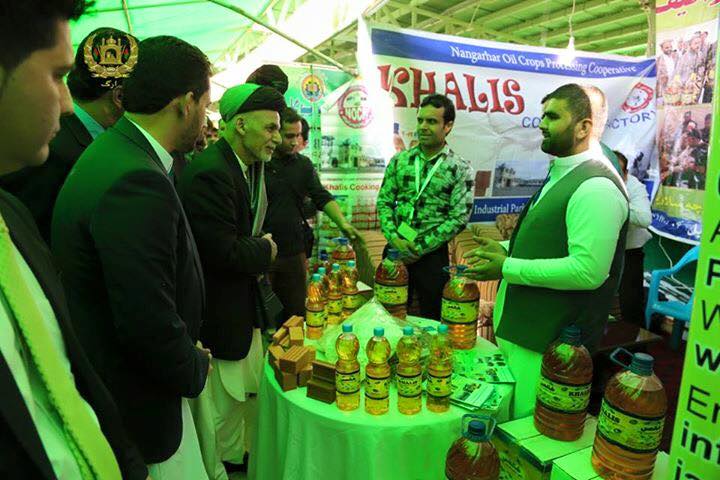
Speech at International Day of Rural Women, 18th Agricultural Exhibition, Kabul
Keypoints:
- Women’s Contribution: Female farmers are the backbone of family nutrition and food security.
- Nutrition & Health: Women produce the milk and vegetables essential for child development.
- Economic Empowerment: Women-led agriculture drives both household and national wealth.
- Direct Support: Targeted grants of 3,000–6,000 AFN boost rural productivity.
- Self-Sufficiency: Local farming cuts import reliance and powers national exports.
- Infrastructure: Farms must be linked to roads, air corridors, and modern irrigation.
- Water Management: Fair and efficient water distribution is vital for sustainable yields.
- Modern Energy: Reliable electricity is required for processing and exporting goods.
- Private Investment: Afghan investors are key to funding energy and agricultural growth.
- Institutional Strength: A capable Ministry of Agriculture is essential for effective service.
- Long-Term Vision: Success depends on the synergy of families, government, and investors.
In the name of Allah, the Most Gracious, the Most Merciful.
Honorable Minister of Agriculture; Mr. Ramin; Mr. Kargar; Mr. Haji Almas; Mr. Basir; Mr. Naderi; Mr. Helmandi; the Mayor of Kabul; Mr. Tarakhail; Mr. Babakarkhail; Mr. Stanikzai; all distinguished guests, and most importantly, dear farmers, sisters, and brothers—Peace, mercy, and the blessings of Allah be upon you all!
Each Afghan woman farmer has taken a small step; however, the sum of these steps is a giant leap for the future prosperity of Afghanistan. Thank you—thank you to you women.
The Foundation of National Health and Nutrition
Why is this step so significant? I have read the profiles of a hundred of you with great care. The first thing you have achieved is a profound change in the Dastarkhwan (dining spread) of the Afghan people. We are a nation where, out of eight essential food items, most have only three: dry bread, tea, and sugar. Those who are better off might have five. But every pioneering woman farmer has introduced vegetables and milk into the diet of her children.
What is the result? God willing, by your grace, the height of our future generations will be significantly taller than ours. This is a benchmark. When I visit the Army Corps and see young soldiers and officers, they are generally shorter than me, even though they are under 35. This indicates we lack sufficient nutrition. We are a nation where at least 15% of our people go to bed hungry every night. Our food security is in a state of crisis, with 49% to 60% of the country being food insecure. Therefore, every woman who has pioneered in agriculture has truly put the soil and water of this homeland to work for its future.
Courage and Economic Independence
Secondly, each of these women is a clear example of courage. Some have had addicted husbands, some are widows, and some took the burden of a family on their shoulders at a young age. Yet, each has secured the dignity, status, and honor of an Afghan family. I thank you from the bottom of my heart.
The most significant change is that today, these women have become models who—with high Islamic ethics and a strong spirit of self-confidence—have become breadwinners. Through their own labor, they are changing the family economy and, by extension, the national economy. It is the clear policy of the Presidency to focus on expanding the Rural Women’s Program until it is nationwide.
The government has invested no more than 3,000 to 6,000 AFN directly in these women. I know of no more effective or transparent use of money than this. Billions of dollars were wasted in the past; but this program is successful. We believe in you and we invest in you. See the broader picture: every step you take transforms Afghanistan from an importing agricultural nation—which is our current tragedy—into a self-sufficient and, eventually, an exporting nation.
Infrastructure and the Agricultural Link
The current state of Afghan agriculture is not acceptable to the people or to me. The land currently under cultivation is only two-thirds of what it was during the era of Daoud Khan. We have a treasure—Land, Water, and People—but we do not value it sufficiently.
Changing rural life is at the top of the government’s agenda. This is not just the burden of the Ministry of Agriculture.
-
Roads: Our country still lacks a ring road and a clear network connecting villages to cities. I have directed the Ministry of Public Works that our connectivity programs must be perfectly synchronized with agricultural programs. When we leave the paved road, it’s as if we create a gap of several centuries.
-
Air Corridors: People might not think airports relate to agriculture, but without the Kandahar and Kabul airports, you would still be dependent on others opening the borders at Spin Boldak. We are investing heavily in our Air Corridor and creating our own air cargo company.
Value Chains and Water Management
Our products are first-class in quality and taste, but we haven't created a "Value Chain." This means ensuring that when your goods are sold, they are sold in the best places for the most money so your pockets are full. A full pocket for a farmer turns into books, pens, clothes, and credit.
Regarding water management: when water is managed and you have certainty of supply, land value increases and yields double. Today, we still import over a million tons of wheat. This is a reproach to us, as 70% of our people are involved in this sector.
-
Salma Dam: The Friendship Dam between Afghanistan and India is finished, storing 650 million cubic meters of water. However, the Ministry of Agriculture has not been successful in managing the distribution side yet. They wasted a full year. My instruction is that by next year, representatives from Salma Dam must report progress. We are starting the construction of at least 29 dams, but small and medium dams are just as vital for daily life.
Energy and the Private Sector
Modern agriculture and exports are impossible without electricity. It is the "infrastructure of infrastructures."
-
Last year, we added 42 MW from Salma and 18 MW from Kajaki.
-
Investment: For the first time, the Afghan private sector is ready to invest in power. Today, $800 million has been invested in electricity production—mostly by Afghans. This shows that Afghan investors now see the State as a partner. We aim to be an exporter of electricity, not just an importer.
The President as the "Salesman" for the Farmer
I was in China with a delegation. Every time I spoke with the Chinese, I talked about saffron or marble. Eventually, a colleague asked, "Are you the President of Afghanistan or a saffron salesman?" I replied: "Whatever the Afghan farmer produces, I am proudly their salesman and representative."
Conclusion: Governance as Service
Our Constitution defines the relationship between the people and the state as one of service. As President, I am proud to be the "First Servant" of this country. I want all our departments to be servant-led, transparent, and accountable. When a Minister does well, encourage them. When they do not, name them.
Long live Afghanistan! (Pashto) Yashasin Afghanistan! (Uzbeki) Zinda bad Afghanistan! (Dari)