
Empowering Cities, Citizens, and Leadership: A Vision for Urban Transformation in Afghanistan
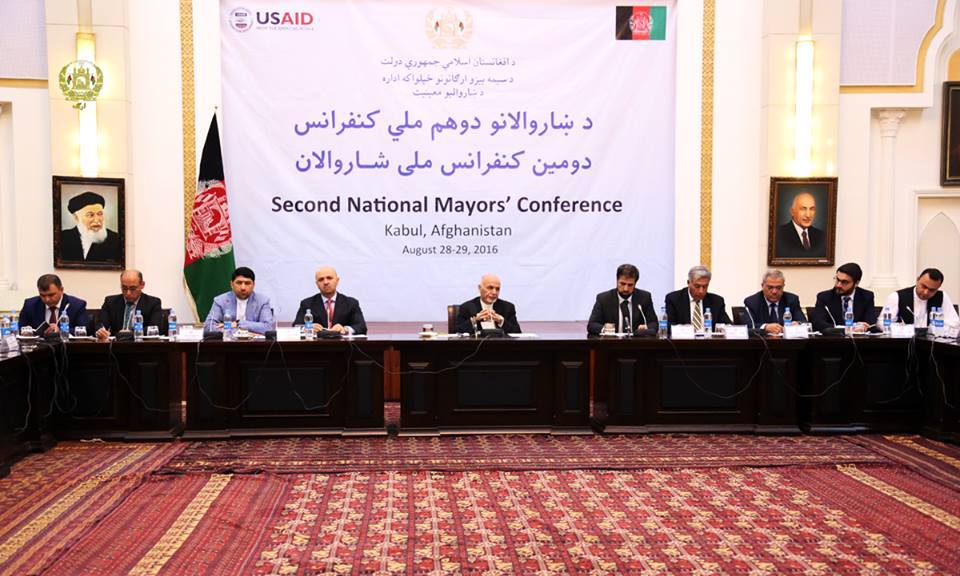
Speech at the Second National Conference of Mayors of Afghanistan
Keypoints:
- Capacity & Leadership: Expert, committed management for resilient cities.
- Citizen Engagement: Ownership and accountability through public participation.
- Urban Planning: Systematic growth through clear, strategic planning.
- Legal Framework: Secure property rights and enforceable regulations.
- Financial Sustainability: Robust revenues and efficient resource management.
- Private Collaboration: Dynamic partnerships to drive urban growth.
- Civil Society: Active community and NGO involvement in city affairs.
- Cultural Preservation: Integrating heritage into modern urban development.
In the name of God, the Compassionate, the Merciful.
Honorable Mayors, sisters and brothers, distinguished guests, Mr. Minister of Urban Development, esteemed members of the Cabinet, Mr. Khipalwak, Mr. Qayoumi, Mr. Popal, the Mayor of Kabul, Mr. Gilani, Mr. Alokozay, Mr. Sipahi, and all our elders! Peace be upon you all, and the mercy of God and His blessings! Welcome! Khosh Amadid! Khosh Gelding!
First and foremost, I send my deepest salutations to the souls of our martyrs, particularly those lost in the most recent incidents, and to the martyrs of the Afghan National Defense and Security Forces who stand daily in the trenches, defending our territorial integrity, our honor, our soil, and our national dignity.
The Identification of Urban Capacity
My remarks today consist of five distinct sections. The first is a message of welcome and profound gratitude. In this room today, I see a clear and undeniable "capacity" that will lead to the fundamental transformation of Afghanistan’s cities. I have personally interviewed at least 21 of you mayors; I have scrutinized your strategic plans and listened to your visions. My decision to appoint you was based solely and exclusively on your capacity.
What is the nature of this capacity? It is the intersection of three things: scientific knowledge, practical experience, and a deep-seated commitment to this nation. With this capacity, I am confident that a major momentum will be generated within our cities. I want to express my gratitude to each of you, and also to the other candidates who applied. For every single post, Mr. Popal provided at least five to ten dossiers. I read every one of them, word by word. Why did I do this? Because it reacquainted me with the specificities of our country, from our smallest towns to our largest urban centers. Your views helped me personally understand both the deep-rooted problems of our cities and the opportunities they hold.
A Vision of Self-Reliance vs. The Culture of Dependency
Secondly, you possess a clear "Vision." This vision is not one of dependency; it is a vision of standing on our own two feet. You understand that each of your cities is essentially a hidden treasure. The mindset I see in you today is not the mindset of a beggar; it is the mindset of dynamic movement. Personally, I am exhausted by begging. I have been a "good beggar" for Afghanistan—I will go to any door or gateway if it is necessary for the people—but a country cannot be built on a foundation of begging.
You are all sitting atop massive treasuries of potential, yet you come asking for a "ruler" to mark lines, while all around you, millions upon millions of dollars’ worth of land were being usurped. This happened because there was a vacuum of leadership, management, and vision. Today, you are here to fill that vacuum of vision.
Management and the Call to Service
The third section is "Management." I see a vast managerial capacity among the mayors who have been appointed. In Afghanistan, we are seeing a capacity that is not just theoretical; it is a capacity for execution. Every mayor I spoke with possessed clear, tangible managerial experience. Unfortunately, such experience is often rare within our central ministries. This is why my focus was to ensure our cities have clear management—management that can walk hand-in-hand with vision and experience to move us forward.
The fourth characteristic is the "Will to Serve." I thank you from the bottom of my heart. You hold doctorates, engineering degrees, and master’s degrees. You have vast experiences. Any one of you could have easily found a job here in Kabul for yourselves. However, your determination to go to the cities and serve—that is truly a matter of pride. On behalf of the Afghan State, I thank you for this will to serve, for your belief in this mission, and for your willingness to go to the most remote corners. Your presence here today proves that Afghanistan lacks neither will nor capacity. You know what needs to be done; you have practical plans. You have told me: "If I am Mayor on day one, this is what I will do on day two." This is a major step. This is why I give this seminar such specific importance.
Transitioning from Isolation to the Urban Network
The importance of this seminar is that today you are being transformed from "isolated mayors" into a "National Urban Network." This is a powerful network with a very loud and resonant voice. Until now, Afghanistan’s cities had no voice because the mayors did not act as the "owners" of the cities. You were either under immense pressure or you were ignored. From this point forward, believe that as a network, you will have a resounding voice.
It is my decision that the Mayor of Kabul, who attends Cabinet meetings, will not only speak of his own city's issues but will represent all of you every week. Simultaneously, with all your diversity, you will not only join the High Urban Council but also the High Economic Council and the Cabinet with unified visions and specific proposals, so that we may hear your voices directly. Until that time, the two capacities sitting beside me [referring to Popal and Qayoumi] have always represented you. I thank the Minister of Urban Development, Mr. Popal, and Dr. Qayoumi for their very specific attention to these matters.
The Social Reality of Citizenship
The second major topic is "Citizenship." A city without citizens is devoid of meaning. A President is a leader of the people—if there are no people, where does leadership come from? You must now move out into the cities. A city is not merely a physical phenomenon; it is a social phenomenon. The Afghan citizen is aware; they have thoughts, expectations, and judgments. Mr. Alokozay mentioned those judgments to you today. The judgment of our brothers and sisters living in our cities—from Kabul to every province—is that a failed system of urban governance is tormenting them. Is that not correct?
To be blunt, I speak the language of the people. The people’s expectation is that this educated class—those who have studied and gained experience—must change the cities. The citizens have given you the first opportunity. However, in the second part of this equation, if the citizens reject you, you will have no future. The metric of your success is whether you make the Afghan citizen the "owner" of the city or not. In which city does an Afghan child feel safe and have a place to play? For 400 years, poems were written in praise of Kabul. Today, show me one poem written in praise of Kabul. But, God willing, in the next two years, that situation will return.
Look at the greatest poets of Dari and Pashto. In Pashto, look at the travelogues of Hamza Baba—imagine what kind of place it was when he came for the Independence celebrations. From Ashqari to others, and even the Emperor Babur, look at their descriptions. And what about women? Does a woman see herself in our city? Can she walk freely? Can she go somewhere with her family on a Friday? If she works, can she sit somewhere safely during the week? These are the fundamental points that we must understand.
And the youth! You complain of addiction—and you should—but what path have we paved for them? What sports, what economic and social activities have we provided? And the culture of Hashar! We created our history through Hashar and community irrigation systems. How many of our cities have we cleaned through Hashar? This is the core: a city requires citizens.
The Failure of State Planning and Property Rights
The third topic is that a city requires a "Plan." Seventy percent of Kabul’s property deeds are "Urfi" (customary/informal). This is the problem of people who spent their entire lives and every penny they had to find two or three biswa of land. Is this the failure of the people? No. From our perspective, this is the absolute failure of the state. If, fourteen years ago, our colleagues in urban leadership had simply sat down and "marked the lines," dividing these small plots legally, today 70% of the city would be legal.
A city requires boundaries, definitions, and a vision. It must be clear what belongs where, and what is permitted or forbidden. The Mayor told you they demolished illegal buildings. This isn't because of a personal grudge; it is because illegal construction destroys the lives of others. A one or two-story house exists, and suddenly next to it, without any permit, a fourteen-story building is erected. We have a culture and we have rules; we must understand each other. The city requires coordination, and you are the ones who must lead the urban sector.
Creating a Sense of Ownership
The fourth issue is "Property." Globally, it is established that if you want city ownership, the citizen must have a "Shari'i" (legal) and credible property title. Without property, we cannot be owners of the city. Look at all these cities—is the house clean? Yes. But who cleans the street? The house is clean, yet the street is filled with waste. What is this a sign of? It means we have not been able to create a sense of city ownership among the people. We produce garbage inside our homes and throw it just a few meters from our own walls.
I once spent four hours with 400 university students from Gawharshad University trying to link "Ownership" and "Citizenship." The absolute majority—98%—said ownership means their house and their four walls. Look at the areas where the first Urban Solidarity Program was implemented. When I was at the Ministry of Finance, we began this. In one area of 1,800 families, every alley is concreted; there isn't a single dusty side-street left. Every alley has a name, every house an address, and every house a lamp. What is the difference? Until eleven at night, children, women, and men are together in the street. These families have become sharers in each other’s grief and joy. When a husband and wife have a problem, the neighbors mediate.
How do you eliminate waste? The citizens themselves will give you 45% of the infrastructure costs if you create this sense of citizenship. They will tell you clearly: "Our property is not just our house; our property is our alley and our neighborhood." But as of now, there is not a single city where all citizens see themselves reflected. We must have a vision where the city belongs to us.
Accountability and the Revenue Model
Ownership is created when there is a sense of mutual accountability. The Mayor of Herat mentioned the "Safayi" (sanitation) fees. You can try to take them by force a thousand times, but if you do not provide services, why should the people pay you? On the other hand, the government departments also ask: "What service did the Kabul Municipality provide at the airport before Mr. Habibzai arrived, that they now demand a fee?" We must be able to answer this. It is a two-way street of accountability. I will implement the law for you a thousand times, but people only pay when they see the money being used for their improvement. If they don't see results, they won't pay.
Outside of the Ministry of Finance, you are the only state institution with the right to collect revenue. Provinces and districts do not have this right. Therefore, it is a very clear opportunity to create a culture of taxation. This has been implemented in several districts of Kabul. Look at Herat—the "setbacks" (road widening) you achieved are unique. I spent five years as a World Bank official for displaced people; people do not easily give up their land and move back. Why did they do it in Herat? Because the people saw that the price of their remaining property would skyrocket. People must see their own benefit in the plan.
A few years ago, a doctoral thesis in America noted that the people of Kabul waited nearly ten years before building informally. They understood the difference between planned and unplanned areas, but the policy failed. What were they supposed to do? Live in a tent? Climb to the top of a mountain? Now we need a vision that creates ownership, and that ownership belongs to you.
The Political Will for the Rule of Law
Sisters and brothers! The key point is not the Minister, and it is not us. We are your supporters. The key points are the Mayors. You want political will? You have it a thousand times over. Has there ever been a powerful person whom I was told to force into paying taxes and I didn't do it? In which judicial case did I interfere to favor a specific person? Clearly, that is not our job. Our job is to have a clear will for the implementation of the Constitution.
You are the focal point. For what? For attracting trust. If you attract the trust of the people, our people have a very good sense of judgment. Our individual judgments might be problematic—we might mock, criticize, or speak ill behind someone's back—but our collective judgment is very just. People prefer the one who works. Every one of you must have a program for "Trust Building." The more trust the people have in you, the more you can achieve. "Citizenship" is the fundamental pillar of our work.
Authority vs. Responsibility
The fifth section is about "Authority and Responsibility." First, I admit absolutely that both authority and responsibility were muddled. This is why your writings and analyses helped me so much. In a speech, there is often no order—everyone thinks they gave the best speech, but tomorrow it’s not clear what was said. Writing, however, is dry and permanent; it is subject to judgment. Read what you wrote and you will understand. Each of you has specific commitments to me, and do not forget that I forget nothing. Is that clear?
However, your working environment is not yet defined, and in this, you are absolutely right. Your legal authorities are not clear. The draft laws need work; they have often just repeated laws from King Amanullah’s era or imported half-measured ideas from outside. I am working urgently on the laws, but they must be "cooked" and mature.
In terms of authority and responsibility:
-
The High Urban Council: This was created so your major decisions have space, resources, and political support. This is a council for decision-making, not just talking.
-
National Programs: These will become organized national programs. The "Citizens’ Charter" is no longer just a rural program; it is a shared rural and urban program.
-
Coordination: There was no coordination and no information. Without coordination, as the Kabul Mayor can tell you, one ministry builds a road while others come to dig it up for pipes. When I lived in Darulaman, for two years we couldn't even cross the bridge because of the water network pipes. For the first six years, the Ministry of Public Works couldn't finish the road. It took an hour to get from Dehmazang to Darulaman because it was full of potholes. People thought I was crazy to live there. Well, it's a village, and I live among my people. The point is, without coordination, our resources are consumed repeatedly with no result.
The Revenue Challenge and Innovation
I want the municipalities to have authority. But first, prove it to me. I will return to the criteria. You have the responsibility to use that authority. All of you sitting here: tell me how much land was stolen from you? You had no choice because you had no power. But there isn't a single city without usurped land. If I give you vast authority now, tomorrow you will face immense pressure. Authority must be legalized, and we must have the capacity to implement it. Understand clearly that the direction of our movement is this: day by day, the authority of mayors will increase, but alongside that, you must show momentum.
My proposal is this: double your revenues, and I will help you in return. Whatever percentage you increase your revenue, we will create a support fund in that framework. But if your revenue decreases, I won't give you a single penny (Qeran). Is that fair? You move, and I will move. God grants blessings, but if you don't move, you won't understand what a blessing is.
There is a story of a man who complained every day: "Why don't I win the lottery?" Finally, after twenty years, a voice from the unknown said: "Man! At least go and buy a lottery ticket so you can win!" [Laughter]. There was another man who went to a Pir (spiritual leader) asking for a child. The Pir wrote many charms, but still no child. Finally, the Pir asked: "Do you even have a wife?" The man replied: "If I had a wife, why would I come to you?" Don't be like that. If there is movement, God willing, blessings will follow.
Criteria for Success
I will summarize the criteria for success:
-
The Communication Bridge: Mayors are the bridge to the citizens. It is a two-way bridge. Bring their demands to the government; solve what you can, and bring the rest to us in an organized manner so we can solve them fundamentally.
-
Revenue: Without revenue, there is no sustainability. I am firm on revenue because it shows me your initiative. Revenue is the test of your management. Read 200 pages about a country’s plans, and then look at one page of their revenue table. That table speaks more than the 200 pages. Revenue isn't about hitting people; it’s about how you change the scope of possibilities.
-
The Triangle of Partnership: At the top is Participation. On one side is the "Private Sector." Your plans have constructive ideas for this. The private sector is your supporter, but it must be a "Lawful" private sector. The sector becomes lawful when the administration is lawful. If the administration is "wild," the private sector will be wild.
-
History and Culture: I was positively moved that you understand the culture of your cities. I spent fourteen years on 600 years of Afghan history, and now I understand our 2,000-year history well. You represent a great civilization. Some places are now on the margins, but they were once central points on the Silk Road. Do not underestimate this. Peace and stability will come, and your cultural heritage will be a major source of urban revenue. This year, I allocated 350 million Afghanis for historic mosques. Every year, we will focus on this.
-
Economic Vision: How do you feed your citizens? Services alone are not enough. We need a clear economic vision. Twenty of our provinces are transit provinces. See the city as an opportunity—link with citizens of other cities.
Toward Elected Municipalities
My final point is that we are committed to the Constitution: we want to make municipalities elective. We have chosen young people now so we have the vision and the opportunity to eventually be elected. To make municipalities elective, we must reform the laws and institutions so that an elected mayor has a foundation to work from.
The urban sector now has a very active leadership team. I am only their supporter, and sometimes a consultant. We have a collaborative team in Kabul—from the Mayor to the Cabinet and Dr. Qayoumi—to create accountability.
Lastly, regarding your resolutions and proposals: I suggest that your individual plans be turned into a general plan where you learn from each other. I thank everyone for the work put into these plans over weeks and months. Mr. Popal must provide a space for free discussion so you can extract the best criteria from your plans yourselves. I have my notes, but if I do it for you, it will make you lazy.
Your resolutions should not be "formalities"; they must be about how you will cooperate. We want a nationwide, Afghanistan-inclusive urban vision. Herat, Kandahar, Maymana, Asadabad, Bamiyan, and Ghazni—they all matter and they all have active mayors. But your hands and visions must join. We must become a learning network. What can Kabul learn from Herat? No one in Kabul has "stepped back" (for road widening), but in Herat, people did it for the sake of reform. What can we learn from Mazar? Kabul is not the center of everything.
Conclusion: The Contract of Service
You are our greatest capital. You are rooted in the people. Now, summarize the visions, hopes, and problems of the urban sector and find ways to create the capital of "Trust," which is our most important asset.
I am tough on money because it is a tool. If you innovate, you will value that money. If it comes from outside, the mindset is "who is asking?" Money given by the people keeps you accountable. Create the conditions for participation, and you will move forward. Bring the results to the High Urban Council.
I thank everyone, and I thank USAID for their assistance. It is good that you have come to your own home [the Palace]. This is a home where whoever lives here does so based on your will. Living here is always temporary. The measure of success for whoever lives here is: what environment have they created for you? How are your ties with the people? Because the people demand answers from me now, and then on the Day of Judgment. One never knows when they will stand before God. So, we have a contract—a "Contract of Service." A commitment that we will truly build Afghanistan’s cities, make them green, and give them a beauty that matches our Islamic and historical culture.
Do not fill every space with concrete. History is not made of glass towers. Our culture must be reflected, and our vision must be clear. I trust that you will do this.
Long live Afghanistan! Yasha-sin Afghanistan! Zenda bad Afghanistan!