Honoring Sacrifice and Upholding the Legacy of Heshmat Khilal Karzai
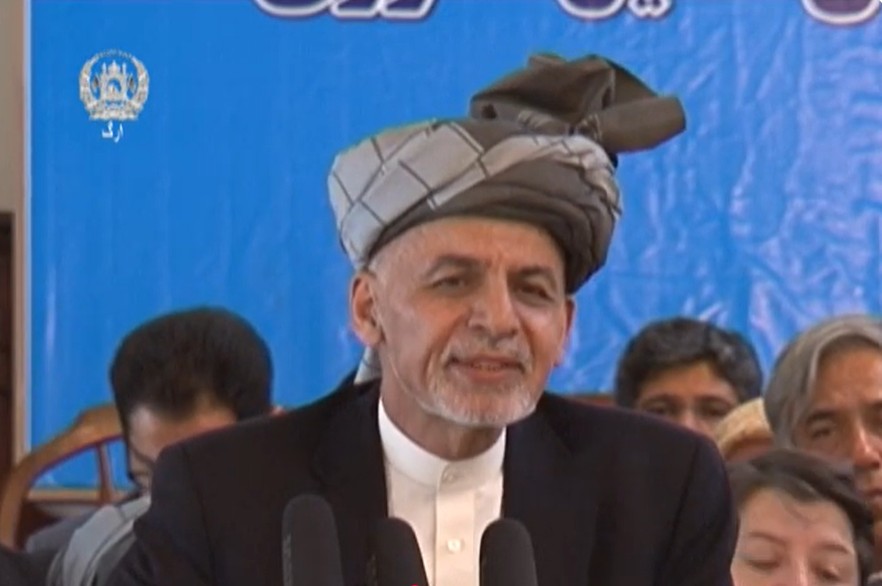
Speech at the 2nd anniversary commemoration of the martyrdom of Heshmat Khan Khilal Karzai- ARG
Keypoints:
- Martyrdom and Sacrifice: Honor Heshmat Khan’s bravery and sacrifice.
- Commitment to Ideals: Fulfill the martyr’s vision and goals.
- Generational Inspiration: Highlight the family’s moral and educational legacy.
- National Unity: Promote unity and overcome divisions.
- Courage and Integrity: Stand firm with honesty and courage.
- Service to the People: Put public welfare above personal gain.
- Peace and Stability: Make lasting peace the nation’s goal.
- Honoring Legacy: Remember and continue the martyr’s values.
In the Name of Allah, the Compassionate, the Merciful.
National Leader, His Excellency Karzai Sahib; His Excellency Dr. Sahib Abdullah; the Honorable Chief Justice; Chairman of the High Peace Council, Pir Sahib [Gailani]; Mr. Muslimyar Sahib; distinguished members of the National Assembly and the Senate; Mr.Kashaf Sahib; all political leaders, Ulema, tribal elders; Mr. Hekmat Khan Karzai, Ataullah Khan, and the bereaved family of the Martyr Hashmat Khan!
Welcome! Khush Amadeed! Khush Kildi!
We have not gathered here today merely to share in grief; we are here to pledge that the aspirations of the Martyr Khan will be realized in this land. He accepted sacrifice with the courage of a lion. A few days before his martyrdom, security officials approached him and warned: "There is a conspiracy; the enemies are coming. Close your gates and begin searching those who enter." But he replied: "I will give my head, but I will not subject my people to searches at my door."
To understand Khan Sahib, we must first ask: What is the true meaning of Khani (leadership)? If you wish to perceive the essence of Hashmat Khan, read Khushal Khan Khattak’s Dastarnama (The Book of the Turban) and Baznama. True Khani is found in friendship; it is found in kinship. The people followed the Martyr Khan every day because he was raised in a household and a school of thought where commitment to the nation was the highest virtue.
His respected mother told me: "Whenever the peasants brought the wheat harvest, he would say, 'This wheat is forbidden in my house,' and he would give it all back to them." This was his generosity. It is this very spirit of benevolence that has gathered us all here today. In Karz, he rebuilt the fort, and do you know who he played with? With a lion. Shera was his special lion. When the Khan was martyred, Shera sat on the mat of mourning; no one else could approach him. Shera would come and rest his head in the Khan’s lap. Even his horse refused to eat barley after his passing. The Khan’s hand reached out to both animal and human, but most importantly, it reached the poor, the destitute, and the powerless.
He never considered himself above the people. He never separated his hand from the nation. This lesson is found in the traditions and customs that Haji Din Mohammad Khan has documented in his book. The Khani of Hashmat Khan—that which was rooted in the people—represented a genuine form of democracy within our traditions. This is a legacy of which we are proud, and we pledge to continue this path.
Another facet of the Khan’s life was his role as an educator. I am proud that his daughter and son possess immense talent. His daughter wrote a poem that won first place in a competition across the entire United Arab Emirates. Do you know its theme? She says: "We all love our homeland with a 'madness'—a divine passion." From the tongue of the Khan's daughter, this love reached the world. In her poem, she says: "I was raised under the sound of machine-gun fire, and I consider this a game; an Afghan never loses heart!" This courage is the lesson of Khan Sahib.
Because of this, in my own ancestral village, a school will be named after the Martyr Khan, and I will personally fund its expenses. The Martyr Khan learned this school of leadership from his martyred father and uncle. I first heard the stories of Khalil Khan from my own father and grandfather, as they were imprisoned together.
Khalil Khan had a unique nature. First, he was absolutely loyal to the father of our National Leader, the Martyr Abdul Ahad Khan. In Pul-e-Charkhi prison, no one ever saw a moment where a word spoken by the Martyr Ahad Khan was not accepted by him. Second, he created a unique style of dress—a specific shirt and trousers that have now become fashionable—and the Martyr Hashmat Khan wore those same clothes. If the Martyr Khalil Khan taught us the lesson of courage, the Martyr Abdul Ahad Khan taught us the lesson of Tadbeer (prudence).
The honor of this family across generations stemmed from the fact that their leadership was accepted by the people. The Martyr Khan ran for the Provincial Council because he believed that today, traditional leadership alone is not enough; one must enter modern politics to gather the nation. I remember when I went to Kandahar, he had invited everyone to the stadium, and afterward, he provided meals for everyone in the hotels. Thank you, Khan Sahib; may Allah (SWT) bless your soul.
Another special trait was his "mad love" for his brother, Hekmat Khan; he was always a shield for him. He firmly believed in Hekmat’s potential. Therefore, the pain Hekmat Khan feels is not just the pain of a brother, but the pain of the entire family. On the day Dr. Abdullah and I went to Karz to offer our prayers, we saw the impact on Hekmat Khan. You see him now as a strong man, by the grace of God, but in those days, he was shattered. Yet, the lesson of the Khan gave Hekmat the resilience and commitment to serve Afghanistan. We thank him for that service.
The foundation of our current system was laid by His Excellency President Karzai. We are all indebted to him. I once called him "President," but now we call him "National Leader." Karzai Sahib has taught this nation many things—specifically, he taught me the lesson of patience (Housala).
[Addressing former President Karzai with a smile] Those were strange times... I was the Finance Minister. Some traders came from Kandahar to import left-hand-drive cars. Karzai Sahib had told them, "Go to Dr. [Ashraf Ghani]." He always showed me respect. But the traders told him, "No, not only will he not do the work, he will be harsh with us!" But the day Karzai Sahib handed me the trust of the Presidency in this very hall, he whispered in my ear: "Those [harsh] days are over for you." We have adopted this lesson of patience because our nation has different tastes, different histories, and different beliefs.
However, our shared conviction is the equality of every Afghan with another. Our shared belief is that our national unity will never be tarnished. In the face of this imposed war, we will be victorious. The dream of peace is not only the dream of the Martyr Khan; it is the first and last aspiration of this entire nation—a sustainable peace. For this, our unity and agreement must remain intact.
The Khan was like my own flesh and blood. I have suffered two great shocks in my life: one when I was young and my two uncles were martyred on the road to Ghazni—whom I still remember in every prayer after 40 years. The second was the martyrdom of the Martyr Khan. It truly agonized me. Why? Because I believed he would be the one to lay me in my grave, not that I would lay him in his.
Those who committed this heinous act knew that with the Khan’s presence, Afghanistan would move toward the aspirations we all believe in. It is now incumbent upon us to pledge that we will not forget him or his dreams. He will always remain the "Martyr of the Nation."
Once again, I offer my condolences to everyone. I especially thank former President Karzai Sahib for his presence and his guidance. May God keep you in His care.
Yashasin Afghanistan!
Zinda bad Afghanistan!
Tal de wi Afghanistan!