
The Pillars of Self-Reliance: Strategic Reform of Public Financial Management
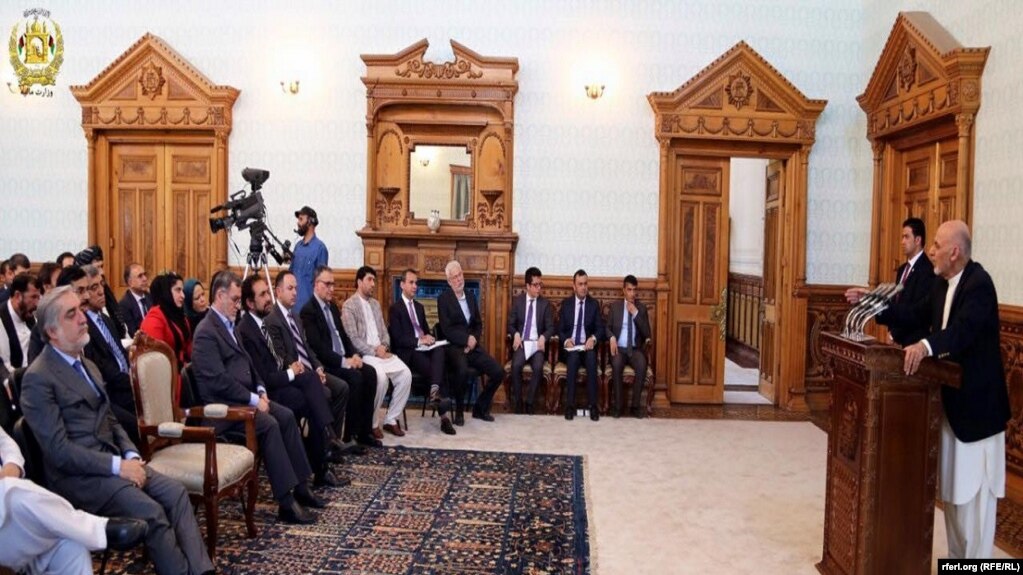
Speech at The Conference on Implementing the Strategy for Public Financial Management and the Launch of the 5-Year Renewable Plan
Keypoints:
- Ethical Foundation: Base transparency on Islamic Bait-al-Mal and national values.
- Revenue Sustainability: Use 22% revenue gain to achieve self-reliance.
- Strategic Planning: Shift from yearly budgets to a 5-year plan.
- Institutional Sovereignty: End parallel systems; channel aid via the national budget.
- Capacity Investment: Spend $20M to modernize the Finance Ministry.
- Afghan Ownership: Prioritize Afghan-designed solutions over external models.
- Meritocratic Culture: Replace reprimands with recognition for staff.
- Economic Transformation: Use geography for growth via TAPI and CASA-1000.
In the Name of Allah, the Compassionate, the Merciful.
Honorable Dr. Sahib Abdullah, [Sarwar] Danish Sahib, [Ahmad Zia] Massoud Sahib, esteemed members of the Cabinet, Deputy Chief Executives, distinguished members of the Wolesi Jirga and Meshrano Jirga, sisters and brothers! Assalamu Alaikum wa Rahmatullah wa Barakatuh!
The Ethical and Islamic Foundations of Accountability
The foundation of the Bait-al-Mal (Public Treasury) was laid by Hazrat Umar Farooq (RA). The culture of our holy religion, Islam, is a culture of accountability, transparency, and service. You all recall the narration: when the spoils of war were being distributed, a Companion stood up in the mosque and criticized Hazrat Umar, saying, "You are tall; you must have taken a double share." Hazrat Umar immediately stepped down and informed him that his son’s portion had been given to him because his own clothes were worn out. Therefore, reforming the Treasury and creating an accountable system is not a new concept. These are not values imported from the outside; they hold a profound and exalted place within our Islamic and national culture.
Commitment to the National Covenant
Secondly, our Constitution, which is our National Covenant, mandates the administration to bring about fundamental reforms. Since the formation of the National Unity Government—as I hope you have observed—the promises we made to the Afghan people are being implemented step-by-step.
Cultivating a Culture of Merit and Appreciation
I first want to express my gratitude, on behalf of the state and the nation, to the Minister of Finance and his colleagues. Mr. Minister, my request is that you nominate those colleagues who have shown extraordinary effort to the Cabinet for official recognition. The culture of appreciation and honor must replace the culture of reprimand. While a culture of punishment is necessary—given the troubled legacy we inherited—a culture of appreciation, solidarity, and unity in fulfilling the aspirations of our people is our primary objective.
The Power of Afghan-Led Methodology
Secondly, I thank you for your methodology. As you mentioned, you did not start by bringing in a few external consultants to chart a path for you to follow. You built this path yourselves. You started from the ground up, engaging department by department and office by office, and based on those consultations, you created this roadmap. Our confidence stems from the fact that everyone was a stakeholder. It is an Afghan tradition: when we are stakeholders in a process, we take ownership of the results. I hope the Ministry of Finance maintains this strong ownership.
Results-Driven Self-Reliance
You have proven your capability in practice. Under the most difficult circumstances, you increased Afghanistan's revenue by 22 percent—not as a one-off, but as a sustainable increase. Today, the good news you delivered to the nation is that this percentage can, and must, be doubled.
I also wish to express my deep gratitude to the National Assembly, particularly the Budget Committee. In passing and approving the budget, the Parliament was a true partner. I thank you all from the bottom of my heart! These were not easy conversations; they involved major policy shifts and significant decisions. You understood the gravity of our situation and the need to prove our intent to the world.
International Credibility
I also thank the civil society of Afghanistan, the sisters and brothers who demand transparency. Positive political pressure is necessary for us to take these giant strides toward an accountable system. I can summarize the importance of this with one story: at the Warsaw Conference, we did not need to speak for ourselves. Do you know what the President of the United States cited to validate this government's will? He pointed to our revenue increase. President Obama said, "When these people speak, they act on their word." What is the significance of this indicator? When we speak of Self-Reliance, its realization is impossible without sustainable domestic revenue.
The "Budget as the Axis" of State Reform
I will be brief and emphasize only a few core pillars. First, these reforms are essential for the entire Afghan state, not just the Ministry of Finance. While the Ministry plays a central role in securing the Treasury, this program requires investment. We will invest approximately $20 million over the next five years in the capacity of the Ministry of Finance to ensure comprehensive results.
Secondly, success must be universal. We apply the "80-20 rule": twenty percent of departments handle eighty percent of the spending or revenue, but the state exists to provide services to the people. No department is "non-key"; every institution is vital and must be held responsible.
Thirdly, the Budget is our Axis. We all complain about parallel structures and wasteful spending. These parallel structures only disappear when there is national and international trust in the state system. This means the Budget must be the sole instrument for policy, expenditure, and revenue. Everything must fall within the framework of the National Budget so that we are accountable first to Parliament and second to the people.
Messaging to the International Community
Fourthly, while initial reforms are complete, Continuous Reform is required. We have two messages for the international community: We commit to any standard of transparency they require, primarily because our religion and our people demand it. However, accountability cannot happen if citizens have to knock on fifteen different doors to find a single contractor. Thus, our second request is that parallel systems must systematically be brought within the framework of the state.
Transitioning from Projects to National Programs
A country cannot progress "project-by-project." Projects must exist within organized programs. Look at the pulse of the Afghan people: Why did the entire nation celebrate the Salma Dam? Because they understand that Afghanistan's waters are either a path to prosperity or a threat to life. Why do people welcome TAPI or CASA-1000? Because they see the geography of Afghanistan being transformed into a great capital asset. Help from international partners should be a catalyst to create a dynamic and sustainable internal economy.
Appreciation for Professional Partnerships
Finally, I want to offer special thanks to our international partners, specifically Australia, for their assistance. These advisors are different; they come directly from the Australian Treasury. Their goal was to facilitate a dialogue among our own Ministry colleagues and hold up a mirror so we could see our own strengths and weaknesses.
My message to all ministries is that the "Method of Reform" is mandatory. A Virtuous Cycle is created when expenditure is unified with service delivery. Once again, I thank you all. I consider today a great day because you are seeing the tangible results of two years of effort—a roadmap that is practical, realistic, Afghan-owned, and based on international standards. I also thank my long-time friend, Scott Hoggin, for his tireless work.
May God keep you safe. I wish you all a productive day.
Tal de wi Afghanistan! Yashasin Afghanistan! Long live Afghanistan!