Afghanistan’s Role in the Rebirth of the Asian Continental Economy: Remarks at the Indian Council of World Affairs
Keypoints:
- Condolences & Context: Expressed sympathy for Nepal earthquake victims; acknowledged Afghan losses in Badakhshan.
- Ecology & Climate: Stressed continental cooperation to address natural disasters and climate change.
- Asian Transformation: Asia poised to become a major continental economy in the next 20–25 years.
- Terrorism Challenge: “Ecology of terror” embedded in criminal economies; requires regional coordination to counter.
- Afghanistan’s Strategic Role: Central location as a historic hub for trade, ideas, and regional connectivity.
- Natural & Economic Resources: Rich in minerals, water, and agricultural potential; need to convert wealth into productive capital.
- Entrepreneurship & Trade Networks: Afghanistan’s history of trade and adaptability can drive regional development.
- Regional Cooperation Vision: Promote a connected Asia; transform Afghanistan from battlefield to platform for trade and collaboration.
New Delhi
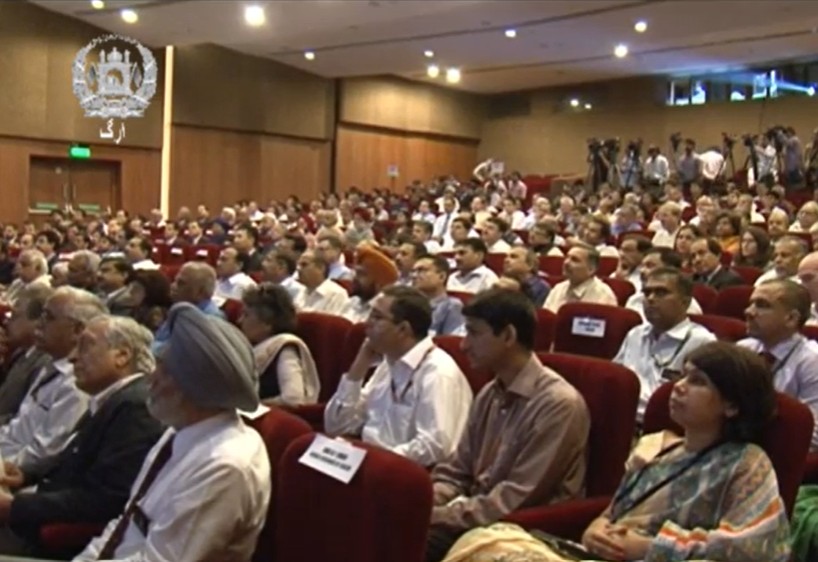
Mr. Vice President, Ambassador, distinguished audience, ladies and gentlemen,
It’s a pleasure to be with you tonight. I apologize in advance for being briefer than intended, as one cannot make the President of India wait. First, my deepest sympathies go to the people of Nepal. I have walked the mountains of Nepal repeatedly and observed their remarkable democratic process. All our hearts go to them. Tragically, the earthquake has also affected Afghanistan; we’ve lost over 50 people in Badakhshan province.
I want to begin with ecology, because climate change forces us to think continentally. Natural disasters do not respect political boundaries, yet the states of the region continuously fail to take account of the need to cooperate to deal with these phenomena. I am heartened by Prime Minister Modi’s assurance that we will mobilize to tackle these important issues together.
In the next 20 years, Asia is very likely to be transformed from a geographical notion into a continental economy. This has profound implications for how subsequent centuries are going to be shaped. Two trends compete here, and I’ll address both: the challenges and the opportunities.
The first challenge is what I call the new ecology of terror. Terrorism is becoming a system. It morphs rapidly—Al-Qaeda with all respects to Microsoft was like Windows 1, now it’s Windows 5. It’s embedded within criminal economies, generating unprecedented finance. It’s increasingly brutal, networked, and kills for the sake of killing.
Afghanistan is seen as a single theater today. Various groups threatening stability in Asia have converged on our territory, believing it to be a weak spot. We are the battlefront, fighting on behalf of all our neighbors, from India to Russia. The main threat is not the phenomenon itself but the lack of coordination between states. Bureaucracies are slow to act, slow to coordinate, and this weakness is what allows the ecology of terror to thrive. There is no advantage in competition between states when facing these challenges.
Now, the opportunities. Afghanistan has immense potential.
-
First, our location. Until the 18th century, Afghanistan was a hub where ideas, people, and goods passed through. European imperialism disrupted this, turning Afghanistan into a marginal space. But in the next 25 years, our location will be a key connector between Central Asia, South Asia, East Asia, and West Asia.
-
Second, our mineral resources. In the next 15 years, Afghanistan will become the world’s largest producer of copper and iron, a major player in gold, and holds 14 of 17 rare earth elements.
-
Third, water and agriculture. We only use 10% of available water. Cooperative water arrangements will be crucial in responding to changing global ecology.
-
Fourth, capital. Afghanistan has wealthy individuals but not productive capital. Money must be transformed into capital, and India’s experience in finance can help convert money into wealth.
-
Fifth, entrepreneurship. Afghanistan has a long history of connectivity and trade. We thrive on networks and adapt to challenges.
To realize this potential, we must think regionally, not nationally. Cooperation accelerates development by leveraging the experience of the region. This is why I speak of the rebirth of the Asian continental economy. For millennia, there was a continental system linking South Asia, Central Asia, and beyond. Afghanistan can again become a platform for cooperation, not a battlefield, not a buffer.
Imagine a day when one can have breakfast in Delhi, lunch in Peshawar, and dinner in Kabul. That is the transformative capacity we can achieve. After retirement, I hope to dedicate my life to creating this possibility of cooperation. Thank you.