Combating Administrative Corruption Through Judicial Reform in Afghanistan
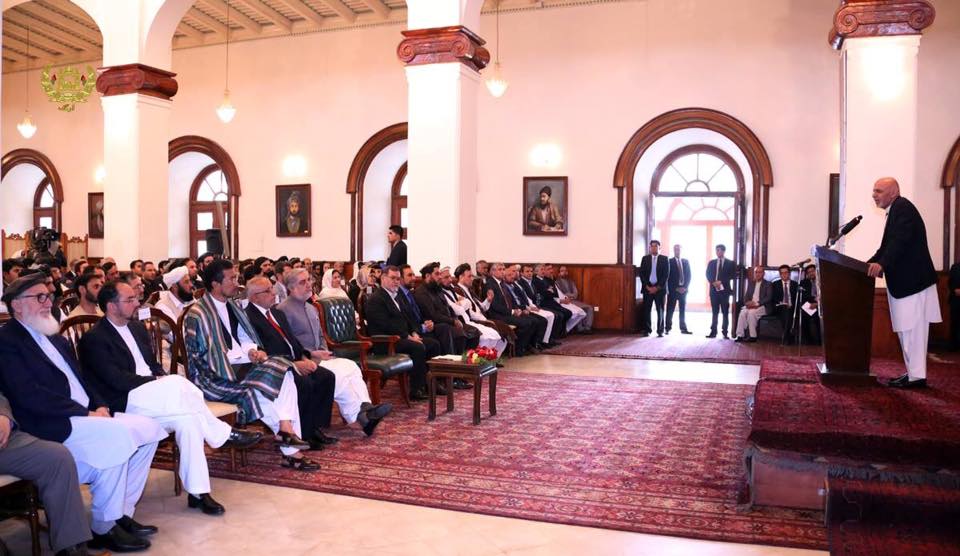
Speech at the Inauguration of the Anti-Corruption Justice Center (ACJC)
Keypoints:
- Rule of Law: Apply laws consistently to all citizens.
- Judicial Independence: Courts operate free from political influence.
- Accountability: Investigate and prosecute corruption transparently.
- Accurate Investigation: Gather evidence carefully and precisely.
- Speed of Justice: Ensure cases are decided without delay.
- Decisiveness: Apply rulings equally to everyone.
- Political Will: Maintain strong commitment to fight corruption.
- Institutional Capacity: Strengthen agencies to enforce the law.
- Public Trust: Build confidence through fair justice.
- Coordination: Align judiciary, prosecution, and executive work.
- Private Sector Confidence: Provide a secure environment for business.
- Sustainable Reform: Commit to long-term legal improvements.
In the name of Allah, the Most Gracious, the Most Merciful.
Excellencies Dr. Abdullah, Sarwar Danish, Ahmad Zia Massoud; Honorable Speaker of the Meshrano Jirga, Honorable Speaker of the Wolesi Jirga; Deputy Chairmen of the Executive Directorate, Honorable Attorney General, distinguished members of the Cabinet, honorable members of the Supreme Court, members of the Wolesi Jirga; brothers, sisters, and distinguished members of the diplomatic corps; Peace be upon you all!
Condolences and the Transformation of the Police
First and foremost, I wish to offer my condolences for the martyrdom of several police officers in recent days. I call upon the entire nation to stand as one voice and one united national will against these rebels (baghiyan). These young men went to the "City of Lions" (the Police Academy) to learn how to implement the law.
I offer my specific condolences to the Minister of Interior, asking him to convey the sympathies of the entire state and the Afghan nation to all members of the Afghan National Police and other police sectors. We are currently undergoing a major transformation in the duties of our police. Today, the police are forced to dedicate 90% of their time and energy to repelling terrorism and rebels, whereas their fundamental duty is the detection of crime and the application of law. [Referring to the photos of the martyred cadets] Our hope is that through this National Police Center, every Afghan woman, child, and man in this homeland can continue their lives with the confidence that their police are protecting them.
The Foundation of the Center
Today is a fitting day to inaugurate this Anti-Corruption Justice Center, as its foundation is based on Article 134 of the Constitution. The stance of the Government of National Unity in the fight against corruption is based on legality.
Why were we delayed until now, and why is this center opening today? Because the execution of justice depends on a "triangle" of cooperation that must work together.
-
The Supreme Court: First, I congratulate the Chief Justice and all members of the Supreme Court. I specifically congratulate Mr. Sangari [honorable member of the Supreme Court], who took his oath just moments ago. The Supreme Court has undertaken fundamental reforms; more than a thousand people in the courts of Afghanistan have been reassigned based on the decisions of the High Council. A climate of trust has been established in the decisions of the courts in general, and the Supreme Court in particular. This trust allows us to be ready today to apply the law without regard for status—from the very top down to every official working in this government. As Dr. Abdullah and I promised in Geneva: there will be no tolerance for corruption.
-
The Attorney General’s Office: Second, I express my gratitude to Mr. Hamidi and his colleagues in the Attorney General’s Office for the fundamental changes they have initiated. This has caused the office to move toward reform day by day. In this regard, I also thank the members of the Wolesi Jirga for confirming the Attorney General, the Chief Justice, and Mr. Sangari, as this confirmation is the very basis of progress.
-
The Major Crimes Task Force: I thank the Minister of Interior. The Center for Combatting Major Crimes is now active, and its structure has been doubled so that it can investigate cases thoroughly.
Avoiding Parallel Institutions
The only way to fight corruption and create a climate of credibility is for the institutions mandated by law to perform their duties. Our experience, and global experience, clearly shows that when you rely on "parallel institutions" or "subjective/temporary bodies" created to sideline primary institutions, it does not yield results. Therefore, the entire philosophy of this Center and its work is based on adherence to the laws. Until the law is applied, trust cannot be created and justice cannot be ensured.
Regarding the damage caused by administrative corruption, specifically major administrative crimes, I will be brief. There is a consensus between the nation and all government institutions that corruption is a "cancer" and a grave danger. We cannot progress with our security challenges or our economic programs unless we fight this phenomenon. Therefore, it is essential that we firmly strengthen our Political Will.
Components of Political Will
Is there political will?
-
Intention (Niyat): First is intention; without it, even the greatest leaders fail. Both the nation and the government have a clear enough intention that administrative corruption, especially major corruption, is intolerable and will not be endured. This is the first step.
-
Capacity: Second is capacity. We must have the means. Political will is not about "acting on a whim" or doing as one pleases—that is not law; that is lawlessness itself. Real political will is sustainable and exists within the sovereignty of the law. Political will means trusting the institutions and organizations that do this work, giving them authority, and holding them accountable to the law, not to a person.
-
Courage: The third part of political will is having the courage to persist when we face negative resistance. If the law is not applied to everyone, it is called into question. We Afghans know each other well; if we are standing in a line, we are willing to wait for hours, but if even two people break that line, we all ask, "Are we any less than them?" By the grace of God, we all consider ourselves equal; no Afghan considers themselves less than another. This claim to superiority must be transformed into equality. For this reason, our methods must be principled, which requires the Justice Center to emphasize three principles:
The Three Principles of the Center
-
Diligence (Deqat): In our current environment, innocent people are often accused. The distinction must be clear, and justifiable reasons must exist. Therefore, the detection of crime is vital. We must invest heavily in the Major Crimes Task Force, and the Minister of Interior must pay specific attention to ensuring detection is carried out with complete precision. Our judges often mention that the threat to their work is the quality of police work. If the investigative work of the police is not principled and precise, the verdicts will be affected. Diligence in detection and subsequent prosecution is mandatory.
-
Speed (Sur'at): The second issue was the past delay in cases. As per the commitment of the Government of National Unity, there is no room for political interference in the investigations of the Attorney General or the decisions of the courts. No government official has the right to interfere; doing so is a crime. We emphasize our commitment to judicial independence. In the past eight months, we have seen an 85% increase in the speed of judicial decisions. The Attorney General’s office must also create speed within the framework of law.
-
Decisiveness (Qata’iyat): Decisiveness means that verdicts are reached without regard for the person. In our holy religion of Islam and our judicial traditions—from Siraj-al-Ahkam to the legal texts of the last 150 years—it is clear that a judge cannot show preference. The core of justice is equality. Verdicts must be made with decisiveness and justice, and then the police must have the full power to implement them.
Institutional Coordination
I want to emphasize that the role of this center must be such that the results from the courts and the Supreme Court are implemented by the executive branch. This is based on the separation of the three powers. The role of the Ministry of Interior is executive; it will be handled with honesty and order. Every sector—from the courts to the Ministry of Interior—will strive for coordination. We hope that the individuals coming to this center will regain the trust of the nation.
The role of the High Council is to continuously demonstrate our support for this political will and to identify the major issues facing our country to refer them to the Justice Center. Its role is not a judicial one, but to show the political will of the Government of National Unity. I thank those who have conducted research on these major cases, as your research is the stage that leads to detection and prosecution.
Conclusion
I thank the nation for its patience. This move against the "Hell of Corruption" must be a grand and sustainable action, not a weak one. We are all passing, but the Law must be permanent. This starts from the Constitution and extends to all other laws. If there are gaps in the law, they must be diagnosed and referred to the legislative power to be fixed.
I thank the civil society and the people of Afghanistan for being serious about the issue of corruption. We need political and administrative cooperation so that no harm comes to the people.
Finally, to the private sector: You provide for the people and guarantee the lives of our soldiers. In a stable environment, you will be willing to bring your capital out of hiding and into the economy to create jobs. I assure you that both political security and political will exist. We must rely on this as we move forward.
Long live Afghanistan! Enduring be Afghanistan! Prosperous be Afghanistan!