The Great Asian Integration: From Geographic Concept to Economic Continent
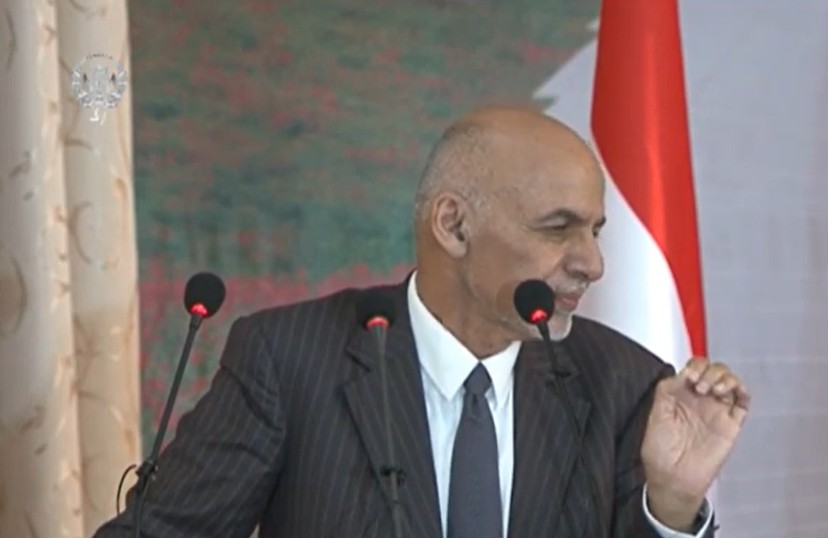
Speech at the National University of Tajikistan, Dushanbe
Keypoints:
- Regional Integration: Linke Central and South Asia via trade, energy, and infrastructure.
- Economic Connectivity: Use projects like CASA-1000 to turn resources into opportunities.
- Asia-Centric Development: Leverage China, India, and Russia for regional growth.
- Role of Universities: Prepare future leaders, innovators, and managers.
- Leadership and Governance: Ensure capable leadership and rule-based management.
- Youth and Gender Inclusion: Engage young people and women in leadership roles.
- Shared Resources: Treat energy, transport, and infrastructure as regional assets.
- Project Management: Plan and execute programs and projects strategically.
- Peace and Collaboration: Link prosperity to stability and cross-border cooperation.
In the name of Allah, the Most Gracious, the Most Merciful.
Dear students, distinguished professors, the leadership of Tajik National University, the Honorable Minister of Education, and the Vice Prime Minister of Tajikistan: Peace be upon you all.
First, it is a profound honor to stand here at Tajik National University. To the generation of Tajikistan’s future leaders: I salute you!
Secondly, I often joke that I was misdirected into the Presidency; I should have been left here to teach. I always feel a specific joy among university students and faculty because the university environment is one of inquiry, respect, and the exchange of ideas. The university plays the fundamental role in creating a vision, fostering understanding, and subsequently, turning that vision into reality.
You, the younger generation, are fortunate. You stand at a massive historical crossroads. The core theme of my discussion with you today is that, God willing, you will witness the transformation of Asia from a mere geographic concept into a massive, integrated economic continent.
The Common Cultural Sphere
My second joy is that in Tajikistan, I do not feel like a stranger. I feel I am still within our great cultural sphere of Central Asia. I do not have to worry about what I eat—whether it is Halal or Haram—nor do I need to consult a translator. I understand the message directly and can feel the heartbeat of the people. Most importantly, I know that in Tajikistan, every Afghan heart beats for your stability, and every Tajik heart beats for the stability of Afghanistan.
I thank you for allowing Afghan students to study side-by-side with their Tajik brothers and sisters. You are not just creating mutual understanding; you are building friendships and networks that will, God willing, bring positive change to both our nations. We must strengthen these ties repeatedly; the more our relations are fortified, the more brilliant our future becomes.
The 500-Year Conflict and the Asian Shift
For 500 years, Europe and Asia were mired in war. Europe eventually ended much of its long-term internal conflict through economic cooperation. Unfortunately, the long-term conflict in Asia has not yet ended. Asia still suffers.
However, alongside this suffering, we are witnessing a fundamental shift that offers hope that this 500-year Asian struggle might end within your generation. What is this shift? For the first time in history, trade between Asian nations is greater than their trade with Europe and America. This is a monumental change.
I also congratulate the Tajik nation on 25 years of independence under the leadership of His Excellency President Emomali Rahmon. This independence opened a new chapter. Where is the easiest path to connect Asia? Central Asia. It is not called "Central" merely because of its position on a map; it is because it was historically central. Two thousand five hundred years ago, our ancestors in this region were scholars, writers, artists, and engineers. Our people created the Great Silk Road. The civilizations of China, India, Central Asia, and the Middle East converged here, first under Buddhist and Zoroastrian influences, and later, when Islam arrived, these were all woven into a shared cultural framework.
Lessons from the Ancient Silk Road
What were the characteristics of the ancient Silk Road?
-
A Sophisticated Financial System: Six hundred years ago, one could easily transfer money or a financial document from Calcutta to Dushanbe or Tashkent. You didn't need physical gold; the trust in these documents was so high that organized groups could process them in any city.
-
Conflict Resolution: A Muslim judge (Qadi) from Andalusia or North Africa could resolve disputes in Bengal or Central Asia using the same unified system. This was unprecedented.
-
Interconnected Cities: If you look back 400 years, the major families from Central Asia to India were linked by marriage and close ties. In his memoirs, Babur notes that when he arrived in Kabul in 1506, traders from the North, South, East, and West converged there. It was a sophisticated system of global trade.
-
Economic Specialization: Production was linked in a chain. Logic dictated that different regions specialized in different goods, creating an integrated economic logic.
The Era of Isolation
This system broke down in 1898. The Tsarist Empire on one side and the British Empire on the other pushed this region into isolation. Central Asia went from being "Central" to being "Isolated." In 1898, the Tsarist Empire created tariffs to reduce trade between India and Central Asia to zero. Later, under the Soviet Union, this isolation deepened as Central Asia turned its gaze toward Moscow rather than its neighbors in South Asia and the Middle East.
The Opportunity of the 21st Century
Today, the opportunity lies in several areas:
-
Regional Imbalance: South Asia is one of the least integrated regions in the world, while Northeast Asia is a major engine of history. The potential for South Asian cooperation is limitless, but a lack of political vision has prevented economic coordination.
-
Energy Connectivity: Both South and East Asia are energy importers. Central Asia can be the center of international energy production. There is a natural synergy here.
-
The Rise of China and India: Within twenty years, China and India may again determine 40% of the global economy—just as they did 300 years ago. You must not only learn Russian; you must learn Chinese and Hindi as well. We are surrounded by three "continental" economies: China, India, and Russia.
The Role of the University: From National to Regional Thinking
What is the role of universities in this? What tools do new leaders need? First, we must understand what we have. This sounds simple, but it requires a systematic "mapping" of our public assets. How many roads, railways, or power plants do we have? If you look at a road through a national lens, it is one thing; if you look at it through a regional lens, it is quite another. Sometimes, an extra 100 kilometers of road is the key to connecting thousands of kilometers. We must move our thinking from "Nation-Only" to a "Regional and Asian" framework.
Take CASA-1000 as an example. Tomorrow, Afghanistan, Kyrgyzstan, and Pakistan will witness a great step as this project moves from theory to practice. We realized that Tajikistan has a massive surplus of energy. Inside Tajikistan, it is more than you need; but it does not become a massive investment until it is linked to Afghanistan, Pakistan, and eventually India. We created a vision of a "shared asset."
Once CASA-1000 is operational, our lives become physically linked. We won't just be linked by culture; we will be linked by the daily flick of a light switch. If the switch is in Tajikistan, we all become stakeholders in ensuring Tajikistan is stable and prosperous. This is the "Win-Win" logic of the 21st century.
A Message to Students: Leadership and Management
You, the youth, must know the past, but you must create a vision for the future.
-
Asian Leadership: You must think at the level of the entire continent.
-
Teamwork: This isn't a solo effort. It requires sociologists, political scientists, engineers, and politicians working together. This synergy starts in the university.
-
Leadership vs. Management: Leadership is the art of creating a vision that is actionable. It is about giving hope and rejecting despair. Management, however, is the science of making it happen. Even the best politician fails without a management team. Management means knowing exactly how many minutes it takes to get from Dushanbe to Kabul. Today, management is as essential as knowing how to use a computer. It is a tool, not the goal—the goal is change.
The Rules of the Game
Every game has rules. Asia today needs "Rules of the Game" to direct its future. I am happy to be here because the leadership of Afghanistan and Tajikistan have a complete consensus on these rules. These two nations will never pose a threat to each other; instead, we will create opportunities for one another.
We need "Governance." Until now, governments carried the burden of regional cooperation. From today on, each of you must become an "Ambassador of Regional Cooperation." We need to build financial and technical institutions that can manage the billions of dollars in infrastructure needed.
The Language of the Future
In the 21st century, it is not enough to understand the language of Rudaki (the poet); you must also understand the language of Schumpeter (the economist). But never forget Rudaki—because without our culture, we are not Asians, Tajiks, or Afghans.
We must also bridge the gender gap. The new generation cannot be male-only. I pay my respects to the female students of this university. You can fundamentally redefine the image of the Muslim, Afghan, and Tajik woman.
Conclusion: A Connected Future
Neither Afghanistan nor Tajikistan is poor. In the past, it was our thinking that lacked richness. Today, we need innovative minds and a broad, inclusive vision.
Eleven years ago, when I came to Tajikistan, it was not the Tajikistan of today. My Foreign Minister, Salahuddin Rabbani, who is here with me, cannot believe how much it has changed. But this is just the beginning of a great book.
I look forward to the day when you can start your day in Dushanbe, eat dinner in Kabul, visit Islamabad the next day, and Delhi the day after that—and move on to Beijing, Astana, and Ashgabat. The future is mobile and interconnected. It belongs to us, and it depends on how we realize this vision.
Thank you, and have a wonderful day.