Building Afghanistan’s Agricultural Future: Water, Crops, and Rural Development
Keypoints:
- Self-Reliance: Expand production to reduce imports and strengthen food security.
- Water Management: Improve water production, transfer, distribution, and efficient use.
- Irrigation Infrastructure: Build dams, canals, and reliable irrigation systems.
- Productivity: Promote improved seeds and modern farming methods to increase yields.
- Land Use: Maximize existing farmland and expand irrigated areas.
- Farmer Capacity: Strengthen farmers’ skills, organization, and women’s participation.
- Market Access: Develop stable markets and farmer cooperatives.
- Exports & Protection: Promote exports and protect local producers from imports.
- Agro-Industry: Develop storage, processing, and agricultural parks.
- Rural Connectivity: Improve roads, electricity, and rural-urban links.
In the name of Allah, the Most Gracious, the Most Merciful.
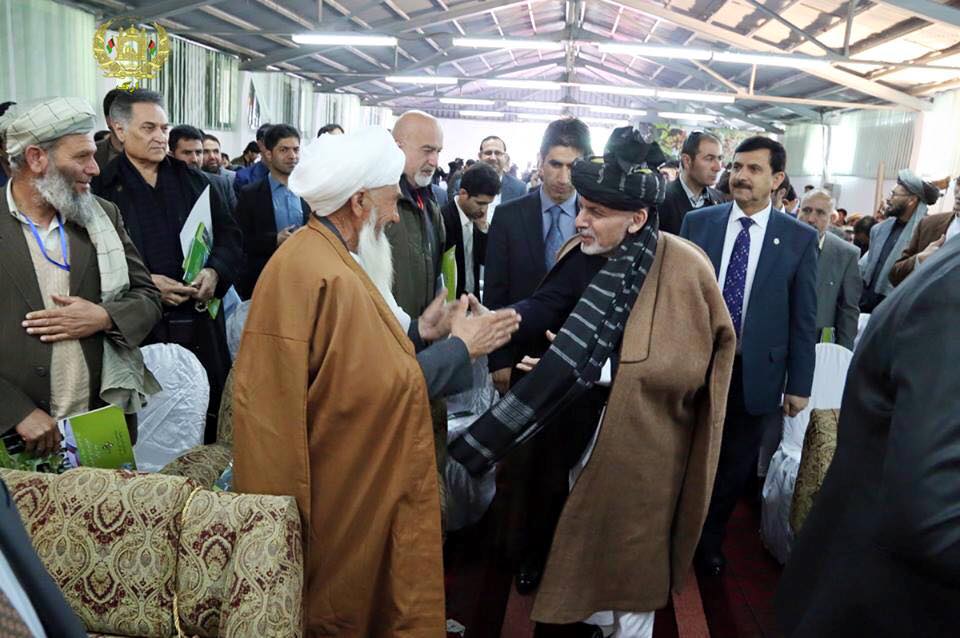
Jnab Zamir Sahib, Minister of Interior, Minister of Rural Rehabilitation and Development, Minister of Borders and Tribal Affairs, Minister of Energy and Water, Minister of Higher Education, Rahimi Sahib, the Governor of Kabul, General Khaliq Khan, all sisters and brothers, but more than all of them, dear farmers! First of all, I offer you the gift of the leader of humanity: Peace be upon you, and the mercy and blessings of Allah!
Gratitude and the Economic Equation
In the first step, I thank every farmer, orchardist, and livestock owner. Every thing and every apple that you produce means that Afghanistan’s hand is not stretched out to the world. Sisters and brothers, this is the main equation. Today, because in past years investment was not made in agriculture, livestock, and orcharding, we are dependent on the world; this is what is called stupid money.
Look at every one of our cities. Foreign products are our daily consumption, while millions of our sisters and brothers in the countryside and cities are unemployed and asking what is the way and solution for unemployment? You are the way and the solution for unemployment. Our sister, the Father of Grapes, the Father of Saffron, and the Fathers of other products are the solution.
First, my request to Zamir Sahib is that next year, on Farmers' Day, you must honor 50 male and female farmers. Today, we honored cultural figures. Today should have been a day where fifty of the first-rank farmers of Afghanistan were shown and you honored them.
The Four Pillars of Water Management
The second point: your message regarding water. Water has four parts: production, transmission, distribution, and consumption. In these four parts, we were not successful in past years, and we are still not. Steps have been taken, and I thank Haji Sahib Qahar for stating the examples; they are good examples.
What is necessary? The irrigation system must become nationwide. Every one of our farmers must know that within a matter of minutes—not hours or days and nights—water will reach them. Professor Sabawon is also present; he has done a lot of work in this. He is both a religious scholar and an engineer; may God (ﷻ) always bring about such a combination.
Our goal? This year, God willing (Ta’ala), we will start the work on 21 to 29 essential dams. These Ministers are fed up with me. Every day I ask them: how is the water issue? They used to imagine that the President’s job is just to say production should increase and then ask them again a year later. No. Every month and every week I ask. If there is no agriculture, there is neither trade nor industry nor any other work.
Coordination and the Culture of Water
Another point is that we are a people of honor (Ba-Ab); but we live without water (Be-Ab). This kind of waterlessness (Be-Abi) does not please the Afghan people. The problem is that still, three ministries have three different roles and want to make the Afghan people dance in three different ways. This kind of dancing is not acceptable; let there be one Attan and one Qarsak; whatever you do, do it as one thing in this era.
Now, by the grace of God (ﷻ), all three Ministers are sitting here and they are coming into a coordination. At the level of the Ministers, coordination has come, but at the level of the ministries, coordination has not come. Every ministry is still thinking of its own past. It thinks it is the owner and authority of everything; without coordination, it cannot be done.
Second is the transmission of water. Our transmission system is very expensive for the farmer. You all see the headwork (intake); from the intake until you bring water to the field, how much do you spend on it annually? A major portion of our intakes are not durable. Every year, floods take them or they are destroyed. Every canal needs cleaning. For this reason, the Minister of Agriculture had calculated—we call it Pati—that 55% of the water was being wasted before it reached the field, while two and a half thousand years ago, the people of Afghanistan left behind the best foundation for water division. The water of the Harirod was divided so precisely that it had no limit. This problem, the Ministry of Rural Rehabilitation and Development will work on fundamentally so that your intakes become reinforced.
Justice in Distribution and Revitalizing Mirabs
Now regarding the canals you mentioned: the canal must come here. And the other problem is in distribution; the distribution of water is not fair. In some provinces you go to, between the head of the water and the tail of the water, the price of land differs five-fold. In the head of the water, they plant rice, and in the tail of the water, even wheat doesn't grow. What is the point? We had a very just system of water division that was based on the holy religion of Islam and our customs in this regard were clear. Excuse me, in those times they used to say: may his wife be divorced, the one who uses the water of another. Mr. Engineer, was it like this or not? Now we have left these kinds of things. It is necessary that the government must manage the just division of water. The work of the judge and the prosecutor is not only to serve the people in a general way; the division of water is a task. For this reason, the most important way—as Haji Sahib Qahar said earlier (who was himself a Mirab)—is that our Mirabs must be revitalized. People must reach a just division of water so we can make maximum use of the water. If you divide water justly, the amount of our production will change fundamentally.
Another issue is usage. You said technology. Technology is about making maximum use of water. Today, we waste water. If water is managed fundamentally, our production will increase and everything of ours, God willing (Ta’ala), will become better. These four things are my directive for these three ministries to work on and achieve fundamental results.
Accountability and the Exam of Success
In this section, the Minister of Agriculture said that he spent 70% of the budget. From that 70% congratulations, you failed in the other 30%, brother! This doesn't work, is it right or not? What does 30% mean? It means that hundreds, or at least dozens, of cold storages could have been built that were not built; water could have reached dozens or hundreds of other fields. People, do not accept these percentages easily. This year, the amount of success is 90%, not 70%. In 70%, there is a condition. And contrary to the new system the Minister brought—where if people fail in the first chance, they take an exam from them a second and third time—in the Cabinet, there is no second and third exam. God willing (Ta’ala), we will all join hands, but the point is that the work of agriculture is not just their work; all Governors, especially the security and defense forces, and all of us must become active in this section.
Improved Seeds and Clear Language
Another subject is agricultural seeds. There is a world of difference between improved seeds and non-improved seeds. Forty years of war destroyed our system of improved seeds. This year, forty thousand tons of improved seeds, God willing, will be distributed. I won't tell you their figures, because they worked very hard at my hand this past week. Every time they brought figures for me, I said: tell us in "round" terms what the result of this is and what the goal is. All our ministries must first understand the pulse of the farmer, and second, speak the language of the farmer. Foreign languages are for us to connect with the world; they are not for bringing our own people into ambiguity so they don't know what we are saying and cannot ask us tomorrow.
[Addressing the farmers] From now on, they will speak with you in clear language. The things you need are the same things that are placed at the top of the government's program. And on the issue of seeds, work will be done fundamentally.
Land Productivity and Human Capital
Another issue is land. Land has several parts: first, the maximum use of existing land. What is the equation? The amount of production from existing land; from little land, high production must occur. The day before yesterday, I was asking the Ministers: what is the result of your investments? They asked me for three months' time to answer this question. Was it like this or not? Neither you answered, nor the Minister, nor the Deputy Ministers. I, poor man, am left wondering what they are saying, right or not? I don’t want many things; I want this one page. On this page, I want to know: how much was your production from the land last year? And how much will it be next year?
Measuring effectiveness is very simple work. What is current production and what will it be at the end of the year? All other things are tools; we need the result. The result is what the sister, the brother, the Father of Saffron, and everyone else says. The result must change. This result is our contract with the farmers, orchardists, and our livestock owners. Right or not? So, in three months your contract comes and they give the exam paper, right? You will give the exam paper, then I will measure it to tell it back to you.
But seriously, one of my requests is that we come out of this culture of bullying and strangling and come to a culture of respect and encouragement. Value one another and give the hand of unity. The Afghan woman has immense capacity; invest in her. The Afghan man has immense capacity, and the Afghan child as well. Every Afghan is a hero. In the section of lands, first is the use of existing land, and second is the production of new lands. They say how is land produced? Well, produce water and land is produced. So, God willing, several hundred thousand hectares of new land will be irrigated; it will be placed at your disposal. But what is the most important element in agriculture?
The human being! There is no element more important in agriculture than the human being. For this reason, the fundamental point we want is the change of knowledge, readiness, and the type of cooperation with the male and female farmer. Male and female orchardists and vegetable-growers are here. First, I thank the colleagues who thanked the actions of the Ministry of Agriculture and the Minister; may your house be prosperous!
Education and Collective Action
The culture of appreciation is very good; but the type of our work must change significantly more. The Ministry is a tool for me; no Ministry is my goal. The Ministry is a tool—a tool for what? A tool for serving a specific class. The goal of these three ministries is to serve the class of our farmers, orchardists, and livestock owners, and every type of cooperation that you (the farmers) identify.
Several things are needed here: first, introduce the leading orchardists and farmers through National Television and a nationwide program to all provinces so that each of them saves us millions of dollars. Because when one Afghan sees how another Afghan works, after that, he learns. Send their husbands [of the farming women] with them to all the districts.
Second, they must come together in associations; work is not done alone. Our sister said she buys from others and then sells it herself. This is a combination where a collective combination should come. I won't speak in detail on other issues; I will come to the issue mentioned by our brother and sister.
Strategic Markets and Protectionism
The issue of the market. Where is the market? Your first market is the security and defense forces of Afghanistan. The Ministers of Defense and Interior who are sitting here are the solution to your market. In the past week, the Ministry of Defense brought its contracts, which were 250 contracts, down to approximately eight contracts of various types. My directive is that this Ministry only purchases from the products of Afghanistan. Now you say, how do you verify that it purchases from domestic products? Organize your associations; let your associations monitor whether it purchases from your products or not. In a few weeks, we will sit your associations down with their contractors so that we reach the result with the original arrangement. Every individual of the National Army is your child and brother. They want to be the means of putting money into your pockets. It takes about two to three months; this is the way. After that, the Ministry of Higher Education, the Ministry of Education, and finally all civil sectors of the government must take action. Sisters and brothers, you have a ready market; no one had thought of this until now. This is the first step.
The second point you made is absolutely correct: that instead of markets being once a year, they should be established fundamentally. I personally appointed the new Mayors. Each of them has the duty to arrange a Friday Market or weekly and monthly markets for you. We will make every Mayor responsible for this from now on.
For the city of Kabul, two very good new plans have come: to arrange one Friday Market in Qargha and another Friday Market in Sarobi for you. The same plan that you mentioned, we give the directive to perform in 14 districts and zones of Kabul.
The other basic way is that supermarkets—which are called medium and large—should be created. My directive to the Governor and the Kabul Municipality is: give land for supermarkets, on the condition that they purchase Afghan fruit.
Another part of the market is that when fruit is plentiful, foreign fruit still comes and competes with you. This year, my rapid directive to the Ministry of Finance is to impose a tariff of 100% or 150% on the import of foreign fruit.
We used to export fruit to the entire world; now they export second-grade fruit to us. They bring "fake" pears to Salang and the Shomali road, place them by the side of the road, and say that this is the Andarab pear. Anyone who has eaten the Andarab pear won't be fooled by foreign pears. Eat the Andarab pear, as well as the Shomali and Herat grapes; this country is the place of grapes.
Our saffron! Again, we give congratulations to the Father of Saffron that you became first-rank in the world again. Regarding the suggestions you made: first, we thank the Father of Saffron for all his efforts. Second, you suggested that they hadn't given you time. So, give the exam paper [to see] if they implemented your suggestion. If no one was there, take a meeting with us.
Infrastructure and Energy
But another major task is marketing and a few other things for you. First, the Barik Ab project, which is the first agricultural and industrial park of Afghanistan, we allowed the government to fund; which in the next few years, God willing, will be completed and placed at your service. Second, we have held three meetings with fruit exporters so far. The fruit exporters of Kabul came with a very good plan. The plan is excellent: and that is how to get 600 tons of Afghanistan’s fruit to the Gulf daily starting from the month of Jawza.
Anything they need, even if you have to turn the current machinery upside down, it is a commitment to you that we will do this work. On the day that we have 600 tons of exports, God willing, for a few months, your market will be fundamentally prepared; but Kabul is not enough, we must at least bring this to five major provinces of Afghanistan. The first step is Kabul.
Cold storages will not be completed this year. But we agreed that cold storage containers be placed at Kabul Airport so the method is established for you. We say again to the private sector to come and invest. So far, we have allowed more than twenty thousand acres of land for parks. Your land problem will be solved quickly and without bribes or filth; no one should block you.
The other issue is electricity. We express gratitude to the Minister of Energy and Water. This year, God willing, the amount of electricity produced in Afghanistan will be more than the past hundred years combined. 240 megawatts of electricity will, God willing, be produced this year. It is little, but it is a big start.
Another issue is the connection of village and city. For the ministries of Rural Rehabilitation and Development and Public Works, my clear directive is to improve your roads. Thousands of kilometers were built last year and we are working on tens of thousands of kilometers to connect your path.
Closing and Prayers for Rain
In the end, I once again thank God (ﷻ) that the rains happened. Rains are a great means of blessing; God (ﷻ) knew your heart regarding these rains occurring. Every night I performed the Tahajjud prayer so that it would rain. When they showed me the figures, there was a danger of drought. Now, with the rains, God (ﷻ) accepted our prayer; I thank Him from the bottom of my heart that we begin this new year with the falling of rain.
But my second thanks is to the Afghan nation. This is truly a magnificent nation. I see your patience, tolerance, and especially your good hopes. I thank God (ﷻ) that He created me Afghan and gave this opportunity for me to be your First Servant. So, the hope is that this year we will move forward in a fundamental way. I spoke a little on the section of livestock, but my attention is there as well. Item by item, from everything that is an Afghan product, from now on I want a report from the Ministry of Agriculture. What did we do with wheat and in what way did we bring it? What did we do with corn, saffron, and grapes? Until our attention is on every item of production and we don't find a market for these, we have not paid attention to our own lives.
The actions taken in the year 1394 (2015) are a foundation. The hope is that this year will be the year of fundamental transformation in agricultural affairs and in the next three years we see the Afghan farmer standing on his own feet, because without you being comfortable, Afghanistan will reach neither peace nor stability.
Billions of dollars spent on weapons do not take the place of your efforts. You are the foundation of this country and this foundation, God willing, will become strong. Sisters and brothers, work together so that this high goal of ours is implemented.