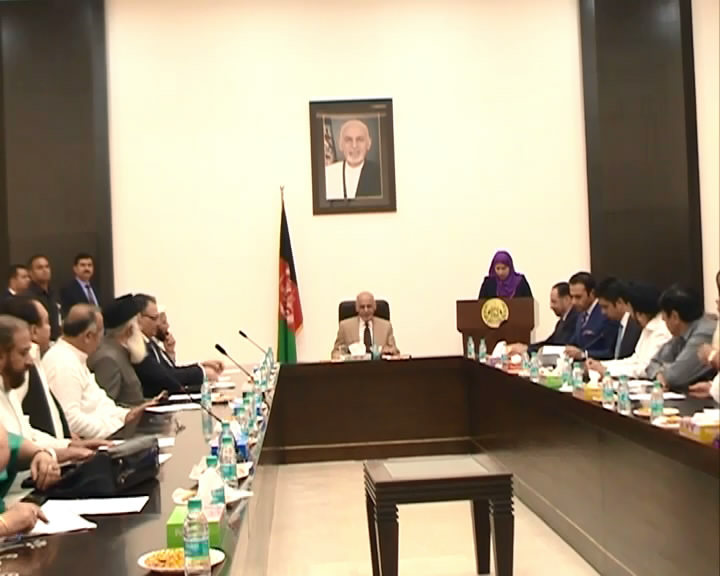
Emphasizing National Identity, Citizenship Rights, and Dignified Return | Address to Afghan Nationals in India
Keypoints:
- Welcome: Embassy is Afghan soil; all visitors are welcome and will return safely and with honor.
- Culture & Language: Gratitude to Afghans preserving traditions; Pashto and Dari instruction and travel facilitation guaranteed.
- Citizenship & Rights: Afghans who renounce citizenship remain Afghan; Hindu and Sikh communities are full citizens.
- Religious Sites & Property: Gurdwaras and temples will be restored; personal property cases handled patiently.
- Education & Scholarships: Children’s right to education prioritized; merit-based reforms for Afghan youth scholarships.
- Embassies & Consulates: Inactive embassies closed; competent staff and consulates prioritized for public service.
- Accountability: Embassy staff evaluated quarterly; unresolved issues escalated to Presidential Palace for action.
- Assurance: Afghan resolve is strong; homeland will remain whole, prosperous, and secure for future generations.
I extend my warm greetings to each and every one of you—welcome to you all. This embassy is the soil of Afghanistan. Welcome to your own land. I hope that each of you will soon return to the homeland, and that you will return with dignity, safety, and honor.
First and foremost, I wish to express my heartfelt gratitude to those Afghans who have lived here for several centuries and who have preserved their culture, traditions, customs, and language. Mufti Sahib—God willing, we will soon build a mosque for you in Kunduz. With honor and respect. May Allah grant you success.
Second, Lala Sahib raised the issue of Pashto and Dari. We will make proper arrangements for their instruction. Earlier, Mr. Abdali¹ informed me that a Pashto and Dari language learning center has been established in Geno. If you require more than that, we will take further measures. Whenever you wish to travel, special facilitation will always be provided. Whenever our people come—regardless of how long they request a visa to visit their homeland—no restrictions or conditions should be imposed on them. Come in peace. If delegations are planning to visit, please inform us in advance so that arrangements can be made. This concludes the first part of my remarks, and I am deeply grateful to you.
I knew Abida Begum² in Bhopal. Shahryar Khan³ is my friend—he is now the Chairman of the Pakistan Cricket Board and belongs to a well-known family of Bhopal. When the tragic incident occurred in Bhopal⁴, we shared in your sorrow. I hope that the people of Bhopal are now well, as are people in other parts of India. I have met you in Calcutta, in West Bengal, and even found you in Orissa. I have traveled through much of India, and wherever I have seen you, I have felt pride. May Allah protect you and keep you safe.
I express my appreciation to our brother, Gul Do Singh. Your first concern is the issue of renouncing citizenship⁵. Let me be clear: in every Cabinet meeting, there is readiness to address this matter. Whether hundreds of people require facilitation, the Minister of Foreign Affairs is at your service. These are difficult times. Cabinet meetings are held weekly, and this decision lies with the Cabinet. Soon, the Ambassador will prepare the necessary schedules, and we will make arrangements. There can be no problem in this area. If any issue arises, the Minister of Foreign Affairs is responsible. I am personally ready to sign, because this requires my direct authorization. I am at your service—have no doubt about this.
Although conditions are difficult, we will not deprive you of your identity. Any Afghan who is compelled to renounce citizenship remains Afghan, as do their children. Life has become difficult—consider this a second passport. The government has decided to facilitate this process. Prepare the lists and send them soon through Mr. Abdali. If there is any complication at the Ministry of Foreign Affairs, send a copy directly to my office so that I can personally follow up. The Ministry of Foreign Affairs is under pressure, and the Minister is burdened with many responsibilities. Nevertheless, I am personally ready to act in this matter.
Second, I have personally returned some of your gurdwaras⁶. In Paktia, two had been confiscated; I returned them. In Kandahar, give me the name of the usurper and I will take action. We cannot resolve all cases of land usurpation this year, because the scale of usurpation is extensive. However, regarding temples and gurdwaras, give me a list directly and I will act. This is unacceptable to me.
The Hindu community of Afghanistan has lived in this land for thousands of years. No one can call them second-class Afghans. The entire Kabul region was Hindu before people embraced Islam—it is not that they arrived later. Baba Nanak⁷ came to Sultanpur and sat among the people. When he passed away, Hindus and Muslims disputed whether he was Hindu or Muslim. Across Afghanistan’s villages, Hindus lived and made trade possible. In Khost and throughout Afghanistan, you owned extensive property. Therefore, no Afghan who follows the Hindu or Sikh faith can be considered a second-class Afghan.
The Constitution and the people of Afghanistan grant you full rights. We can reclaim religious sites. As for personal properties, I ask for your patience. Corruption has been extensive, and resolving these cases will take time. I will not promise what cannot be delivered. But regarding your places of worship, I will take action.
Another issue you raised is the right of children to education. If the numbers are as you state, we will take action to ensure their right to education. This is a fundamental right. My closest school friend, with whom I had intense academic competition, was Kalyan Singh. Today, he is among the leading doctors in Germany. All of these children have exceptional talent. God willing, we will invest in them and provide opportunities.
Our sister, Anarkali⁸, represents you. I have sat with them and will continue to consult her to understand their specific challenges and what kind of actions are required. We are pursuing the remaining properties you own in order to formalize their status, but this is time-consuming. Our courts remain deeply corrupt. I have personally met judges from 34 provincial courts, and I am deeply dissatisfied with their performance. This will take time. I ask for your patience. God willing, justice will be delivered.
Regarding the other issues you raised, we will consider them step by step and work with you to find solutions. I express my appreciation to our sister, Katiba Yousafzai. Regarding UNHCR⁹: India has not signed the relevant convention, and no one can compel a country to implement an agreement it has not signed. Nevertheless, we will engage with UNHCR to see what assistance may still be possible.
Afghanistan still has five million migrants. The world is not prepared to extend refugee arrangements indefinitely. Sooner or later, pressure will increase. Our fundamental objective is to create conditions for gradual, dignified, and voluntary return. This year is not a good year. It is a year of intense war and difficult conditions. Therefore, we will make every effort with Indian authorities. But where there is no agreement, possibilities are limited.
Regarding scholarships, your concerns are entirely valid. Corruption in scholarships—whether nepotism or other forms—has been severe. We want to fundamentally reform this system so that Afghan youth are supported purely on the basis of merit, without connections. We will take steps to attract them back to Afghanistan. After this meeting, we will hold a separate session with students to listen directly to their concerns.
Regarding the Syed Jamaluddin School¹⁰, our respected sister Sonia Fida Taj raised this matter—thank you. I will instruct the Ministry of Education to implement your request. If your salaries are unpaid, this is a shame for us.
One of the major demands raised by Amir Khan on behalf of Afghans concerns our foreign missions. I have already made our policy clear: close inactive embassies in Europe and increase the number of consulates here. We have ten people in London who do not even attend the embassy—close it this week and redirect the funds to the consulate in Calcutta. People here need services, and this decision must be implemented immediately.
The budget of the Ministry of Foreign Affairs must primarily be spent in our first strategic ring¹¹—from India to Azerbaijan. Where resources are wasted and appointments are made through connections, I have instructed both the Minister and Parliament to remove all such individuals. I accept neither relatives of ministers nor relatives of parliamentarians. Appointments to embassies must be based on competence. This is our policy, and God willing, it will be implemented.
The Minister bears a heavy burden, but I hope this policy will be implemented swiftly, and that conditions for a consulate in Calcutta will be established. Ambassador Abdali has shared additional challenges with us. I came here to serve you. I instructed the embassy staff that after meeting with you, I will meet with students and then again with embassy staff so that we can address problems systematically and take action, God willing.
In conclusion, I wish to thank you for your love of the homeland, for your attention, and for your patience in the face of our shortcomings. I also apologize. If embassies in the past were unable to serve you effectively, now is the time for change. Just as I consider myself your servant, our embassies must be ready to serve you. Together, God willing, we will do this.
Ambassador Sahib, one more task: from now on, the embassy in India should prepare an evaluation form for all Afghans every three months to assess your performance. Where have you succeeded? Where are the problems? Which issues fall within your authority to resolve, and which fall under ours at the center? Issues at the center must be processed within one week—either sent to the Presidential Palace or to the relevant ministries. Failure to respond to correspondence is unacceptable.
I want to assure you: God willing, we will resolve these issues. Afghanistan faces many challenges, and we are constantly engaged with difficulties. But know this: once Afghans stand firm, no one can defeat us. We have tied our resolve, and we leave this hall with confidence and assurance. God willing, Afghanistan will be whole and prosperous. You, your children, your grandchildren, and your great-grandchildren will all return to the embrace of the homeland.
Thank you. Long live Afghanistan. May Afghanistan endure.