Empowerment and Rights of Afghan Women: Education, Participation, and Leadership
Speech at the International Women’s Day celebration ceremony
Keypoints:
- Equality & Solidarity: Women support each other as allies, not rivals.
- Active Participation: Women serve as leaders, soldiers, doctors, and lawyers.
- Rights & Duties: Women balance their rights with civic responsibilities.
- Education & Empowerment: Educating girls transforms families and communities.
- Protection & Respect: Women deserve safety, dignity, and respect.
- Leadership & Influence: Women guide decisions and national progress.
- Faith & Principles: Women follow Islamic and moral values.
- Opportunity & Aspiration: Afghan women pursue goals with courage.
In the Name of Allah, the Most Gracious, the Most Merciful
First Lady; Ms. Kamila Siddiqi, Deputy of the Administrative Office of the President; Malalai Shinwari, Adela Bahram, Ms. Ramika, Palwasha Amin, Fawzia Alam, all advisors, and dear sisters: Welcome.
First, I wish to congratulate you on International Women’s Day. For the rest of Afghanistan, perhaps this is a single day; but for me, every day of the year is Women’s Day. Because anyone who ignores the commands of God, the Seerat (biography) of the Prophet, and the instructions of the Constitution regarding the role of women has, in truth, forgotten themselves.
International Women’s Day is a vehicle—a means for us to understand our challenges and our achievements. But more than that, it is an occasion to manifest our intent, will, and resolve for a fundamental transformation in the role of women within Afghan society. Today, we renew our covenant.
I congratulate you all: first, because today the Afghan woman is the owner of her own voice and her own agenda. The Afghan woman does not require an outsider to define her objectives. Second, I thank you for choosing two authentic representatives who come from the "kitchen and the factory" to represent you.
Furthermore, I note your active participation across all sectors. Today, the Afghan woman is a soldier, a police officer, a doctor, a legal scholar, a judge, a minister, and an ambassador. Inshallah, there are no boundaries for the Afghan woman. The fundamental point is this: No one can ever put the Afghan woman back in a cage. Any peace and stability that comes to this country will be built upon the consolidation of the Afghan woman’s role. Sustainable peace means the active participation of women.
I must also specifically honor the widows of Afghanistan—those like Ms. Parnian, who secure the future of their children against all odds. It is a matter of immense pride that a woman widowed at eighteen has seen her children through to university graduation. This proves that the resolve of the Afghan woman is unyielding.
However, I ask for your solidarity. I hope we do not see a repeat of the situation where a highly skilled judge I nominated for the Supreme Court failed to be confirmed because eight women MPs were absent. I fulfilled my commitment; the women in Parliament did not. We must hold one another accountable. An Afghan woman must not view another Afghan woman as her rival. While we speak of cooperation between men and women, I first call for cooperation among women themselves.
Our objective is the realization of the rights and obligations of women as citizens. A citizen cannot demand rights without fulfilling obligations; there must be a continuous balance. If we are to begin with the rights of women, let us begin here, in the Arg. I have instructed the deputies of the Administrative Office to engage in a fundamental dialogue with all female staff within the next month so they feel truly part of this family.
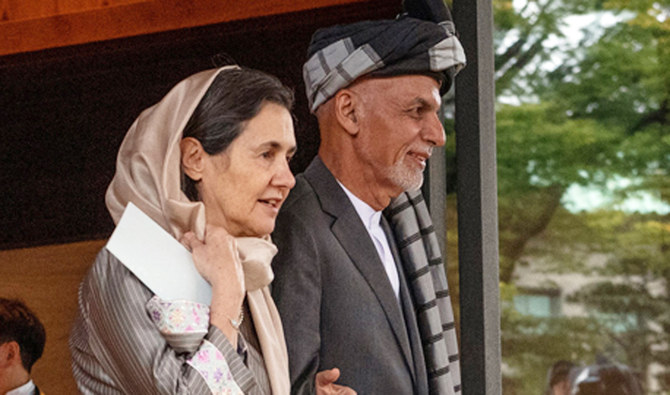
(To the First Lady): If I may share a lighthearted moment—yesterday I was speaking with Stanekzai Sahib and Atmar Sahib. I thanked them because, long before International Women’s Day was officially declared, my wife and I were married on March 8th. It was our 41st anniversary. I thank her from the bottom of my heart, for she taught me the praxis of equality and the shared role of men and women. I hope my colleagues foster the same environment in our administration.
When we emphasize the role of women, we are echoing the Holy Quran and the Hadith. To whom is the Quran addressed? To Insan (Humanity) or Naas (People). The American Constitution and the French Declaration spoke of the equality of "men," and it took centuries for women to gain the right to vote or own property. Islam, however, emphasized the Human. I have searched the Sahih Bukhari and Muslim repeatedly for a distinction in human value and found none.
We respect women as mothers, sisters, and wives, but that is a secondary role. We cannot reduce a woman solely to these labels. Respect in this society occurs only when you first recognize her as a Woman. If you mention mothers and sisters, you must simultaneously mention fathers and brothers. Why do we not speak of the men in the same breath? This is a serious point; we must look at both sides.
The Afghan Constitution is far richer than the Universal Declaration of Human Rights. Why? Because of two pillars: First, every obligation in our Constitution has a specific executive mechanism—the Afghan State. Article 3 of our Constitution is rooted in the sacred religion of Islam.
Our problem lies in our understanding. There is no nation more devout than ours. I say this not because I am an Afghan or your President, but show me another people who have given 1.5 million martyrs for their faith? Every family has been scarred. When I was a student in America, every male member of my family was imprisoned for eighteen months. My uncle, General Shahpur Khan, was martyred, and we could never find his body. Every family is scarred, yet every family is a family of pride, knowing they sacrificed for Islam and for the love of this homeland. Our problem is that forty years of pain and sorrow have replaced Islamic principles with outdated customs.
Violence against women has no place in Islam. One of the Surahs in the Quran is Al-Mujadila (The Pleading Woman). It was named after a woman, Khawla, who questioned the Prophet ﷺ about her rights. When Umar Farooq was Caliph, he would stand in her presence out of respect, saying: "God heard her voice from the heavens; how could I not hear it on earth?"
Therefore, it is essential that we understand our faith. I am grateful for the initiative of women’s organizations and the Ulema. Their recent resolution provides a roadmap. Over the next six weeks, I will conduct nationwide consultations with women’s groups and scholars. Following this, I will convene a joint session of all three branches of government to create a functional map to eliminate violence.
We inherited a difficult legacy: 41% of our people live below the poverty line, surviving on $1.25 a day. Eradicating poverty is a primary goal because without economic security, dignity cannot be fully sustained. But violence is a phenomenon that threatens every woman—regardless of her wealth or status—and this must have no place in our culture.
I have said it before: If you educate a boy, you change a generation; if you educate a girl, you change five generations. Look at my own life. My grandmother was forced into exile during the era of Abdur Rahman Khan. She was educated in India. Every day she read the Quran, but she also managed the schooling of her children and grandchildren. I am standing before you today because of her.
I have two biological children, and their upbringing is thanks to Bibi Gul (the First Lady). Mariam is the eldest, Tariq the youngest. Both are university professors. But I have 15 million other children—Afghan girls and boys—and I want every one of them to possess the qualities of Mariam and Tariq: self-reliance, purpose, and the ability to serve as human beings.
We will not celebrate this day just once a year; we will work on it every day. No matter how high the mountain, a human can reach the summit. If you need an example, look at our cricket and football teams. Afghan women must set high goals, just like them. As for your criticisms of the government—bring them. My patience is vast.
Long live Afghanistan!