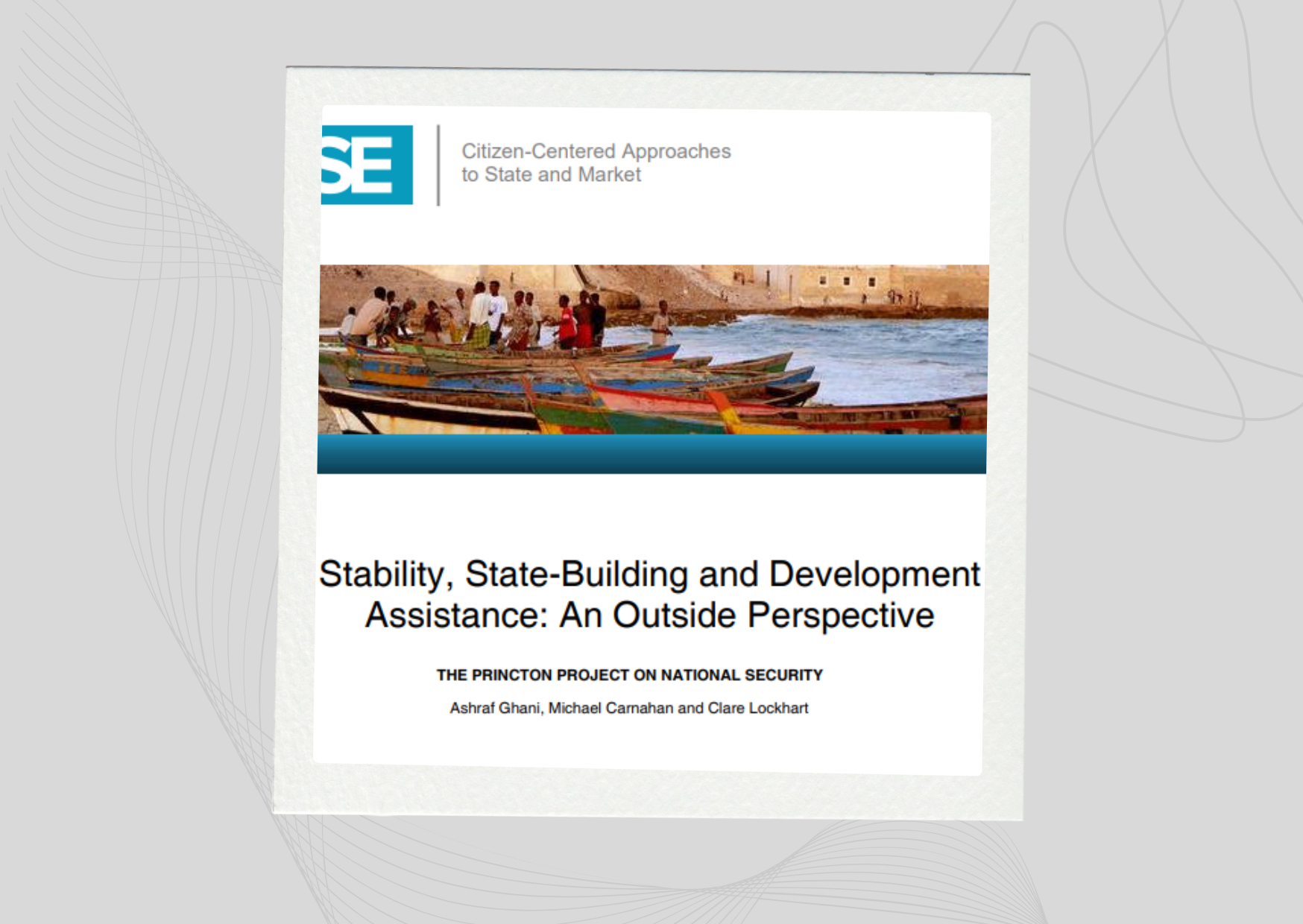
Stability, State-Building and Development Assistance: An Outside Perspective
This strategic paper, published in 2005, provides a critical "outside perspective" on the failures of the international aid system. It argues that the prevailing model of development assistance often undermines the very states it intends to help by creating parallel systems of governance and bypassing national institutions.
Core Objectives
-
The Problem of Parallel Governance: Critiquing how NGOs and international agencies create a "second civil service" that drains talent away from the national government, thereby weakening the state's capacity.
-
Defining Stability: Redefining stability not as the absence of war, but as the presence of effective institutions capable of managing conflict and providing predictable rules for the economy.
-
Alignment and Harmonization: Calling for development assistance to be aligned with national priorities. It argues that donors should move from fragmented projects to programmatic support that builds the state's central treasury and administrative systems.
-
The "Double Compact" Logic: Reaffirming that aid should be a tool for creating a contract between the state and its citizens, rather than a perpetual umbilical cord to international donors.