December 7, 2023
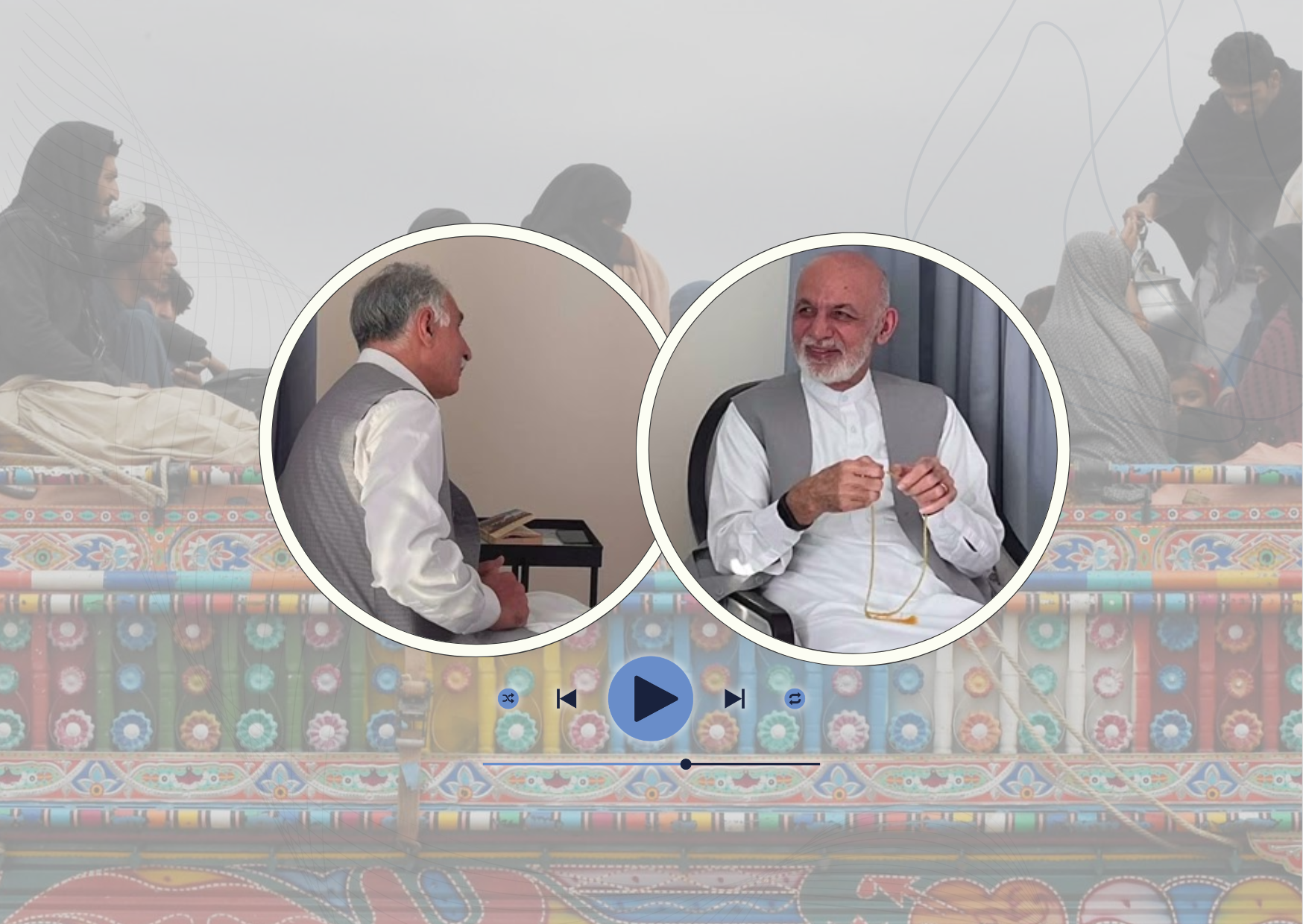
Episode 1: Afghan Refugee Crisis
The debut episode focuses on the migration crisis, specifically the mass expulsion of Afghans from Pakistan, framing it as a symptom of a lack of institutional planning and national consensus. Argues that addressing this burden requires a 9% annual economic growth rate over twenty years, driven by the country's "hidden treasures"—its mineral wealth, transit potential between Central and South Asia, and 70,000 MW of wind energy capacity. Ultimately, the discussion stresses that transitioning from a "buffer state" to a "land-linked hub" is only possible through internal political legitimacy, a formal economy, and a collective "national intellect" that prioritizes state-building over conflict.
Transcript
<h2 data-path-to-node="2"><strong data-path-to-node="2" data-index-in-node="0">I. The Core Thesis: Afghanistan 2047</strong></h2>
<p data-path-to-node="3">The podcast is introduced as a roadmap for the 300th anniversary of the modern Afghan state (founded in 1747). Ghani argues that Afghanistan must shift from a "reactive" state to a "visionary" one. He proposes that by <strong data-path-to-node="3" data-index-in-node="218">2047</strong>, Afghanistan should no longer be a "buffer state" or a site of "negative security," but a central hub of regional connectivity.</p>
<h2 data-path-to-node="4"><strong data-path-to-node="4" data-index-in-node="0">II. The Immediate Crisis: Forced Migration</strong></h2>
<p data-path-to-node="5">The discussion begins with the mass expulsion of nearly <strong data-path-to-node="5" data-index-in-node="56">1.7 million Afghans from Pakistan</strong> (and hundreds of thousands from Iran). Ghani identifies three layers to this crisis:</p>
<ul data-path-to-node="6">
<li>
<p data-path-to-node="6,0,0"><strong data-path-to-node="6,0,0" data-index-in-node="0">Political Injustice:</strong> He describes the expulsions as a violation of international law and a "political weapon" used by neighbors.</p>
</li>
<li>
<p data-path-to-node="6,1,0"><strong data-path-to-node="6,1,0" data-index-in-node="0">The "Sore Thumb" Strategy:</strong> He revisits his 2014 theory that neighbors use Afghan refugees as a "sore thumb" to press and weaken the Afghan state whenever they are displeased.</p>
</li>
<li>
<p data-path-to-node="6,2,0"><strong data-path-to-node="6,2,0" data-index-in-node="0">Institutional Failure:</strong> He laments the lack of a "unified national voice" and a clear management plan in Kabul to integrate these returnees.</p>
</li>
</ul>
<h2 data-path-to-node="7"><strong data-path-to-node="7" data-index-in-node="0">III. The Economic Blueprint: The 9% Growth Target</strong></h2>
<p data-path-to-node="8">Ghani asserts that for Afghanistan to absorb millions of returnees and lift its population out of poverty, it requires a <strong data-path-to-node="8" data-index-in-node="121">9% annual GDP growth rate for the next 20 years</strong>. He justifies this ambitious figure based on:</p>
<ul data-path-to-node="9">
<li>
<p data-path-to-node="9,0,0"><strong data-path-to-node="9,0,0" data-index-in-node="0">The 2004 "Securing Afghanistan’s Future" Study:</strong> A reminder of past research showing that 240 billion dollars in damage was done over decades, requiring massive sustained growth to repair.</p>
</li>
<li>
<p data-path-to-node="9,1,0"><strong data-path-to-node="9,1,0" data-index-in-node="0">Hidden Treasures (The "Assets"):</strong></p>
<ul data-path-to-node="9,1,1">
<li>
<p data-path-to-node="9,1,1,0,0"><strong data-path-to-node="9,1,1,0,0" data-index-in-node="0">Mineral Wealth:</strong> Moving from raw extraction to value-added processing.</p>
</li>
<li>
<p data-path-to-node="9,1,1,1,0"><strong data-path-to-node="9,1,1,1,0" data-index-in-node="0">Wind & Solar:</strong> Highlighting the <strong data-path-to-node="9,1,1,1,0" data-index-in-node="31">70,000 MW wind energy potential</strong> in the western corridors.</p>
</li>
<li>
<p data-path-to-node="9,1,1,2,0"><strong data-path-to-node="9,1,1,2,0" data-index-in-node="0">Transit:</strong> Utilizing Afghanistan's geography as the "roundabout" of Asia.</p>
</li>
</ul>
</li>
<li>
<p data-path-to-node="9,2,0"><strong data-path-to-node="9,2,0" data-index-in-node="0">The "National Intellect":</strong> Ghani calls for the "release of the captive mind," arguing that Afghanistan's greatest resource is its collective intellect, which is currently suppressed or exiled.</p>
</li>
</ul>
<h2 data-path-to-node="10"><strong data-path-to-node="10" data-index-in-node="0">IV. The Concept of "Positive Security"</strong></h2>
<p data-path-to-node="11">Ghani makes a critical distinction between the current <strong data-path-to-node="11" data-index-in-node="55">"negative security"</strong> (the absence of active war) and <strong data-path-to-node="11" data-index-in-node="107">"positive security"</strong>:</p>
<ul data-path-to-node="12">
<li>
<p data-path-to-node="12,0,0"><strong data-path-to-node="12,0,0" data-index-in-node="0">Five Pillars of Security:</strong> In Islamic philosophy, security includes the protection of life, property, religion, lineage, and <strong data-path-to-node="12,0,0" data-index-in-node="124">intellect (Aql)</strong>.</p>
</li>
<li>
<p data-path-to-node="12,1,0"><strong data-path-to-node="12,1,0" data-index-in-node="0">The "Captive Mind":</strong> He argues that a country where half the population (women) cannot work or learn, and where the "national intellect" is not consulted, is not truly secure.</p>
</li>
</ul>
<h2 data-path-to-node="13"><strong data-path-to-node="13" data-index-in-node="0">V. Personal Reflection: The "Migrant Heart"</strong></h2>
<p data-path-to-node="14">In a rare personal moment, Ghani shares his experience of being an exile in 1977.</p>
<ul data-path-to-node="15">
<li>
<p data-path-to-node="15,0,0"><strong data-path-to-node="15,0,0" data-index-in-node="0">The Trauma of Silence:</strong> He recalls the months of not knowing if his family in Pul-e-Charkhi prison were alive or dead, and how he "earned his own bread" through academia rather than aid.</p>
</li>
<li>
<p data-path-to-node="15,1,0"><strong data-path-to-node="15,1,0" data-index-in-node="0">The Call to Action:</strong> He emphasizes that "no one leaves their home by choice," and the only way to end the cycle of migration is to create a country where "every valley has the signs of our prosperity."</p>
</li>
</ul>
<hr data-path-to-node="16">
<h3 data-path-to-node="17"><strong data-path-to-node="17" data-index-in-node="0">Key Takeaway</strong></h3>
<p data-path-to-node="18">The podcast serves as an academic appeal for <strong data-path-to-node="18" data-index-in-node="45">National Consensus</strong>. Ghani’s message is that regardless of who is in power, the <strong data-path-to-node="18" data-index-in-node="124">technical and economic prerequisites</strong> for a stable Afghanistan remain the same: internal legitimacy, regional cooperation, and a transition to a formal, growth-oriented economy.</p>
<p data-path-to-node="3">The podcast is introduced as a roadmap for the 300th anniversary of the modern Afghan state (founded in 1747). Ghani argues that Afghanistan must shift from a "reactive" state to a "visionary" one. He proposes that by <strong data-path-to-node="3" data-index-in-node="218">2047</strong>, Afghanistan should no longer be a "buffer state" or a site of "negative security," but a central hub of regional connectivity.</p>
<h2 data-path-to-node="4"><strong data-path-to-node="4" data-index-in-node="0">II. The Immediate Crisis: Forced Migration</strong></h2>
<p data-path-to-node="5">The discussion begins with the mass expulsion of nearly <strong data-path-to-node="5" data-index-in-node="56">1.7 million Afghans from Pakistan</strong> (and hundreds of thousands from Iran). Ghani identifies three layers to this crisis:</p>
<ul data-path-to-node="6">
<li>
<p data-path-to-node="6,0,0"><strong data-path-to-node="6,0,0" data-index-in-node="0">Political Injustice:</strong> He describes the expulsions as a violation of international law and a "political weapon" used by neighbors.</p>
</li>
<li>
<p data-path-to-node="6,1,0"><strong data-path-to-node="6,1,0" data-index-in-node="0">The "Sore Thumb" Strategy:</strong> He revisits his 2014 theory that neighbors use Afghan refugees as a "sore thumb" to press and weaken the Afghan state whenever they are displeased.</p>
</li>
<li>
<p data-path-to-node="6,2,0"><strong data-path-to-node="6,2,0" data-index-in-node="0">Institutional Failure:</strong> He laments the lack of a "unified national voice" and a clear management plan in Kabul to integrate these returnees.</p>
</li>
</ul>
<h2 data-path-to-node="7"><strong data-path-to-node="7" data-index-in-node="0">III. The Economic Blueprint: The 9% Growth Target</strong></h2>
<p data-path-to-node="8">Ghani asserts that for Afghanistan to absorb millions of returnees and lift its population out of poverty, it requires a <strong data-path-to-node="8" data-index-in-node="121">9% annual GDP growth rate for the next 20 years</strong>. He justifies this ambitious figure based on:</p>
<ul data-path-to-node="9">
<li>
<p data-path-to-node="9,0,0"><strong data-path-to-node="9,0,0" data-index-in-node="0">The 2004 "Securing Afghanistan’s Future" Study:</strong> A reminder of past research showing that 240 billion dollars in damage was done over decades, requiring massive sustained growth to repair.</p>
</li>
<li>
<p data-path-to-node="9,1,0"><strong data-path-to-node="9,1,0" data-index-in-node="0">Hidden Treasures (The "Assets"):</strong></p>
<ul data-path-to-node="9,1,1">
<li>
<p data-path-to-node="9,1,1,0,0"><strong data-path-to-node="9,1,1,0,0" data-index-in-node="0">Mineral Wealth:</strong> Moving from raw extraction to value-added processing.</p>
</li>
<li>
<p data-path-to-node="9,1,1,1,0"><strong data-path-to-node="9,1,1,1,0" data-index-in-node="0">Wind & Solar:</strong> Highlighting the <strong data-path-to-node="9,1,1,1,0" data-index-in-node="31">70,000 MW wind energy potential</strong> in the western corridors.</p>
</li>
<li>
<p data-path-to-node="9,1,1,2,0"><strong data-path-to-node="9,1,1,2,0" data-index-in-node="0">Transit:</strong> Utilizing Afghanistan's geography as the "roundabout" of Asia.</p>
</li>
</ul>
</li>
<li>
<p data-path-to-node="9,2,0"><strong data-path-to-node="9,2,0" data-index-in-node="0">The "National Intellect":</strong> Ghani calls for the "release of the captive mind," arguing that Afghanistan's greatest resource is its collective intellect, which is currently suppressed or exiled.</p>
</li>
</ul>
<h2 data-path-to-node="10"><strong data-path-to-node="10" data-index-in-node="0">IV. The Concept of "Positive Security"</strong></h2>
<p data-path-to-node="11">Ghani makes a critical distinction between the current <strong data-path-to-node="11" data-index-in-node="55">"negative security"</strong> (the absence of active war) and <strong data-path-to-node="11" data-index-in-node="107">"positive security"</strong>:</p>
<ul data-path-to-node="12">
<li>
<p data-path-to-node="12,0,0"><strong data-path-to-node="12,0,0" data-index-in-node="0">Five Pillars of Security:</strong> In Islamic philosophy, security includes the protection of life, property, religion, lineage, and <strong data-path-to-node="12,0,0" data-index-in-node="124">intellect (Aql)</strong>.</p>
</li>
<li>
<p data-path-to-node="12,1,0"><strong data-path-to-node="12,1,0" data-index-in-node="0">The "Captive Mind":</strong> He argues that a country where half the population (women) cannot work or learn, and where the "national intellect" is not consulted, is not truly secure.</p>
</li>
</ul>
<h2 data-path-to-node="13"><strong data-path-to-node="13" data-index-in-node="0">V. Personal Reflection: The "Migrant Heart"</strong></h2>
<p data-path-to-node="14">In a rare personal moment, Ghani shares his experience of being an exile in 1977.</p>
<ul data-path-to-node="15">
<li>
<p data-path-to-node="15,0,0"><strong data-path-to-node="15,0,0" data-index-in-node="0">The Trauma of Silence:</strong> He recalls the months of not knowing if his family in Pul-e-Charkhi prison were alive or dead, and how he "earned his own bread" through academia rather than aid.</p>
</li>
<li>
<p data-path-to-node="15,1,0"><strong data-path-to-node="15,1,0" data-index-in-node="0">The Call to Action:</strong> He emphasizes that "no one leaves their home by choice," and the only way to end the cycle of migration is to create a country where "every valley has the signs of our prosperity."</p>
</li>
</ul>
<hr data-path-to-node="16">
<h3 data-path-to-node="17"><strong data-path-to-node="17" data-index-in-node="0">Key Takeaway</strong></h3>
<p data-path-to-node="18">The podcast serves as an academic appeal for <strong data-path-to-node="18" data-index-in-node="45">National Consensus</strong>. Ghani’s message is that regardless of who is in power, the <strong data-path-to-node="18" data-index-in-node="124">technical and economic prerequisites</strong> for a stable Afghanistan remain the same: internal legitimacy, regional cooperation, and a transition to a formal, growth-oriented economy.</p>
Additional Resources
📄
Download →
📄
Download →
📄
Download →
📄
Download →
📄
Download →
What is the exact number of Afghans in Iran?
Just how badly does the KP police treat Afghan refugees?
SOCIETY: THE AMBIVALENCE AROUND AFGHANS
CORE Pakistan-Afghanistan Returns Emergency Response 01 Dec 2023
AFG BM Report - 01 Jan - 30 June 2023 UNHCR AFGHANISTAN