Afghanistan 2047
A vision for a stable, prosperous and dignified Afghanistan
Path of Life
 Latest Episode
Episode 46: First Anglo-Afghan War
This episode examines the causes, course, and consequences of the First Anglo-Afghan War within the broader crisis of political fragmentation in nineteenth-century Afghanistan. It explores British strategic objectives in Central Asia, the restoration of Shah Shuja, the collapse of resistance in key cities, the role of popular uprisings, and the eventual British defeat and withdrawal. The discussion also reflects on the restoration of Dost Mohammad Khan, the internal struggles that followed, and the shifting geopolitical tensions that set the stage for renewed confrontation later in the century.
Episode 45: Lessons of Disintegration
This episode explores the deepening political fragmentation of Afghanistan following the death of Timur Shah Durrani, focusing on elite rivalries, the rise of the Barakzai (Payenda Khel) brothers, and the gradual collapse of centralized authority. It examines how internal power struggles, disputed succession, economic decline, and shifting regional dynamics—amid expanding British, Russian, Qajar, and Sikh influence—reshaped the country during the nineteenth century. At the same time, it highlights the resilience of popular unity in moments of foreign invasion and reflects on the long-term lessons of governance, justice, and national cohesion.
Episode 44: The Dissipation of Afghan State (Empire)
This episode explores the rise and gradual fragmentation of the Durrani Empire after the death of its founder, Ahmad Shah Durrani. It examines the reign of Timur Shah Durrani, the transfer of the capital from Kandahar to Kabul, and the growing rivalries among royal heirs that weakened central authority. The discussion highlights the absence of clear succession laws, tensions between the Sadozai and the Barakzai branches of the ruling elite, mounting economic pressures, and the broader regional dynamics involving Qajar Persia, the Sikh Empire, and the British—offering historical lessons on governance, unity, and the consequences of political fragmentation.
Episode 43: Establishment of Modern Afghan State
In this episode, we explore the 300-year history of modern Afghanistan, tracing its origins from the rise of Ahmad Shah Durrani in 1747. The discussion examines the political, military, and cultural foundations of the Durrani Empire, the challenges of succession, and the role of key figures and tribes in shaping the state. Through historical context, including earlier periods under Mirwais Khan Hotak and the interventions of Nader Shah Afshar, the episode highlights how Afghanistan’s early modern state was established, its governance systems, economic structures, and diplomatic relations, offering lessons on unity, leadership, and state-building for contemporary audiences.
Episode 42: Afghanistan Ports (Part II)
In this episode, the podcast explores Afghanistan’s ports and trade corridors, focusing on their history, challenges, and developments from the late 20th century through the post-Soviet and Taliban eras. It examines how decades of conflict, warlord dominance, and political instability disrupted customs, trade routes, and port operations. The discussion also highlights efforts to centralize customs, modernize port infrastructure, improve regional transit, and integrate Afghanistan into international trade networks, emphasizing both historical setbacks and long-term plans to strengthen the country’s economic position and strategic connectivity by 2047.
Episode 41: Afghanistan Ports (Part I)
The episode explores Afghanistan’s historical and contemporary trade networks, focusing on the development of its ports and transport routes. It examines how Afghanistan connected Central Asia, India, and beyond through caravan routes and early ports under Ahmad Shah Durrani, the role of banking and barter systems, and the impact of 19th-century railroads introduced by the British and Russians. It also discusses how the Durand Line, Soviet influence in the north, and modern infrastructure projects reshaped trade, creating both formal and informal ports, affecting the country’s economic access and regional connectivity over time.
Episode 40: Aviation (Part II)
This episode explores Afghanistan’s aviation sector, detailing its post-2001 recovery after air infrastructure destruction, the gradual revival of Ariana Airlines, and the establishment of international air corridors to India, China, and the UAE to boost exports. It highlights significant female participation in civil and military aviation, the importance of combining technical capacity with trained personnel and transparent management, and Afghanistan’s strategic location as a regional hub. The discussion also emphasizes long-term planning toward 2047, focusing on neutrality, national cohesion, and adapting to technological and global changes.
Episode 39: Aviation (Part I)
This episode explores the rich history and development of aviation in Afghanistan, from its early military use with balloons and initial aircraft in the early 20th century to the training of the country’s first pilots and the construction of airfields under King Amanullah Khan. It highlights the creation of the Royal Afghan Air Force, the founding of Ariana Afghan Airlines, and the development of domestic carriers like Bakhtar Afghan Airlines, alongside the strategic significance of major hubs such as Kandahar International Airport, Bagram Airfield, and Kabul International Airport. T
Episode 38: Roads and Highways (Part II)
This episode explores the history and development of roads in Afghanistan, from ancient royal highways and trade routes to modern motorways. It highlights how the country’s rugged geography, rivers, and mountain passes shaped travel and trade, while rulers and foreign powers influenced construction and maintenance. We also examine the role of roads in national unity, economic growth, and regional connectivity, tracing how infrastructure has evolved over centuries to meet Afghanistan’s changing needs.
Episode 37: Roads and Highways (Part I)
This episode explores the evolution of roads from ancient times to the modern era. It covers early trade routes, including the Silk Road, and highlights how rulers like Emperor Sher Shah Suri and Emperor Akbar shaped road networks for trade, military, and administration—most notably the Grand Trunk Road. The discussion moves to technological innovations such as asphalt, concrete, and modern machinery that revolutionized road construction, as well as the role of highways in connecting cities and shaping communities. It also examines social, cultural, and environmental impacts, challenges like land acquisition, and the shift toward sustainable infrastructure, including electric vehicles.
Episode 36: Telecommunications (Part II)
This discussion outlines Afghanistan’s communications journey from early caravan and signal systems to the telegraph and telephone under Amir Sher Ali Khan and Amir Habibullah Khan, modernization under King Amanullah Khan and King Mohammad Zahir Shah, and later reforms during the presidencies of Sardar Mohammad Daoud Khan and Dr. Mohammad Najibullah. It highlights the post-2001 mobile and fiber expansion, regulatory and cybersecurity challenges, digital misinformation, satellite and regional integration, and a long-term vision for advanced e-governance and digital connectivity by 2047.
Episode 35: Telecommunications (Part I)
This episode explores the evolution of communication technologies—from early signaling methods to the telegraph, telephone, radio, and today’s internet—and how each stage transformed society, governance, and journalism. It also examines the opportunities and risks of the digital age, including global connectivity, cyber threats, and disinformation in an increasingly interconnected world.
Episode 34: Electricity (Part II)
This podcast continues our exploration of electricity in Afghanistan, delving into energy production, transmission, and distribution. We discuss various power sources—hydro, solar, wind, gas, and diesel—along with the history of both large and small-scale projects. The episode also examines connecting urban and rural areas, building a national energy network, and managing resources efficiently, while considering climate change, environmental impacts, and long-term national and regional development.
Episode 33: Electricity (Part I)
This episode traces Afghanistan’s electrification from the first hydroelectric projects under Amir Habibullah Khan to the strategic expansions of the Daoud Khan era. The discussion analyzes challenges in production and transmission, the role of foreign investment, and the energy gap between urban and rural areas. By examining the rise of industries like textiles and sugar, the episode highlights Afghanistan’s potential as a regional energy hub while emphasizing lessons in sustainable planning and local capacity building.
Episode 32: Railway Network
This episode traces the history of Afghanistan’s railway development, from the early conceptual attempts under Amir Abdur Rahman Khan and King Amanullah Khan to President Daoud Khan’s strategic plans aimed at linking the nation's mineral wealth and trade routes with neighboring countries. The discussion covers modern northern railway projects—such as the Hairatan, Aqina, and Torghundi links—while addressing the technical, economic, and management challenges inherent in large-scale infrastructure. It highlights how a robust railway network reduces transport costs, boosts international trade, facilitates resource extraction, and strengthens national unity by providing vital connectivity to remote regions.
Episode 31: Infrastructure and Utilities
This episode delves into the development of Afghanistan’s infrastructure, tracing its evolution from ancient times to the modern era. It covers early irrigation and water management systems, organized agricultural practices, urban planning, and city defenses, as well as trade routes that connected regions long before the Silk Road. The discussion also explores engineering innovations in construction and resource extraction, the role of animals and transport methods, and the gradual emergence of modern infrastructure such as railways in the 19th and 20th centuries, highlighting how these systems shaped social, economic, and cultural life.

Episode 30: Mosques and Waqfs
This episode centers on the construction of new mosques and the restoration of historic ones in Afghanistan during the Republic era, despite ongoing conflicts and financial constraints. The discussion examines why mosque-building was prioritized, how architectural designs drew from traditional Timurid and regional styles, and how provisions were made for women’s participation. It also addresses the preservation of major historic mosques such as Eidgah Mosque and the Great Mosque of Herat, the management of religious endowments (awqaf), and the broader cultural and national significance of mosques as centers of faith, community
Episode 29: Historical Overview of Kabul City (Part II)
This episode explores Kabul’s transformation, focusing on the restoration of historic landmarks like Darul Aman Palace, Shah-Do Shamshira Mosque, Bala Hissar, and key gardens, alongside reviving green spaces such as Bagh-e Alam Ganj and Bagh-e Babur. It highlights urban planning efforts to reconnect the city through corridors, pedestrian paths, and cultural hubs, integrating historical architecture with modern functionality. The discussion also covers water management, restoration of historical streams and reservoirs, and creating inclusive public spaces for recreation and cultural engagement.
Episode 28: Historical Overview of Kabul City (Part I)
This episode examines the historical evolution and contemporary challenges of Kabul, from its ancient roots as a crossroads of civilizations to its role as a modern capital. The discussion highlights rapid urban growth, infrastructure pressures, water and environmental concerns, and governance challenges, while presenting a long-term vision for sustainable development and preservation of the city’s cultural heritage.
Episode 27: Strategic Plans for Five Major Cities
This episode explores the strategic development plans designed for five major Afghan cities—Mazar-e-Sharif, Herat, Kandahar, Khost, and Jalalabad. The discussion outlines a long-term vision to transform these urban centers into modern, well-planned cities aligned with the demands of the 21st century, while preserving their historical identity and cultural heritage. Key themes include infrastructure development, water and environmental management, job creation, urban governance, transit connectivity, and the role of private investment. The episode also addresses funding strategies, implementation challenges, and how these plans aimed to position the cities as economic, cultural, and regional transit hubs.
Episode 26: Our Cities (An Overview)
This episode focuses on the challenges and future of urban development in Afghanistan. The discussion examines rapid urban expansion, unplanned settlements, land disputes, water shortages, weak municipal services, and overcentralization in Kabul. It argues for moving beyond rigid master plans toward a flexible strategic urban framework that promotes balanced regional growth, economic zoning, infrastructure development, affordable housing, and stronger links between cities and rural areas. The episode also highlights the importance of preserving cultural heritage as a foundation for national identity, tourism, and sustainable economic development.
Episode 25: Urban Civilization (Part II)
This podcast explores Afghanistan’s urban history, from the Buddhist and Gandhara periods to Islamic civilization. It highlights key sites like Bamiyan, Bagram, and Sajjawand as centers of religion, art, and learning, and traces the spread of Buddhist culture across Asia. Later, it examines city growth, architecture, and trade under local dynasties, including the Ghaznavids and Ghurids. The discussion further covers urban development during the Timurid and Durrani eras, focusing on how citadels, royal gardens, and systematic city planning have shaped Afghanistan’s historical and modern urban identity.
Episode 24: Urban Civilization (Part 1)
This podcast explores the history of urban civilization in Afghanistan, tracing the development of cities from ancient times. It covers the Zoroastrian, Hellenistic-Bactrian, and Buddhist periods, explaining how cities were planned around water, trade, agriculture, and defense. It also discusses trade routes like the Silk Road, cultural exchanges, architecture, governance, and the connections between cities across the region over thousands of years.
Episode 23: Trade and Industry (Part II)
The podcast emphasizes Afghanistan’s trade with neighbors and global markets, highlighting historical roots and figures like Zabuli. Success depends on understanding value chains, ensuring quality, reliable logistics, and certifications. Human capital, professional skills, and strategic planning are key to integrating Afghanistan into regional and global trade and building a sustainable, export-oriented economy.
Episode 22: Trade and Industry (Part I)
In this episode, the discussion focuses on Afghanistan’s rich history of trade and commerce, from its ancient role on the Silk Road to modern efforts at building a strong export-oriented economy. The conversation highlights pioneering initiatives in banking, industrialization, and human capital development, while examining the challenges posed by war, political conflicts, and global economic shifts. Drawing inspiration from international examples like Japan, South Korea, and Singapore, the episode explores Afghanistan’s untapped potential and the strategies necessary for sustainable economic growth and regional trade integration.
Episode 21: Human Capital (Part II)
This podcast episode delves into human capital and its vital role in shaping a nation’s future. It examines the historical development of modern education, the evolution of access for girls and boys, and the balance between rights and responsibilities in learning. The discussion highlights the importance of professional and technical education, the role of teachers, and the integration of values, technology, and institutions to build a skilled and capable society. It also addresses challenges in curriculum design, school infrastructure, and equitable access, offering insights on how to strengthen human capital for sustainable growth and national development.
Episode 20: Human Capital (Part I)
This episode explores the concept of human capital, focusing on how personal qualities, knowledge, experience, and technical skills shape individuals and society. It examines the role of education, practical experience, and cultural values in fostering long-term development, emphasizing the balance between local traditions and global knowledge.
Episode 19: Civilization Capital (Part II)
This episode continues the discussion on civilizational capital by examining the development of Islamic jurisprudence, intellectual traditions, and political thought. It reflects on the influence of major scholars such as Imam Abu Hanifa and Ibn Taymiyyah, and connects their ideas to institutional reform, education, and governance in Afghanistan. The episode emphasizes that understanding this intellectual legacy is essential for shaping a confident and forward-looking future.
Episode 18: Civilization Capital (Part I)
This discussion explores the concept of civilizational wealth, highlighting how knowledge, faith, culture, and intellectual exchange shaped a vibrant and influential Islamic civilization, particularly in the region of historic Khurasan. It examines the foundations of scientific, philosophical, and educational achievements, emphasizing that lasting progress emerged from strong institutions, scholarly networks, and a deep commitment to learning. Ultimately, it presents this heritage as a source of insight and inspiration for building a confident, knowledge-based future.
Episode 17: Information Technology (Part II)
This episode explores the role of information technology in strengthening governance and public services in Afghanistan. It highlights digital identity systems, e-governance platforms, and electronic payments, while examining challenges such as weak infrastructure and limited technical capacity. The discussion emphasizes that digital transformation is not just about technology, but about improving transparency, efficiency, and long-term national development.
Episode 16: Information Technology (Part I)
This episode examines how digital transformation can strengthen governance, transparency, and economic growth in Afghanistan. It explores the development of e-governance, digital identity systems, electronic payments, and integrated public databases, while addressing challenges such as weak infrastructure, limited technical capacity, and institutional resistance. The discussion highlights how technology—when combined with accountability and strategic planning—can reduce corruption, improve public services, and support long-term national development.
Episode 15: Natural Resources (Part II)
This episode continues the discussion on Afghanistan’s natural resources by examining the deeper structural, economic, and governance challenges that determine whether mineral wealth becomes a source of prosperity or instability. It explores global lessons from countries that successfully managed their resources, as well as those that struggled due to corruption, weak institutions, and conflict. The episode highlights the importance of infrastructure, transparent contracts, technical expertise, environmental responsibility, and national unity in transforming underground wealth into sustainable development. Ultimately, it emphasizes that natural resources alone do not guarantee progress—strong institutions, strategic planning, and accountability are essential for long-term national growth.
Episode 14: Natural Resources (Part I)
This episode explores Afghanistan’s vast underground resources, including minerals, oil, and gas, and examines their historical discovery, geological significance, and economic potential. It discusses the importance of scientific geological surveys, transparent contracts, and strong national expertise in managing these resources responsibly. The conversation highlights global lessons—how natural wealth can either fuel prosperity or cause instability—and emphasizes that Afghanistan’s mineral resources must be developed with long-term vision, accountability, and benefit for future generations.

Episode 13: Forests (Part II)
This episode explores Afghanistan’s forests and pastures, highlighting their environmental, economic, and cultural importance. It examines the damage caused by deforestation and unsustainable practices, and discusses strategies for restoration, including lessons from global reforestation efforts. The program also emphasizes the value of local initiatives, sustainable use of forest products like pine nuts and wild fruits, biodiversity conservation, and the role of communities in protecting and managing these natural resources for future generations.
Episode 12: Forests (Part I)
This episode explores the forests and pastures of Afghanistan, one of the country’s most valuable natural resources. It explains the history, current condition, and challenges facing these landscapes, including deforestation, climate impacts, and sustainable management. Listeners will learn about the ecological, economic, and cultural importance of forests and pastures, as well as how local communities contribute to their protection and restoration.
Episode 11: Water (Part II)
This podcast offers an in-depth discussion on Afghanistan’s water resources, the impacts of climate change, water management challenges in agriculture and industry, and the legal and political dimensions of shared rivers with neighboring countries. It highlights the importance of international agreements, scientific management, and public participation, while exploring how Afghanistan can transform water from a source of tension into a foundation for regional cooperation and sustainable development.
Episode 10: Water (Part I)
This podcast identifies water management as a strategic priority for national survival and economic growth. It categorizes the country into five major river basins—Kabul, Panj-Amu, Northern, Harirod-Murghab, and Helmand—while warning that climate change and unmanaged deep-well drilling are depleting vital groundwater. The discussion advocates for modern technical data over folklore-based planning, emphasizing natural, soil-based engineering and reforestation for flood control. Ultimately, it stresses that securing water rights through international treaties and technical capacity is essential to ensure regional stability and national prosperity.
Episode 9: Our Location (Part II)
This podcast discusses transforming Afghanistan from a landlocked nation into a regional connectivity hub within a rising Asian economy. It emphasizes that the country’s geography offers immense potential for green energy production (solar, wind, and hydro) and the transit of minerals and power between Central and South Asia. However this "heart of Asia" potential can only be realized through political legitimacy, national stability, and a formal economy, noting that without these, Afghanistan faces international isolation while neighboring countries develop alternative corridors.
Episode 8: Our Location
In Episode 8, we explore Afghanistan’s strategic significance as the "fleshy heart of Asia," examining how its unique geography can once again serve as a vital economic bridge between the East, West, Central, and South. By moving from regional confrontation toward shared economic collaboration, we discuss how the nation can reclaim its historic role as Asia’s indispensable transit artery in today’s rapidly evolving global market.
Episode 7: Drought
This episode examines the critical and recurring threat of drought in Afghanistan. Following a winter of record-low snowfall and rising temperatures, the discussion moves beyond weather patterns to analyze drought as a fundamental challenge to national stability and economic survival. The conversation frames water management not just as a technical necessity, but as a core requirement for political legitimacy and state effectiveness. Key Discussion Points: Defining the Crisis: An exploration of the three dimensions of drought: the lack of precipitation, the depletion of surface water (rivers and springs), and the critical loss of moisture within the soil, which leads to the alarming drop in groundwater levels across major cities. Historical Impact and Legitimacy: A review of how major droughts have historically challenged the stability of governance in the region, emphasizing the urgent need for a shift from "emergency management" to long-term institutional planning. The Vulnerability of Agriculture and Livestock: A deep dive into the risks faced by the foundational pillars of the economy. The discussion highlights the devastating loss of rural assets, market volatility, and the erosion of food security during dry cycles. Strategic Trade and Food Security: The importance of "land-linked" trade corridors. It details how diversifying trade routes toward Central Asia (such as Kazakhstan and Uzbekistan) serves as a deliberate strategy to ensure a steady supply of grain and commodities when traditional borders are closed. Water Management as a National Asset: A case for the management of every drop of water. This includes the strategic importance of large-scale dams, modern irrigation networks, and community-led check dams to transform the country into a regional hub for agricultural production. The Global and Regional Dimension: Addressing the "sovereignty threat" posed by environmental degradation, including the illegal smuggling of timber and the lack of regional cooperation. The episode argues for a regional approach to climate adaptation to protect shared resources. Summary: This episode provides a comprehensive analysis of the "State Effectiveness" framework applied to climate change. It argues that while traditional and cultural responses to drought are significant, the primary responsibility of a functioning administration is to apply science, modern technology, and regional diplomacy to protect the livelihoods of the most vulnerable—the farmers, herders, and rural citizens who form the heart of the nation.

Episode 6: Economy
This episode analyzes Afghanistan’s economy through four lenses: the legal, informal, criminal, and network-based sectors. While formal trade has weakened, "black globalization"—driven by a multibillion-dollar narcotics trade—remains a powerful link to world markets. The discussion highlights the $9 billion in frozen reserves as a vital backbone for the national currency rather than a mere spending fund. By contrasting current "secret deals" in mining with past failed international promises, the episode argues that Afghanistan is "sitting on a diamond mine" of resources. To escape poverty, the nation must shift from predatory, fragmented economics to a unified vision that treats all national assets as the collective property of its citizens.

Episode 5: Poverty and our Wealth
This podcast episode analyzes Afghanistan's poverty as a crisis of severe food insecurity—affecting 22 provinces and millions of malnourished children—contrasted with the opportunity for an 8% growth rate. While the "path of gradual death" persists through a stagnant service sector and depleted savings, the "path of life" lies in transitioning to a production-based economy. By reintegrating the intellectual capital of returning professionals and leveraging regional trade, the nation can transform its current dependency into long-term self-sufficiency and national stability.
Episode 4: Opportunities and Crisis
This podcast episode analyzes the forced deportation of millions of Afghans as a dual reality: a humanitarian crisis and a missed economic opportunity. The crisis is defined by the potential loss of $20 billion in refugee assets and the legal hurdle of returning to a land where nearly a million hectares have been "usurped" by land-grabbing. Conversely, the opportunity lies in the return of a skilled workforce and the potential for a 8% growth rate driven by "Green Infrastructure." By adopting the Nakamura Method for low-cost irrigation and viewing every province as a "Small Afghanistan" that embraces ethnic diversity, the nation could transform this mass displacement into a catalyst for self-sufficiency and national unity.
Episode 3: Refugees and International Aids Until 2024
This podcast episode examines the strategic necessity of transitioning Afghanistan from a global security risk into a sustainable economic hub. It highlights the potential for "Green Infrastructure"—utilizing wind, solar, and water management—to create self-sufficiency and combat the illicit drug trade. Central to the discussion is the urgent need to address internal displacement caused by climate change and conflict, while emphasizing that national recovery is impossible without protecting the rights and economic agency of women, who serve as the primary managers of the family unit during times of crisis.
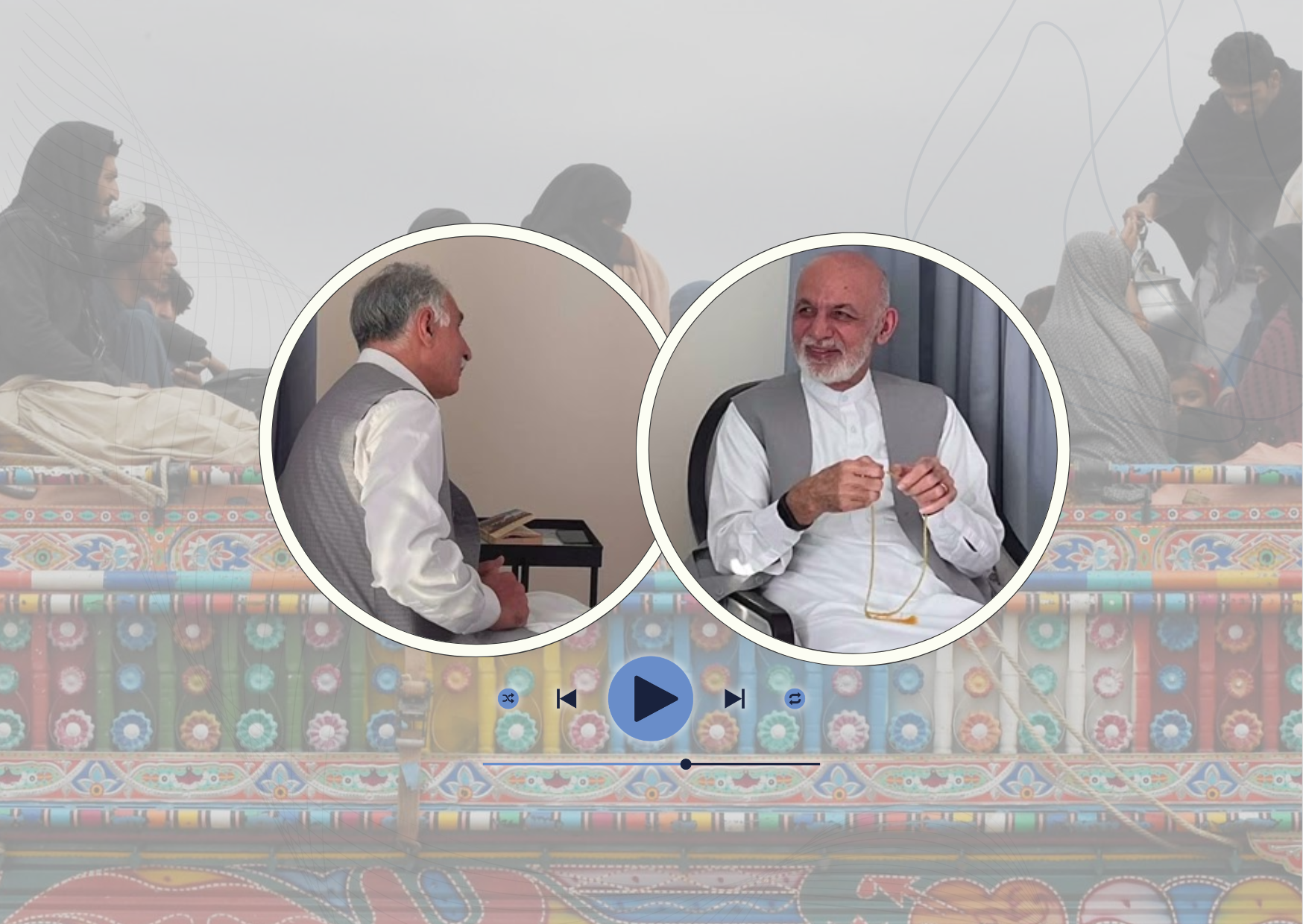
Episode 2: Returnees and its Challenges
This podcast episode analyzes the forced return of Afghan refugees from Pakistan, focusing on the complex task of reintegrating a generation that has lived its entire life in exile. It explores the legal challenges of property restitution, the preservation of linguistic identity, and the need for a national consensus to prevent social tension. By framing the crisis as a test of national solidarity, the discussion emphasizes that long-term stability depends on converting these returnees from a perceived burden into a productive force for economic development.
Episode 1: Afghan Refugee Crisis
The debut episode focuses on the migration crisis, specifically the mass expulsion of Afghans from Pakistan, framing it as a symptom of a lack of institutional planning and national consensus. Argues that addressing this burden requires a 9% annual economic growth rate over twenty years, driven by the country's "hidden treasures"—its mineral wealth, transit potential between Central and South Asia, and 70,000 MW of wind energy capacity. Ultimately, the discussion stresses that transitioning from a "buffer state" to a "land-linked hub" is only possible through internal political legitimacy, a formal economy, and a collective "national intellect" that prioritizes state-building over conflict.
Vision 2047 Movement
Join thousands of Afghans committed to building a better future