Afghanistan 21st Century: Cities of Opportunity and Unity
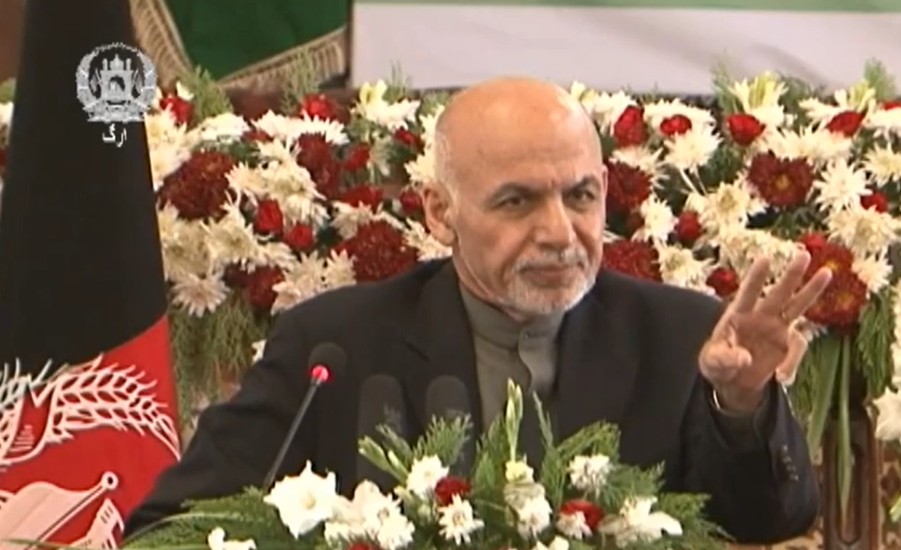
(Keynote Address at the 2nd National Urban Conference -Kabul, Afghanistan)
Keypoints:
- Citizen-Centered Housing: Secure legal housing; protect property rights; involve citizens in planning.
- Private Sector Engagement: Clear contracts, accountability, and active participation in urban projects.
- Civil Society Participation: Empower communities to improve neighborhoods and urban services.
- City-Rural Integration: Strengthen links between cities and surrounding rural areas; support local production.
- Infrastructure & Industry: Develop industrial parks, local manufacturing, and basic urban services.
- Economic Productivity: Transform cities from consumption hubs into engines of production.
- Governance & Leadership: Build capable, innovative mayors; ensure transparent, long-term urban policies.
- Cultural & Historical Preservation: Incorporate heritage and Islamic architecture into city development.
- Regional & International Cooperation: Promote cross-border trade, transit, and energy projects.
- Sustainability & Planning: Align urban development with social, environmental, and economic needs.
In the name of God, the Most Gracious, the Most Merciful.
We praise Him and send blessings upon His noble Messenger. Honorable Mr. Massoud, esteemed Professor Muhaqqiq, Honorable Dr. Homayoun Qayoumi, respected Cabinet members, Mr. Mayor, Acting Speaker of the National Assembly, distinguished members of the diplomatic corps, and honored guests: Peace be upon you, and God’s mercy and blessings.
The Voice of the Future: A Message from Afghanistan’s Children
The message of the children of Afghanistan reflects both the failures of our past and a roadmap for what must be done. Today, the children of Afghanistan are not satisfied with the state of our cities.
-
They tell us that they cannot breathe due to poor fuel quality.
-
They tell us that they cannot move freely because traffic systems remain inefficient.
-
They point out that land has been unlawfully seized around them, eroding confidence in property ownership.
-
They witness their parents, brothers, and sisters struggling with unemployment and poverty.
Yet, these children express a profound hope: they want Afghanistan to become a giver, not merely a recipient. Their message is clear, and we must listen: it is incumbent upon us—the current generations—to ask what we are doing for them and how we can serve as a bridge to a better future.
Defining Success: From Speeches to Actionable Agendas
What makes a conference successful? A conference is successful when it produces a concrete agenda for action. At the conclusion of these few days, my earnest request is that you deliver a coherent agenda for transforming Afghanistan’s cities, one that aligns:
-
Citizens,
-
The private sector,
-
Civil society,
-
And the state in a clear social compact.
A conference that produces only speeches, to be repeated next year, is not only ineffective but a waste of public resources and, above all, the time of our children.
The Crisis of Legality and Property Rights
The first point of emphasis is participation. Urban dynamism is generated by the people. According to systematic Habitat statistics derived from aerial surveys, Afghanistan has 962,467 housing units. This achievement reflects the collective labor, sweat, and determination of millions of Afghans. Yet, when seventy percent of these are unlawful, it starkly demonstrates the state’s failure.
Why should Afghan men and women, who strive to secure housing, live without legal protection? Therefore, a primary responsibility of the Land Administration—headed by Mr. Jowad Pekar—and the Independent Directorate of Local Governance is to ensure that property is reliable and legalized. Every Afghan, in accordance with the precepts of Islam and the Constitution, must be able to assert their civic right to property. Property is a fundamental right, enshrined in international human rights declarations, and must be safeguarded. I hope this matter is a central topic of your discussions and that concrete proposals will be presented.
Overcoming Corruption and Fostering Participation
What prevents progress? In the past, it was either insufficient capacity or lack of planning, but corruption remains a significant obstacle.
-
Urban land grabbing must end.
-
Seized lands must be recovered systematically and according to a plan, not haphazardly.
Yet, the most critical element is ensuring meaningful citizen participation. Without active public engagement, secure urban living cannot be achieved. International experience demonstrates that when property is unlawful or insecure, investment decreases dramatically, whereas secure property attracts greater investment. Security of housing is thus fundamental.
A few years ago, I conducted a group exercise at a university with around 400 participants, asking: “What is your property?” The overwhelming majority responded, “Our home.” In a project in Kheirkhana, families identified their neighborhood, streets, and city sections as their property, demonstrating a sense of communal ownership. Forty percent of the sidewalks there have been concreted. Each house has a number, each street a name, and lamps have been installed. During summer and autumn nights, children play safely in the streets, sharing in a spirit of communal solidarity. This is genuine cohesion and the model for building societal unity.
Engaging the Private Sector and Establishing Standards
The second point is the role of the private sector. I wish to express gratitude to Mr. Takal. In the first program, you were not present, but I informed the Minister that I must address critics as well as supporters. I have always welcomed constructive and critical engagement from civil society and the private sector.
In this conference, the private sector’s role in construction must be clarified. Both sides face challenges. The private sector must meet clear:
-
Standards,
-
Timelines,
-
And quality benchmarks.
Failure in past projects demonstrates the consequences of neglecting standards: costs rise, quality drops, and projects are delayed. I propose a unified, transparent contract framework. Government programs cannot succeed without private sector participation, but clear criteria and oversight must be established. With $3 billion in government bank accounts, funds are not utilized due to unclear contracting standards. Once companies are properly classified and contracts executed transparently, a fundamental challenge will be resolved.
Every 18 billion Afghanis spent effectively can produce a one percent increase in economic growth, directly improving the livelihoods of hundreds of thousands of citizens. I urge the private sector, civil society, and government to coordinate and maximize the impact of public consumption.
Localized Urban Policy and Cultural Heritage
Citizens and civil society must also identify the five major urban challenges in Kabul, Herat, Balkh, Bamiyan, Paktia, Gardez, and other cities. Urban policy must not be abstract; it must be directly connected to the lives of the people. We must learn from international experience while adapting solutions to Afghan culture, history, and context. How many constructions in Kabul reflect Islamic heritage? Despite billions spent, have we restored the architectural legacy of Qala-e-Akhtarlodin or other historical cities? These considerations must guide our urban planning.
Strengthening Urban-Rural Linkages and Local Industry
Afghanistan’s cities are historically centers of empire, trade, and transit. Balkh, Bagram, Baghlan, Herat, Kandahar, Gardez, Bamiyan, Nangarhar, and Ghor have all been major historical and cultural centers. Historically, cities and villages were closely connected; today, that connection is severely weakened. Afghanistan imports $4 billion in agricultural products annually, yet urban-rural linkages remain underdeveloped. Strengthening these connections is essential.
Industrial development is equally critical. Afghanistan possesses at least 40 varieties of marble, yet imports them. Local production, such as domestic pipe manufacturing, must be prioritized in government projects. Cities must evolve from engines of consumption into engines of production, generating sustainable economic activity.
The Role of Government and Municipal Governance
The government’s role is to facilitate, regulate, and partner with private and civil actors.
-
We will establish municipal construction centers in every district, ensuring coordinated development between government presence and private sector activity.
-
Land will be allocated systematically; urban maps prepared under Minister Nadri will align with the environment and local needs.
-
Municipalities will be connected to national networks, ensuring transportation, pricing, and production efficiency.
The selection of mayors is also crucial. The candidates for seven cities demonstrate technical capacity, international understanding, and deep local knowledge. They present innovative, actionable proposals capable of doubling municipal revenue in one year and tripling it in four years. We aim to create a network of competent, visionary mayors to fundamentally improve municipal governance.
International Cooperation and Holistic Development
Urban cohesion, as modeled in South Korea, will be applied to Afghanistan. Municipal networks will integrate cities and surrounding villages, fostering sustainable, long-term urban-rural synergy. Industrial parks and educational initiatives will be developed, with clear benchmarks for production and service delivery. Housing must be affordable, practical, and accessible. International support—from the United States, Japan, World Bank, Asian Development Bank, Switzerland, the EU, DFID, USAID, Australia, and neighboring countries—will complement national efforts.
Afghanistan’s cities are natural transit and trade hubs. Regional cooperation and projects such as CASA 1000 exemplify our commitment to integrated development. Urban development must be holistic, encompassing:
-
Housing,
-
Industry,
-
Infrastructure,
-
Governance,
-
Culture,
-
And economic productivity.
Conclusion and Gratitude
Finally, I extend my sincere gratitude to all organizers, participants, and international partners, particularly Habibat UN for providing detailed housing data. Today, for the first time, we know the number of homes in each city—a critical step for effective urban policy and planning.
May our cities be prosperous, our governance effective, and may this conference pave the way for a more resilient, productive, and citizen-centered urban Afghanistan.
Thank you.