Lessons of Ashura: Justice, Sacrifice, and Unity for Afghanistan
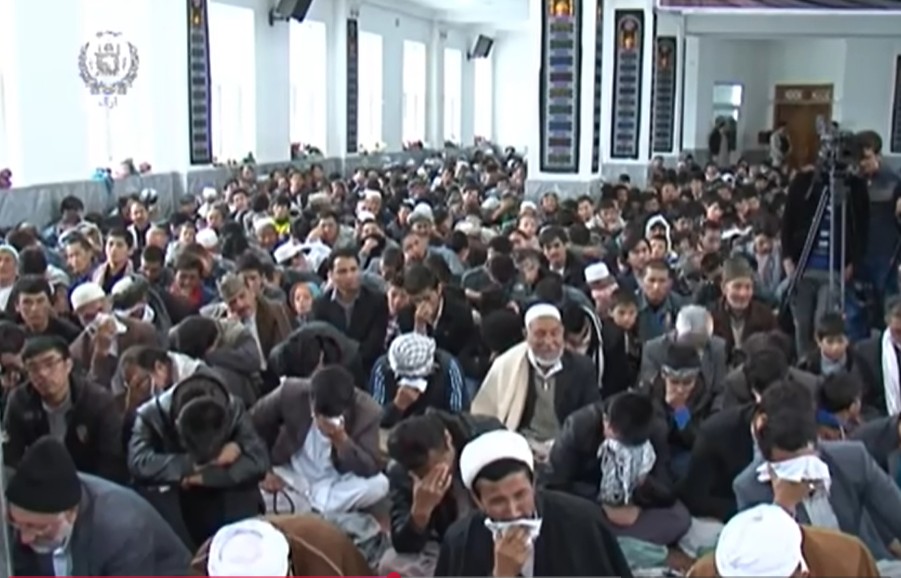
(Address on the Occasion of Ashura)
- Justice and Resistance: Stand against injustice and oppression.
- Sacrifice: Honor courage and selflessness for higher ideals.
- Unity: Promote national solidarity and cohesion.
- Reject Extremism: Resist violence and radicalism.
- Faith and Values: Uphold ethical and religious principles.
- Commemoration: Learn from history through mindful observance.
- Support Defenders: Appreciate those protecting the nation.
- Peace and Stability: Build justice-based, harmonious society.
I offer my condolences on the arrival of Ashura to the freedom-loving and mourning people of Afghanistan, both at home and abroad.
1. Ashura: The School of Resistance and Sacrifice
Ashura is the manifestation of freedom and nobility. Ashura is a liberating school of thought and a stand against injustice, tyranny, and oppression. The grandson of the Prophet of God, Imam Hussein, and his devoted companions taught the world the lesson of sacrifice and selflessness on this day. This lesson has been repeated many times over the last 1400 years.
During the second Anglo-Afghan war, when the British were besieged in Sherpur, it was the day of Ashura. The ranks of the Mujahideen came one after another, not fleeing from bullets but standing firm. The British General remarked: "These are the true descendants of Imam Hussein." Therefore, the lesson of Ashura is a lesson of continuous sacrifice. Commemorating Ashura is the perpetuation of the quest for justice and standing firm against despotism.
2. The Universal Message of Imam Hussein
Imam Hussein belongs to the Islamic world, but his message is universal. The entire world stands in need of this message, for it is a message of justice, reform, and resistance—a perennial message that encompasses all things. The tragic event of Karbala had a profound impact on Islamic history. When Imam Hussein saw that the religion of his grandfather was in danger and that oppression and transgression were prevailing over Islam, he rose up. He fought against tyranny and extremism, rejected coercion and injustice, and proclaimed: "If the religion of my grandfather, the Messenger of Allah, can only live through my death and the death of my family, then O swords, come and tear me to pieces!" He famously stated: "I see death as nothing but felicity, and life with oppressors as nothing but humiliation and wretchedness."
The message of Ashura for the Islamic world is clear and specific. It has educational, personal, governmental, and humanitarian dimensions. A great witness to the importance of Imam Hussein's message was Gandhi, the great reformer of India, who, in order to save his country from the colonialism of that time, said: "If we want to save India and make its people proud, we must learn from Hussein ibn Ali."
3. Ashura in the Context of Globalization and State-Building
It is remarkable that the lessons Imam Hussein gave 1,400 years ago are only now being fully realized by the world in its discussions on globalization and human rights. To summarize:
-
First, the Struggle Against Oppression: Justice constitutes the very foundation of Islam. The message of Ashura for the people of Afghanistan is justice and equality. All Afghans are equal before the law. We are all equal, and that is why we all commemorate Ashura; it is a point of unity and harmony for us, unlike in other countries where it may be a point of discord and division.
-
Second, Sacrifice for a Goal: We are in a difficult period, and we are not the only nation to face a challenging historical moment. But what is the difference between nations that possess a sense of sacrifice and those that do not? Nations with a sense of sacrifice achieve their goals. Nations that lack unity of thought and action fail. Today, the Afghan nation needs sacrifice, selflessness, and unity of thought and action more than ever. National unity is the message of Ashura.
I sincerely welcome the message of Professor [Sarwar] Danesh regarding a nationwide movement of Afghanistan's elites to establish peace and stability, and I am ready for any form of cooperation with them.
4. Combating Extremism and Violence
We must not allow violence and extremism to take root. As stated in the testament of the Martyred Imam, his uprising was for reform, not for seizing power; it was a return to the religion and principles of his noble grandfather, not for the sake of force. Therefore, we must fight against every form of extremism and violence.
Extremism is like a thief that steals the future of our women, our children, and our country, for it means deviating from the principles that have guided us for 1,400 years. Anyone who does not know the enlightened religion of Islam needs only to study the life of Imam Hussein for ten hours to understand that this religion is one of reform, justice, and equality—not one of coercion, force, and extremism.
5. "Being Husseini": Sacrifice as a Living Practice
To be "Husseini" means to carry the sense of sacrifice from the cradle to the grave. I highly welcome the tradition started by Professor [Karim] Khalili, which is the donation of blood. We all need to make blood a means of life, especially for our security and defense forces who stand today "Hussein-like" in the trenches of this country, defending our honor, dignity, independence, territorial integrity, and our future. Salutations to the martyrs of our Army, National Police, and National Security!
Conclusion: A Historical Mandate
The Government of Afghanistan is committed to protecting Ashura and reviving the ancient tradition of mourning in its most rational and enlightened form. I ask all the Muslim people of Afghanistan to commemorate this historic day in a manner that fosters nationwide unity and agreement.
Centuries after we are gone and have returned to the dust, the Muslim people of Afghanistan will still commemorate Ashura and remember Imam Hussein. Thus, we must understand that behaving in a "Husseini" manner requires us to understand and act upon the life and testament of Imam Hussein with all our hearts and souls. Emotions must be kept under control, the discussion must become "Afghanistan-inclusive," and we must learn from both sides of the conflict. One side is the symbol and sign of justice; the other side is the symbol of oppression, cruelty, and tyranny. Establishing a just society and system requires the attention of everyone, and I hope we can fulfill this historical mission.
(In Pashto): Once again, on the occasion of the anniversary of the martyrdom of the Household (Ahl al-Bayt) and the loyal companions of Hazrat Imam Hussein in the field of Karbala, I offer my condolences to all Muslims and followers of peace, justice, and humanity. I pray to Allah the Almighty ﷻ to save all Muslims from the evil of ignorant murderers. Amen, O Lord of the Worlds!
Peace and blessings be upon Imam Hussein, all the Household, and the Companions!